Summary:
You turn on the shower and it hits you — that unmistakable sulfur smell, like something died in the pipes. Maybe it’s been there for a while and you’ve been hoping it would go away. Maybe it just started this summer and it’s getting worse. Either way, you want to know what’s causing it and whether it’s something you actually need to worry about.
The answer depends on where the smell is coming from. That’s not a dodge — it’s genuinely the most important question, because the source determines the fix. Get the diagnosis wrong and you’ll spend money on the wrong solution. We’ve seen it happen more times than we can count.
What's Actually Causing That Rotten Egg Smell in Your Lake County Well Water?
The smell comes from hydrogen sulfide — a colorless gas that forms naturally in groundwater and, under certain conditions, inside your own plumbing. At concentrations above 0.5 parts per million, it produces that sharp, unmistakable odor. You don’t need much of it to notice.
Lake County sits on top of the Floridan Aquifer System — a vast limestone formation that stretches across much of Florida. As groundwater moves through that porous rock, it picks up sulfur compounds. It’s the same aquifer that feeds Florida’s famous springs, and the mineral content that makes those springs so clear is the same geology that gives many Lake County wells their sulfur signature.
This isn’t a one-time contamination event. It’s a structural condition. Without treatment, it doesn’t go away on its own.
Hot Water Smells Like Sulfur but Cold Water Doesn't — Is It Your Water Heater?
This is one of the most common diagnostic questions we get, and it’s a smart one. If the rotten egg smell only shows up in your hot water — at every faucet, not just one — there’s a good chance your water heater is part of the problem, even if it’s not the whole story.
Here’s why: most conventional water heaters have a magnesium anode rod inside the tank. That rod protects the tank from corrosion, and it does its job well. But when water with elevated sulfate levels passes through the heater, the magnesium rod can react with those sulfates and produce hydrogen sulfide gas. The hot water comes out smelling like rotten eggs even when the cold water seems fine.
The fix in that case is usually replacing the anode rod with an aluminum or zinc-aluminum rod, which doesn’t trigger the same reaction. Some plumbers will do this as a standalone service — and it’s worth knowing that this is outside what we handle at Quality Safe Water of Florida LLC, since our focus is on the water treatment side, not water heater repairs.
But here’s where it gets important: if replacing the anode rod doesn’t solve the problem, or if both your hot and cold water smell, or if the smell is present at an outdoor hose bib where there’s no water heater involved — the source is your well or aquifer, not your tank. That’s a different problem entirely, and it requires a different solution.
In Lake County, where iron levels in some wells exceed 5 parts per million and sulfur bacteria are genuinely common, the well is often the primary culprit. The water heater may be amplifying an existing problem rather than creating it. A proper water quality test is the only way to know for certain which you’re dealing with.
Why Lake County's Rotten Egg Smell Gets Worse Every Summer
If you’ve noticed the smell intensifying between June and September, you’re not imagining it. Florida’s rainy season drives more surface water down through the soil and into the aquifer, and as that water moves through sulfur-bearing limestone formations, it picks up more hydrogen sulfide along the way. Warmer groundwater temperatures in summer also accelerate the activity of sulfur bacteria — microorganisms that live in wells and groundwater and produce H₂S gas as a byproduct of their own metabolism.
Sulfur bacteria are worth understanding because they’re not just an odor problem. They produce a slime that can clog well casings, plumbing lines, and irrigation systems over time. They can also create conditions that allow other bacteria — including iron bacteria — to grow more easily. In some cases, wells that test positive for sulfur bacteria also show signs of coliform contamination, which is a genuine health concern, not just an aesthetic one.
For homeowners in communities like Umatilla, Fruitland Park, Paisley, and the unincorporated areas of Lake County that rely entirely on private wells, this is the environment their water system operates in year-round. The summer peak is real and predictable. It happens because of where Lake County sits geologically, and it will keep happening every year without a treatment system designed to address the source.
Shock chlorination — pouring bleach into the well casing — is sometimes recommended as a DIY fix for sulfur bacteria. It can temporarily reduce bacterial populations, but it doesn’t address the geological source of hydrogen sulfide, and it doesn’t provide ongoing protection. Within weeks or months, the smell comes back. We’ve talked to many Lake County homeowners who’ve done this multiple times and are still dealing with the same problem.
What Water Quality Testing Actually Reveals About Your Lake County Well
A real water quality test isn’t a single number. It’s a profile — iron levels, sulfur content, bacteria presence, pH, sulfate concentration, and other parameters that together paint a picture of what’s actually in your water and where the problem is originating.
This matters because the treatment for well-sourced hydrogen sulfide looks different from the treatment for sulfur bacteria, which looks different again from a water heater anode rod reaction. Diagnosing the wrong source and installing the wrong system is how homeowners end up spending thousands of dollars on equipment that doesn’t solve the problem. We hear this story often. The fix isn’t buying a bigger filter — it’s knowing what you’re actually treating.
Can a Store-Bought Filter Actually Remove the Rotten Egg Smell?
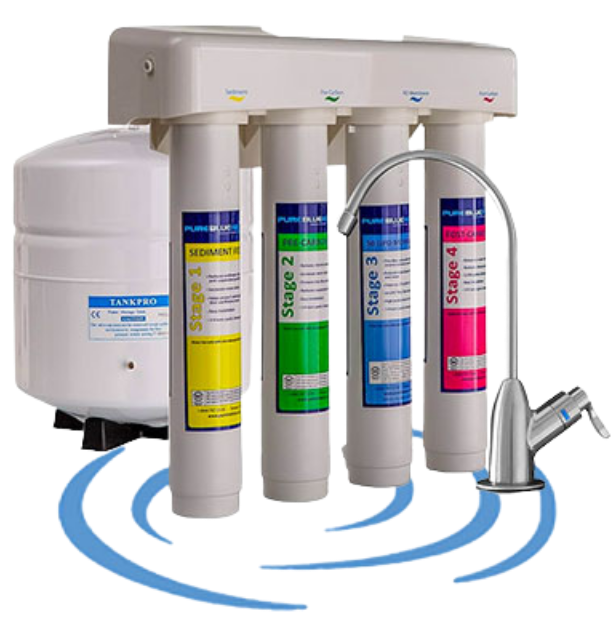
It’s a reasonable first instinct. You smell something in the water, you pick up a filter at the hardware store or order one online, and you hope that takes care of it. For some contaminants, a quality carbon filter does meaningful work. For hydrogen sulfide gas, it largely doesn’t.
Standard carbon block filters — the kind used in pitcher filters, under-sink units, and many basic whole-house systems — are not designed to remove hydrogen sulfide at the concentrations typically found in Lake County well water. H₂S is a dissolved gas, and it behaves differently than particulate contaminants or even many chemical compounds.
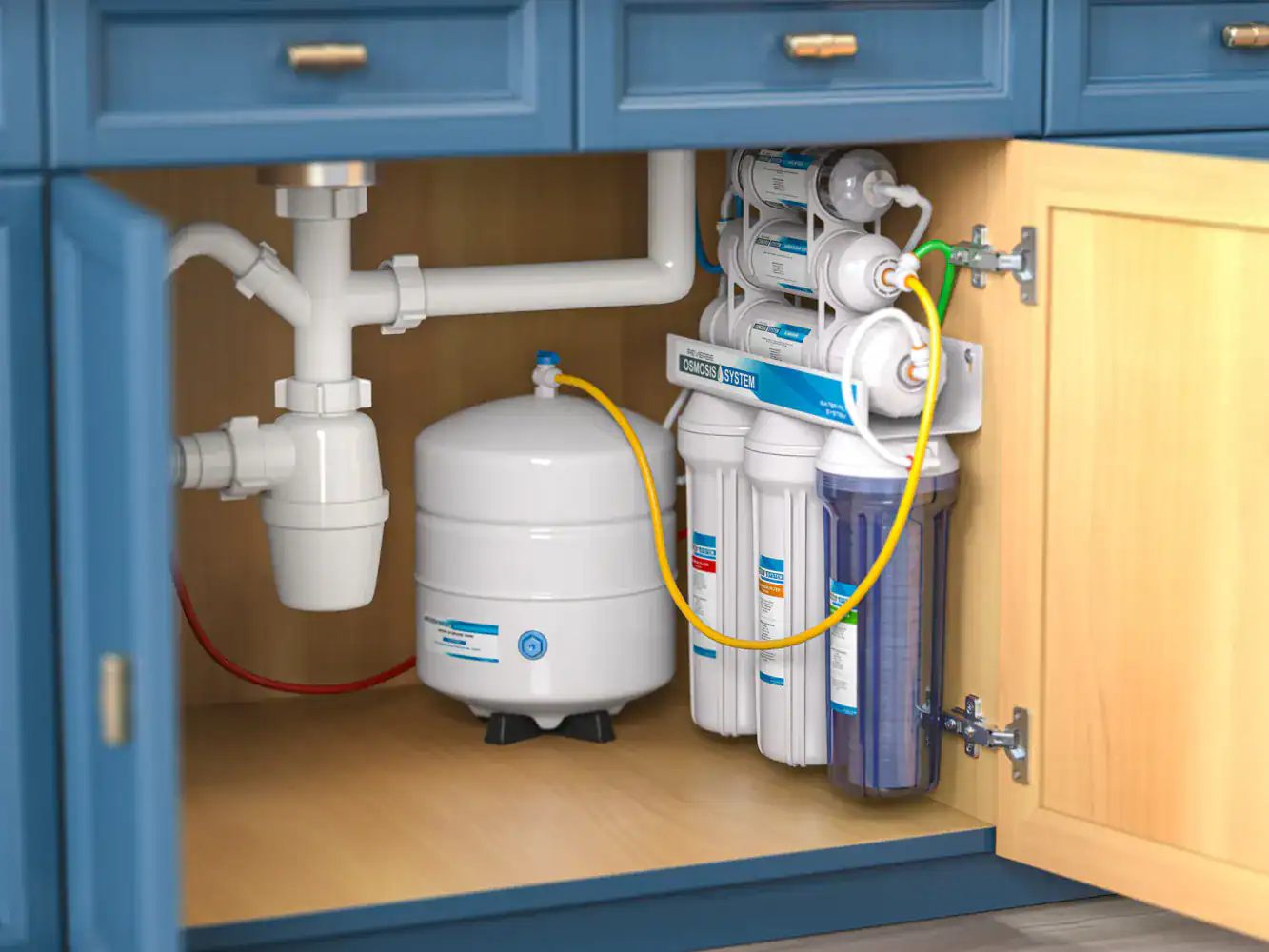
Effective treatment usually requires one of a few specific approaches: air injection oxidation, which introduces oxygen to convert H₂S into elemental sulfur that can then be filtered out; hydrogen peroxide injection for more severe cases or where bacteria are present; or specialized catalytic carbon media that can oxidize and adsorb hydrogen sulfide simultaneously. None of those are available in a consumer pitcher filter or a basic big-box whole-house unit.
The right approach depends on the concentration of H₂S in your specific well, whether sulfur bacteria are contributing to the problem, what your iron levels look like, and what your water’s pH is doing. A well in Leesburg with moderate H₂S and high iron needs a different configuration than a well in Howey-in-the-Hills with heavy sulfur bacteria and lower iron. This is exactly why we test the water before recommending anything. The analysis tells us what we’re working with. The system is designed around those results — not around what’s easiest to install or what’s sitting in a warehouse.
How to Choose the Right Water Treatment System for Lake County Well Water
The honest answer is: you don’t, until you test. And that’s not a sales pitch — it’s just the reality of how varied well water is across Lake County. Two homes a mile apart can have meaningfully different water chemistry depending on well depth, casing age, proximity to agricultural land, and exactly where in the aquifer they’re drawing from.
What we do know from decades of testing water across this county is that iron and sulfur together are the norm, not the exception. Some wells come in at iron levels of 5 parts per million or higher — more than sixteen times the EPA’s aesthetic threshold of 0.3 ppm. That level of iron doesn’t just stain your sinks and toilets. It clogs fixtures, shortens appliance lifespans, and interacts with sulfur bacteria in ways that make both problems worse. Treating one without addressing the other often means the system underperforms.
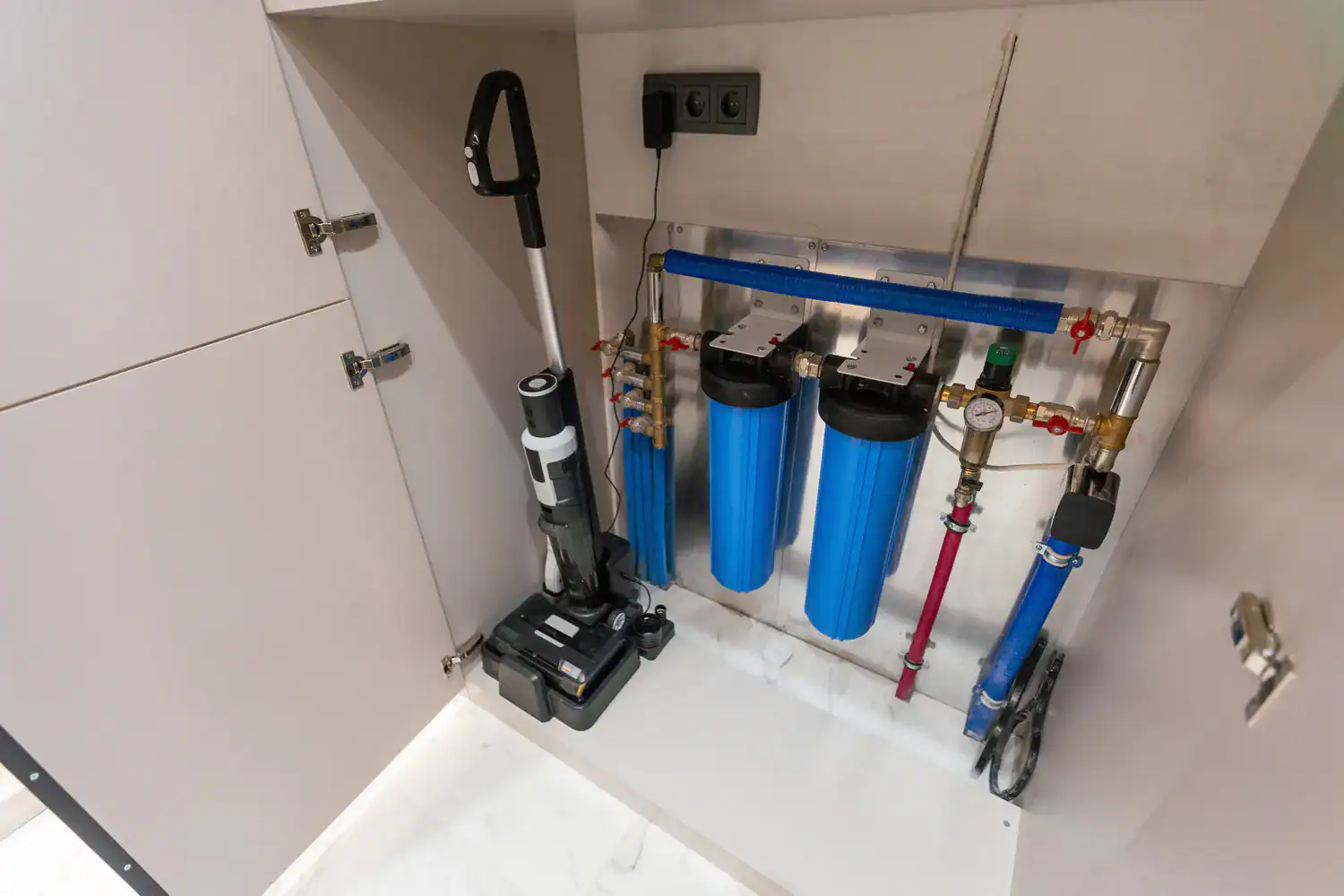
A whole-house approach — one that addresses the water at the point of entry before it reaches any fixture, appliance, or faucet — is typically the right framework for Lake County well water with multiple contaminants. That might mean an air injection oxidation system for iron and H₂S, combined with a UV purification stage for bacteria, and a softening component if hardness is also a factor. Or it might be a different configuration entirely. The water test tells us.
We’ve been doing this work in North and Central Florida for over 50 years. We’re based in Leesburg — this is our backyard, not a service territory we cover from three counties away. We know what Lake County water looks like. We know what it takes to fix it. And we test again after installation to confirm the system is actually doing what it’s supposed to do, because a promise without proof isn’t worth much.
Quality Safe Water of Florida LLC holds an A+ rating with the Better Business Bureau — zero complaints — and is a member of the National Water Quality Association. Those are verifiable facts that reflect how we operate. We also service all brands of existing water treatment equipment, including Culligan, Kinetico, and Leaf, because the relationship doesn’t end when the installation is done.
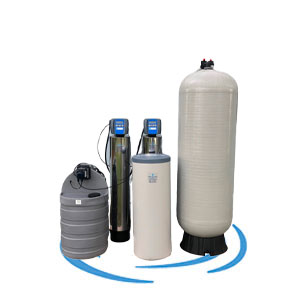
Get Rid of the Rotten Egg Smell in Your Lake County Home
If your water smells like sulfur, the path forward starts with knowing what you’re actually dealing with. Is it the well, the plumbing, the water heater, or some combination? The answer changes everything about what treatment will actually work — and what will just waste your time and money.
For Lake County homeowners on well water, the geology is working against you in ways that generic filters and DIY fixes aren’t built to handle. But the problem is solvable. Thousands of homes across this county have water that used to smell and now doesn’t, because the source was properly identified and the right system was put in place.
If you’re ready to stop guessing, the next step is a free in-home water analysis — no obligation, no pressure, just a real picture of what’s in your water. Reach out to Quality Safe Water of Florida LLC and we’ll come to you.