Summary:
If your water looks fine but your appliances keep failing early, your water pressure has quietly dropped, or you’ve noticed rust stains creeping across your fixtures—a whole house sediment filter is probably on your radar. It’s a reasonable place to start. Sediment filtration is genuinely important, and for many Lake County homes, it’s the first thing that should go in. But it’s also just the beginning.
For homeowners in Lake County, where the groundwater comes up through a limestone aquifer loaded with iron, sulfur, and bacteria, a sediment filter alone leaves the most stubborn problems completely untouched. Here’s what you need to know before you buy anything.
How a Whole House Sediment Filter Actually Works
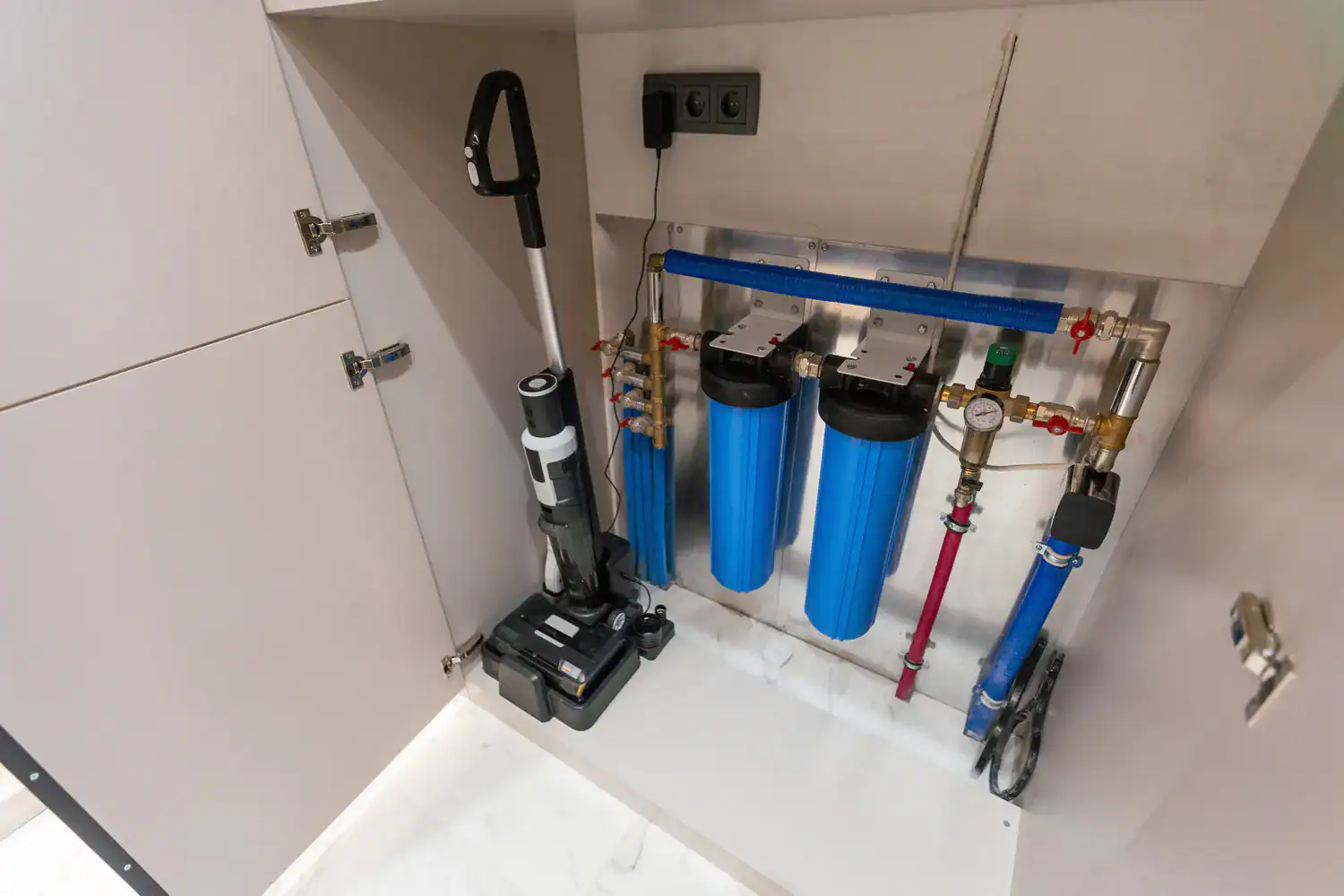
A whole house sediment filter installs at the point where water enters your home—before it reaches any faucet, appliance, or additional treatment system. Its job is mechanical: it physically traps particles like dirt, sand, silt, rust flakes, and debris as water passes through a filter cartridge. Nothing gets dissolved or chemically altered. It’s purely a physical barrier.
The filter’s effectiveness is measured in microns. A 5-micron filter catches particles 5 microns or smaller—fine enough to trap silt and clay. A 50-micron filter is better suited for heavier sediment like sand or rust chunks. Getting the micron rating right for your actual water matters more than most people realize, because a filter that’s too fine for your sediment load will clog quickly, restrict pressure, and need constant replacing.
What a Sediment Filter Removes—and What It Misses
A sediment filter removes physical particles. That’s it. Dirt, sand, rust, silt, clay—anything solid that’s suspended in your water. If you can see it floating or settling, a sediment filter is designed to catch it.
What it doesn’t touch is everything dissolved in the water. Chlorine and chloramines—the disinfectants added to municipal water—pass right through. So does dissolved iron, which is the form of iron most common in Lake County well water. That’s called clear water iron, because it’s invisible until it hits oxygen and turns orange on your sink or toilet. A sediment filter won’t stop it.
Bacteria, viruses, hydrogen sulfide gas (the source of that rotten egg smell so common in Lake County wells), volatile organic compounds, and hardness minerals—none of these are touched by sediment filtration. They require entirely different treatment technologies: activated carbon for chemicals and taste, UV for pathogens, ion exchange or oxidation for dissolved iron.
This isn’t a flaw in sediment filters. It’s just what they’re designed to do. The problem comes when homeowners install a sediment filter expecting it to solve everything, then wonder why the smell is still there or why the staining hasn’t stopped.
A sediment filter is Stage 1—the gatekeeper that protects everything downstream. It’s not the whole system.
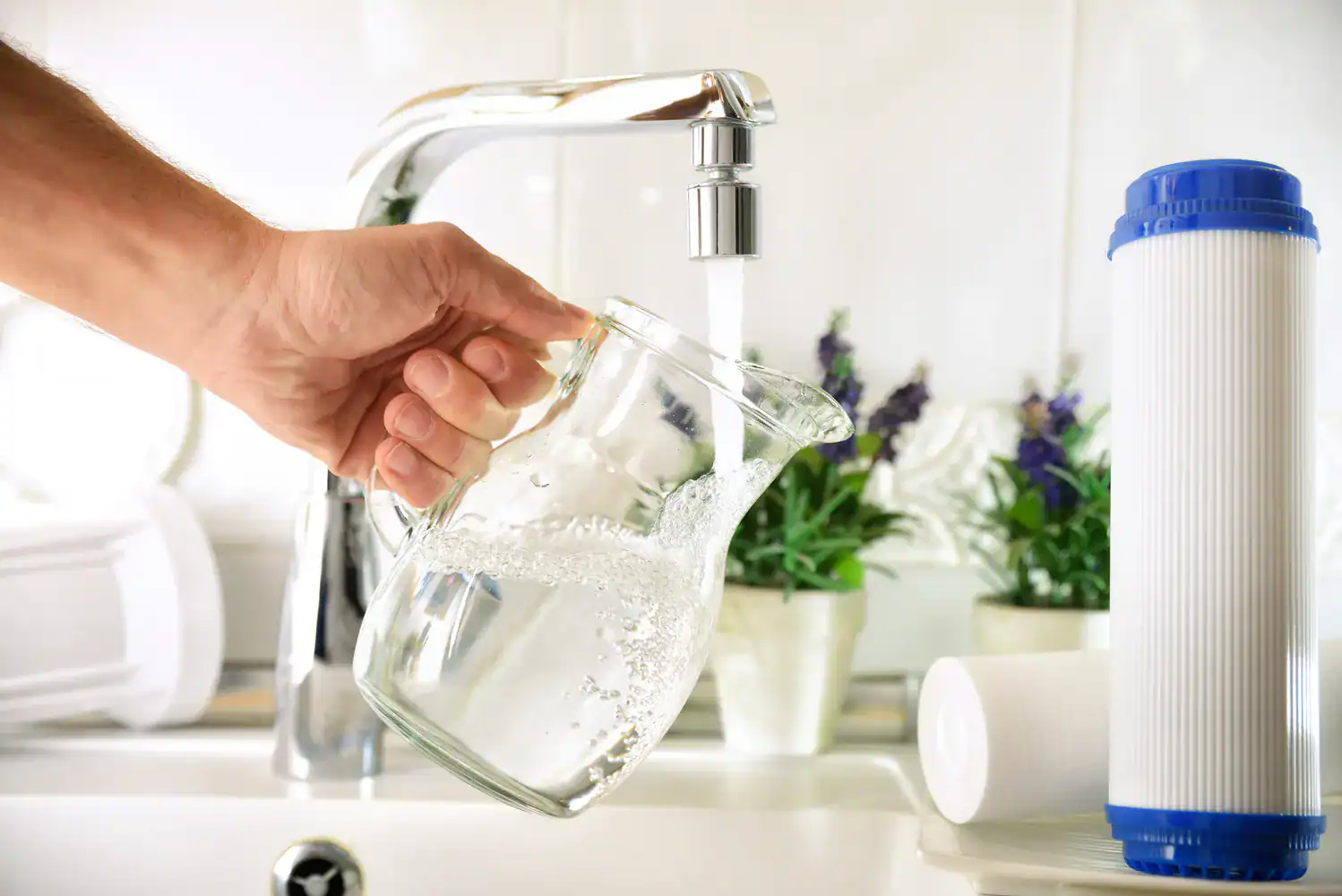
The visual indicator most people miss: your filter housing. When a cartridge is new, it’s white. Over weeks and months, it shifts to yellow, then tan, then dark brown. By the time it’s nearly black, it’s overdue for replacement. Most sediment pre-filters need to be swapped out every six to twelve months, depending on your water’s sediment load.
The Silent Damage Sediment Does Before You Notice Anything
Here’s the thing about sediment—it rarely announces itself. You’re not going to wake up one morning and think, “my water has too much silt in it.” What you will notice is that your water heater died after eight years instead of fifteen. Or that your washing machine needed a new solenoid valve. Or that your dishwasher pump burned out. By then, the connection to water quality is long gone.
Sediment settles at the bottom of water heater tanks. In gas water heaters, it forms an insulating layer between the burner and the water, causing the tank to overheat and wear out faster. In electric models, it buries the lower heating element, which eventually burns out. Water heaters are consistently one of the most expensive victims of untreated sediment—and most homeowners never make the connection.
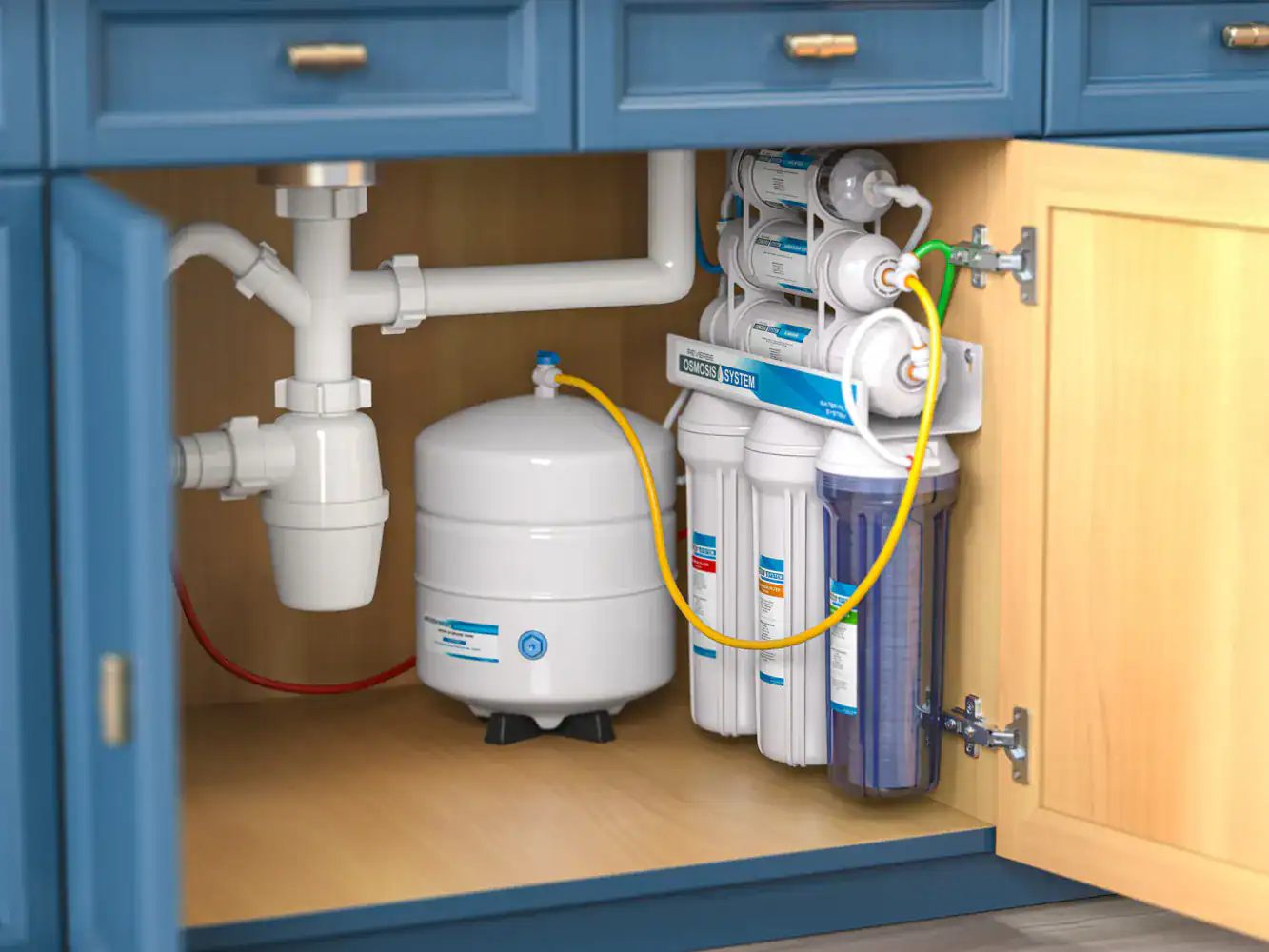
The damage chain doesn’t stop there. Sediment clogs faucet aerators and showerhead orifices, reducing flow gradually enough that you might not notice for months. It wears down washing machine inlet valves and dishwasher pumps. And if you have a reverse osmosis system for drinking water, sediment reaching the RO membrane dramatically shortens its lifespan—membranes that should last two to three years get destroyed in a fraction of that time.
This is why a sediment pre-filter isn’t just about water quality. It’s appliance protection. It’s the filter that protects all your other filters. Installing one at the point of entry is genuinely one of the most cost-effective things a homeowner can do, because the alternative is paying for appliance repairs and replacements that could have been avoided entirely.
For Lake County homes on well water, the sediment load tends to be higher than homeowners expect—especially after heavy summer rains, when Florida’s wet season pushes surface sediment into shallow aquifers. A professional water analysis will tell you exactly what your sediment levels are and what micron rating makes sense for your specific situation.

Why Lake County Well Water Needs More Than One Filter Stage
Lake County sits on top of Florida’s Floridan Aquifer—a massive limestone formation that supplies most of the region’s groundwater. Limestone is naturally porous, which means water picks up minerals, gases, and bacteria as it moves through the rock. That’s what makes Lake County’s water chemistry different from a lot of other places, and it’s why a single filter rarely does the job.
The most common complaints we hear from homeowners in Leesburg, Clermont, Eustis, Tavares, and the surrounding Lake County communities are: a rotten egg smell from hydrogen sulfide gas, orange or rust-colored staining on fixtures and laundry from dissolved iron, and occasional bacterial contamination. These aren’t random problems—they’re predictable outcomes of the local geology. And each one requires a different treatment technology.
Whole House Carbon Water Filter: The Stage That Handles What Sediment Can't
After sediment filtration, the next stage in a properly designed whole house system is activated carbon. A whole house carbon water filter works through a process called adsorption—contaminants in the water bond to the surface of the carbon media as water flows through it. It’s effective against chlorine, chloramines, volatile organic compounds, pesticides, industrial chemicals, pharmaceuticals, and many of the compounds responsible for bad taste and odor.
For homeowners on municipal water in Lake County, chlorine and chloramines are the primary target. Disinfectants are necessary in the treatment process, but they don’t need to come out of your shower or sit in your drinking glass. A whole house carbon filter addresses them at the point of entry, so every faucet in the house delivers treated water.
For well water users, carbon filtration plays a different but equally important role. It handles organic compounds and some of the chemical byproducts that form naturally in groundwater—things that don’t have a smell but still affect water quality. It’s also the stage that protects downstream components, including RO membranes, from chemical degradation.
One thing worth understanding about carbon media: it has a finite capacity. Quality carbon media in a properly sized whole house system typically lasts around five years or 600,000 gallons before it needs replacement. But that lifespan assumes the sediment pre-filter is doing its job. If sediment reaches the carbon media, it clogs the carbon’s pores and forces early replacement. The two stages work together—sediment pre-filtration is what allows your carbon filter to last its full service life.
There’s also a distinction between standard activated carbon and catalytic carbon. Catalytic carbon is more effective at breaking down chloramines, which are harder to remove than free chlorine and increasingly common in municipal treatment. If your water comes from a municipal source in Lake County, it’s worth knowing which disinfectant your utility uses.
Whole House UV Water Filter and Ion Exchange: When Your Water Needs the Full System
For Lake County homeowners on well water, carbon filtration often isn’t the final stage either. Bacteria and viruses are a documented risk in groundwater drawn from the Floridan Aquifer’s limestone formations, and activated carbon does nothing to address them. That’s where UV comes in.
A whole house UV water filter works by exposing water to ultraviolet light as it passes through the system. The UV light destroys the DNA of bacteria, viruses, and other pathogens—rendering them unable to reproduce and effectively eliminating the health risk. It adds nothing to the water, removes nothing from the water, and doesn’t affect taste or odor. It’s a chemical-free disinfection method that works at every faucet in the house simultaneously. UV systems destroy 99.9% of microorganisms when properly sized and maintained. The one maintenance task they require is an annual bulb replacement—even if the bulb is still lit, its effectiveness at killing bacteria decreases over time.
We’ve had customers in Lake County whose well water tested positive for E. coli. That’s a situation where UV isn’t optional—it’s the only whole-house solution that eliminates bacterial risk at the point of entry. Our Purelight System is designed for exactly this application.
Then there’s dissolved iron and hardness, which require yet another approach. Ion exchange is the technology behind water softeners—it works by swapping hardness minerals like calcium and magnesium, or certain forms of dissolved iron, for sodium ions using a resin bed. Ion exchange addresses the contaminants that cause scale buildup in pipes, water heaters, and appliances, and it handles the dissolved iron that causes rust staining on fixtures and laundry. It’s a fundamentally different process from sediment filtration or carbon treatment, and it targets a different set of problems.
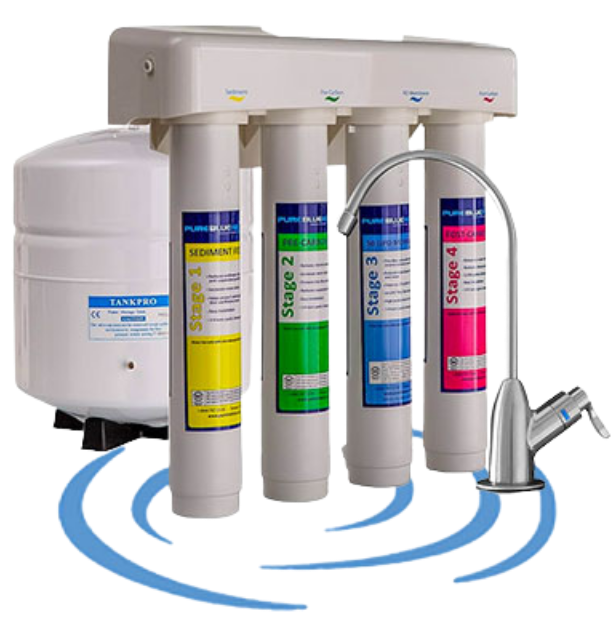
This is why we say one size does not fit all. A Lake County home with iron, sulfur bacteria, sediment, and hardness needs a layered system—sediment pre-filter, carbon, UV, and possibly ion exchange—in the right combination and the right order, sized correctly for the home’s flow rate and the family’s water usage. That combination is different for a new construction home in Groveland than it is for a well-water property in Eustis that’s been in the family for decades. The only way to know what your water actually needs is to test it first.

Getting the Right Whole House Water Filter System for Your Lake County Home
A whole house sediment filter is a genuinely valuable piece of the puzzle—it protects your appliances, extends the life of every other filter stage, and keeps your water pressure where it should be. But for most Lake County homeowners, especially those on well water, it’s the starting point, not the finish line.
The limestone aquifer beneath Lake County produces a specific combination of water problems: iron, sulfur, bacteria, hardness, and sediment—often all at once. Solving that combination requires a system designed around what’s actually in your water, not a generic product off a shelf.
If you’re not sure where to start, that’s exactly what our free in-home water analysis is for. We come to you, test your water, and walk you through what we find—no pressure, no guesswork. Quality Safe Water of Florida LLC has been solving water problems in Lake County for over 50 years, and we’d be glad to help you figure out what your home actually needs.