Summary:
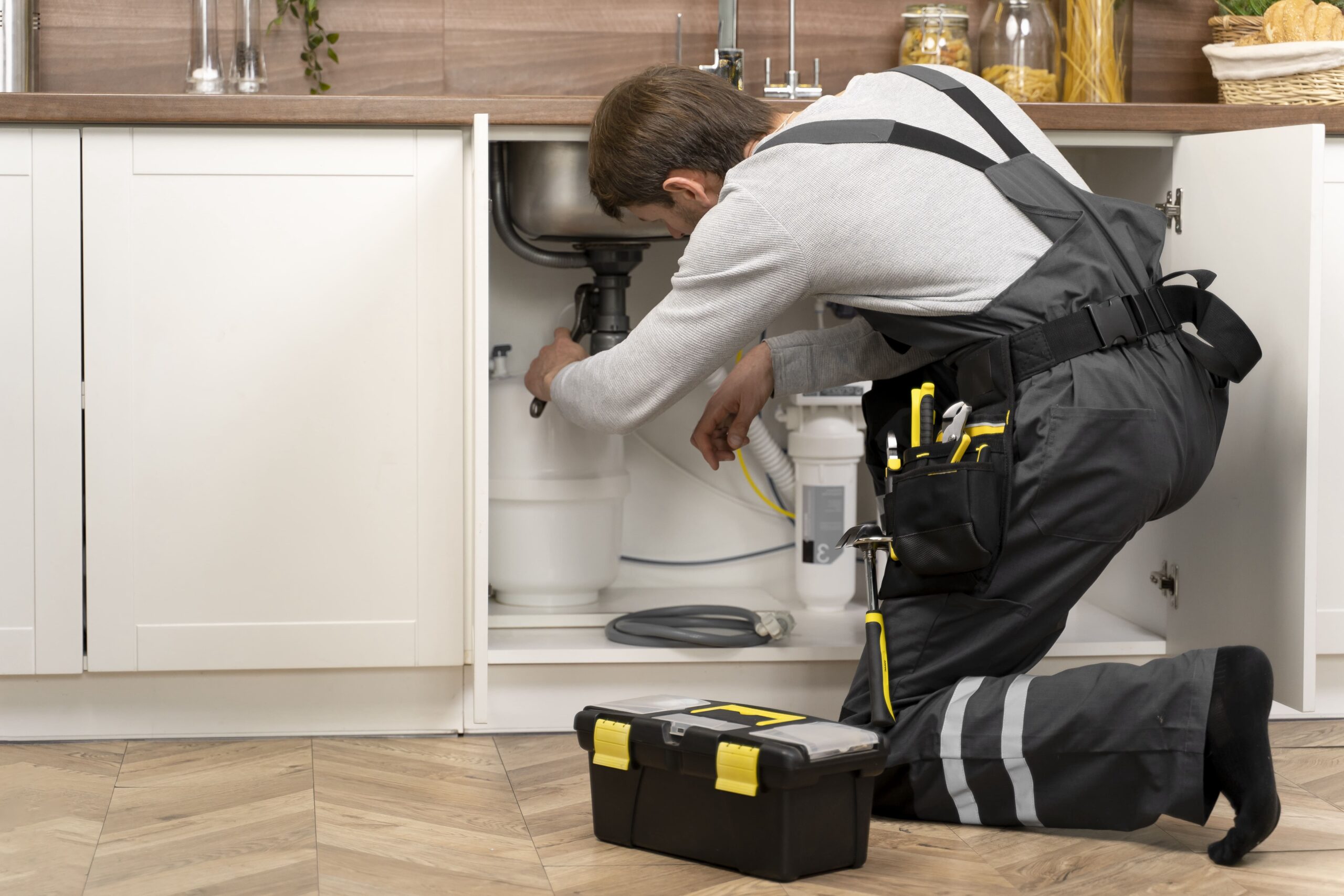
Your water softener stopped working again. Maybe you’re seeing hard water spots on your dishes, or the system’s making strange noises, or it’s just not regenerating like it should. Now you’re stuck with a question that affects both your budget and your home: do you repair it, or is it time to replace the whole system?
The answer isn’t always obvious, and in Marion County, where hard water is a fact of life at around 180 ppm, making the wrong call can cost you thousands. Let’s walk through what actually matters when you’re deciding between water softener repair and replacement.
How to Know If Your Water Softener Needs Repair or Replacement
The decision comes down to three things: age, cost, and frequency of problems. A water softener that’s five years old with its first issue is a completely different situation than a 15-year-old system that’s breaking down every few months.
Here’s what you’re actually looking at. Most water softeners last between 10 and 15 years with proper maintenance. Some high-quality systems push past 20 years, but that’s not the norm. If your system is approaching or past the 10-year mark and needs significant repairs, replacement often makes more financial sense than throwing money at an aging system.
The repair-versus-replace math is straightforward. If the repair cost is more than half the price of a new system, replacement usually wins. A $400 repair on a system that would cost $1,500 to replace? That’s worth fixing. A $900 repair on the same system? You’re better off replacing it and getting a new warranty, better efficiency, and years of reliable service.
What Water Softener Repairs Actually Cost in 2026
Let’s talk real numbers, because cost matters when you’re making this decision. Water softener repair typically runs between $150 and $600, depending on what’s wrong. Simple fixes like breaking up a salt bridge or replacing a filter might cost $25 to $50. More involved repairs like replacing resin beads or fixing a control valve can run $200 to $500.
The average repair bill sits around $500. That’s not pocket change, but it’s also significantly less than replacing the entire system, which typically costs $1,200 to $3,800 installed in Marion County.
Here’s where it gets tricky. Some repairs signal deeper problems. If your resin bed needs replacing, that’s a $200 to $400 job. But if you’re also dealing with a failing control valve and corroded tanks, you’re looking at multiple repairs that add up fast. At that point, you’re essentially rebuilding an old system instead of investing in a new one.
The service call itself usually costs $40 to $100 just for the inspection, before any actual work. A reputable company will diagnose the problem, explain what’s wrong, and give you honest guidance on whether repair makes sense for your specific situation. If we’re pushing hard for replacement on a relatively new system with a minor issue, that’s a red flag worth noting.
Signs Your Water Softener Is Beyond Repair
Some problems tell you it’s time to replace, not repair. If you’re dealing with constant breakdowns—where you’re calling for service every few months—the system is telling you it’s done. Frequent repairs add up quickly, and you end up spending more on patches than you would on a new system.
Rust and corrosion are deal-breakers. If the tank, valve, or other critical components are rusted through, replacement is your only real option. You can’t effectively repair structural corrosion, and attempting to do so just delays the inevitable while wasting your money.
Age combined with inefficiency is another clear signal. Older systems don’t soften water as effectively as newer models. If your 12-year-old softener is struggling to keep up with your household’s water usage, using excessive salt, or regenerating constantly, a new high-efficiency system will likely save you money in the long run through reduced salt and water usage.
Watch for inconsistent water quality. If your water feels soft some days but hard on others, that’s a sign the system isn’t functioning properly. Sometimes this is fixable with a valve repair or resin cleaning. Other times, it means the system’s core components are failing and it’s time to upgrade.
Whole-system electrical failures usually aren’t worth repairing. If you need to replace the transformer, fuses, and circuit board, you’re looking at significant costs on a system that’s likely having other problems too. At that point, a new system with modern digital controls and better efficiency makes more sense.

How to Find a Legitimate Water Conditioning Service in Marion County
Here’s something most people don’t realize until it’s too late: Florida has a serious problem with water treatment scammers. These companies use deceptive mailers that look official, employ high-pressure sales tactics, and target homeowners—especially elderly residents—with inflated prices and unnecessary systems.
The Florida Attorney General’s office receives regular complaints about companies sending postcards claiming to be from government agencies, offering “free” water tests that turn into aggressive sales pitches, and quoting $8,000 for systems that should cost $3,000. Some companies quote one price, then drop it by thousands of dollars when you refuse, proving the initial quote was inflated from the start.
This is why verification matters. Before you let anyone touch your water softener, you need to confirm they’re legitimate, licensed, and have a track record you can verify.
Finding a Quality Water Softener Company You Can Trust
Start with their Better Business Bureau rating. A company with an A-rating and zero complaints has proven itself through actual customer experiences, not just marketing claims. The BBB tracks complaints, how companies respond to problems, and whether they resolve issues fairly. An A-rated company with zero complaints is rare—and valuable.
Verify their licensing and insurance. In Florida, water treatment work requires proper licensing. Ask for their license number and verify it with the state. Insurance protects you if something goes wrong during installation or repair. A legitimate company will provide this information without hesitation. If they dodge the question or give vague answers, walk away.
Look for industry certifications like WQA (Water Quality Association) membership. These certifications demonstrate that the company meets professional standards and stays current with industry best practices. It’s not just a marketing badge—it’s proof of ongoing education and commitment to quality work.
Check how long they’ve been in business locally. Experience matters in water treatment, especially in Marion County where our limestone-heavy groundwater creates specific challenges. A company that’s been serving the area for 50+ years has survived because they do quality work and treat customers fairly. Fly-by-night operations don’t last decades.
Ask about their service capabilities. A quality water softener company should be able to service all major brands—Culligan, Kinetico, Leaf Water Solutions, and others. If they only work on systems they sell, they’re not really interested in solving your problem. They’re interested in selling you something new, whether you need it or not.
Read recent reviews from actual customers in your area. Look beyond the company’s website. Check Google reviews, Facebook, and other platforms where people share unfiltered experiences. Pay attention to how the company responds to complaints. A company that addresses problems professionally and makes things right is one you can trust.
Red Flags That Signal a Water Treatment Scam
Certain tactics should send you running. Official-looking mailers that claim to be from a “Water Department” or “Consumer Awareness Department” are designed to deceive. No government agency is mailing you about your water softener. These are sales companies pretending to be official to get in your door.
High-pressure tactics are another warning sign. Legitimate companies give you time to think, compare options, and make an informed decision. Scammers create artificial urgency—”this price is only good today” or “we’re in your area now and won’t be back.” These are manipulation tactics designed to force a decision before you can research or get other quotes.
Watch for prices that drop dramatically when you say no. If a company quotes $8,000, then suddenly offers the same system for $4,000 when you decline, the initial price was inflated. They’re playing games with your money, not providing honest service.
Be wary of “free water tests” that turn into sales presentations. While legitimate companies offer water testing, scammers use rigged tests that make any water look contaminated. They add chemicals that change color or create sediment, then claim your water is dangerous. They’re not testing your water—they’re scaring you into buying.
Avoid companies that refuse to provide written estimates, detailed contracts, or clear warranty information. Everything should be documented. If they’re pushing for a decision without giving you paperwork to review, they don’t want you reading the fine print or comparing their offer to others.
Never work with unlicensed contractors, even if they’re cheaper. Florida law prohibits unlicensed plumbing work, and homeowners who knowingly hire unlicensed contractors can face fines. More importantly, unlicensed work isn’t insured, isn’t guaranteed, and often creates problems that cost more to fix than you saved initially.

Making the Right Decision for Your Marion County Home
Here’s what matters: if your water softener is less than 10 years old and the repair costs less than half the replacement price, repair usually makes sense. If it’s older than 15 years, breaking down frequently, or needs repairs that approach replacement costs, a new system is the smarter investment.
But the decision isn’t just about the system. It’s about who you trust to diagnose the problem honestly and do the work right. In Marion County, where hard water affects every home and scammers target homeowners regularly, working with a verified, licensed company with a proven track record isn’t optional—it’s essential.
When your water softener needs attention, look for a company with an A-rated BBB status, WQA certification, and decades of local experience. You deserve professionals who can service all major brands, provide honest assessments, and back their work with real guarantees. We’ve served North and Central Florida for over 50 years with zero BBB complaints, helping homeowners make informed decisions about their water treatment systems—whether that means a simple repair or investing in a new high-efficiency system that will serve your family for years to come.