Summary:
If your water smells off, stains your fixtures, or you just moved onto a property with a private well and have no idea what’s coming out of the ground — this is for you. Private wells in Lake County aren’t monitored by any government agency. What’s in your water is entirely your responsibility to find out. The good news is that a proper well water analysis takes the guesswork out of it completely. The not-so-good news is that a lot of what gets called a “water test” around here isn’t really one. Here’s what a real analysis looks like, why it matters, and what Lake County’s specific water conditions mean for your results.
Sulfur Bacteria in Water: What's Actually Causing That Rotten Egg Smell
That rotten egg smell coming from your tap isn’t random. It’s hydrogen sulfide gas — produced by sulfur-reducing bacteria that feed on sulfates in the groundwater and release H₂S as a byproduct. Most people can detect it at around 0.5 parts per million. At 1–2 ppm, the smell is impossible to ignore.
Lake County sits on a limestone aquifer — part of the Floridan Aquifer System — and that geology is almost purpose-built for sulfur bacteria to thrive. The limestone is rich in sulfate compounds, the water is warm year-round, and the conditions underground are exactly what these bacteria need to proliferate. This isn’t a fluke. It’s one of the most common complaints we hear from well owners across Leesburg, Eustis, Tavares, and the rural stretches of unincorporated Lake County.
Why a Sulfur Smell Isn't Just a Nuisance — It's a Sign of a Bigger Problem
Hydrogen sulfide gas is corrosive. It attacks iron, steel, copper, and brass — meaning it’s quietly working on your plumbing every time you turn on a faucet. Over time, that translates to accelerated wear on pipes, fixtures, and water-using appliances. The smell is the most obvious symptom, but the damage happening inside the walls is the part that actually costs you money.
Sulfur bacteria also produce a slime that can help iron bacteria take hold. Once both are present, they can clog well screens, pressure tanks, and irrigation systems. What starts as a smell problem can turn into a pressure problem, a staining problem, and eventually an equipment problem — all from the same root cause.
This is exactly why a real well water analysis doesn’t just confirm that sulfur bacteria are present. It measures hydrogen sulfide concentration, sulfate levels, and whether iron bacteria are co-occurring. Those details determine what kind of treatment system will actually work. Hydrogen peroxide injection systems, for example, handle both high iron and sulfur bacteria simultaneously — the peroxide oxidizes the iron so it can be filtered out and disinfects as it goes. Air injection oxidation is a solid option when iron is the primary issue and bacteria aren’t a major factor. But you can’t make that call accurately without knowing what the test shows.
Guessing at a treatment system based on a smell is how homeowners end up spending money on equipment that doesn’t solve the problem. A proper analysis tells you exactly what you’re dealing with before a single recommendation is made.
High Iron Water in Lake County: What the Staining Is Telling You
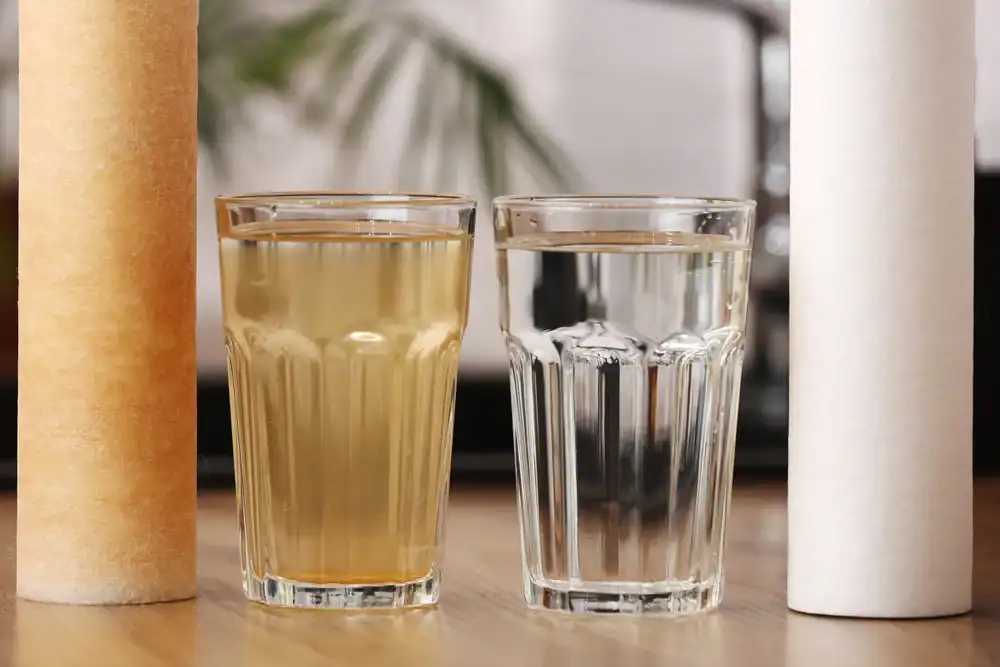
Orange rings in the toilet. Rust-colored stains on sinks and tub walls. White laundry that comes out of the wash looking dingy and discolored. If any of that sounds familiar, high iron levels in your well water are almost certainly the cause.
Iron in well water shows up in two forms. Dissolved iron — sometimes called ferrous iron — is invisible in the water when it comes out of the tap, but it oxidizes when it hits air and turns into the reddish-brown particles that stain everything it touches. Particulate iron, or ferric iron, is already oxidized and visible as a cloudiness or discoloration in the water itself. Many Lake County wells have both, which is why the staining tends to be persistent no matter how often you clean.
A complete iron analysis doesn’t just measure total iron — it looks at ferrous and ferric iron separately, checks for iron bacteria, and also tests for manganese, which behaves similarly and often appears alongside high iron. Iron bacteria produce a reddish-brown slime that can clog pipes, well screens, and irrigation systems over time. If that slime is present, the treatment approach is different than if you’re dealing with dissolved iron alone.
This is where the “test first, then design” approach matters. A whole-house iron filtration system has to be sized to your actual contamination levels. An undersized system won’t keep up with the iron load in your water. An oversized system wastes chemical and money. Getting that sizing right requires a real measurement — not an estimate, not a visual check, and not a quick field test that only tells you whether iron is present without telling you how much or what form it’s in.
What a Real Well Water Quality Test Actually Measures
A credentialed well water analysis covers a lot more ground than most homeowners expect. At minimum, it should include total coliform bacteria and E. coli, iron levels, hydrogen sulfide, pH, hardness, nitrates, and total dissolved solids. In Lake County specifically, there’s an additional layer worth knowing about.
Because of the county’s agricultural history — decades of citrus groves and cattle operations — the Florida Department of Health actively monitors certain areas of Lake County for Ethylene Di-Bromide, a pesticide-related contaminant tied to historic grove operations. If your property sits in or near an old agricultural area, that’s a contaminant worth including in a comprehensive panel.
The Difference Between a Free Test and a Real Water Analysis
Most “free water tests” offered by water treatment companies check for two or three things — typically hardness and chlorine — and use those results to justify selling you a softener or a filter. That’s not a water analysis. That’s a sales tool with a clipboard.
A real analysis measures the full picture: bacteria (total coliform and E. coli), iron in its various forms, hydrogen sulfide concentration, pH, hardness in grains per gallon, nitrates, and total dissolved solids. Depending on your location and the history of the surrounding land, it may also screen for agricultural contaminants or radiological elements. The goal isn’t to find something to sell you — it’s to understand exactly what’s in your water so that any treatment recommendation is based on actual results.
This distinction matters because the wrong system doesn’t just waste money. It can create a false sense of security. A homeowner who installs a water softener because a sales rep flagged hard water — without testing for bacteria or iron bacteria — may have solved the hardness problem while leaving a contamination issue completely untreated. That’s a pattern we see regularly in Lake County.
We’re a member of the National Water Quality Association, which means our testing protocols and treatment recommendations follow professional industry standards. Our BBB accreditation — A-rated, with zero complaints on record — reflects how we operate: honest assessment first, recommendation second. If your water doesn’t need a whole-house system, we’ll tell you that.
How Often Should You Test Your Well Water in Lake County?
The Florida Department of Health recommends testing private well water for bacteria and nitrates at least once a year. For lead, every three years is the standard recommendation. But in Lake County, there are a few conditions that should prompt a test regardless of schedule.
After any significant flooding or heavy storm activity, surface water can enter a vulnerable well and introduce bacteria that wouldn’t otherwise be present. Florida’s high water table and the frequency of tropical weather events make this a real and recurring risk — not a rare edge case. If your property sits in a low-lying area near one of Lake County’s 1,400-plus lakes, this is especially worth keeping in mind.
Spring is generally the best time for an annual test. Rainfall is at its highest, water is percolating through the soil into the aquifer, and any new contamination from the previous year is most likely to show up in test results. If you’ve never tested your well, the right time is now — not next spring. A USGS study found that roughly one in five private wells contains at least one contaminant above EPA health benchmarks. In agricultural areas, that number climbs to closer to one in three. Only about 30% of well owners test annually as recommended, which means the majority of people drawing water from private wells have no current data on what’s in it.
If you’ve recently purchased a home in Lake County with an existing well, testing should happen before you settle into a routine of drinking that water. Previous owners may not have tested in years, and well water chemistry changes over time as surrounding land use shifts, as the aquifer fluctuates, and as the well itself ages.
What to Do After You Get Your Well Water Test Results
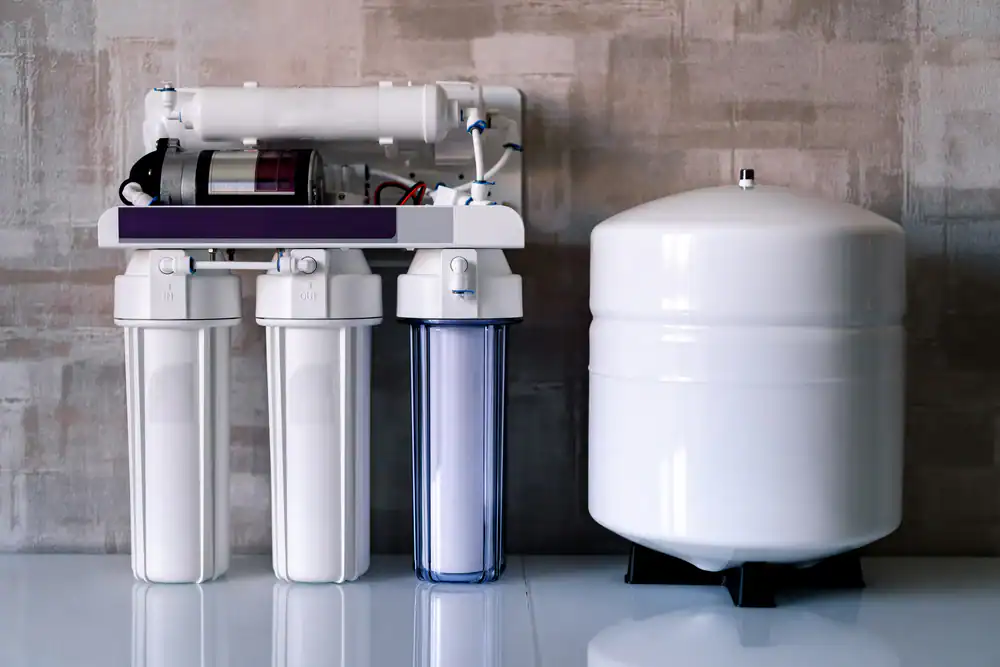
A water test is only useful if you know what to do with the results. Iron levels, sulfur bacteria, pH, coliform counts — those numbers mean something specific, and they point toward specific solutions. High iron reading with iron bacteria present calls for a different system than dissolved ferrous iron alone. Sulfur bacteria require oxidation and disinfection, not just filtration. The results tell the story; the right system is the response to that story.
That’s the approach we take at Quality Safe Water of Florida LLC. We start with a real water analysis — not a hardness check — and we use those results to explain exactly what’s in your water and what, if anything, needs to be done about it. No pressure, no upsell on systems you don’t need. If you’re in Lake County and you’re not sure what’s coming out of your well, that’s the right place to start.