Summary:
If you’re on well water in Lake County, FL, you’ve probably noticed something — a faint rotten egg smell in the shower, an orange ring in the toilet that won’t scrub off, or water that just tastes off no matter what you do. These aren’t minor inconveniences. They’re signals that something in your water needs attention.
The challenge is knowing what that something actually is — and what kind of well water filtration system will fix it. Generic systems from big-box stores are built for average water. Lake County water is anything but average. Here’s what you need to know before you buy anything.
Water Purification Systems: Why Lake County Well Water Is a Different Problem
Lake County sits directly above the Floridan Aquifer — a massive limestone formation that supplies the region with abundant groundwater but also loads it with iron, sulfur compounds, and hardness minerals at concentrations well above the national average. That’s not a marketing claim. It’s geology.
The same porous limestone that gives Lake County its roughly 1,000 lakes also creates the conditions for some of the most challenging well water in the state. When groundwater moves through limestone, it picks up dissolved minerals, feeds sulfur-reducing bacteria, and creates a multi-contaminant situation that a single-stage filter was never designed to handle.
What's Actually in Lake County Well Water?
Iron is the most visible problem. It shows up as orange or rust-colored staining on toilets, sinks, driveways, and laundry — the kind of staining that no cleaning product fully removes because you’re treating the symptom, not the source.
What makes iron tricky in Lake County is that it exists in two forms. Dissolved ferrous iron is invisible when it first comes out of the tap. It looks perfectly clear. But once it hits air, it oxidizes into that familiar rust color and sticks to everything it touches. Particulate ferric iron is already rust-colored when it comes out. Both forms require different treatment approaches, which is exactly why a water test matters before you buy anything.
Sulfur is the second major complaint. That rotten egg smell comes from hydrogen sulfide gas, which forms when sulfur-reducing bacteria break down sulfates in your groundwater. Florida’s limestone geology is loaded with sulfur compounds, which gives those bacteria plenty of fuel. The smell tends to be stronger in hot water because sulfur-reducing bacteria also colonize water heaters — so if your hot water smells worse than your cold, that’s why.
Then there’s bacterial contamination. Florida’s warm groundwater temperatures and organic-rich environment create ideal conditions for bacterial growth. Coliform bacteria and iron bacteria are both documented concerns for private well owners in Lake County. Iron bacteria are particularly insidious — they oxidize iron in your water and create a rusty, slime-like buildup inside pipes and toilet tanks that most homeowners mistake for a plumbing problem.
Hard water is the slow-motion damage most people don’t connect to their well until a plumber points it out. High mineral content — calcium and magnesium dissolved from the limestone — causes scale to build up inside pipes, water heaters, dishwashers, and washing machines. It shortens appliance lifespans and drives up energy costs as heating elements work harder through layers of mineral buildup.
Agricultural land around Leesburg, Groveland, and Minneola adds another layer of concern: nitrate runoff from fertilizers can infiltrate shallow wells, particularly after heavy rain. Lake County’s rainy season, which runs from June through September, is the highest-risk period for this kind of contamination.
Why the Treatment Sequence Matters as Much as the System Itself
One of the most common and costly mistakes Lake County homeowners make is buying the right technology in the wrong order. Treatment sequence is not a minor detail — it determines whether your system actually works.
UV disinfection is a good example. A UV system like our Purelight kills 99.99% of waterborne organisms and bacteria without adding any chemicals to your water. That’s a genuinely powerful technology. But UV light requires clear water to work. If iron, sediment, or turbidity is present in the water before it reaches the UV chamber, those particles block the light and dramatically reduce its effectiveness. A UV system installed without prior iron and sediment removal is a system that isn’t doing its job.
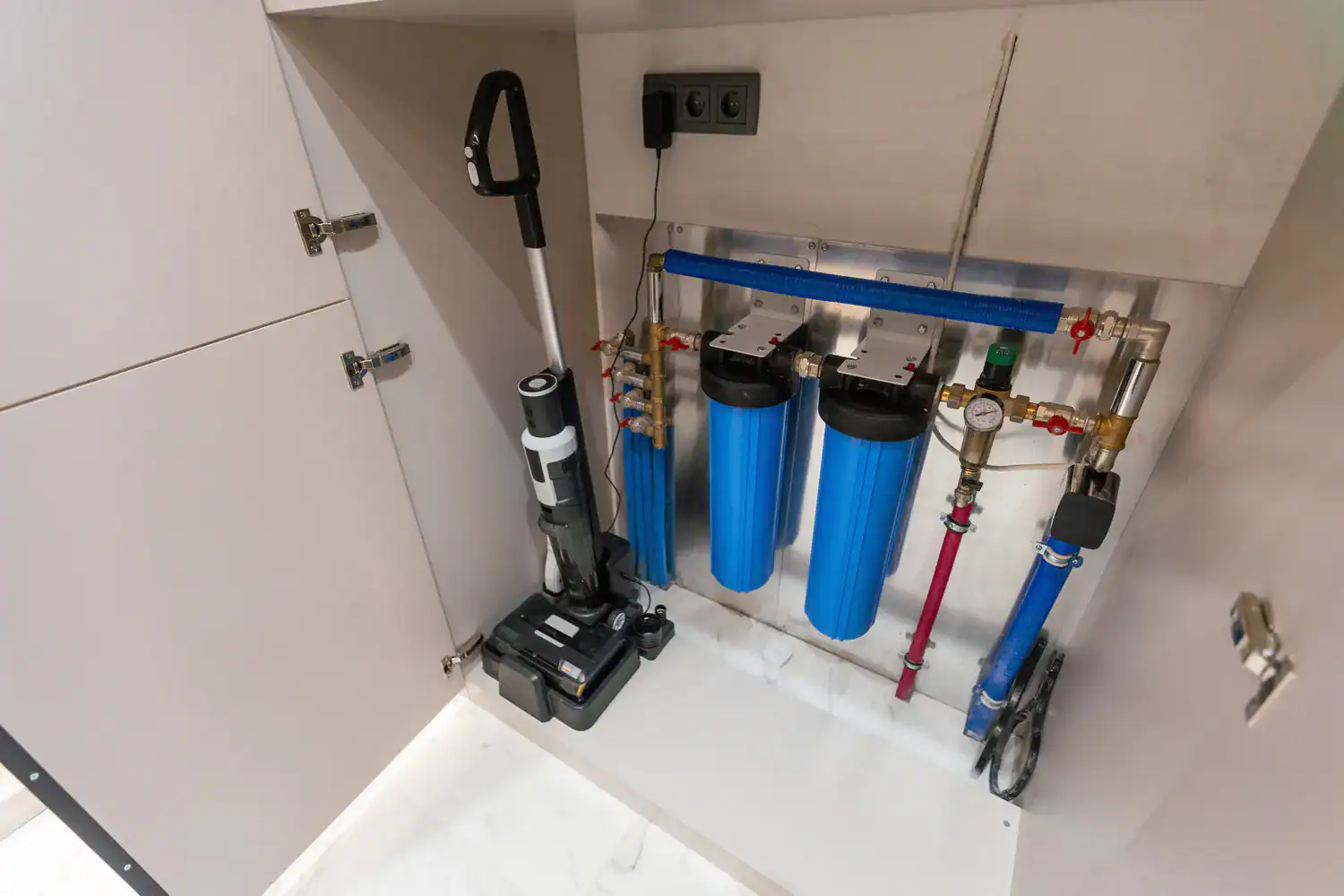
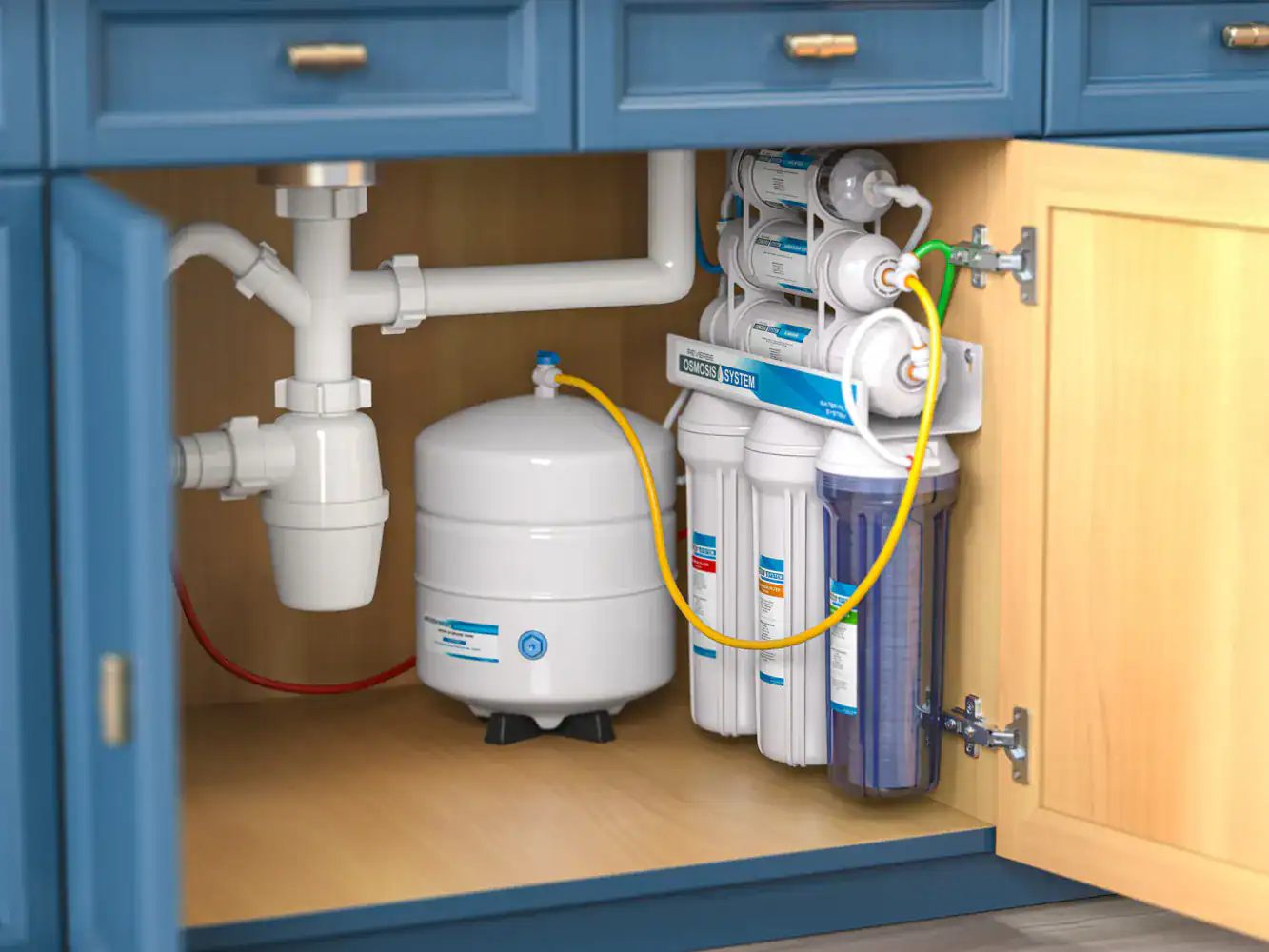
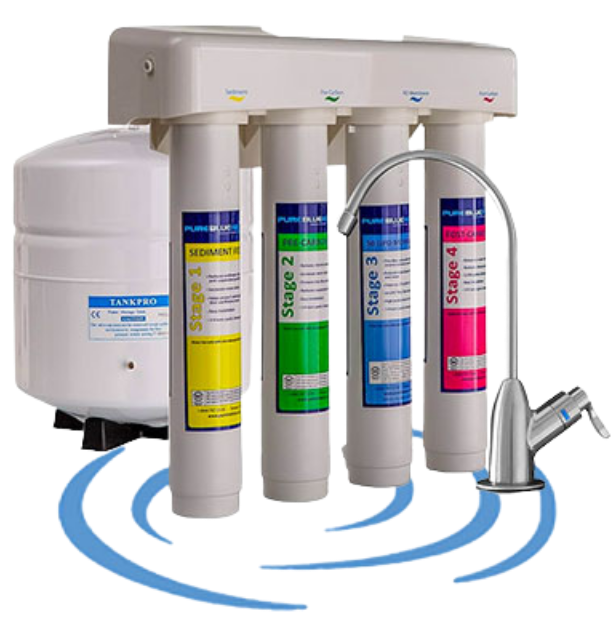
The correct sequence for a typical Lake County well water situation starts with sediment filtration to remove particles, moves to iron and sulfur removal — often using air injection oxidation or hydrogen peroxide injection, depending on what the water test shows — then proceeds to water softening or salt-free conditioning for hardness, and finally UV disinfection for bacterial protection. Reverse osmosis can be added at the drinking water tap for an additional layer of protection against contaminants like PFAS, nitrates, lead, and arsenic.
This is why a one-size-fits-all system from a national retailer almost always underperforms in Lake County. Those systems are built around average water chemistry. They aren’t engineered for the specific combination of iron, sulfur, bacterial activity, and hardness that defines the Floridan Aquifer. A homeowner in Clermont, Lady Lake, or Eustis who buys a system designed for Midwest water is going to be disappointed — and often doesn’t realize why until they’ve spent thousands of dollars on something that only partially works.
The other thing worth understanding is that not every Lake County home has the same water. A well in Minneola may have different iron concentrations than a well in Eustis. A home near agricultural land faces different nitrate risks than a home on the lakefront. The only way to know what your water actually contains is to test it — professionally, before buying anything.
Water Tests: The Step Most Lake County Homeowners Skip — and Regret
A professional water test isn’t the beginning of a sales process. It’s the only honest way to know what you’re dealing with. Without it, you’re guessing — and in water treatment, guessing is expensive.
A free water analysis from our team identifies the specific contaminants present in your water, their concentrations, your water’s pH level, hardness, iron levels, and bacterial presence. That information determines what type of system you need, how it should be sized for your household’s flow rate, and in what order the treatment stages should be installed. It’s the difference between a system that works and one that looks like it works.
What Does a Professional Water Test Actually Show?
A DIY test strip from a hardware store can give you a rough sense of hardness or pH, but it won’t tell you whether you have ferrous or ferric iron, what concentration of hydrogen sulfide is present, whether coliform bacteria are in the water, or what your nitrate levels look like. For Lake County homeowners, those distinctions are exactly what determine which system you need.
A professional water analysis measures the full picture. It tells you whether your iron problem requires air injection oxidation or hydrogen peroxide injection. It tells you whether your bacterial concern is coliform contamination — which requires disinfection — or iron bacteria, which requires a different approach. It tells you whether your hardness levels are high enough to justify a salt-based softener, or whether a salt-free conditioning system would handle your situation without the ongoing salt cost and water waste.
For new homeowners in South Lake County — particularly in Clermont, Minneola, and Groveland where residential development has expanded rapidly — this step is especially important. Many buyers move from municipal water areas and have no baseline for what their well water should look like. They notice the sulfur smell or the staining within weeks of moving in and start searching for solutions without knowing what they’re actually solving for. A water test gives you a starting point that’s grounded in facts, not symptoms.
It’s also worth doing if you’ve had a system installed previously and it doesn’t seem to be performing the way it should. Water chemistry can shift over time, especially after heavy rain seasons, and a system that was correctly sized three years ago may need to be reassessed. The water test is how you find out — not by guessing, and not by buying more equipment you may not need.
We offer free water analysis and consultation for Lake County homeowners. There’s no obligation attached to it. If the test shows your water is fine, we’ll tell you that.
Water Treatment Systems: How to Choose What Your Home Actually Needs
Once you know what’s in your water, the next question is what to do about it. The answer depends on your specific contaminants, your household size, your flow rate demands, and whether you want a whole-house solution or just drinking water protection at a single tap.
A whole house well water filter handles treatment at the point where water enters your home, which means every tap, shower, appliance, and fixture gets treated water. This matters for more than just taste. Iron and sulfur don’t just affect drinking water — they damage pipes, stain laundry, corrode fixtures, and accelerate appliance failure. A point-of-use filter under your kitchen sink protects one faucet. It does nothing for your water heater, your washing machine, or the shower your kids use every morning.
For most Lake County homeowners dealing with iron, sulfur, hardness, and bacterial concerns, a whole-house approach is the only complete solution. The specific components depend on what the water test shows. Some homes need a multi-stage system that addresses iron, softening, and UV disinfection in sequence. Others may have manageable hardness but a serious sulfur problem that a targeted oxidation system can handle. Some homeowners want the additional protection of a residential reverse osmosis system at the drinking water tap, which removes 95–99% of contaminants including PFAS, lead, nitrates, arsenic, and bacteria.
For homeowners who want to avoid the ongoing cost and maintenance of a salt-based softener, salt-free treatment systems are a real alternative. Our salt-free systems use no electricity and produce no water waste — which matters both for utility costs and for homeowners in areas with HOA restrictions on salt discharge. They work differently than traditional softeners — they condition water to prevent scale formation rather than removing hardness minerals through ion exchange — but for many households, they’re an effective and lower-maintenance option.
Sizing matters, too. A well water filtration system needs to deliver enough flow to meet your household’s peak demand. A system that’s undersized will restrict water pressure during high-use periods and may not treat water effectively when multiple fixtures are running at the same time. A system that’s oversized wastes money upfront. Getting the sizing right requires knowing your household’s usage patterns and your well’s flow rate — which is part of what a professional assessment covers.
The question we get asked most often is some version of: “Can I just buy a system online and install it myself?” The honest answer is that some homeowners do, and some of them get it right. But the ones who get it wrong often don’t realize it for months — until the staining comes back, the smell returns, or a plumber finds scale damage in the pipes. A system that’s installed in the wrong sequence, with the wrong media, or at the wrong flow rate may appear to work while quietly failing to protect your home. That’s an expensive mistake to undo.

Finding the Right Well Water Filtration Company in Lake County, FL
The right well water filtration system for your home starts with knowing what’s actually in your water — and then working with someone who will design a solution around that, not around what’s easiest to sell.
We’re based in Leesburg, in the heart of Lake County, FL. We’ve been working on well water systems for over 50 years, we’re members of the National Water Quality Association, and we hold an A+ BBB rating with zero complaints on record. We service all brands — including Culligan, Kinetico, and Leaf — because we’re in this for the long relationship, not the one-time installation.
If your water smells, stains, tastes off, or you’ve just never had it tested and you’re not sure what you’re dealing with, start with a free water analysis. Quality Safe Water of Florida LLC will tell you exactly what’s in your water and what — if anything — needs to be done about it. No pressure, no guesswork.