Summary:
Something’s off. The white crust is back around your faucets. Your skin feels dry after a shower. Or maybe you noticed the salt level in your brine tank hasn’t budged in weeks. Whatever tipped you off, you’re now staring at a water softener that isn’t doing its job — and wondering whether to fix it or cut your losses.
This is one of the most common questions we hear from homeowners across Lake County, and it’s a fair one. The answer isn’t always obvious, and the wrong call can cost you more than it should. Here’s how to think through it clearly.
Water Softener Repair vs. Replacement: The Real Decision Framework
The first thing to figure out is whether the problem is mechanical or terminal. A water softener that’s under ten years old with a single fixable issue — a stuck valve, a salt bridge, a fouled resin bed — is almost always worth repairing. These are common, well-understood problems with straightforward solutions.
The calculus changes once a system crosses the ten-year mark and starts showing multiple issues. At that point, you’re often spending money to extend the life of something that’s already declining. The industry standard is something called the 50% rule: if the cost to repair your system approaches or exceeds 50% of what a new system would cost, replacement is typically the smarter investment.
The tricky part is that most homeowners don’t know what a repair will actually cost until someone looks at the system. That’s exactly why a free water analysis and honest assessment matters more than any number you’ll find on a search results page.
What Are the Most Common Water Softener Problems?
Most water softener failures come down to a handful of recurring issues, and knowing what they are helps you have a smarter conversation when a technician arrives.
Salt bridging is probably the most common call we get in Lake County. A hardened crust forms above the waterline inside the brine tank, which prevents the salt from dissolving and stops the system from regenerating properly. You’ll notice your water starting to feel hard again even though the salt tank looks full. Lake County’s humidity is a direct contributor here — the warm, moist air accelerates the clumping process in ways that homeowners in drier climates simply don’t deal with as often.
Resin bed failure is another common culprit. The resin beads inside your softener are what actually pull hardness minerals out of the water through ion exchange. Over time — especially in areas with high iron content, which is common in homes on private wells throughout Lake County’s rural stretches — those beads degrade or become fouled. When that happens, the system runs but doesn’t soften. Resin bed replacement can restore function on an otherwise healthy unit, but on an older system it’s worth weighing against the cost of a full upgrade.
Control valve malfunctions and regeneration cycle failures round out the most frequent repair calls. A softener that seems to run constantly, drains endlessly, or never completes its cycle usually has a valve issue or lost electrical connection mid-cycle. These are repairable in most cases, but they’re also a signal to look at the system’s overall age and condition before committing to the fix.
What Happens If You Ignore a Failing Water Softener?
Ignoring the problem doesn’t make it cheaper — it just moves the cost somewhere else. Hard water is particularly punishing on appliances and plumbing. The minerals that your softener is supposed to capture start accumulating inside your water heater, dishwasher, washing machine, and pipes. Scale buildup reduces efficiency and shortens equipment lifespan in ways that add up quietly until something fails.
In Lake County, this plays out faster than in many other parts of the country. The Floridan Aquifer — the geological formation that supplies groundwater to most of Central Florida — delivers water that typically runs between 7 and 12 grains per gallon of hardness. That’s firmly in the “hard” category, and it means your appliances are under consistent mineral stress if your softener isn’t doing its job.
There’s also the quality-of-life side of it. Hard water strips natural oils from skin and hair, leaves dishes cloudy after the dishwasher, and creates that chalky residue on fixtures that no amount of scrubbing fully removes. These aren’t catastrophic problems, but they’re daily annoyances that compound over time. A system that’s limping along isn’t protecting your home the way it should.
The longer you wait to address it, the more you’re paying in invisible costs while you decide. Getting an honest assessment sooner rather than later is almost always the right move.

Salt-Based Water Softener Versus Salt-Free Water Conditioner: Which One Do You Need?
If your softener is at the end of its life, a repair event is actually the best moment to ask a question most homeowners never think to ask: should I replace it with the same thing, or is there a better fit for my home?
Traditional salt-based softeners and salt-free water conditioners are often lumped together in conversation, but they work differently and serve different purposes. Understanding the distinction can change what you decide to install next.
How Does a Salt-Free Water Conditioner Actually Work?
A traditional water softener removes hardness minerals — calcium and magnesium — from your water through a process called ion exchange. The minerals are captured by resin beads and flushed out during a regeneration cycle that uses salt and water. The result is water that is technically “soft,” meaning the hardness minerals have been removed.
A salt-free water conditioner works differently. Rather than removing hardness minerals, it changes their structure so they can’t form scale. The minerals are still present in the water, but they pass through your pipes and appliances without sticking. This process — sometimes called template-assisted crystallization — doesn’t require salt, electricity, or water waste during a regeneration cycle. There’s no brine tank to maintain, no salt bags to haul, and no water discharged during the conditioning process.
For many Lake County homeowners, this distinction matters a lot. The retiree communities around Leesburg and Lady Lake — where hauling heavy salt bags becomes a genuine physical burden — are a natural fit for salt-free systems. So are homeowners who are conscious of water usage or want to reduce the ongoing cost and maintenance that comes with a traditional softener. Florida’s water conservation concerns make the zero-waste aspect genuinely appealing, not just a marketing talking point.
That said, salt-free systems aren’t the right answer for every situation. Homes with very high iron content or extreme hardness levels — particularly those on private wells in more rural parts of Lake County — may still need the mineral-removal capability of a traditional softener. The honest answer is that the right system depends on what’s actually in your water, which is why we start every conversation with a real water analysis rather than a one-size-fits-all recommendation.
Salt-Free Water Softener Maintenance: What Does Upkeep Actually Look Like?
One of the most common misconceptions about salt-free systems is that they’re completely maintenance-free. They’re not — but the maintenance is genuinely minimal compared to a traditional softener, and that difference is meaningful for a lot of households.
With a traditional salt-based system, you’re regularly checking and refilling the brine tank, cleaning out salt bridges (especially in humid climates like Lake County’s), monitoring salt consumption, and scheduling periodic resin bed inspections. It’s manageable, but it’s ongoing. Miss a few cycles and the performance drops noticeably.
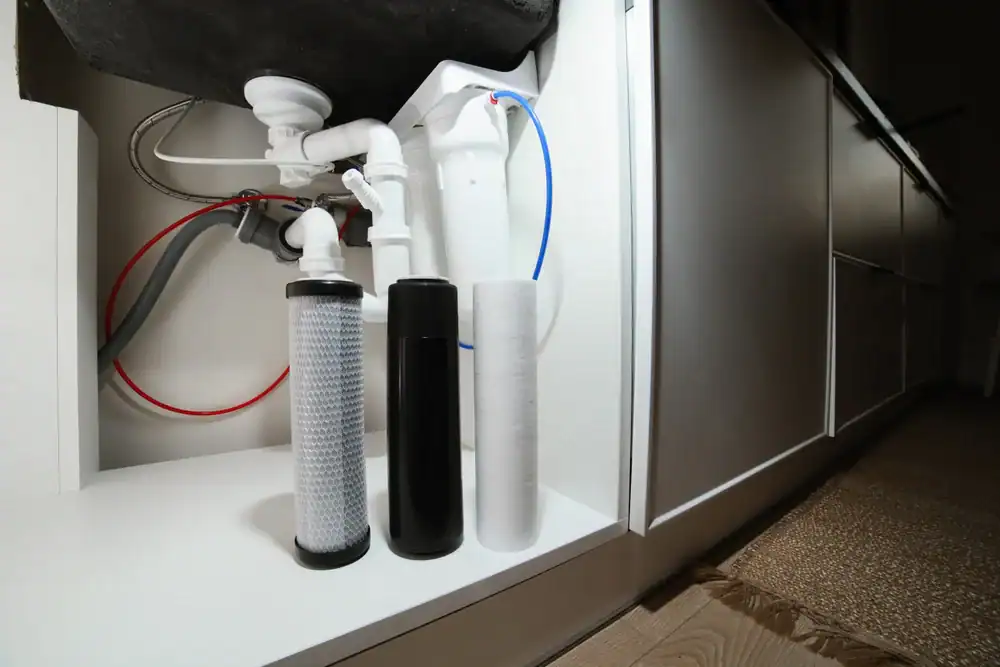
A salt-free conditioner simplifies that considerably. The main upkeep task is replacing the pre-filter, which typically needs attention every six to twelve months depending on your water quality and household usage. The conditioning media itself — the component that does the actual work — generally lasts several years before it needs replacement. There’s no brine tank to clean, no salt to add, and no regeneration cycle to monitor.
For homeowners who travel, spend part of the year elsewhere, or simply don’t want another maintenance task on the list, this is a real advantage. A traditional softener left idle for several months — common among Lake County’s seasonal residents who head north for the summer — can develop salt mushing, resin fouling, and stagnation issues by the time they return in the fall. A salt-free system handles that kind of irregular usage far more gracefully.
The best system is the one that fits how you actually live in your home. That’s why we test your water first, ask about your household size and usage, and design something specific to your situation rather than defaulting to whatever’s easiest to sell.

When to Call Quality Safe Water of Florida LLC for Water Softener Repair in Lake County
If your system is under ten years old and showing a single, diagnosable issue, a repair is likely the right first step. If it’s older, breaking down repeatedly, or you’re facing a repair cost that approaches what a new system would run, it’s worth having an honest conversation about replacement — and about whether a salt-free conditioner might serve you better than a direct swap.
What you shouldn’t do is make that call without someone actually looking at your water. The symptoms that show up in Lake County homes — scale buildup, hard water feel, salt bridges, foul odors from well water — point in different directions depending on what’s actually in your water supply.
We’re based in Leesburg, serve homeowners throughout Lake County, and we’re open seven days a week. We’re members of the National Water Quality Association, carry an A-rating with the Better Business Bureau, and have zero complaints on record — because we’d rather give you an honest answer than a fast sale. If you’re trying to figure out whether to repair or replace, reach out to Quality Safe Water of Florida LLC and start with a free water analysis. It costs you nothing and gives you the information you actually need to decide.