Summary:
Most homeowners in the Brownwood area do not think much about their water until something forces the issue. Maybe it is a chalky film on the shower glass that will not scrub off. Maybe the morning coffee tastes like it was brewed straight from swimming pool water. Perhaps a plumber noticed heavy scale crusting inside the water heater, an appliance installed only four years ago.
Once you start paying attention, the evidence is difficult to ignore. A whole house water filter treats every drop of water entering your home before it reaches a single faucet, appliance, or showerhead. If you live in neighborhoods like Sanibel, Charlotte, Fernandina, or Gilchrist, this guide explains how treatment systems function, what local utility water contains, and how to select equipment that delivers long-term protection.
What A Whole House Water Filter Accomplishes For Your Home
A whole house water filter, often called a point-of-entry system, installs at your main shutoff where municipal lines enter the property. Everything downstream gets treated: the kitchen faucet, the bathroom sinks, the master shower, the washing machine, and the refrigerator ice maker.
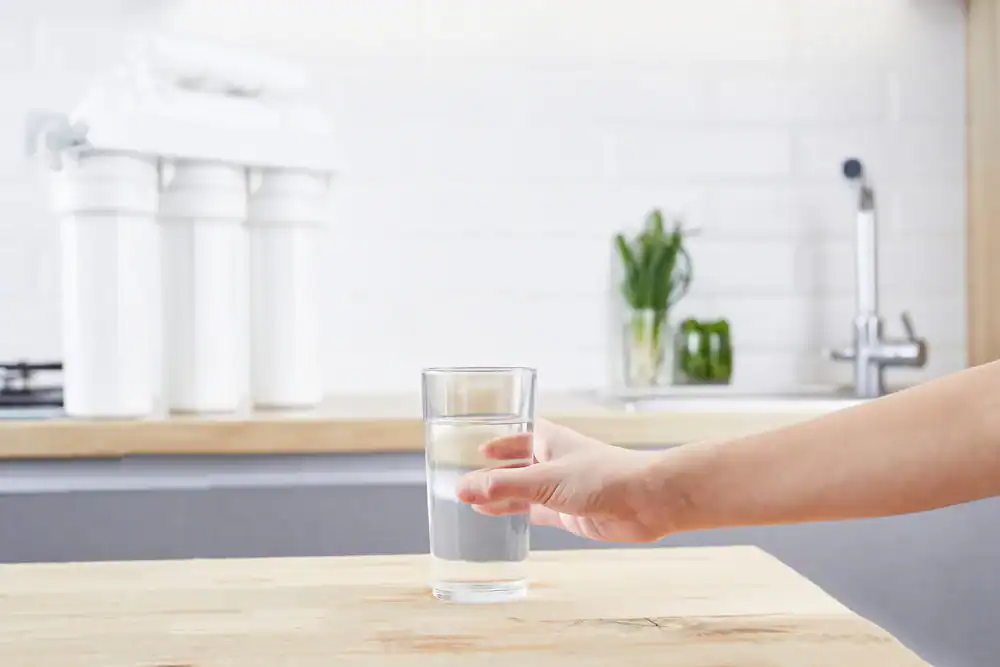
That whole-property coverage marks the core difference between comprehensive filtration and basic pitcher or under-sink units. Countertop and under-sink units only treat water at a single faucet. A whole house filter purifies the incoming supply right at the source. In the shower, you are not breathing in warm chlorine steam. Running the dishwasher will not leave baked-on mineral spots across your glassware, and your water heater is shielded from scale that steadily burns out heating elements.
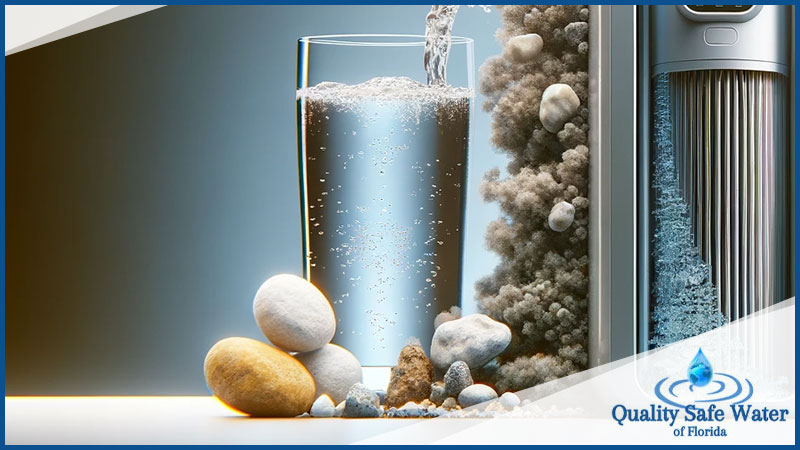
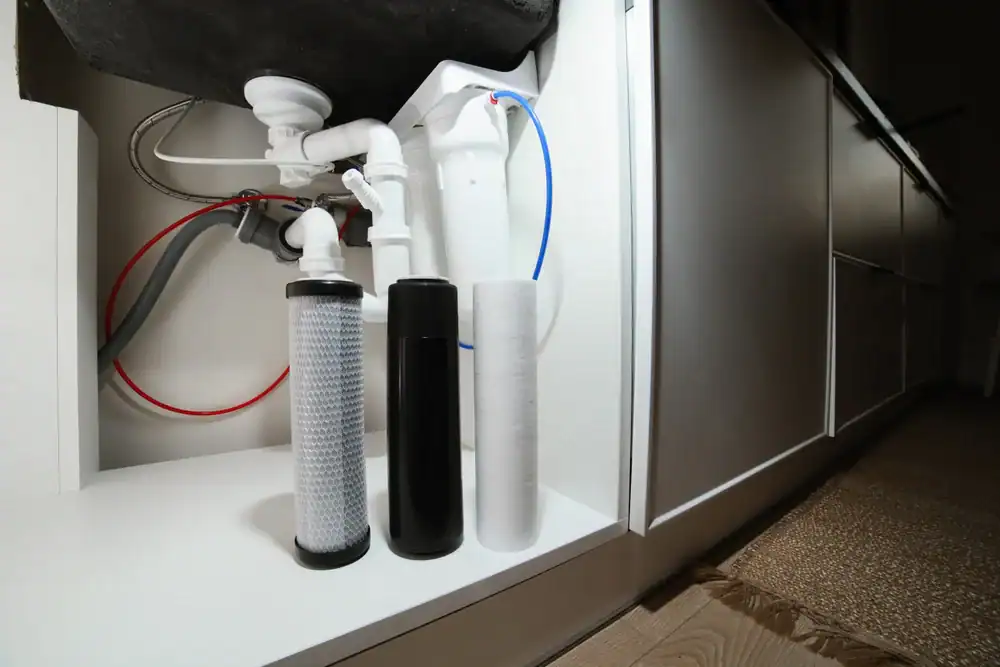
The complete system combines multiple targeted stages: sediment pre-filtration to capture grit, catalytic activated carbon to strip out chlorine, chloramines, and organic compounds, and specialized media beds chosen according to your water test results. The ideal setup reflects the specific chemistry flowing through your street.
What Exists In The Water Supply South Of CR 466A?
This is where local water profiles get specific, and where generic retail filters fail to keep up. The municipal utilities serving the Brownwood area, including Central Sumter Utility and South Sumter Utilities, draw groundwater directly from the Floridan Aquifer. This underground limestone network naturally dissolves high levels of calcium and magnesium into the water supply. It is not an unexpected utility malfunction; it is a permanent geological reality.
The Consumer Confidence Report for the Village Center Service Area records local water hardness at 153 mg/L. By water quality standards, anything above 120 mg/L ranks as very hard. That mineral density does not just degrade taste; it builds thick limescale inside water heaters, dishwashers, coffee makers, and washing machines, steadily driving down operational efficiency and shortening appliance lifespans.
For homeowners in Pinellas, Collier, Collier at Antrim Dells, and Collier at Alden Bungalows who have invested in quality kitchens and fixtures, hard water represents a tangible financial loss. Beyond hardness minerals, regional testing documents the presence of total trihalomethanes (TTHMs), chemical byproducts generated when municipal chlorine disinfectant interacts with organic matter in distribution pipes. While TTHM levels sit within federal regulatory bounds, legal thresholds are not always identical to optimal wellness standards.
Utility reports for the area also reveal detectable trace concentrations of arsenic, hexavalent chromium, nitrates, barium, fluoride, and selenium. While every reading falls inside EPA allowances, health-conscious homeowners often look beyond basic regulatory minimums when choosing what comes out of their taps.
These facts are not shared to provoke alarm. Local utility providers operate responsibly under state guidelines. What the data does confirm is that homeowners in Hillsborough, Lake Deaton, Dunedin, and LaBelle have documented, measurable reasons to upgrade their water treatment rather than relying on guesswork.
Water Softener vs. Whole House Filter: Which One Do You Need?
Homeowners across Sumter County often mix up water softeners and filtration systems, so clarifying the distinction helps ensure you buy the right equipment. A water softener and a whole house filter address completely different water quality issues.
A water softener specifically targets hardness minerals through ion exchange. Mineral-heavy water passes through an internal resin bed where calcium and magnesium ions bind to tiny beads, releasing negligible sodium ions in their place. The outcome is soft water that stops scale formation on fixtures and plumbing elements. Conventional salt-based units perform reliably, though they introduce modest trace sodium to household taps, an important detail for residents monitoring sodium intake or heart health.
Salt-free conditioning provides an alternate route. Rather than pulling minerals out through chemical exchange, salt-free units restructure calcium and magnesium using template-assisted crystallization, preventing them from bonding to surfaces. The minerals flow down the drain without encrusting pipes, requiring no salt additions, electrical hookups, or wastewater discharge.
A whole house filter handles an entirely separate set of concerns: chlorine disinfectants, chloramines, particulate sediment, chemical vapors, and disinfection byproducts like TTHMs that water softeners cannot remove. In communities like Osceola Hills and Osceola Hills at Soaring Eagle Preserve, pairing scale conditioning with carbon-based filtration creates a complete barrier against both mineral accumulation and chemical contaminants.
Finding the right approach comes down to your home’s incoming water chemistry. A thorough on-site water test pinpoints precisely what is entering your home, allowing you to choose equipment based on verified numbers rather than broad assumptions.

How We Help Sumter County Homeowners Choose The Right System
The engineering behind the hardware is critical, but the dependability of the installation crew matters just as much. The water treatment sector has developed an unfortunate reputation for high-pressure sales outfits that install a system, collect payment, and stop answering phone calls when maintenance is required. That experience is a major worry for homeowners who want clean water without having to service complicated valves on their own.
Before signing an installation quote, verify a few baseline credentials. Check if the business holds a clean Better Business Bureau profile with zero outstanding complaints. Find out if they maintain active standing in the National Water Quality Association, which sets strict technical and ethical criteria for installers. Ensure they perform a comprehensive on-site test before pitching hardware, instead of quoting standardized units out of the catalog.
At Quality Safe Water of Florida LLC, we maintain a flawless zero-complaint history with the Better Business Bureau. Asking direct questions about long-term service and technician credentials ensures you get an installation backed by professional accountability.
Why The Test-First Approach Matters
Too many water treatment interactions begin with a salesperson running an exaggerated chemical demonstration at your kitchen sink, attempting to scare you into buying an expensive pre-packaged unit. That high-pressure tactic explains why so many homeowners view water companies with skepticism.
Our team takes a completely different path. We test the water at your home first, delivering an honest, detailed breakdown of your mineral levels and chemical markers before suggesting any equipment. We never push generic inventory sitting in our warehouse; every configuration matches your household size, plumbing layout, and daily water consumption.
For properties south of CR 466A, a diagnostic test typically confirms elevated mineral hardness along with trace chlorine and TTHMs from the municipal line. Neighborhoods throughout Brownwood, Fenney, and Eastport share the same regional aquifer, yet individual utility lines and pressure zones produce slight variations from one development to the next.
We offer an in-home water analysis completely free of charge, with zero sales pressure to buy equipment, giving you the objective data you need to decide what makes sense for your property.
Questions Sumter County Homeowners Ask Us Most
Residents frequently ask if our local water differs significantly from the rest of Florida. The answer is consistent across the region: the Floridan Aquifer creates mineral-heavy groundwater everywhere it runs. Documented utility data showing 153 mg/L hardness combined with chemical disinfection byproducts places southern Sumter County in a position where whole-home filtration provides clear, immediate value.
Homeowners also worry about potential pressure drops after installation. A correctly sized system matched to your home’s peak flow rate will never create a noticeable drop in shower pressure or faucet volume. Pressure issues only arise when cut-rate companies install undersized units to widen profit margins, highlighting the value of careful sizing calculations prior to installation.
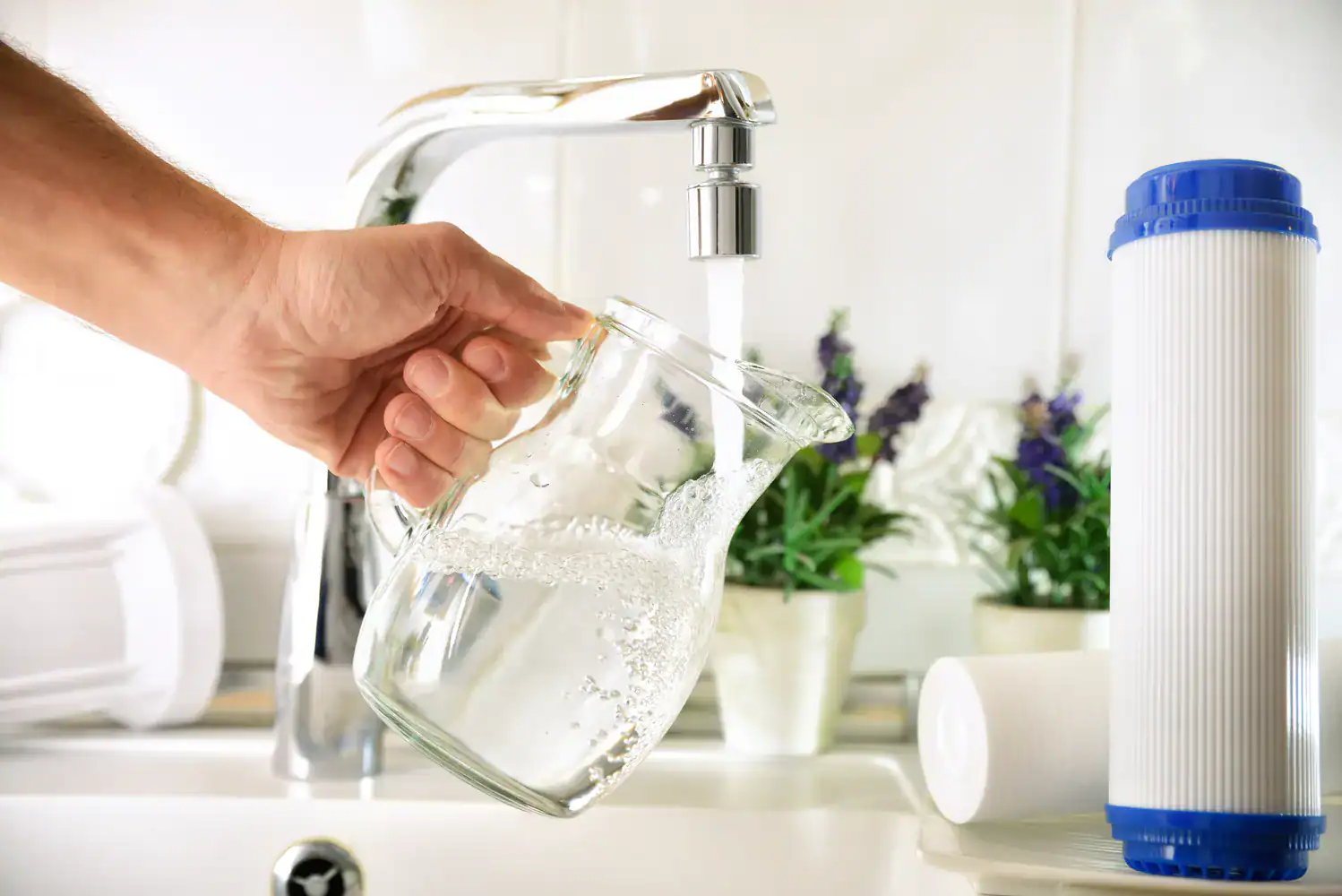
Ongoing maintenance costs represent another frequent consideration. Filtration systems require periodic media or cartridge replacements depending on incoming water conditions, while salt-based softeners need salt replenishment. Salt-free systems run with far less hands-on upkeep. We review all maintenance cycles and filter expenses upfront so you know exactly what ownership involves over the coming years.
Neighbors also regularly ask about community discounts. We provide a $500 discount on qualifying complete systems for active-duty military, veterans, and first responders in honor of their dedication to our communities. We also take pride in supporting the Tunnel to Towers Foundation and their work delivering mortgage-free homes to America’s fallen heroes and Gold Star families.
Ready To Find The Right Water Filter For Your Home In Sumter County?
The municipal supply entering your home south of CR 466A meets basic regulatory standards, but persistent mineral hardness, chlorine odors, and chemical disinfection byproducts continue to shorten appliance lifespans and affect everyday tap water. Installing a custom-fit whole house filtration system removes these impurities right at the property line, protecting your plumbing and providing clean, crisp water throughout the entire house. Contact Quality Safe Water of Florida LLC today to schedule your free in-home water analysis and start enjoying cleaner, fresher water in your home.