Summary:
If your tap water tastes off, leaves white spots on your dishes, or makes you reach for a bottled water out of habit, you’ve probably started looking into under-sink filters. They’re compact, they’re popular, and they sound like exactly what you need. And sometimes, they are. But if you’re in Lake County — Leesburg, Clermont, Eustis, Mount Dora, Lady Lake — your water has some specific characteristics that change the equation. Before you buy anything, it’s worth understanding what an under-sink system actually does, where it stops, and what else might be going on in your pipes.
What Is an Under-Sink Water Filter and How Does It Work?
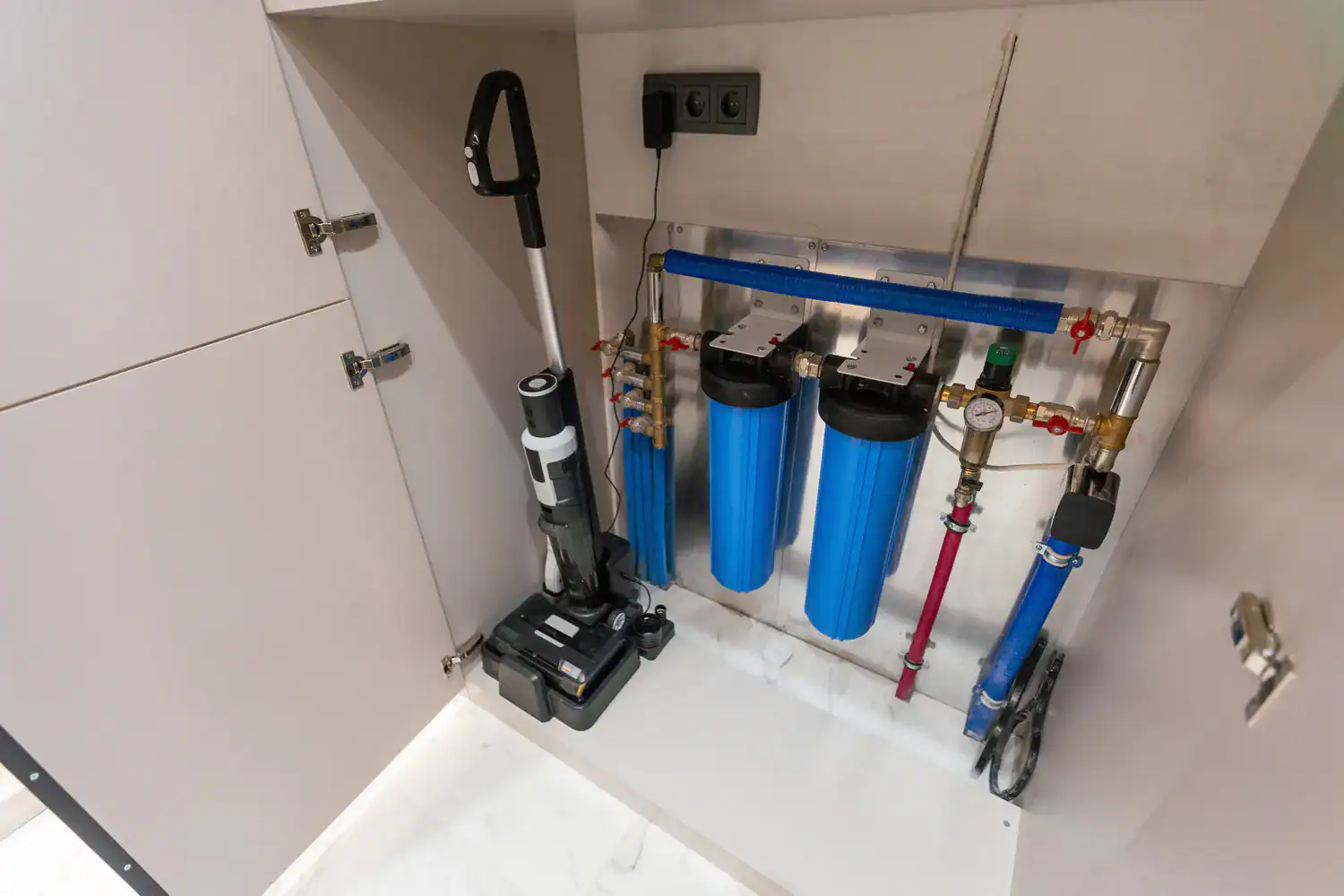
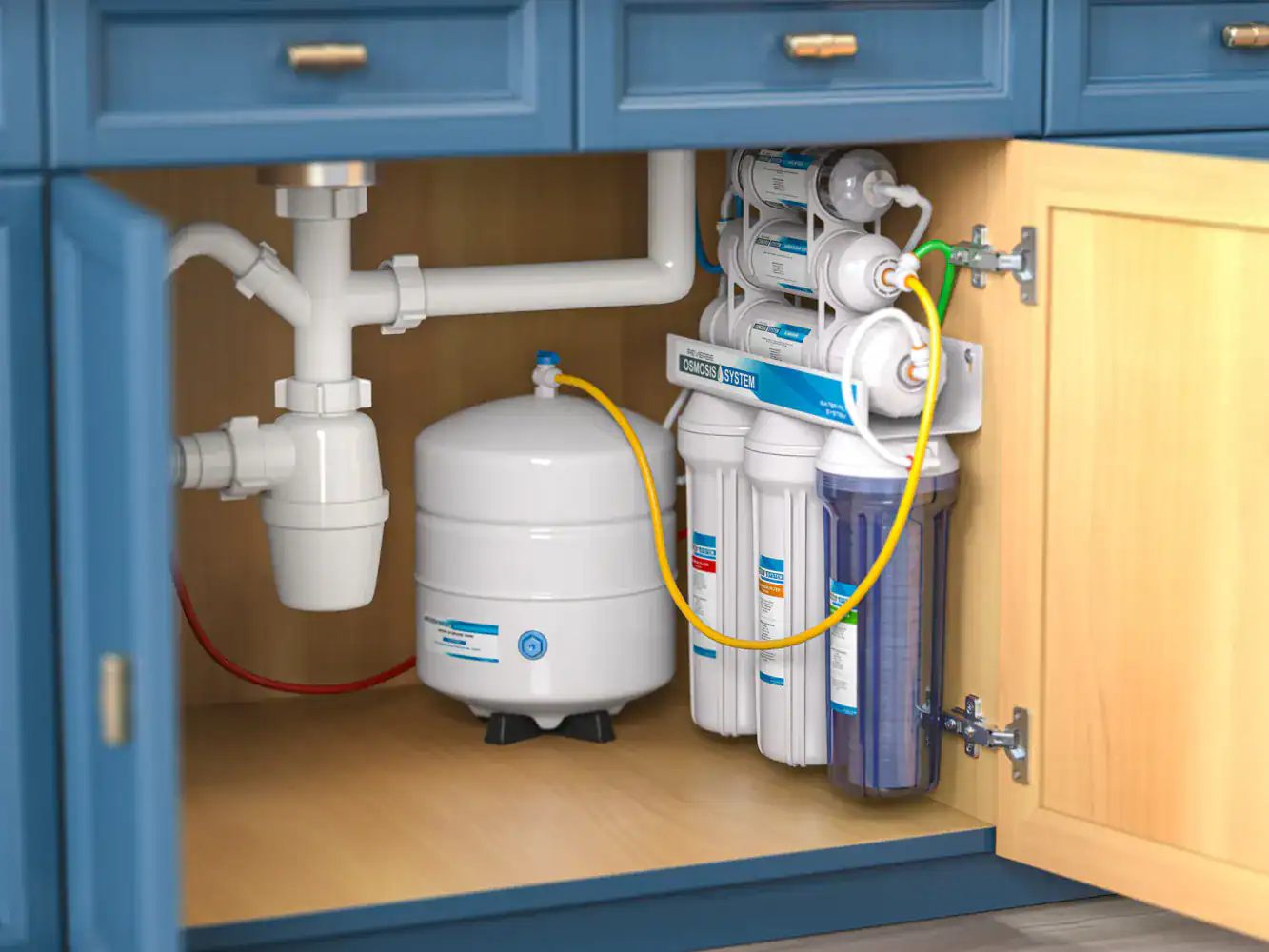
An under-sink water filter installs directly on your cold water line beneath the kitchen sink. It intercepts the water before it reaches your faucet — running it through one or more filter stages — and delivers the treated water through either your existing faucet or a dedicated drinking water tap mounted on the counter.
Most standard under-sink systems use carbon-based filtration to reduce chlorine, sediment, and the compounds that cause taste and odor problems. They’re a step up from pitcher filters and refrigerator filters, which use smaller cartridges and have limited contact time with the water. Under-sink systems are larger, more effective, and designed to handle the volume a household actually uses for drinking and cooking.
Carbon Filtration vs. Reverse Osmosis: Which Under-Sink System Do You Actually Need?
This is where most buyers get tripped up, because “under-sink filter” covers a wide range of technology. A basic carbon filter and a reverse osmosis system are both installed under the sink — but they do very different things.
A carbon filter is good at improving taste and odor. It reduces chlorine and some sediment. For water that just doesn’t taste great, it can make a noticeable difference. But it has limits. It won’t remove dissolved minerals like calcium and magnesium — the ones responsible for hard water scale. It won’t remove fluoride. It won’t touch dissolved heavy metals at meaningful levels, and it won’t address PFAS, the class of synthetic chemicals that have been turning up in Florida groundwater and making headlines in recent years.
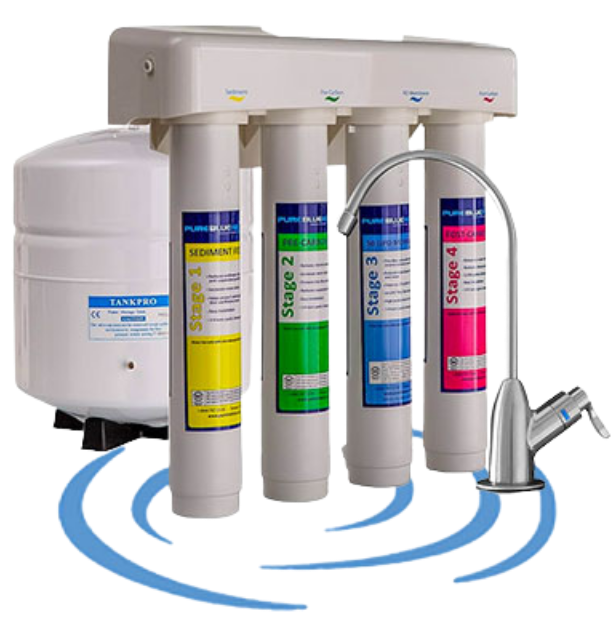
A reverse osmosis system — also installed under the sink, but with more filter stages and a semi-permeable membrane — operates at a fundamentally different level. It removes up to 99% of dissolved contaminants, including the minerals, fluoride, trace heavy metals, and PFAS that carbon alone can’t catch. It’s also the right call for homes dealing with chloramines, which many Florida municipalities use instead of or in addition to free chlorine. Chloramines are harder to remove, and a standard carbon filter won’t do it reliably.
For most Lake County homes pulling from the Floridan Aquifer — which delivers water with hardness levels that often exceed 20 grains per gallon, well past the threshold considered “very hard” — a reverse osmosis system isn’t an upgrade from a carbon filter. It’s a different category of solution. The water coming into your home carries dissolved minerals from millions of years of limestone geology. Carbon filtration improves the taste. RO actually removes what’s causing the problem.
One more thing worth knowing: under-sink RO systems produce filtered water on demand and store it in a small tank beneath the sink. They’re quiet, out of sight, and low-maintenance. Filter stages typically need changing every three to six months for sediment pre-filters, with carbon stages running six to twelve months and the RO membrane itself lasting two to three years. We handle all of that — so you’re not tracking it yourself.
What an Under-Sink System Doesn't Protect — and Why That Matters in Lake County
Here’s the honest part that most filter companies skip: an under-sink system only treats the water coming out of one faucet. That’s it. Every other faucet in your home, every shower, every appliance, every load of laundry — that water goes untreated.
For some households, that’s fine. If your main concern is the water you drink and cook with, and your water is otherwise manageable, a point-of-use system at the kitchen sink may genuinely be the right answer. But in Lake County, where hard water is the norm rather than the exception, limiting treatment to the kitchen tap means the rest of your home is still running on water that’s 20-plus grains per gallon of hardness. That’s the water running through your water heater, your dishwasher, your washing machine, and your shower fixtures.
Hard water doesn’t just affect taste. It builds up scale inside appliances and pipes, shortens the lifespan of water heaters and washing machines, leaves film on glass shower doors, and makes soap and shampoo less effective. An under-sink filter — even a very good one — doesn’t address any of that. It protects the glass of water you pour. It doesn’t protect the infrastructure of your home.
This is why we always start with a free water analysis before recommending anything. Not because we want to upsell you. Because the right answer genuinely depends on what’s in your water and how your household uses it. Some homes need a point-of-use RO system at the kitchen sink and nothing else. Others need a whole-house solution that treats every water source from the main line in. Many need both — an RO system for drinking water purity, and a softener or whole-house filter for everything else. We won’t know until we test.
The Floridan Aquifer serves the vast majority of Lake County’s municipal water supply — Leesburg, Tavares, Eustis, Clermont, and surrounding communities all draw from it. The limestone geology that makes this part of Florida so beautiful — all 1,400 of those lakes — is the same geology that saturates the groundwater with calcium and magnesium. That’s not something a single under-sink carbon filter was designed to solve. Knowing that going in saves you from buying the wrong thing twice.

Under-Sink Reverse Osmosis Systems: What to Look for Before You Buy
If you’ve decided an under-sink RO system is the right fit, the next question is how to tell a quality system from a mediocre one — because the marketing on this category is aggressive and the claims are often identical regardless of what’s actually inside the unit.
The most reliable thing to look for is NSF certification. NSF/ANSI 58 is the specific standard for reverse osmosis systems — it tests both the performance of the system and the safety of its materials. A system certified to NSF/ANSI 58 has been independently verified to do what it says. A system that’s merely “designed to NSF standards” or “tested in-house” has not. That distinction matters more than the brand name on the box.
How to Evaluate an Under-Sink Water Filter Installation Company in Lake County
The system itself is only part of the equation. Who installs it — and what happens after — matters just as much.
The water treatment industry has a well-documented problem with high-pressure in-home sales, misleading water test demonstrations, and companies that disappear once the check clears. It’s not universal, but it’s common enough that most homeowners who’ve been in this market for a while have a story. Someone came out, put drops in a glass, the water turned a dramatic color, and suddenly they were signing paperwork for a system they didn’t fully understand. Then the filter needed service and nobody answered the phone.
We’re members of the National Water Quality Association, which sets professional standards for this industry and requires ongoing accountability from its members. We install only NSF-certified components — not because it’s a good marketing line, but because it’s the only way to know the equipment actually does what we say it does. And we service what we sell, including systems installed by other companies. Culligan, Kinetico, Leaf — if you have a system that needs service, we’ll show up.
That last part matters more than it sounds. There are companies in this market that sell systems and then make it very difficult to get them serviced. We’ve heard from enough Lake County homeowners who found that out the hard way. Part of what we do is clean up those situations — test the water, assess what’s there, and either service the existing system or help the homeowner understand their options without pressure.
We also carry our A-rating from the Better Business Bureau with zero complaints on record, which we mention not to brag but because it’s genuinely uncommon in this industry. If you’re comparing companies and trying to figure out who to trust, that’s a useful data point. So is the fact that we’ve been doing this for more than 50 years and we’re headquartered right here in Leesburg — not a regional office of a national brand, but a local company that’s been working with Florida water specifically for a long time.
Frequently Asked Questions About Under-Sink Water Filtration in Lake County
**Does an under-sink water filter remove hard water minerals?** A standard carbon under-sink filter does not remove dissolved minerals like calcium and magnesium — the ones responsible for hard water. A reverse osmosis system does. If hard water is your primary concern in Lake County, an RO system is the right choice at the sink. For whole-home protection, a water softener or whole-house treatment system handles what an under-sink system can’t reach.
**Is a water filter for the sink enough if I’m on Lake County municipal water?** It depends on what you’re trying to solve. Municipal water from Lake County utilities meets legal safety standards, but “meets legal minimums” isn’t the same as “ideal for drinking and cooking.” The Floridan Aquifer water that most of Lake County draws from is very high in dissolved minerals, and many utilities use chloramines for disinfection — which standard carbon filters don’t fully remove. An under-sink RO system handles both. Whether that’s all you need depends on a water test, not a guess.
**How often do I need to replace the filters?** Sediment pre-filters typically need changing every three to six months. Carbon stages run six to twelve months. The RO membrane itself generally lasts two to three years. We track this for our customers so you don’t have to — and we service all major brands, so even if we didn’t install your system, we can maintain it.
**Does an under-sink RO system remove PFAS?** Yes. Reverse osmosis is one of the most effective methods for removing PFAS — the synthetic compounds sometimes called “forever chemicals” — from drinking water. Most quality under-sink RO systems certified to NSF/ANSI 58 are verified to reduce PFAS to non-detectable levels. If PFAS is a specific concern, look for that certification explicitly rather than relying on general marketing claims.
**What’s the difference between an under-sink filter and a whole-house system?** An under-sink filter treats water at one point of use — typically the kitchen faucet. A whole-house system treats every water source in your home from the main line in: every faucet, every shower, every appliance. For Lake County homes dealing with hard water throughout the house — scale in the water heater, film on the shower, spotting on dishes — a whole-house approach addresses the full problem. Many homeowners use both: a whole-house softener or filter for the infrastructure, and an under-sink RO system for the highest-purity drinking and cooking water.

So Is an Under-Sink Water Filtration System the Right Call for Your Lake County Home?
Sometimes, yes. Sometimes it’s the starting point. And sometimes your home needs more than one faucet’s worth of protection. The honest answer depends on what’s actually in your water — and that’s not something you can determine from a label or a general guide written for a national audience.
Lake County’s water has specific characteristics. The Floridan Aquifer’s mineral load, the disinfection methods local utilities use, the seasonal variation — these aren’t details you can assume away. A water analysis gives you a real picture of what you’re dealing with, and a real recommendation based on that picture rather than whatever happens to be on sale.
If you’re ready to stop guessing, Quality Safe Water of Florida LLC offers a free water analysis with no pressure and no obligation. We test first, then talk through what the results mean and what your options are. That’s where every conversation starts — and it’s the only way to make sure whatever you invest in actually works.