Summary:
You turned on the tap, and something was off — a chemical smell, a flat taste, maybe an orange ring forming around the drain. So you started researching filters, and now you’re three tabs deep trying to figure out whether a countertop reverse osmosis system is actually worth it, or if the faucet attachment you saw at the hardware store would do the same thing for a fraction of the cost.
Here’s the honest answer: they’re not the same, and the difference matters — especially in Lake County, FL. We’ve been helping homeowners and renters here find the right filtration for over 50 years, and we’ve seen exactly which systems solve real problems and which ones fall short. Let’s walk through what each format actually does, where it earns its place, and where it doesn’t.
Water Filter for Sink Faucet: What a Basic Faucet Filter Actually Does
Faucet-mounted filters are the easiest entry point — you screw one onto your existing tap, and you’re done in five minutes. They use activated carbon to reduce chlorine, improve taste, and cut down on odor. For a lot of people, that’s enough to make tap water noticeably more drinkable.
But there’s a ceiling to what they can do. Most faucet filters are certified to NSF/ANSI 42, which covers aesthetic improvements only — chlorine, taste, and odor. That’s it. They don’t remove lead, fluoride, nitrates, arsenic, dissolved minerals, or the kind of heavy metals that don’t have a taste or smell but are worth keeping out of your glass.
If you’re on municipal water in Leesburg or Tavares and your only complaint is a faint chlorine smell, a faucet filter might genuinely be all you need. But if your water is leaving scale on your kettle, staining your sink orange, or you have any concern about what’s actually dissolved in it — a faucet filter isn’t going to get there.
What Does NSF 42 vs. NSF 58 Actually Mean for Your Water?
When you’re shopping for any water filter, certification labels tell you more than brand names do. NSF/ANSI 42 is the standard for aesthetic improvement — it verifies that a filter reduces chlorine, taste, and odor. It’s a legitimate certification, and filters that carry it do what they claim. But it says nothing about what else is in your water.
NSF/ANSI 58 is the certification specifically for reverse osmosis systems. To earn it, a system has to demonstrate that it removes total dissolved solids — the minerals, salts, metals, and other compounds that are dissolved in your water and invisible to the eye. The best NSF 58-certified systems also remove fluoride, arsenic, nitrates, hexavalent chromium, and cysts. That’s a fundamentally different level of filtration.
This matters in Lake County because the water here doesn’t come from a mountain spring — it comes from the Floridan Aquifer, a vast limestone formation running beneath Central Florida. Limestone geology means the water naturally picks up calcium, magnesium, iron, and other dissolved minerals before it ever reaches your tap. A carbon faucet filter will make that water taste better. An osmosis water filter certified to NSF 58 will actually strip out what’s dissolved in it.
The distinction isn’t about brand loyalty or upselling. It’s about knowing what tool solves what problem. If your concern is taste, NSF 42 works. If your concern is what you can’t taste or see — lead, nitrates, dissolved solids from a limestone aquifer — you need NSF 58, and that means reverse osmosis.
Is a Countertop Reverse Osmosis System Right for Lake County Renters and Seasonal Residents?
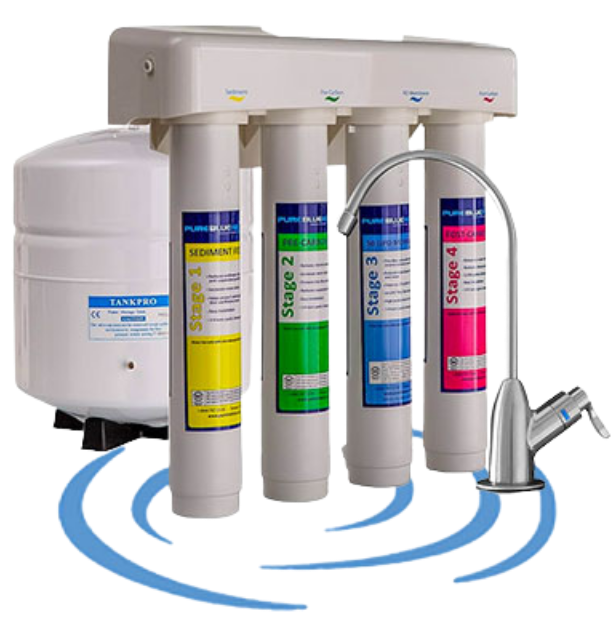
This is where countertop reverse osmosis earns its place. A countertop RO unit connects to your existing faucet via a diverter valve — no drilling, no plumbing modification, no landlord conversation required. Setup typically takes less than five minutes. When you move, it comes with you.
For renters in Mount Dora or Clermont, condo owners near Lady Lake, or snowbirds who spend October through April in their Lake County home before heading north for the summer, a countertop RO system is a genuinely practical solution. You get real reverse osmosis filtration — not just carbon — without touching the plumbing. That’s a meaningful upgrade over a faucet filter, and it’s portable in a way that an under-sink system simply isn’t.
The trade-off is real, though, and it’s worth being honest about. Countertop RO units take up counter space, and they have a lower daily production capacity than under-sink systems. Some require manual refilling if they’re not connected to a direct line. For a single person or a couple, that’s usually fine. For a family of four in a full-time home who runs the dishwasher, fills water bottles, and cooks with filtered water daily, the countertop format can become a bottleneck.
There’s also a longer-term consideration. Many people who start with a countertop RO system — especially renters who eventually buy a home — end up upgrading to an under-sink setup once they have the option. That upgrade makes sense, and it’s not a failure of the countertop unit. It just means the countertop format is the right tool for a specific season of life, not necessarily a permanent solution for a full-time homeowner.
Best Under-Sink Water Filter: Why Homeowners Choose Under-Sink RO Systems
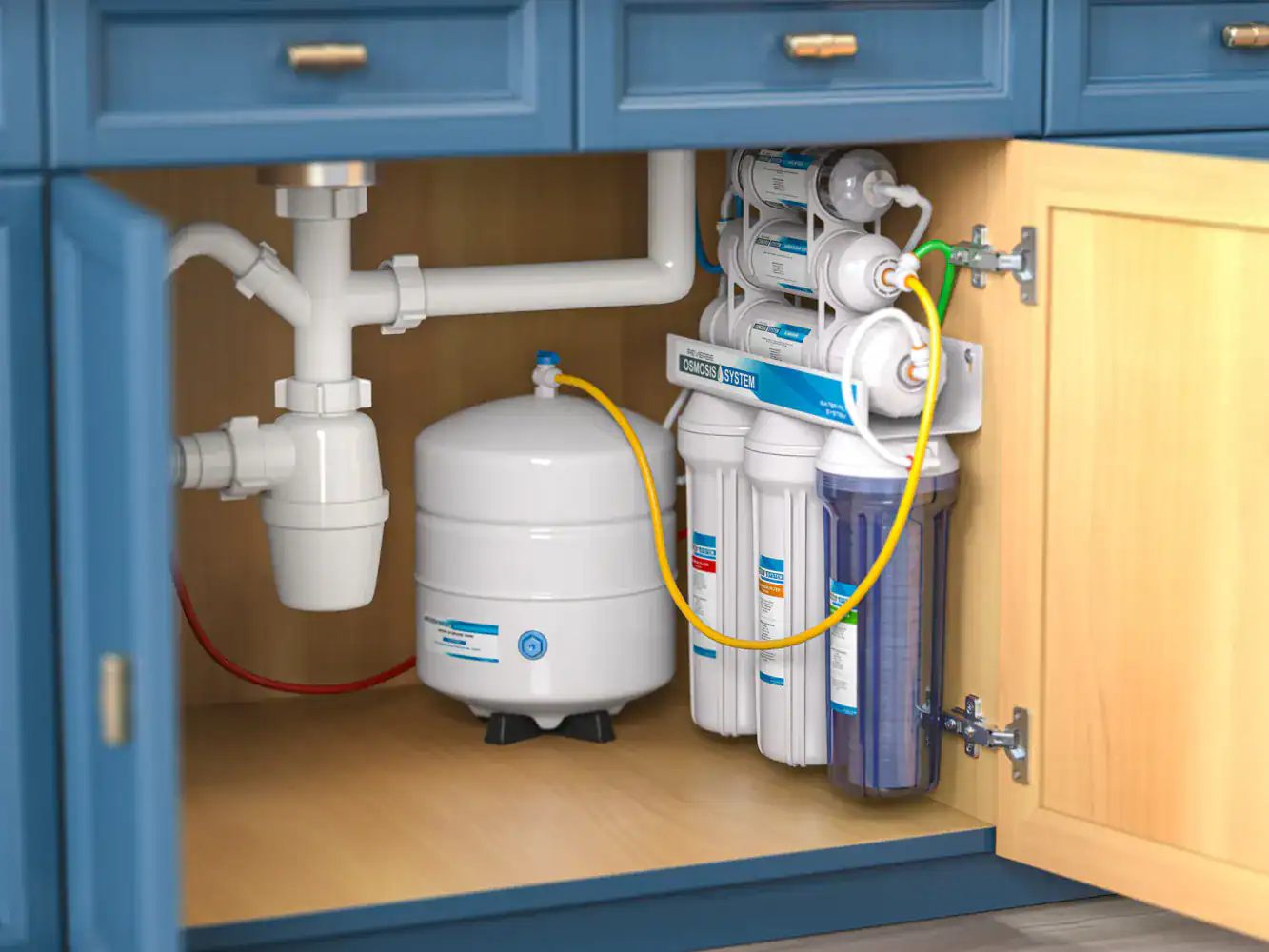
Under-sink reverse osmosis systems are installed beneath the kitchen sink, connected directly to the cold water line, and dispense purified water through a dedicated faucet. There’s no counter space lost, no manual refilling, and no waiting — you turn the faucet on and purified water comes out.
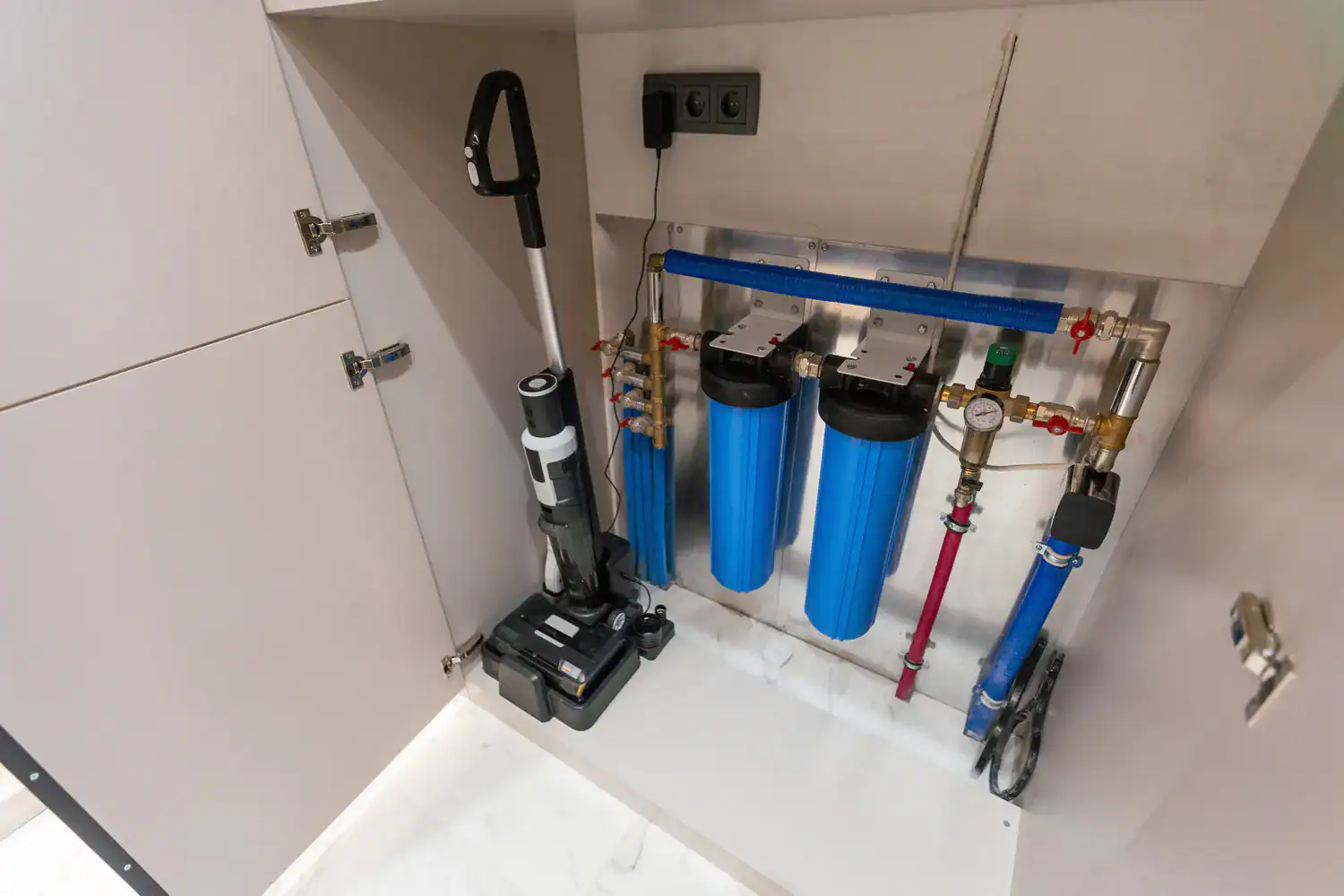
For homeowners in Lake County dealing with hard water, iron staining, elevated TDS from the limestone aquifer, or just the general reality of Florida water, an under-sink RO system is the most thorough point-of-use solution available. Multi-stage filtration — sediment pre-filter, carbon filter, RO membrane, and post-filter — works together to remove the full range of what a faucet filter and even a countertop RO unit might miss or handle less efficiently at volume.
How Does an Under-Sink Reverse Osmosis System Handle Lake County's Hard Water?
Lake County’s water has a reputation among locals, and it’s earned. The orange staining on sink basins, the white scale on showerheads, the dry skin after a shower — these aren’t just cosmetic annoyances. They’re signs that your water is carrying a significant mineral load, and that load affects everything it touches: your appliances, your plumbing, your coffee, your skin.
The Floridan Aquifer delivers naturally hard water to most of Central Florida, and Lake County — sitting on top of it with over 1,400 lakes fed by the same groundwater system — sees some of the most mineral-dense water in the region. Iron is a particular issue here. We’ve seen Leesburg homeowners deal with the high mineral content characteristic of Lake County water, including iron causing unsightly orange staining. That’s not a marketing line — it’s what we actually service every day.
An under-sink RO system addresses this at the point of use. The RO membrane filters out dissolved minerals, reducing total dissolved solids by around 97%. Pre-filters catch sediment and chlorine before the water reaches the membrane, which extends the membrane’s life and keeps the system running efficiently. Post-filters polish the water before it comes out of the dedicated faucet.
One thing worth knowing: Florida’s mineral-rich water means your filters will work harder than they would in a lower-TDS environment. RO membranes typically last two to three years; pre-filters and post-filters need replacement every six to twelve months. In Lake County, that maintenance schedule is worth taking seriously — a neglected filter isn’t protecting you the way a fresh one does. We service every brand we install, and we handle that schedule so you don’t have to think about it.
Water Filters for Kitchen Sink: Comparing All Three Formats Side by Side
If you’re still deciding which direction to go, here’s how the three formats actually stack up when you put them next to each other in the context of a real Lake County household.
A faucet filter is the simplest option — affordable, easy to install, and effective at improving taste and reducing chlorine. It’s NSF 42 certified, which means it handles aesthetic issues well. It doesn’t remove dissolved solids, lead, fluoride, or nitrates. It’s a reasonable starting point if taste is your only concern and your water source is municipal. It’s not the right tool if you’re on a private well, if you have elevated iron, or if you want the level of filtration that reverse osmosis actually provides.
A countertop reverse osmosis system is a genuine osmosis water filter — it uses the same semi-permeable membrane technology as an under-sink system and carries NSF 58 certification. The difference is form factor. It sits on your counter, connects to your faucet via a diverter valve, and can be unplugged and moved. It’s the right answer for renters, snowbirds, and anyone who can’t or won’t modify their plumbing. The trade-off is counter space and daily production limits — for a family using filtered water throughout the day, it can feel like it’s always running behind.
An under-sink RO system is the permanent, high-volume solution for homeowners. It’s out of sight, connected directly to the cold water line, and dispenses on demand through a dedicated faucet. There’s no counter footprint, no manual process, and no production ceiling that a family of four is likely to hit in normal use. It’s more involved to install — which is exactly why professional installation matters. A properly installed system, sized and configured for your household’s actual water and usage, performs completely differently from a generic unit dropped in without a water analysis first.
That last point is worth sitting with. Lake County water isn’t the same as water in other states, and it isn’t even uniform across the county — well water in rural Groveland carries different concerns than municipal water in Leesburg. A free in-home water analysis tells you what’s actually in your water, which is the only reliable way to know which system — and which configuration — is actually right for you.
Which Water Filter Is Right for Your Lake County Home?
The honest answer is that it depends — on whether you own or rent, on what’s actually in your water, and on how much filtered water your household goes through in a day. A faucet filter is a reasonable starting point for taste and odor. A countertop reverse osmosis system is a real upgrade and a smart move for anyone who can’t modify their plumbing. An under-sink RO system is the most complete point-of-use solution for homeowners who want purified water on demand without giving up counter space.
What none of those options replace is knowing what you’re actually dealing with. Lake County water — drawn from a limestone aquifer, often carrying iron, hardness, and dissolved minerals that most filters weren’t designed to handle at this concentration — deserves more than a generic answer from a product listing.
If you’re ready to find out what’s in your water and which system is actually built for it, we offer a free in-home water analysis with no obligation. We’ve been doing this for over 50 years, we’re open seven days a week, and we service every brand — including whatever you might already have installed. Reach out and we’ll start there.