Summary:
The white spots on your dishes won’t wipe away easily. Your soap barely lathers in the shower. Crusty mineral deposits keep building up around your faucets no matter how often you clean. With Marion County, FL water testing around 180 ppm hardness—classified as “Hard” water—these problems aren’t going away on their own. You’re researching solutions, and “salt-free water softener” keeps appearing in your search results. Here’s what most homeowners don’t realize until after they buy: salt-free systems use completely different technologies that work in fundamentally different ways. Some crystallize minerals. Others use electromagnetic fields. A few rely on catalytic media. Each approach delivers different results, has distinct limitations, and works best for specific applications. Let’s break down what these technologies actually do—and help you figure out which solution makes sense for your home and water conditions.
How Salt-Free Water Softener Systems Actually Work
Here’s the biggest misconception to clear up first: salt-free systems don’t actually soften water. They condition it. That’s not marketing language—it’s a fundamental difference in how these systems function compared to traditional salt-based water softeners.
A traditional water softener removes calcium and magnesium from your water through ion exchange. Those hardness minerals are physically extracted and replaced with sodium ions. A salt-free system leaves those minerals in your water but alters how they behave. The calcium and magnesium stay in your water, but they’re transformed into a form that’s less likely to stick to your pipes, appliances, and fixtures.
This distinction directly affects what results you should expect. If you want that slippery feel of truly soft water, spot-free dishes without any wiping, or soap that lathers easily, a salt-free system won’t deliver those outcomes. What it will do is reduce scale buildup, make existing mineral deposits easier to remove, and eliminate the need for salt purchases, electricity usage, and wastewater discharge that traditional softeners require.
Template Assisted Crystallization (TAC) Technology
Template Assisted Crystallization—commonly called TAC—is the most widely used technology in salt-free water conditioners, and there’s solid reasoning behind its popularity. The technology has been field-tested long enough to demonstrate consistent performance, and the science supporting it is straightforward and verifiable.
Here’s the mechanism: Your water flows through a tank filled with specialized polymer beads covered in microscopic craters called nucleation sites. When calcium and magnesium ions in your hard water contact these nucleation sites, they begin forming tiny crystals right on the bead surface. As these crystals grow larger, they eventually break off from the beads and flow through your plumbing system as suspended microscopic particles rather than dissolved minerals.
Because the hardness minerals are now in crystallized form instead of dissolved ionic form, they can’t bond to surfaces and create the chalky scale buildup that damages water heaters, clogs pipes, and leaves white residue on fixtures. The crystals just flow past your pipes, heating elements, and appliance components without sticking. Your water still contains the same total amount of calcium and magnesium—you’re just receiving it in a different physical form that won’t cause buildup problems.
TAC systems perform best with moderate hardness levels. Marion County, FL water at 10.5 grains per gallon falls well within TAC’s effective range. However, if you’re drawing from a private well with significantly harder water—say 20 to 30 grains per gallon—or if your water contains iron above 0.3 parts per million, you might need pre-filtration or a different treatment approach entirely. Iron can foul TAC media and reduce its effectiveness over time.
The media itself has a finite lifespan that depends on your water chemistry and daily usage volume. Most TAC media requires replacement every three to six years. There’s no salt to purchase and add monthly, no regeneration cycles that waste water, and no electricity required, but that periodic media replacement represents a real cost to factor into your total ownership calculations.
One thing TAC categorically won’t do is give you that soft water feel on your skin. Your soap still won’t lather quite as abundantly as it would with ion-exchange softened water. You might still notice some light spotting on glassware fresh from the dishwasher, though the spots will wipe away more easily than with completely untreated hard water. For many Marion County, FL homeowners, that trade-off is acceptable to avoid the ongoing salt purchases, maintenance tasks, and wastewater concerns that come with traditional water softeners.
Electromagnetic Conditioning and Catalytic Media Systems
Electromagnetic water conditioners take a completely different approach to addressing hard water. Instead of media that water flows through, these systems wrap around your existing pipe and use electromagnetic or magnetic fields to alter the electrical charge and behavior of minerals in your water as it passes through.
The theory suggests that these electromagnetic fields change the charge of calcium and magnesium ions, preventing them from bonding together and forming scale deposits on surfaces. Installation couldn’t be simpler—you wrap coils around your existing pipe, plug the control unit into an electrical outlet, and you’re done. No plumbing modifications, no cutting into your water line, no bulky tanks consuming valuable floor space in your garage or utility room.
But here’s where you need realistic expectations and honest information. The effectiveness of electromagnetic systems is inconsistent across different installations, and the scientific evidence supporting their claims is limited and often contradictory. Multiple independent university studies—including research from Purdue University, Penn State, and the Army Corps of Engineers—have found minimal to no measurable benefit from magnetic water treatment devices. Some homeowners report noticeable improvements in scale reduction. Others see absolutely zero change in their water quality. The results appear to depend heavily on specific variables like water chemistry, mineral composition, flow rates, pipe material, and installation factors that are difficult to control or predict.
If you’re considering an electromagnetic system, approach it with clear-eyed realism. These units are relatively inexpensive and genuinely easy to install, which makes them tempting for DIY homeowners. But they’re also the least proven and most controversial technology in the salt-free category, with limited scientific validation.
Catalytic media systems employ an entirely different mechanism. These systems pass water through a tank filled with specialized media—often a proprietary blend of materials like zinc, copper, calcium sulfite, or other compounds—that triggers chemical reactions as water flows through. Some catalytic systems use citric acid or similar compounds to bind with hardness minerals, keeping them in solution so they’re less likely to precipitate out and form scale on surfaces.
Citric acid-based systems can demonstrate measurable effectiveness in reducing scale formation, but they introduce their own considerations. The acid lowers your water’s pH slightly, which could potentially accelerate corrosion in certain plumbing materials, particularly older copper pipes or galvanized steel. The catalytic media requires periodic replacement similar to TAC systems—typically every two to six years depending on water hardness and usage volume. And like all salt-free technologies, you’re conditioning water rather than truly softening it, so you won’t get the same feel and performance as ion-exchange softened water.
The best water softener and filtration system for your specific home might combine multiple technologies in a single integrated solution. Some comprehensive whole-house systems pair catalytic media for scale control with activated carbon stages for chlorine removal, sediment filtration for particulate protection, and even UV disinfection for bacteria and virus elimination. This multi-stage approach gives you broader water treatment addressing multiple issues simultaneously at your point of entry.
When you’re comparing these different technologies, look beyond polished marketing claims and impressive-sounding technical jargon. Ask about independent third-party testing and certifications. Find out what happens if your specific water chemistry doesn’t respond well to the system—what’s the return policy or satisfaction guarantee? Understand the complete maintenance schedule and lifetime replacement costs, not just the upfront equipment price. And be completely honest about what results you’re actually trying to achieve—because that determines which technology and approach makes practical sense for your situation.
Best Whole House Water Softener System Selection Factors
Choosing the best whole house water softener system isn’t about buying the most expensive option or the model with the longest feature list. It’s about matching the right technology to your actual water conditions, your household size and usage patterns, and your real priorities for what you want your water to do.
Start with professional water testing—not the basic free test strip from a big-box hardware store, but a comprehensive analysis that reveals your hardness level, pH, iron content, manganese, sulfur, total dissolved solids, and other parameters that affect treatment decisions. Marion County, FL water varies significantly depending on whether you’re connected to municipal supply or drawing from a private well. Your neighbor three houses down might have completely different water chemistry than you do.
That water test determines whether a salt-free system is even appropriate for your specific situation. If your hardness exceeds 25 grains per gallon, or if you have iron above 3 parts per million, manganese, or pH below 7.0, a salt-free conditioner alone might not be sufficient. You might need a traditional ion-exchange softener, iron filtration, pH correction, or a combination approach that addresses multiple water quality issues in sequence.
System Sizing, Capacity, and Flow Rate Requirements
System capacity and flow rate matter far more than most homeowners realize when they’re shopping for water treatment. An undersized system simply can’t keep up with your household’s water demand during peak usage times. You’ll experience frustrating pressure drops when multiple fixtures run simultaneously—someone showering while the dishwasher operates and someone else washes their hands at the kitchen sink.
Flow rate is measured in gallons per minute (GPM). Your whole-house system needs to deliver sufficient flow to handle realistic simultaneous water use without creating pressure problems. For most homes with three to four bathrooms, that means a minimum sustained flow rate of 10 to 12 GPM. Larger homes with five or more bathrooms and multiple water-using appliances need systems rated for 15 GPM or higher.
Salt-free systems typically offer an operational advantage here because they don’t require regeneration cycles that take the system offline. A traditional salt-based softener goes offline for approximately 90 minutes during regeneration, usually programmed for 2:00 or 3:00 AM when water usage is typically lowest. If someone uses water during that regeneration window, it bypasses the softener completely and flows through untreated. Salt-free TAC and catalytic systems condition water continuously, 24 hours a day, 7 days a week, without any offline periods or interruptions.
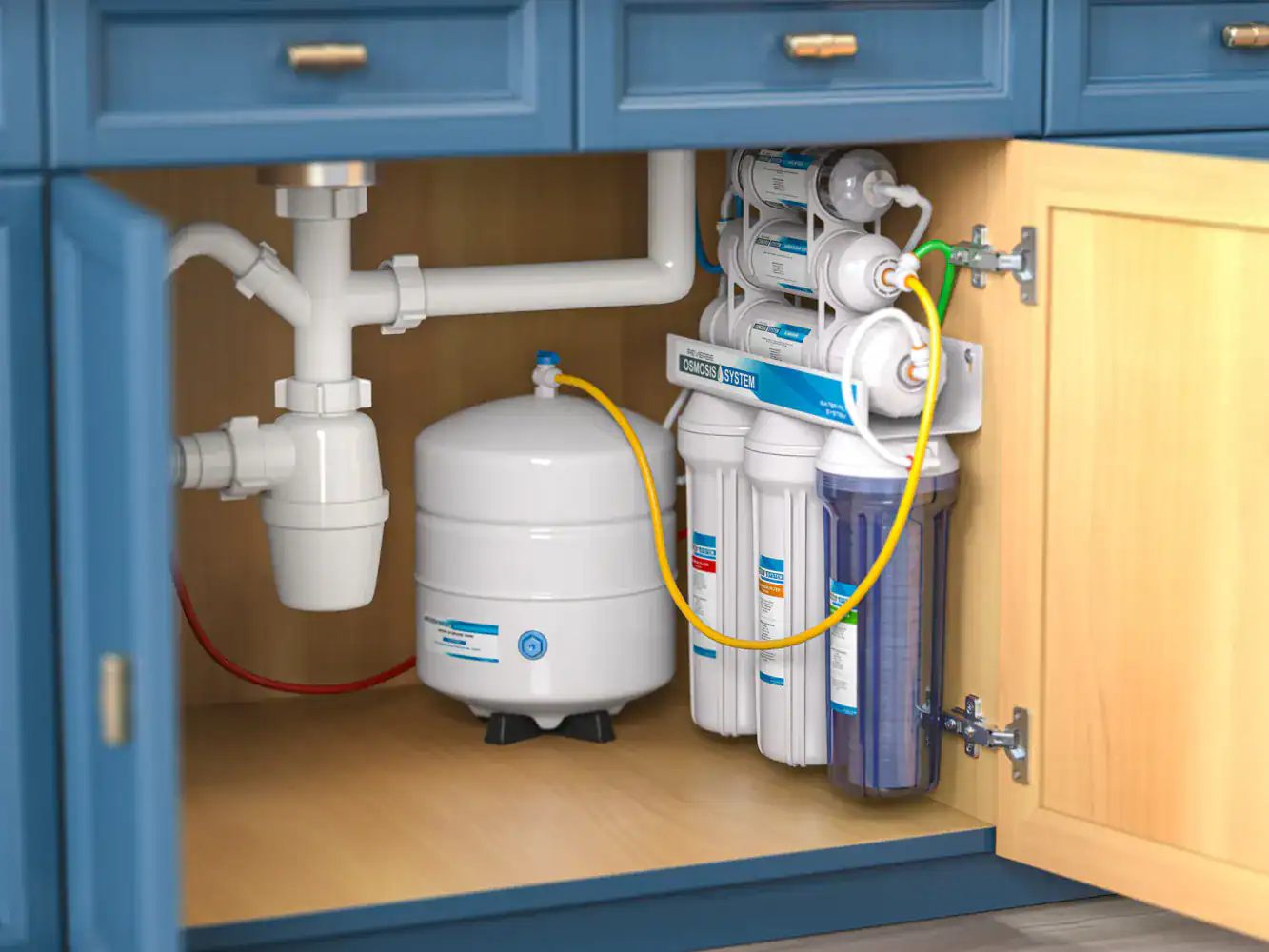
Tank size and physical footprint become important considerations if you’re working with limited installation space. Salt-free systems generally use a single conditioning tank, while traditional softeners require both a resin tank and a separate brine tank for salt storage. If you’re installing equipment in a compact garage, tight utility closet, or low-clearance basement crawlspace, that footprint difference can determine what systems are even physically possible to install.
Pay close attention to installation requirements beyond just physical size. Some systems need a drain line for backwashing cycles or regeneration discharge. Others require a dedicated electrical outlet with proper grounding. Salt-free TAC and catalytic systems typically don’t require either drainage or electricity, which can significantly simplify installation, reduce upfront costs, and provide more flexibility in where you can locate the equipment.
Think carefully about your household size and realistic water usage patterns. The average family of four uses roughly 300 gallons per day, but that’s just an average. If you have teenagers who take 20-minute showers, if you run multiple loads of laundry daily, if you have irrigation systems or outdoor water features, your actual usage will be substantially higher. The system you select needs adequate capacity and headroom to handle your peak demand days, not just your average consumption.
The Best Water Softener System Integrates with Whole-House Filtration
Here’s a critical point that catches many homeowners by surprise after they’ve already installed a water conditioner: softening or conditioning water doesn’t filter it. If your goals include removing chlorine taste and odor, filtering out sediment, reducing volatile organic compounds (VOCs), or addressing other contaminants, you need dedicated filtration stages in addition to your conditioning system.
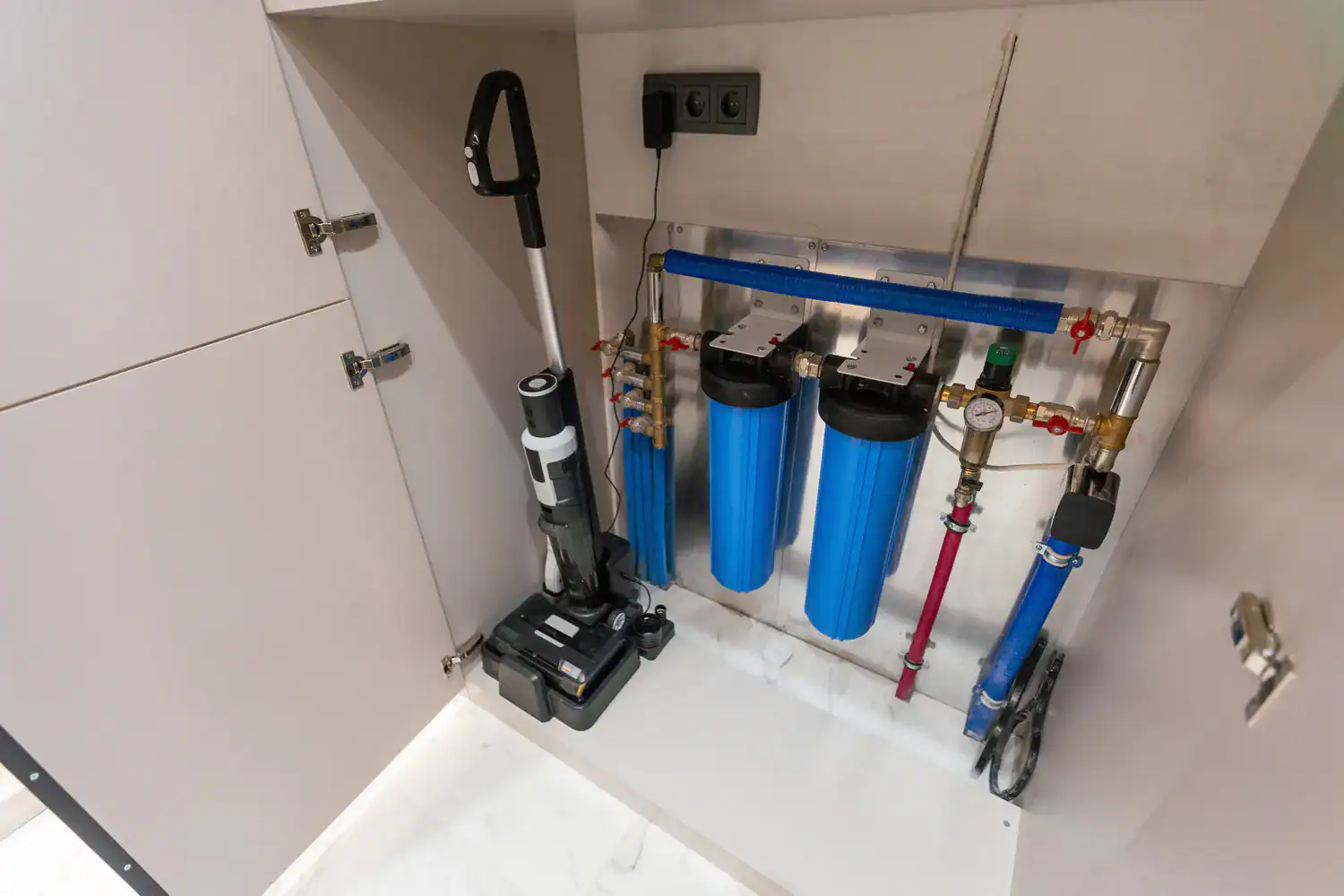
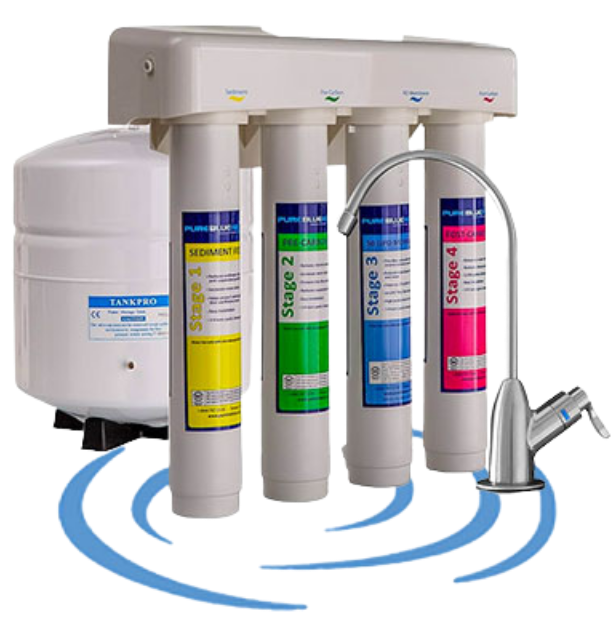
The best water softener and filtration system combinations address both hardness and contaminant removal in a properly integrated solution. Some manufacturers offer hybrid multi-stage systems that include sediment pre-filtration to protect downstream components, activated carbon filtration for chlorine and chloramine removal plus taste and odor improvement, and TAC or catalytic media for scale control. These comprehensive combo systems deliver complete water treatment at your point of entry, ensuring every tap and fixture in your home receives treated water.
When you’re designing a whole-house treatment system, the sequence of components matters significantly for performance and longevity. Sediment filters should always come first in the treatment train to protect downstream components from particulate damage that can foul media and damage valve mechanisms. If you’re using a traditional salt-based softener, it typically installs before carbon filtration because softened water extends the useful life of activated carbon media. With salt-free conditioning systems, you have more flexibility in component sequencing.
Carbon filtration is particularly important for Marion County, FL homeowners connected to municipal water supply. Chlorine and chloramines used for water disinfection can create unpleasant taste and odor, produce shower steam with a noticeable chemical smell, and contribute to dry, irritated skin and brittle hair. A quality whole-house carbon filter removes these disinfection byproducts while your conditioning system handles hardness minerals.
UV disinfection is another component worth considering if you’re drawing water from a private well. Ultraviolet light at specific wavelengths kills bacteria, viruses, cysts, and other microorganisms that might be present in groundwater sources. UV doesn’t remove anything from your water or change its chemistry—it simply inactivates pathogens so they can’t reproduce or cause illness. UV systems work in tandem with filtration and conditioning stages to provide comprehensive water treatment that addresses both aesthetic issues and health concerns.
Professional installation by experienced water treatment specialists ensures all these components work together properly and efficiently. Flow rates need to match across all treatment stages to prevent pressure loss. Pressure drops need to stay within acceptable ranges so your showers and appliances perform normally. Bypass valves need to be installed correctly so you can isolate individual components for maintenance and media replacement. And everything needs to be sized appropriately for your specific water conditions, daily usage volume, and peak demand requirements.
We specialize in whole-house purification projects—not just selling individual components—because we understand these complex integration challenges. We don’t just sell you equipment and leave you to figure out installation. We test your water thoroughly, design a customized system that addresses your specific issues in the right sequence, install it correctly with proper plumbing and electrical connections, and provide ongoing service and maintenance over the system’s lifetime. That level of expertise and support matters significantly, especially when you’re investing thousands of dollars in comprehensive water treatment that needs to work reliably for 10 to 20 years.

Choosing the Right Water Treatment Solution for Your Home
Salt-free water softener technologies offer genuine benefits for the right applications and water conditions. They reduce scale formation without requiring salt purchases, using electricity, or producing wastewater discharge. They require minimal ongoing maintenance beyond periodic media replacement. And they preserve the calcium and magnesium minerals in your water that some people prefer for taste and potential health benefits.
But they’re not a universal solution that works for every situation. If you want truly soft water—the kind that makes soap lather abundantly and leaves dishes completely spot-free without any wiping—a traditional salt-based ion-exchange softener remains the only technology that consistently delivers those specific results. If your hardness is very high (above 25 grains per gallon), or if you have iron, manganese, or pH issues, you’ll likely need a different approach or combination of treatment technologies.
The best choice for your home depends entirely on your specific water test results, your priorities for how you want your water to perform, and what problems you’re actually trying to solve. That’s exactly why professional water testing and expert guidance from experienced specialists matter so much. We’ve been helping Marion County, FL homeowners navigate these complex decisions for over 50 years, with WQA-certified professionals who deeply understand Florida’s unique water challenges and a proven track record of A-rated BBB standing with zero complaints. When you’re ready to move past the confusion and get a customized solution that actually works reliably for your home and water conditions, our specialized expertise and commitment to customer satisfaction make all the difference.