Summary:
You already know your water has a problem. Maybe it smells like rotten eggs when you run the shower. Maybe your fixtures have that orange tint no amount of scrubbing fixes. Or maybe your water seems fine, but you’ve been reading about PFAS and lead and you’re not so sure anymore. Whatever brought you here, you’re doing the right thing by researching before you call anyone. Because the water treatment industry — like a lot of home services — has its share of companies that will diagnose a problem they already know the solution to. This guide is about helping you avoid that. And about understanding what you actually need before someone shows up at your door.
Water Filter for Home System: What the Options Actually Are
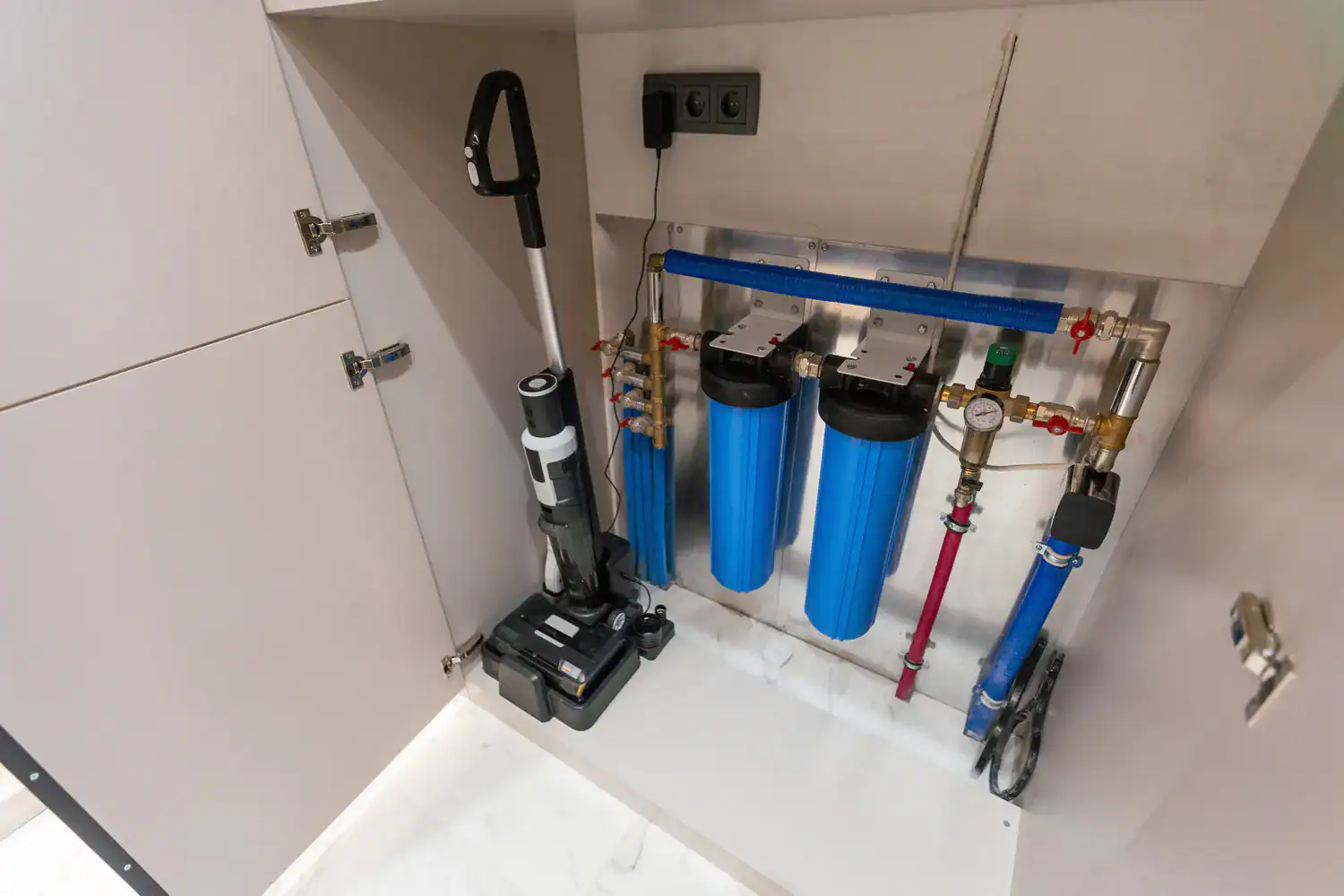
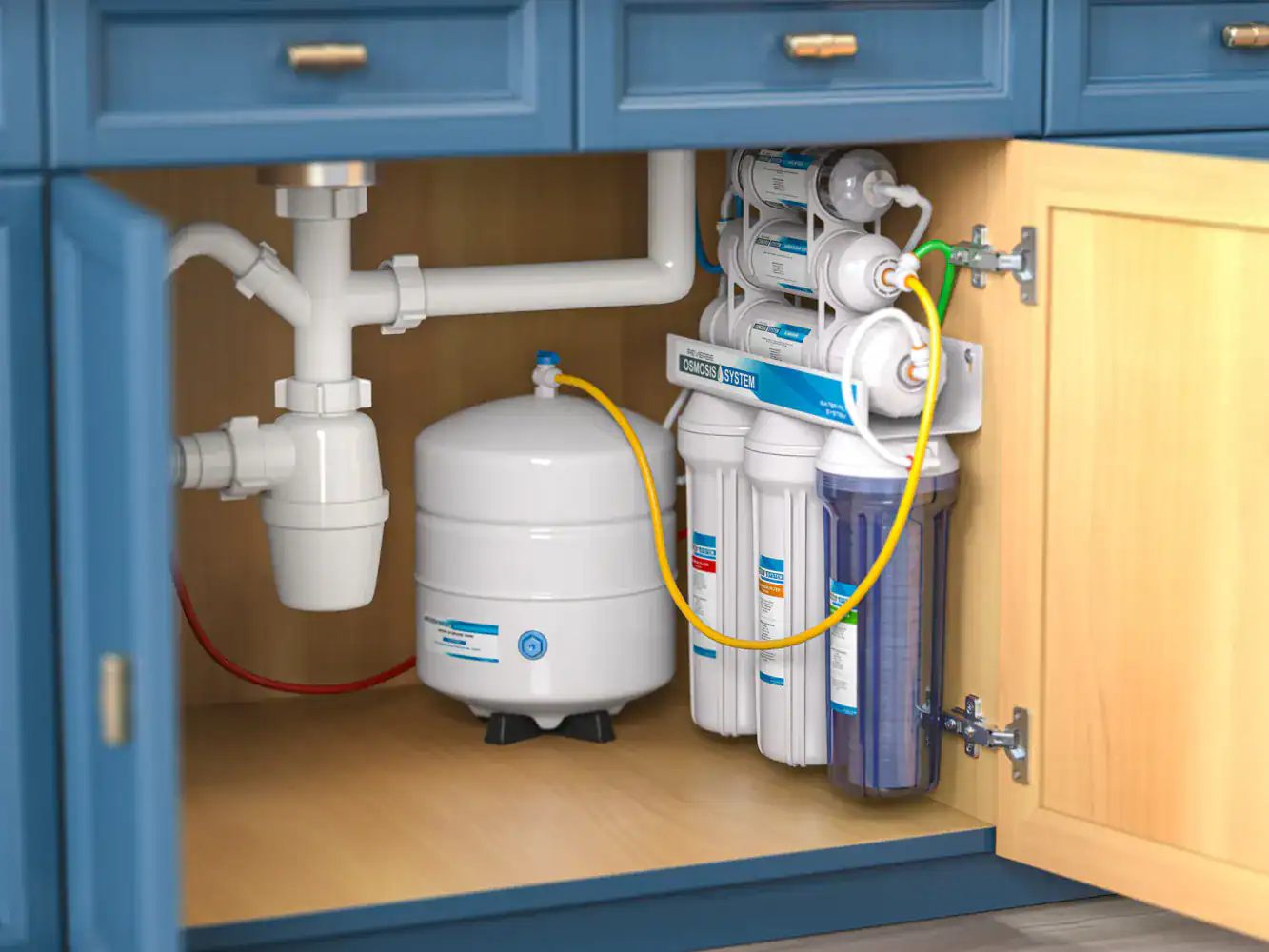
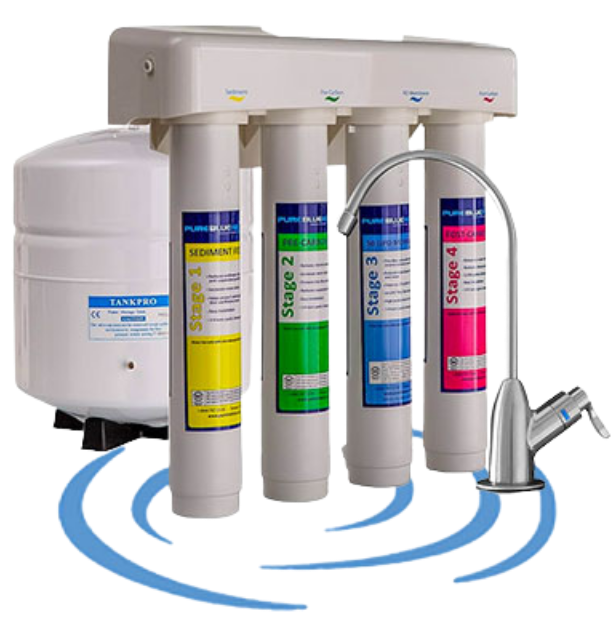
There are at least five distinct types of home water filtration systems, and most people shopping for one don’t realize they’re solving different problems. A whole house filtration system treats every drop of water that enters your home — at the point it enters the plumbing. A reverse osmosis system sits under your kitchen sink and produces highly purified drinking water at a single tap. A water softener addresses hardness — the calcium and magnesium that cause scale buildup and that slippery, filmy feeling — but it doesn’t filter out bacteria, PFAS, or chlorine. A salt-free water conditioner works differently still: it doesn’t remove minerals, but changes their structure so they stop forming scale. And a UV purification system uses ultraviolet light to neutralize bacteria and viruses without adding any chemicals.
None of these is universally “the best.” The right system depends entirely on what’s in your water.
What's the Difference Between a Water Softener and a Water Filter?
This is probably the most common point of confusion — and it’s one the industry doesn’t always bother to clear up, because confusion sells more product.
A water softener and a water filter are not the same thing, and they don’t do the same job. A water softener is designed specifically to treat hardness. In Lake County, that matters a lot. The county sits on top of the Floridan Aquifer System — a massive underground limestone formation that naturally loads groundwater with calcium and magnesium.
That’s why your water heater builds up scale, your dishwasher leaves white spots on glasses, and your soap never quite lathers the way it should. A softener addresses all of that by exchanging those hardness minerals for sodium ions, which don’t cause scale.
But a softener does nothing for bacteria. It doesn’t remove chlorine or the chloramines that municipal water systems use for disinfection. It won’t touch PFAS — the “forever chemicals” that the EPA finally set enforceable limits on in April 2024. And it won’t address iron or hydrogen sulfide, which are the two most common complaints from Lake County homeowners on private well water.
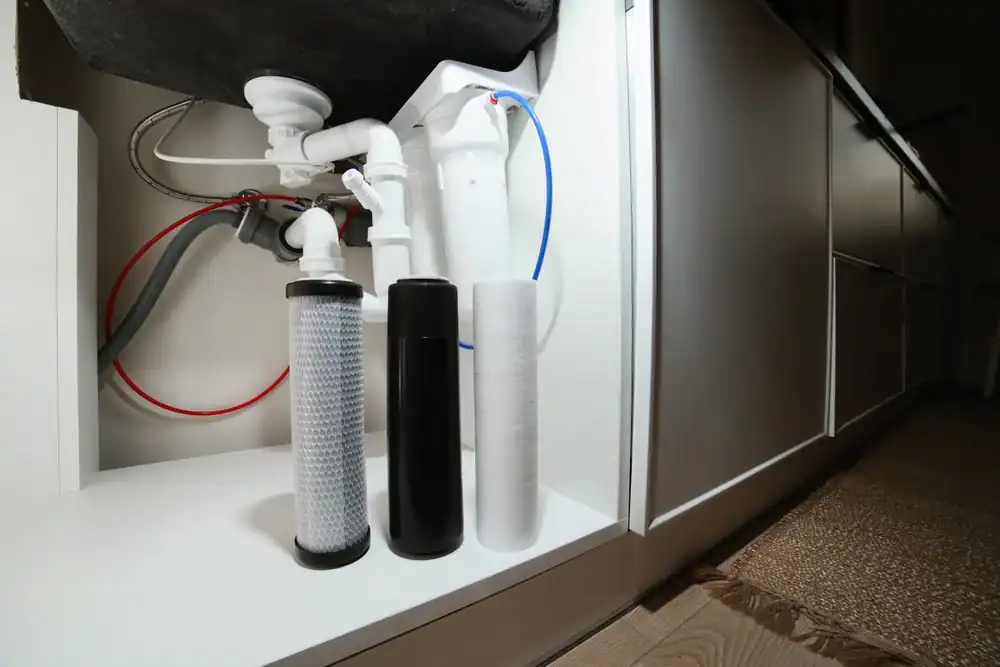
A water filter, depending on its design, can address some or all of those things — but a basic carbon filter won’t treat hardness. That’s why most homes with serious water quality issues need more than one type of treatment working together. A sediment filter to catch particulates, a carbon stage to handle chlorine and taste, a softener or conditioner for hardness, and in some cases a UV stage to handle biological contamination. The order matters too — UV only works on clear water, so it always comes last in a properly designed system.
If someone recommends a single-stage solution for all your water problems without testing first, that’s a red flag worth paying attention to.
Well Water vs. City Water in Lake County — Why It Changes Everything
Lake County is not a one-size-fits-all water market. The county has over 1,400 named lakes, a geology defined by limestone, and a mix of municipal water systems and private wells that creates dramatically different water quality from one neighborhood to the next.
If you’re on city water in Leesburg, Clermont, or Tavares, your water has been treated — chlorine or chloramines added for disinfection, hardness that varies by source, and the possibility of PFAS or other contaminants that municipal treatment doesn’t fully address. The water is technically safe by EPA standards, but “meets the minimum” isn’t the same as “tastes good” or “won’t damage your appliances.”
If you’re on a private well — which is common in the more rural stretches of Lake County, and in some of the newer developments in Groveland, Mascotte, and south Lake County — you’re on your own. There’s no federal monitoring of private wells. What comes out of the ground is what you get, and in Lake County that often means elevated iron levels that leave rust-orange stains on toilets, sinks, and laundry, and hydrogen sulfide that gives water that unmistakable rotten egg smell.
These aren’t cosmetic annoyances — iron can damage appliances and irrigation systems over time, and neither problem goes away on its own.
The south Lake County growth corridor — Clermont, Minneola, Groveland — has seen thousands of new homes built in the last several years. A lot of those homeowners are discovering Florida’s water quality for the first time. They moved from somewhere with different geology, different municipal infrastructure, and different water problems. What worked in their last home may not be the right system here.
All of this is why a water test isn’t a sales tactic. It’s the only honest starting point. The test tells you what’s actually in your water — iron, sulfur, hardness, pH, bacteria, TDS — before any system is recommended. A company that skips that step and recommends the same system to every customer is selling on commission, not solving your problem.
Best Water Filters for Home: What to Look For Before You Buy
When people search for the best water filters for home use, they usually end up on product comparison pages that rank brands and models. Those pages are useful for understanding what’s available. But they don’t answer the question most Lake County homeowners actually need answered: which type of system is right for my specific water, and which company can I actually trust to install it and be there when something goes wrong?
Those are two different questions, and both matter.
On the product side, NSF/ANSI certification is the most meaningful indicator that a system does what it claims. NSF 42 covers aesthetic effects like chlorine and taste. NSF 53 covers health effects including lead and certain VOCs. NSF 58 applies to reverse osmosis systems. If a company can’t tell you which NSF standards their systems are certified to, that’s worth asking about.
Best Water Filtration System for Home: How to Match the System to Your Water Problem
The best water filtration system for your home is the one that addresses what’s actually in your water — not the most expensive option, and not the one with the most impressive brochure.
If your primary issue is taste and odor from chlorinated city water, a quality whole house carbon filtration system or a point-of-use reverse osmosis system under the kitchen sink may be all you need. RO systems remove 95 to 99 percent of contaminants, including lead, nitrates, pesticides, and PFAS — which makes them one of the most effective options for drinking water quality. The tradeoff is that they treat water at one tap, not throughout the whole house.
If you have hard water — which, again, is the default in Lake County given the limestone aquifer — you need a softening or conditioning solution in addition to filtration. Salt-based softeners are the most effective at eliminating hardness. Salt-free conditioners are a good alternative for homeowners who don’t want to haul salt bags or who are on well water with limited capacity, since they use no electricity and waste no water in the treatment process.
If you’re on well water with iron and sulfur, you need a system specifically designed for oxidation and iron removal. Standard carbon filters won’t handle it. A properly designed well water system typically includes a sediment pre-filter, an oxidation stage for iron and sulfur, a carbon stage, and often a UV stage to address any biological risk — all sized to your home’s flow rate so you don’t lose water pressure in the process.
The sizing piece matters more than most people realize. An undersized system drops your water pressure noticeably. An oversized one costs more than necessary. Getting that right requires knowing your household’s water usage and the flow rate demands of your plumbing — which is part of what a proper in-home assessment covers.
How to Avoid Getting Oversold on a Home Water Filter System
This is the part most water treatment companies won’t write about, for obvious reasons.
The high-pressure water filter sale is a documented pattern in this industry. It typically goes like this: a technician comes to your home, runs a water test designed to look alarming, and then presents a system — usually an expensive one — with urgency attached. “We can do it today at this price.” “This is a limited offer.” The test results are real, but the recommendation isn’t necessarily based on them. It’s based on what the company sells.
There are a few straightforward ways to protect yourself. First, insist on a written water test report that you can keep, regardless of whether you buy anything. A company that won’t give you your own test results is telling you something. Second, ask specifically which contaminants the recommended system is certified to remove, and ask to see the NSF certification. Third, ask about post-sale service — who services the system, how often it needs maintenance, and what happens if something goes wrong a year from now.
That last question is where a lot of national companies fall short. They install and move on. The service call number routes to a call center. The local technician who did the install is long gone.
We’ve been in Lake County long enough to know what happens when homeowners go with a company that treats installation as the finish line. We get those calls — people with systems that aren’t performing, filters that haven’t been changed in years, and no one picking up the phone at the company that sold it to them. We service those systems too, regardless of who installed them. Culligan, Kinetico, others — if it’s a water treatment system, we can work on it.
The reason we’re willing to say all of this plainly is that we’re not going anywhere. We’re based in Leesburg. We’ve been doing this for over 50 years. Our BBB record has zero complaints — not because we’re perfect, but because when something comes up, we handle it. That’s the standard we hold ourselves to, and it’s the standard you should expect from any company you invite into your home.

What to Do Before You Call a Water Treatment Company in Lake County
You don’t need to be an expert before you pick up the phone. But knowing the basics — the difference between filtration and softening, why a water test should come before any recommendation, and what questions to ask about post-sale service — puts you in a much better position than most buyers.
Lake County’s water is genuinely varied. Hard water from the limestone aquifer, iron and sulfur in well water, chloramines in city water, and a fast-growing population of new homeowners who haven’t dealt with Florida water before — there’s no single answer that works for everyone here. The right system is the one that fits your water, your home, and your household.
If you want to start with a free water analysis and a straightforward conversation about what you actually need, we’re available seven days a week — including weekends — and the assessment comes with no pressure and no obligation. Just answers.