Summary:
Most “best RO system” lists were written for someone in Phoenix or Portland. They compare tank sizes and flow rates without ever mentioning chloramines, iron, or the Floridan Aquifer — which is exactly the water most Lake County homes are dealing with. If you’ve already read a few of those roundups and still feel like you’re guessing, that’s why. The water here behaves differently, and the system that works well in a generic scenario may underperform badly in Leesburg, Clermont, or Lady Lake. Here’s what you actually need to know.
Tankless Reverse Osmosis Systems vs. Traditional Tank: What Works in Lake County
The most common question we hear from homeowners who’ve done some research is whether a tankless reverse osmosis system is worth it over a traditional tank model. It’s a fair question, and the honest answer is: it depends on your water and your household.
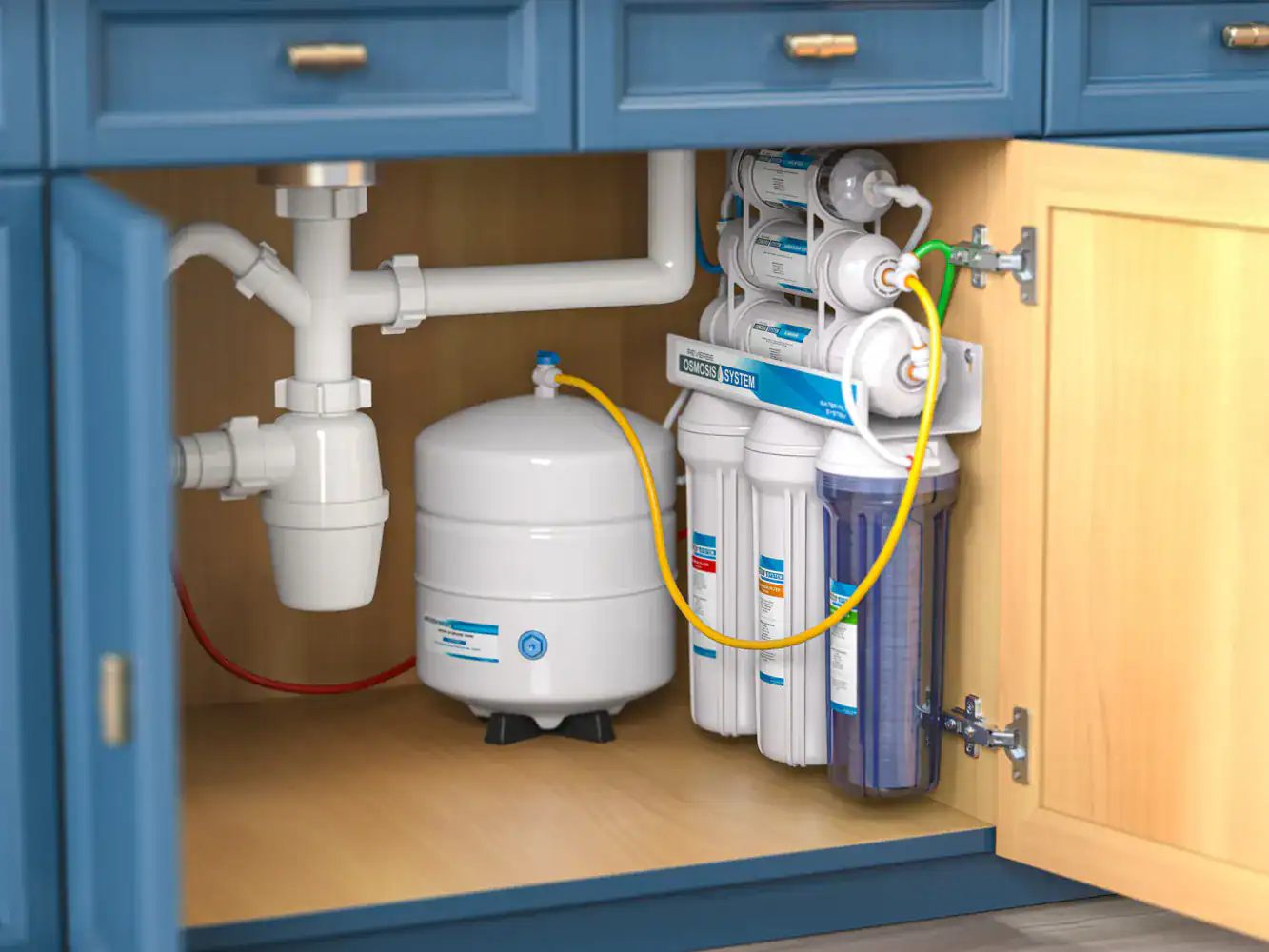
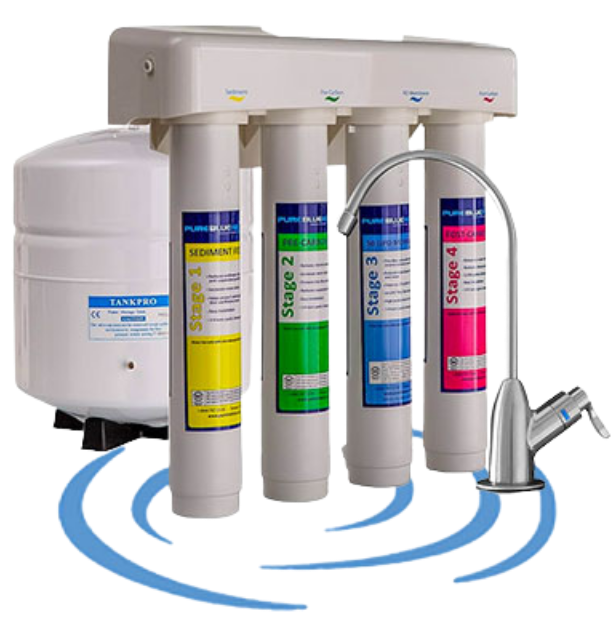
Traditional RO systems store purified water in a pressurized tank — typically two to four gallons — so water is ready on demand without waiting. Tankless systems skip the storage entirely, running water through a higher-capacity membrane in real time. That means faster flow, no tank to maintain, and no risk of bacteria building up in stored water over time.
When a Tankless RO System Makes Sense — and When It Doesn't
Tankless systems have real advantages. They tend to produce water more efficiently, with less waste per gallon purified compared to older tank-style units. They’re also compact, which matters if you’re working with limited cabinet space under the kitchen sink. And because there’s no storage tank sitting idle between uses, you don’t have to worry about water quality degrading if the system goes unused for a stretch — something that can happen in seasonal homes or vacation properties, which Lake County has plenty of.
That said, tankless systems do require adequate incoming water pressure to function properly. If your home runs on well water with inconsistent pressure — common in unincorporated parts of Lake County — a tankless system may not deliver the flow rate it promises on the box. In those cases, a traditional tank system sized correctly for your household is often the more reliable choice.
There’s another consideration that rarely makes it into the product comparison articles: pre-treatment. Lake County’s water, whether it comes from a municipal system or a private well, typically carries high mineral content from the Floridan Aquifer. Hard water at the levels common here — often in the range of 200 to 400 milligrams per liter — shortens membrane life significantly if the water isn’t pre-treated first. A tankless system with a premium price tag can underperform within a year if it’s installed without addressing what’s upstream of the membrane.
This is why we always start with a water analysis before recommending any system. It’s not a sales tactic — it’s the only way to know whether a tankless unit is actually the right fit, or whether a tank system with proper pre-filtration stages will serve you better long-term. The equipment matters, but so does the sequence it’s installed in and the water chemistry it’s designed around.
How to Choose a Reverse Osmosis Water Filter Under Sink for Lake County Water
Under-sink reverse osmosis filters are the most common residential format, and for most families focused on drinking and cooking water, they’re the most practical starting point. The system lives beneath the kitchen sink, connects to a dedicated faucet, and treats water at the point of use without affecting the rest of the home’s plumbing.
For Lake County homeowners on municipal water — in Leesburg, Tavares, Eustis, or Clermont — an under-sink RO system is often a strong fit. Municipal supplies here use chloramination for disinfection, which is worth understanding. Chloramines are harder to remove than free chlorine and require a specific type of carbon block pre-filter to protect the RO membrane from degradation. A system designed for free-chlorine water, which is what most national brands assume, won’t handle chloraminated supply as effectively. This is a detail that rarely shows up in online product reviews, but it matters significantly for how long your membrane lasts.
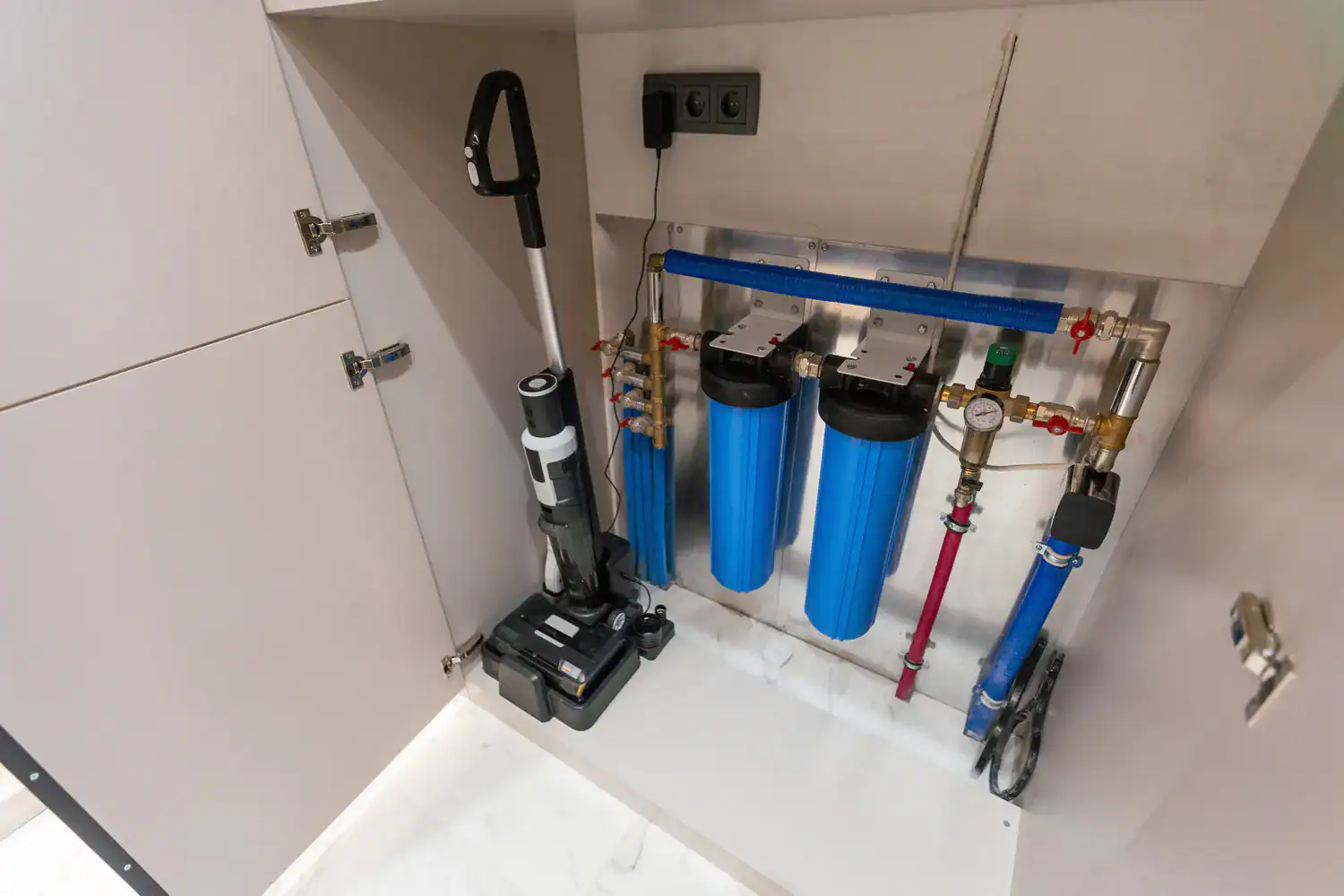
For homes on private wells — and there are many of them in the unincorporated stretches of Lake County, particularly around the lake corridors — the calculus changes. Well water in this area frequently carries hydrogen sulfide, which produces that familiar sulfur odor, along with iron and tannins from organic matter near the water table. An under-sink RO system alone won’t resolve those issues at the whole-house level. The drinking water at the kitchen tap might improve, but every shower, every load of laundry, and every appliance is still running on untreated water. In those situations, we typically recommend addressing whole-house pre-treatment first, with an under-sink or whole-house RO system as the final stage for drinking water.
The certification to look for on any system you’re considering is NSF/ANSI Standard 58 — that’s the independent testing standard for point-of-use reverse osmosis systems, verifying that the unit actually reduces the contaminants it claims to. It’s the baseline. If a system doesn’t carry that certification, there’s no independent verification that it performs as advertised.

Reverse Osmosis Water Filter Installation: Why the Installer Matters as Much as the System
There’s a version of this decision that ends with buying a unit on Amazon, watching a few installation videos, and hoping for the best. For a simple under-sink system in a home with straightforward municipal water, that sometimes works out fine. For most Lake County homes, it’s where things tend to go sideways.
The water here isn’t simple. Hard minerals, chloramines, iron, sulfur — these aren’t problems a generic installation handles well. A system that isn’t sized and configured around your actual water chemistry will underperform, and often the homeowner doesn’t realize it until the membrane fails early or the water still doesn’t taste right.
What Professional Reverse Osmosis Installation Actually Includes
Professional installation isn’t just about connecting the lines. It starts before any equipment is ordered. We test your water first — looking at hardness, total dissolved solids, pH, chlorine or chloramine residual, iron levels, and any other compounds that show up in your specific supply. That analysis determines which system is the right fit, what pre-treatment stages are needed upstream of the membrane, and how the system should be sized for your household’s actual usage.
From there, installation involves configuring the pre-filter stages in the correct sequence, ensuring proper pressure at the membrane, connecting to the dedicated faucet or whole-house supply line depending on the system type, and verifying flow rate and output quality before the job is considered done. For whole-house systems that connect to the main supply line, the process may involve coordination with a licensed contractor — something we handle as part of the project.
What happens after installation is just as important. RO systems require regular maintenance: pre-filters and carbon filters typically need replacement every six to twelve months, and the RO membrane itself lasts two to three years under normal conditions. A system that’s neglected past those intervals starts to lose effectiveness — and in some cases, a deteriorating storage tank can become a bacterial concern. We offer ongoing service for every system we install, and we also service systems from other brands, including Culligan, Kinetico, and Leaf Water Solutions, if you already have a system in place that needs attention.
This matters more than it might seem. One of the most common complaints we hear from homeowners who call us is that the company that installed their system has become unreachable. They need a filter change, or something isn’t performing right, and there’s no one to call. We’ve built our business around not being that company. Our BBB A-rating with zero complaints isn’t something we put in front of people to brag — it’s just evidence of what consistent follow-through looks like over time.
Common Questions Lake County Homeowners Ask About RO Systems
One question that comes up often: do you need a reverse osmosis system if you already have a water softener? The short answer is yes, and here’s why. A water softener addresses hardness — it exchanges calcium and magnesium ions for sodium ions, which protects your pipes and appliances. But it doesn’t remove dissolved solids, PFAS, fluoride, arsenic, or the full range of contaminants that an RO membrane filters out. In fact, softened water with elevated sodium levels is another reason an RO system at the drinking water stage becomes more important, not less. The two systems work together, not interchangeably.
Another common question: does it matter where the system is made? We install USA-made systems, and for homeowners who’ve looked at the range of imported options online, the difference in build quality and membrane longevity tends to show up over time rather than immediately. It’s one of those things that’s hard to see in a product listing but becomes apparent after a few years of use.
Homeowners in The Villages and Lady Lake frequently ask about systems for homes that sit vacant for part of the year. This is worth thinking through carefully. A traditional tank system in a seasonal home can develop water quality issues in the storage tank during extended periods of non-use. A tankless system avoids that concern, but again, only if the home’s water pressure and pre-treatment situation support it. This is exactly the kind of detail a water analysis surfaces before any equipment decision is made.
Military veterans and first responders in Lake County should also know that we offer a $500 discount on installations — it’s one of the ways we try to give something back to the people who’ve given a lot to this community.
How to Find the Right Reverse Osmosis System for Your Lake County Home
The best reverse osmosis system for your home isn’t a brand — it’s the right configuration for your specific water, installed correctly, and maintained over time. In Lake County, that means accounting for the Floridan Aquifer’s mineral load, whether your supply is municipal or well-sourced, what disinfection method your utility uses, and what you actually need at the drinking water tap versus throughout the whole house.
We’ve been doing this work for more than 50 years, and we’re based here in Leesburg — not a regional call center, not a franchise. When you call, you’re talking to someone who knows Lake County’s water and can give you a straight answer about what your home actually needs.
If you’re ready to stop guessing, Quality Safe Water of Florida LLC offers a free water analysis and consultation, seven days a week. That’s the right place to start.