Summary:
Most people assume their water is fine because the bill says it passed inspection. And technically, it probably did. But federal legal limits for drinking water contaminants haven’t been updated in nearly 20 years — which means “legal” and “safe” aren’t always the same thing. If you’ve noticed white buildup on your faucets, dry skin after showering, or a faint chemical taste you can’t quite place, your water is trying to tell you something. This guide covers what’s actually going on with water quality across St. Johns County, Flagler County, and Palm Coast — and what you can realistically do about it.
What's Actually in St. Johns County's Water
St. Johns County draws its water from the Floridan Aquifer — one of the most productive groundwater systems in the world, and also one of the most minerally dense. As water moves through ancient limestone formations deep underground, it picks up calcium and magnesium at concentrations that average around 215 parts per million across the aquifer system. That puts it firmly in the “Very Hard” category, and St. Johns County sits squarely in that range.
Hard water isn’t a health emergency, but it’s expensive and frustrating. It’s the reason your dishwasher leaves spots on glasses, your showerhead clogs faster than it should, and your water heater works harder than it needs to — consuming up to 17 to 21 percent more energy just to heat water through the scale buildup coating its interior. Over time, that adds up in utility bills and shortened appliance life.
Beyond hardness, St. Johns County’s own 2024 Annual Drinking Water Quality Report acknowledged that Total Dissolved Solids exceeded the Maximum Contaminant Level — classified as a secondary, aesthetic standard, but a real signal that what’s dissolved in your water is above baseline. The Environmental Working Group’s tap water database for St. Johns County Utilities also flagged haloacetic acids and chlorate, both byproducts of the chlorine disinfection process used in municipal treatment. Chlorate, in particular, has been linked to impaired thyroid function and is considered most harmful during pregnancy and early childhood.
Water Treatment in St. Augustine, FL — What the City Handles and What It Doesn't
St. Augustine’s municipal water system does what it’s designed to do: it kills bacteria, meets federal legal standards, and delivers water that’s safe by the government’s current definition. The city’s water quality report has documented trace amounts of microbial contaminants, inorganic contaminants, pesticides, and radioactive contaminants — all within legal limits, all disclosed. That transparency is worth something.
But there’s a gap between what municipal treatment addresses and what actually reaches your tap. The treatment plant handles disinfection. It does not remove the minerals that cause hardness. It does not eliminate PFAS — the class of synthetic chemicals sometimes called “forever chemicals” — which the Floridan Aquifer averages at 15.2 parts per trillion across the cities it serves. The EPA’s updated limit for PFAS, established in 2024, is 4 parts per trillion. The aquifer average is more than three times that threshold.
St. Augustine is also a coastal city, which adds saltwater intrusion to the list of concerns. As development increases demand on the aquifer and sea levels shift, brackish water can migrate into freshwater zones — affecting taste, TDS levels, and the overall mineral profile of what comes out of your tap.
What this means practically is that a homeowner in St. Augustine relying solely on municipal treatment is getting water that’s legally compliant but not comprehensively protected. A point-of-use pitcher filter addresses taste and some chlorine. It doesn’t protect your pipes, your appliances, your shower water, or your laundry. That’s the gap a whole-house system is designed to fill — treating water at the point of entry so every tap in the home is covered.
For homeowners who’ve been on the fence, the combination of hard water minerals, disinfection byproducts, and PFAS levels above current health guidelines is usually the moment the decision becomes clear. The question shifts from “do I need this?” to “what kind of system actually fits my water?”
Well Water in St. Johns County and Lake County — A Different Set of Risks
Not everyone in St. Johns County is on city water. Rural and semi-rural areas throughout the county — and much of Lake County and Central Florida — rely on private wells. If that’s your situation, the calculus is different, and in some ways more urgent.
Municipal water is tested regularly by the utility and reported publicly. Your well is tested when you test it. If you haven’t had it tested recently, you genuinely don’t know what’s in it. That’s not an exaggeration — it’s just how unregulated private water sources work.
The Floridan Aquifer that supplies well water across this region carries the same mineral load and the same PFAS risk as the municipal supply. But well water also bypasses the disinfection step entirely, which means bacteria, nitrates, and agricultural runoff can be present without any treatment stage catching them. In Lake County, the Florida Department of Health actively monitors groundwater for Ethylene Di-Bromide — a pesticide tied to the area’s agricultural history — specifically because it has been detected in old grove and farming areas. That’s a documented, local concern, not a hypothetical one.
For well-water homeowners in Lake County and across Northeast Florida, a whole-house purification system isn’t an upgrade — it’s the only line of defense between the aquifer and your family’s water. The right system depends entirely on what’s in your specific water. That’s why starting with a water analysis matters so much. A system sized and configured for your actual water chemistry will perform completely differently than one pulled off a shelf and installed without testing first. Every household’s water is different, and that difference is what determines which combination of filtration, softening, and purification actually solves the problem.
Flagler County Water Quality and What Palm Coast Homeowners Are Dealing With
Flagler County and Palm Coast face the same fundamental challenge as their neighbors to the south: hard water from the Floridan Aquifer, disinfection byproducts from municipal chlorination, and the persistent gap between legal compliance and current health standards. Palm Coast’s own municipal FAQ acknowledges that hard water is a documented reality for city residents — the city even operates a lime softening facility capable of treating 6 million gallons per day specifically to address it.
Municipal lime softening helps, but it’s a partial solution. It reduces hardness at the treatment plant level, but by the time water travels through aging distribution lines and into your home’s plumbing, the mineral content and disinfection byproducts are still present in concentrations that affect taste, appliances, and long-term health.
Palm Coast Water Quality — What the City's Own Treatment Plant Doesn't Fully Resolve
Palm Coast’s Water Treatment Plant No. 1 has been operating since 1977, drawing groundwater from local aquifer wells and running it through a conventional lime softening process before distribution. For a city that’s grown dramatically since then, it’s a system doing meaningful work. But lime softening addresses hardness — it doesn’t address PFAS, haloacetic acids, or the disinfection byproducts that form when chlorine interacts with organic matter in the water.
The EWG’s tap water data for this region consistently shows that while water meets federal legal standards, it doesn’t meet the latest health guidelines. That distinction matters more than it might seem. Federal standards were written decades ago, before PFAS were understood, before newer research on chlorination byproducts was available, and before the EPA updated its PFAS limit to 4 parts per trillion in 2024.
Palm Coast also experienced a documented infrastructure stress event when heavy rainfall — approximately 7 to 10 inches over five days — pushed 23 wastewater lift stations near capacity. That kind of event doesn’t necessarily contaminate the drinking supply, but it illustrates how weather and system capacity interact in ways that aren’t always visible to residents. For homeowners who want a consistent, independent layer of protection regardless of what’s happening at the municipal level, a whole-house system provides exactly that.
The practical impact of Palm Coast’s hard water shows up in the same ways it does across the region: scale on fixtures and appliances, shortened water heater lifespan, spots on dishes and shower doors, and that slightly dry feeling on skin after a shower. These aren’t dramatic health crises — they’re daily friction that compounds over years. A properly configured whole-house filtration or conditioning system eliminates most of it at the source.
What Kind of Water Treatment System Actually Works for Northeast Florida Homes
This is the question most homeowners eventually get to, and the honest answer is: it depends on your water. That’s not a dodge — it’s the reason a water analysis has to come before a recommendation. The Floridan Aquifer delivers different mineral profiles to different parts of the region, and a household on well water in a former agricultural area has different needs than a home on city water in a newer Palm Coast subdivision.
For hardness, a salt-based water softener is the most direct solution — it exchanges calcium and magnesium ions for sodium, producing noticeably softer water throughout the home. For homeowners who want to avoid salt and the associated water discharge, salt-free conditioning systems work by changing the structure of minerals so they don’t crystallize and stick to surfaces. These systems use no electricity and produce no wastewater, which is a meaningful advantage for homeowners thinking about long-term operating costs and environmental impact.
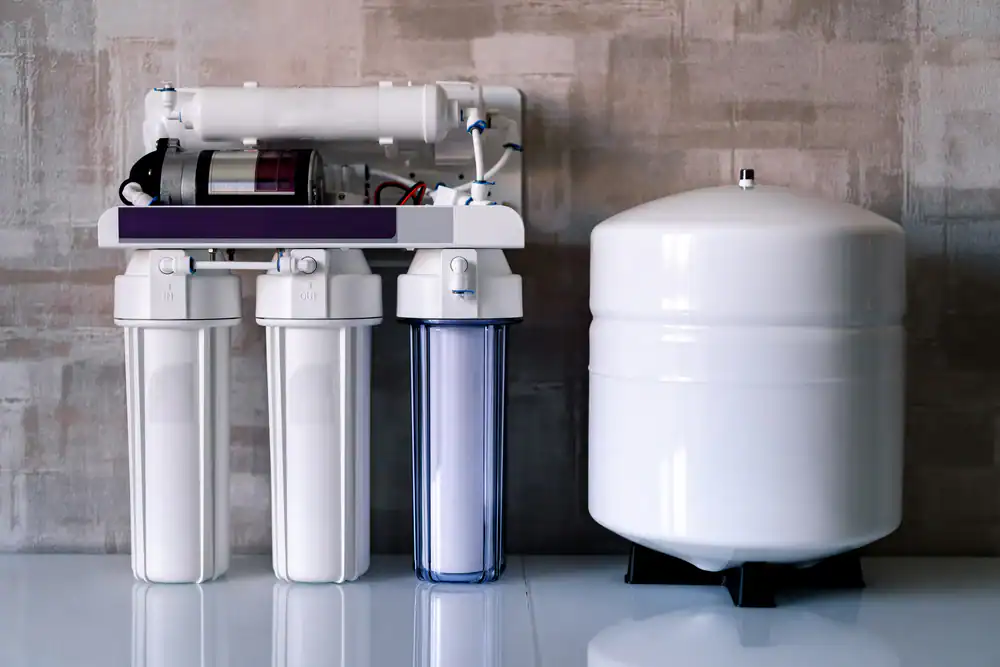
For drinking water specifically, a reverse osmosis system at the point of use — typically under the kitchen sink — is the most effective way to address PFAS, TDS, and other dissolved contaminants that a whole-house softener doesn’t target. RO membranes typically last two to three years; pre-filters need replacement every six to twelve months, and Florida’s higher mineral content means staying on that schedule matters more here than in most other states.
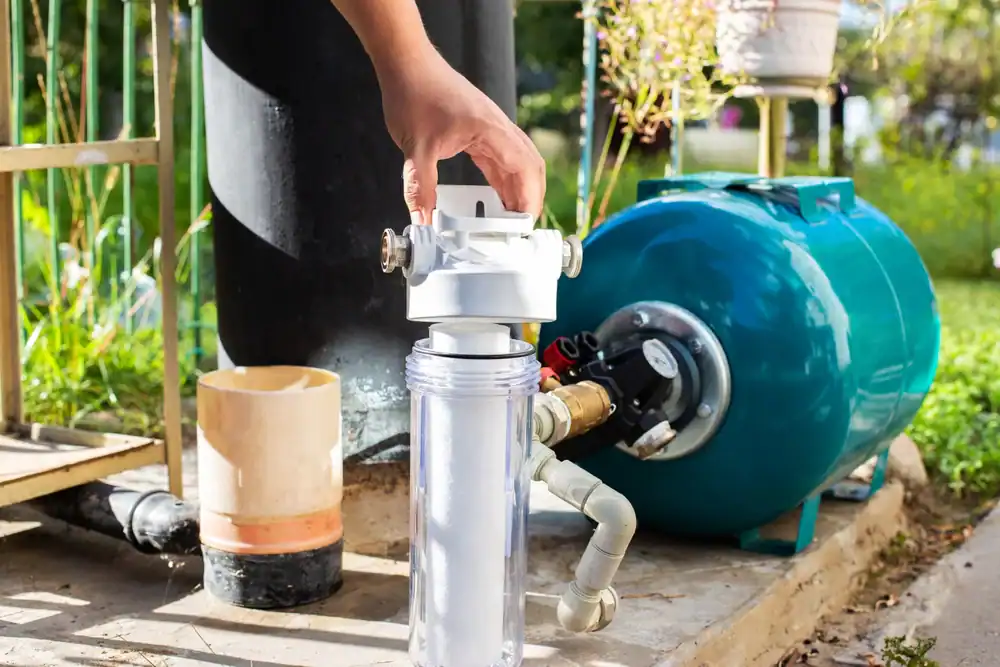
For well-water homes, UV purification — like the Purelight System — adds a disinfection layer that addresses bacteria and microorganisms that filtration alone doesn’t catch. For homes that want comprehensive coverage, a combination of whole-house filtration, softening or conditioning, and a dedicated drinking water system handles the full range of concerns from the entry point to the tap.
The most common mistake homeowners make is buying a system based on what worked for a neighbor or what ranked highest in an online review. Water chemistry is local and specific. A system that’s perfectly sized for a home in one part of St. Johns County may be undersized or misconfigured for a home two miles away. That’s why the right starting point is always a real water test — not a phone quote, not a one-size-fits-all package.
Getting Your Water Tested in Northeast Florida — What to Do Next
If you’ve read this far, you probably already suspected your water wasn’t quite right. The white buildup, the dry skin, the taste — those things don’t lie. What this guide hopefully adds is the context behind them: where the problem comes from, why municipal treatment only goes so far, and what your actual options look like.
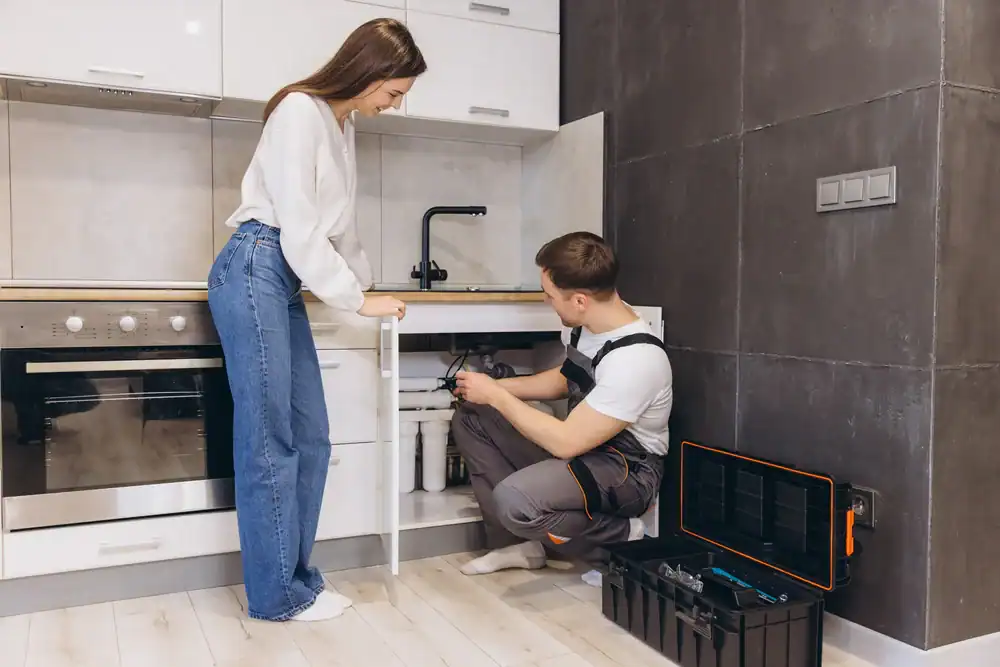
The right next step isn’t buying a system. It’s understanding your water first. A free in-home water analysis gives you real data about your specific water — hardness level, TDS, contaminants present — before any recommendation is made. That’s the only way to know what you actually need versus what someone wants to sell you.
Quality Safe Water of Florida LLC is based in Leesburg, right here in Lake County, and we serve homeowners across North and Central Florida — including St. Johns County, Flagler County, and the Palm Coast area. If you’re ready to find out what’s in your water and what to do about it, reach out and schedule your free analysis. No pressure, no guesswork — just your water, tested and explained.