Summary:
If you’ve been Googling “well water treatment cost” hoping to find a single number, you already know it’s not that simple. The ranges are all over the place — $800 here, $10,000 there — and most of what you find is written for a national audience that has nothing to do with Lake County’s water.
Here’s the honest version: what you’ll pay depends almost entirely on what’s in your water. And in Lake County, that answer usually involves more than one problem. We walk you through real 2026 cost ranges, what drives them up or down, and what the local geology means for your situation specifically.
Well Water Filtration System Cost: What You're Actually Paying For
The reason cost ranges are so wide is that “well water treatment” isn’t one thing. A basic sediment filter runs $200 to $600 installed. A water softener for hardness runs $800 to $2,800. A full multi-stage system that handles iron, sulfur, hardness, and bacteria — which is what most Lake County homes actually need — typically falls between $3,000 and $6,000 installed.
That gap exists because the system has to match the water. Buying a softener when you also have iron and sulfur doesn’t solve your problem — it just softens water that still smells and stains. The only way to know what you actually need is to test the water first.
Water Treatment System Installation Cost: What Goes Into the Final Number
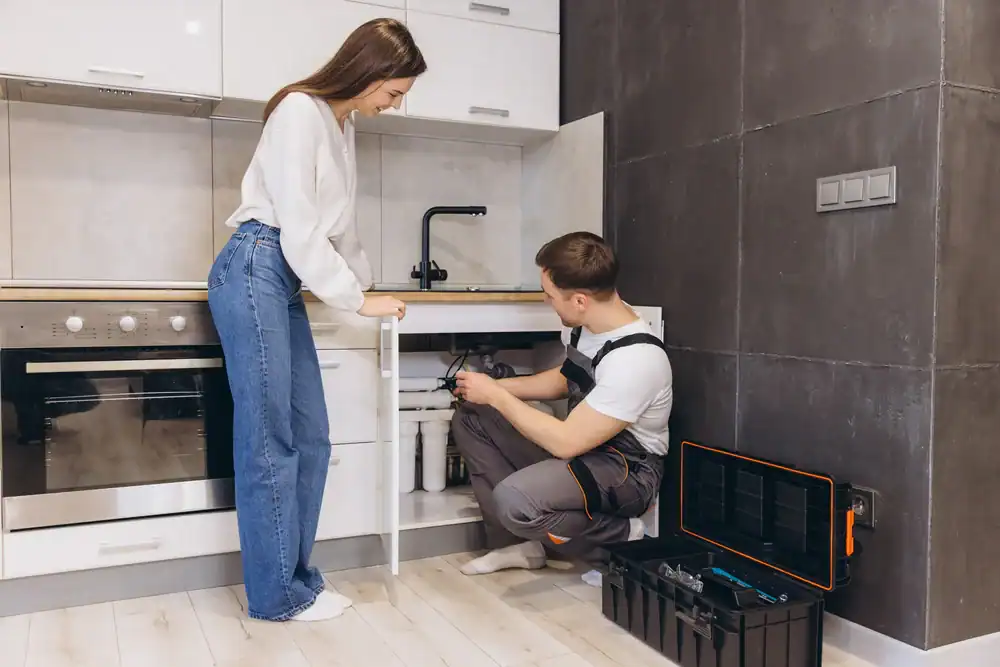
When you get a quote for a well water treatment system, you’re paying for more than the equipment sitting in a box. Installation is a real cost component — and for whole-house systems, it’s not a small one.
Point-of-use systems, like an under-sink reverse osmosis unit, are relatively straightforward. Equipment for those runs $200 to $600, and installation is typically simple enough that some homeowners handle it themselves. Whole-house systems are a different story. They require proper plumbing connections, correct sizing for your home’s flow rate, and — critically — the right installation sequence.
A sediment filter goes first, then iron and sulfur treatment, then a softener, and UV disinfection always goes last. That order isn’t a preference; it’s a requirement. UV light can’t kill bacteria hiding behind a particle of iron or sediment, so if the water entering the UV chamber isn’t already clean, you’re not getting the protection you paid for.
Professional installation for a standard whole-house system typically adds $300 to $800 on top of equipment cost. For a more complex multi-stage setup — which is common in Lake County given the iron, sulfur, and bacteria combination — that number can be higher depending on what your plumbing requires. A whole-house reverse osmosis system, which removes more than 90% of all contaminants, runs $4,800 to $8,000 total installed.
There’s also a longer-term cost to factor in. Most homeowners spend $150 to $900 per year on maintenance, with the average around $450. UV lamps need to be replaced annually at a cost of $50 to $150, and filter cartridges and softener salt add up over time. These aren’t hidden fees — they’re just the real cost of keeping the system working the way it should.
Why Lake County Well Water Costs More to Treat Than the National Average
Most cost guides you’ll find online are written for a national audience. They’ll quote you a range that assumes a single contaminant — hard water, or some iron, or the occasional bacteria concern. Lake County is rarely that simple.
The county sits on top of Florida’s limestone geology, and that geology does something very specific to groundwater. As water moves through porous limestone in the Floridan Aquifer — which supplies roughly 90% of Florida’s drinking water — it picks up calcium, magnesium, iron, and sulfur compounds along the way. Those sulfur compounds are particularly relevant here because limestone is loaded with them, and sulfur-reducing bacteria thrive in the warm, oxygen-poor environment inside wells and plumbing systems.
The result is a water profile that often combines hardness, dissolved iron, hydrogen sulfide gas (the rotten egg smell that’s one of the most common complaints we hear from Lake County homeowners), and bacterial contamination — all at once. That combination matters for cost because it means a single-stage system usually isn’t enough.
You’re not solving a hardness problem or an iron problem in isolation — you’re solving all of them together, in the right sequence, with equipment sized for your home’s specific flow rate and water volume. That’s why Lake County well water treatment systems frequently land in the $3,000 to $6,000 range, even when a national guide suggests you might get by with $1,500.
It’s also worth noting that private well water in Florida is not tested or regulated by any government agency. That responsibility falls entirely on the homeowner. There’s no municipal treatment plant catching problems before the water reaches your tap. What comes out of your well is exactly what’s in the ground beneath your property.

Iron Filter for Well Water Cost in Florida
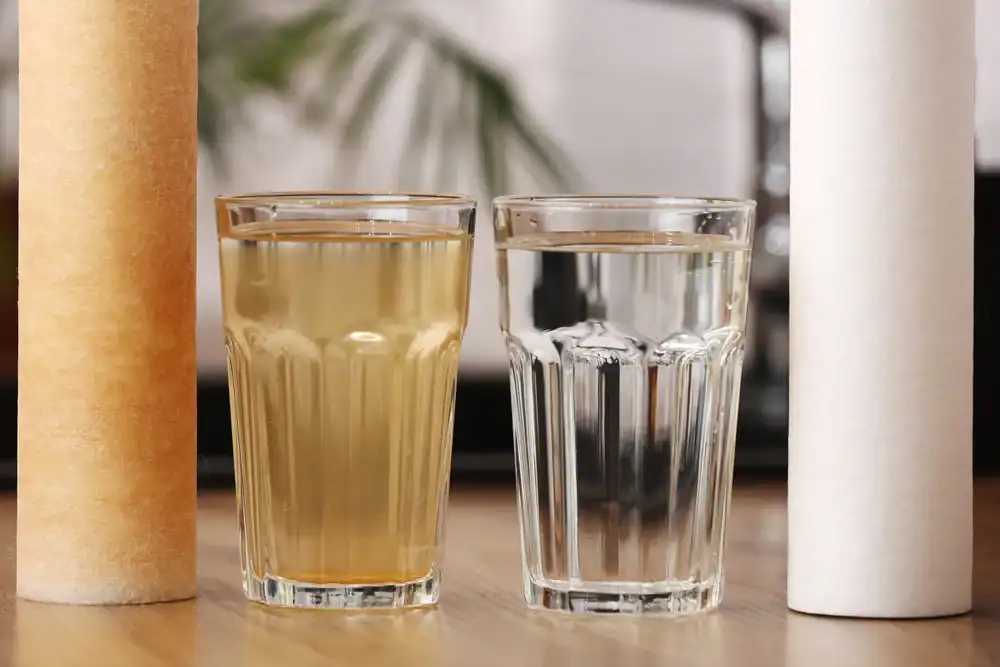
Iron is one of the most common well water problems in Central Florida, and it’s also one of the most visible — orange staining on sinks, toilets, shower doors, and laundry is hard to ignore. An iron filter system typically costs $1,000 to $3,000 installed, depending on the method used and the severity of the iron concentration in your water.
The two most common approaches are air injection oxidation, which runs $1,500 to $2,500 and requires no chemicals, and chemical injection using hydrogen peroxide or chlorine, which runs $1,000 to $2,000. The right choice depends on your water test results — specifically your iron levels, whether you have iron bacteria (a separate issue from dissolved iron), and whether sulfur is also present.
UV Water Purifier Cost: What It Does and What It Doesn't
A UV disinfection system runs $600 to $2,200 installed, and for Lake County homes on well water, it’s often a necessary part of the picture — not an optional upgrade.
Here’s why. Florida’s warm climate creates year-round conditions for bacterial growth in wells. Coliform bacteria and E. coli can show up even in well-maintained systems, and there’s no government testing or treatment standing between your well and your tap. UV disinfection kills 99.99% of waterborne organisms and bacteria without adding any chemicals to your water — no chlorine taste, no byproducts, just water that’s been exposed to a specific wavelength of light that destroys bacteria at the cellular level.
But UV treatment only works when it’s installed correctly. The water entering the UV chamber has to be clear — free of iron, sediment, and hardness — because particles in the water can physically shield bacteria from the light. This is why UV is always the last stage in a properly designed system, not the first. If someone quotes you a UV system without asking about your iron and sediment levels first, that’s worth asking about.
Annual maintenance for a UV system is straightforward: the lamp needs to be replaced once a year at a cost of $50 to $150, and the quartz sleeve around the lamp should be cleaned or replaced periodically. It’s one of the lower-maintenance components in a full treatment system, but skipping the annual lamp replacement defeats the purpose entirely — UV lamps lose effectiveness over time even when they’re still visibly lit.
Our Purelight System is our branded UV disinfection solution, designed specifically for whole-house installation as the final stage in a complete treatment sequence. It’s built to handle the bacterial concerns that are common in Lake County wells, and it’s sized to match your home’s flow rate so you’re not trading water pressure for water safety.
How to Know Which Well Water Treatment System Is Right for Your Home
This is the question most people are actually trying to answer when they search for cost information. The price ranges in this guide are real, but they can’t tell you what your home specifically needs — and buying the wrong system, or buying systems out of sequence, wastes money and leaves problems unsolved.
The only reliable starting point is a water test. Not a general sense of “my water smells funny” or “I have hard water” — an actual analysis that tells you what’s in your water and at what concentrations. Iron levels, sulfur content, hardness, pH, bacteria, total dissolved solids — these numbers determine what equipment you need, how it should be sequenced, and what size system makes sense for your household’s water demand.
We offer a free water analysis and consultation for homeowners in Lake County and the surrounding areas. We’re based in Leesburg, which means we’re not routing your call to a national service center — we’re a local company that knows what Lake County well water looks like, what problems come up most often in this area, and what systems actually hold up in Florida’s climate long-term.
A few things worth knowing before you call anyone: a reputable company will always test your water before recommending a system. They’ll explain the results in plain language, not use them as a sales tool. They’ll give you a complete installed price — equipment plus installation, no surprises — and they’ll be clear about what annual maintenance costs look like. If a quote comes without a water test, or if the system being recommended sounds like a standard package regardless of your results, those are fair reasons to ask more questions.
We also offer financing with low monthly payments, which makes a $3,000 to $6,000 system a lot more manageable than the sticker price suggests. And if you’re active military, a veteran, or a first responder, we offer a $500 discount as a straightforward thank-you — not a promotional gimmick.

Getting the Right Well Water Treatment System in Lake County, FL
The cost of well water treatment in Lake County comes down to one thing: what’s actually in your water. The geology here — limestone, sulfur compounds, warm groundwater — means most wells carry more than one problem, and treating just one of them rarely fixes the picture. A properly designed, correctly sequenced multi-stage system costs more upfront than a single-stage filter, but it solves the problem instead of managing part of it.
The most useful next step isn’t another search. It’s a water test. Once you know what you’re dealing with, the right system and the real cost become a lot clearer.
If you’re in Lake County and want a straight answer, Quality Safe Water of Florida LLC offers a free water analysis with no obligation. We’ve been treating Florida well water for over 50 years, we’re A+ rated with the Better Business Bureau with zero complaints, and we’re open seven days a week — including weekends — because water problems don’t wait for Monday.