Summary:
Your tap water shouldn’t taste like a swimming pool or leave white film on everything it touches. Yet for many Marion County residents, that’s exactly what comes out of the faucet—hard water loaded with minerals, chlorine you can smell from across the room, and concerns about what else might be lurking in there.
Countertop water filters solve that problem without the permanent installation, plumber visits, or landlord approvals that come with built-in systems. You get cleaner water where you need it most—at your kitchen sink—with a unit that plugs in, sits beside your faucet, and moves with you when you do. Here’s what you need to know about choosing one that actually handles Florida’s unique water quality challenges.
What Is a Countertop Water Filter and How Does It Work
A countertop water filter is a self-contained filtration unit that sits on your kitchen counter and purifies water without connecting to your plumbing. You either fill a reservoir manually or attach a diverter to your faucet, and the system filters water through multiple stages before dispensing it through a built-in spout.
The technology inside varies widely. Basic models use activated carbon to remove chlorine and improve taste. Mid-range systems add sediment filters and ion exchange for better contaminant reduction. High-end countertop reverse osmosis systems force water through a semi-permeable membrane that blocks dissolved solids, heavy metals, and microscopic contaminants that simpler filters miss entirely.
What makes these different from pitcher filters is capacity and performance. Where a pitcher might hold 10 cups and take 15 minutes to filter, countertop units process water faster and hold more—often a gallon or more of purified water ready to pour. The filtration is also more thorough because the water passes through multiple treatment stages rather than just trickling through a single carbon cartridge.
Countertop Carbon Filters vs Reverse Osmosis Systems
Not all countertop filters are created equal, and the difference between carbon filtration and reverse osmosis determines what contaminants you actually remove.
Carbon-based countertop filters work by adsorption—contaminants stick to the activated carbon as water flows through. These excel at removing chlorine, improving taste and odor, and reducing some chemicals like pesticides and VOCs. They’re affordable, require no electricity, and work using your existing water pressure. Brands like Pelican and Culligan offer 3-stage countertop systems in this category, typically priced under $200.
The limitation is what carbon can’t remove. Dissolved minerals that cause hard water pass right through. So do fluoride, nitrates, and many heavy metals. Total dissolved solids (TDS) stay essentially unchanged. If your Marion County water is hard or you’re concerned about specific contaminants like arsenic or PFAS, carbon alone won’t solve the problem.
Countertop reverse osmosis systems take a different approach. They use a pump to force water through a membrane with pores around 0.0001 microns—small enough to block dissolved salts, minerals, and contaminants at the molecular level. This removes 95-99% of total dissolved solids, including the calcium and magnesium that cause hardness, along with fluoride, arsenic, lead, nitrates, and PFAS compounds that carbon filters miss.
The tradeoff is complexity and cost. Countertop RO systems need electricity to run the pump, produce some wastewater (though modern units like the AquaTru waste far less with 4:1 efficiency ratios), and cost more upfront—typically $300-500. But if you’re dealing with Florida’s notoriously hard water or specific health-related contaminants, RO is the technology that actually addresses them.
For most Marion County residents dealing with hard water from the Floridan Aquifer, sulfur odors, or concerns about agricultural runoff and emerging contaminants, a countertop reverse osmosis system provides the level of filtration that matches the challenge. Carbon systems work fine for basic taste improvement if your water quality is already decent—but that’s rarely the case here.
Who Actually Benefits from Countertop Water Filters
Countertop filters aren’t for everyone, but they’re ideal for specific situations where permanent installations don’t make sense.
Renters and apartment dwellers top the list. If your lease prohibits plumbing modifications or you’re not staying long enough to justify installing an under-sink system, countertop units provide serious filtration without risking your security deposit. You plug them in, use them daily, and pack them up when you move. No drill holes, no faucet replacements, no explaining modifications to a landlord.
Small households and individuals also benefit. If you’re the only one drinking filtered water or you’re a couple without kids, a countertop system’s capacity—typically 1-2 gallons of purified water at a time—keeps up with demand without the overkill of a whole-house system. The countertop footprint works in efficiency apartments and small kitchens where under-sink cabinet space is already maxed out with cleaning supplies and trash bins.
People testing the water before committing to permanent solutions find countertop systems useful too. Maybe you’re not sure if filtration will make enough difference to justify a bigger investment. A countertop reverse osmosis system lets you experience what truly purified water tastes like and see the impact on your coffee, cooking, and drinking water before deciding whether to upgrade to a whole-house solution.
Homeowners in temporary housing situations—living in a rental while building, staying somewhere short-term for work, or in transition between properties—get the water quality they want without installing equipment they’ll leave behind.
The common thread is portability and flexibility. You’re not locked into one property or one plumbing setup. The system adapts to wherever you are, providing consistent water quality regardless of what’s coming out of the local tap.
That said, if you own your home long-term, have a larger family, or want filtered water throughout the house—not just at one kitchen tap—a countertop system is a stepping stone, not the final answer. It handles drinking and cooking water well, but your showers, laundry, and appliances still deal with whatever’s in the unfiltered supply. For comprehensive protection in a permanent residence, whole-house filtration addresses the problem at the source rather than treating symptoms at a single point of use.
Reverse Osmosis Water Filter Countertop: What Makes RO Different
Reverse osmosis countertop systems represent the highest level of filtration available in a portable format. Understanding how they work and what they remove helps you decide if the investment makes sense for your water quality situation.
RO technology uses pressure to force water through a semi-permeable membrane with microscopic pores. Contaminants larger than water molecules—including dissolved minerals, salts, metals, and chemicals—can’t pass through. They’re flushed to a waste line while purified water collects in a storage tank.
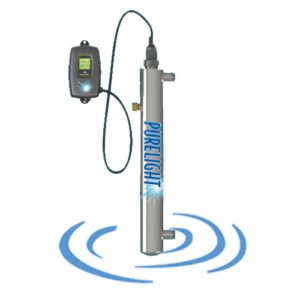
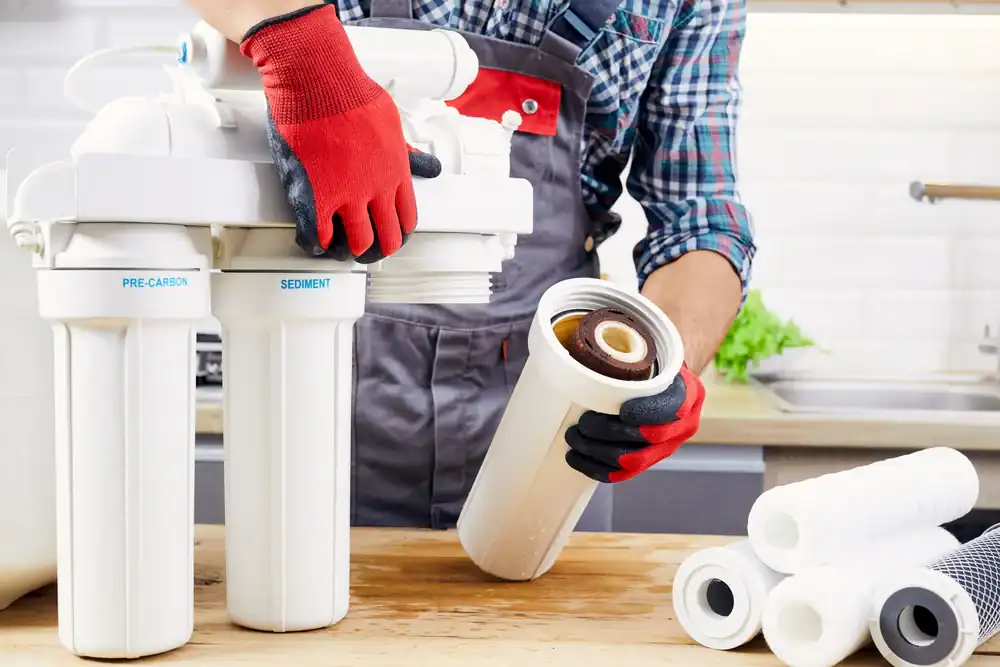
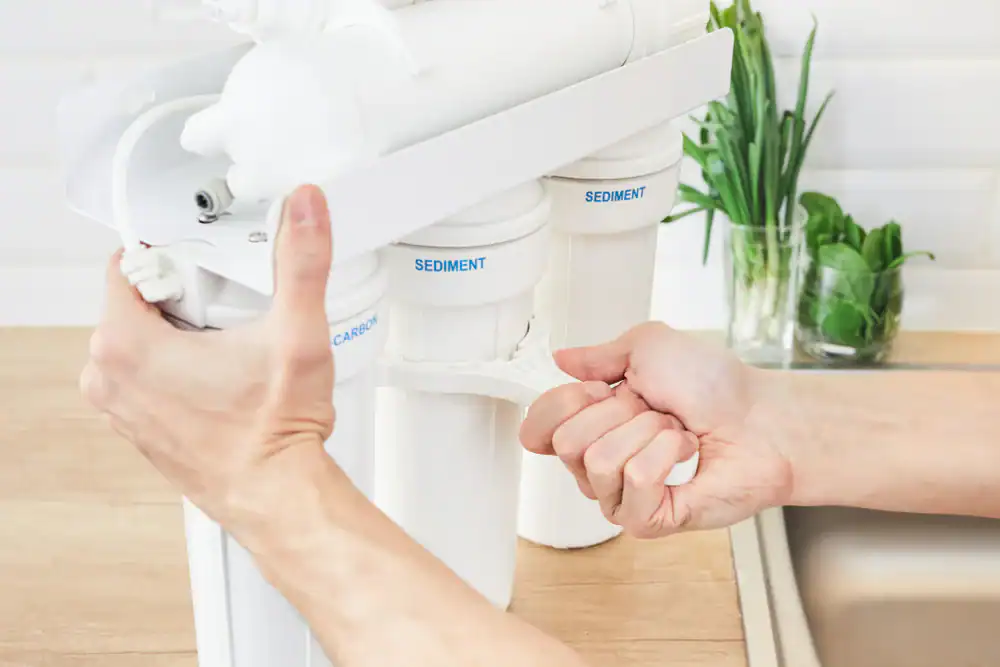
Most countertop RO systems use 4-6 filtration stages. Sediment pre-filters catch particles that would clog the membrane. Carbon stages remove chlorine and organic compounds. The RO membrane does the heavy lifting on dissolved solids. Post-filters polish the water and sometimes add minerals back for taste. Higher-end units include UV sterilization to eliminate bacteria and viruses.
The result is water with TDS levels dropping from 200-400+ ppm (typical in Marion County) down to 5-15 ppm—approaching the purity of distilled water. You taste the difference immediately. No chlorine, no mineral aftertaste, no sulfur smell. Just clean water that makes coffee and tea taste like they should.
Best Countertop Reverse Osmosis System: What to Look For
When you’re comparing countertop RO systems, certain features separate the best performers from the mediocre ones.
Certification matters more than marketing claims. Look for NSF/ANSI certifications—specifically Standards 42 (aesthetic effects), 53 (health effects), 58 (reverse osmosis), 401 (emerging contaminants), and P473 (PFAS reduction). These are third-party verified performance standards, not manufacturer promises. Systems like the AquaTru carry certifications for 83+ specific contaminants, meaning independent labs confirmed what the system actually removes.
Water efficiency determines how much you waste. Older RO systems might waste 3-5 gallons for every gallon of purified water produced. Modern countertop units have improved dramatically—the best achieve 4:1 or even 5:1 pure-to-drain ratios. In a county facing water shortage restrictions, that efficiency matters both environmentally and economically.
Filter lifespan and replacement cost affect long-term value. Pre-filters typically last 6-12 months. RO membranes run 2-3 years. Calculate the annual filter cost, not just the upfront price. A $300 system with $80/year in filters might cost less over five years than a $450 system with $150/year in replacements. Also check if filters are proprietary or if compatible third-party options exist—getting locked into expensive brand-specific cartridges adds up.
Tank capacity and filtration speed determine daily usability. If you’re filling water bottles for the gym, making coffee, and cooking, you need reasonable throughput. Systems that take 15-20 minutes to process a gallon mean you’re waiting or planning ahead. Larger tanks (1+ gallon) reduce refill frequency. Some units let you pour while they’re still filtering, which helps during high-demand times.
Build quality and warranty coverage indicate how long the system will last. Glass collection vessels beat plastic for durability and taste neutrality. Stainless components outlast cheaper alternatives. A 1-year warranty is standard, but some manufacturers offer 2-3 years, suggesting confidence in their product longevity.
For Marion County residents specifically, prioritize systems certified for the contaminants most common here—hardness minerals, chlorine, fluoride, nitrates, and PFAS. A system that removes 99% of dissolved solids handles the Floridan Aquifer’s high mineral content. One certified for PFAS addresses concerns about agricultural runoff and emerging contaminants showing up in Florida groundwater.
The “best” system is the one that matches your actual water quality challenges, fits your available space, and delivers certified performance at a total cost (purchase plus filters) that makes sense compared to buying bottled water or living with poor-quality tap water.
Reverse Osmosis Countertop System: Installation and Maintenance Reality
One of the biggest selling points of countertop RO systems is the “no installation required” promise. That’s mostly true, but understanding what’s actually involved helps set realistic expectations.
Setup typically takes 10-15 minutes. You unbox the unit, insert the filter cartridges (they usually twist or click into place), fill the water reservoir, and run a couple of flush cycles to prime the system. Then you plug it into a standard electrical outlet and you’re filtering water. No tools, no plumbing connections, no faucet modifications. If you can make coffee, you can set up a countertop RO system.
Daily use is straightforward. You fill the input tank with tap water—either by pouring from your faucet or, with some models, attaching a diverter hose. The system automatically processes the water and fills the clean water tank. You pour from the spout when you need filtered water. Empty the waste tank periodically (how often depends on your usage and the system’s efficiency ratio).
The maintenance reality is filter replacement. Pre-filters need changing every 6-12 months depending on your water quality and usage. The RO membrane lasts longer—typically 2-3 years. Most systems have indicator lights or displays that track filter life, so you’re not guessing. Replacement is usually tool-free: twist out the old cartridge, twist in the new one, run a flush cycle.
What people underestimate is the routine of managing the tanks. Unlike an under-sink system connected to your water line, countertop units require you to refill the input tank and empty the waste tank. If you use a lot of water—filling multiple bottles daily, cooking with filtered water, making ice—that becomes a several-times-daily task. It’s not difficult, just something to build into your routine.
Cleaning the tanks periodically keeps water tasting fresh and prevents any biofilm buildup. A quick soap-and-water rinse weekly takes care of it. Some people run diluted vinegar through the system monthly to keep components clean.
The portability advantage means you can take the system with you when you move, travel with it to a vacation rental, or even use it in an RV. But that same portability means it’s not a set-and-forget solution like a permanently installed under-sink system. You’re more involved in the day-to-day operation.
For people who value convenience above all else and plan to stay in their home long-term, that ongoing involvement might be a dealbreaker. For renters, frequent movers, or anyone who wants filtration without permanent installation, it’s a reasonable tradeoff for the flexibility you gain.
The key is going in with eyes open. Countertop RO systems work extremely well at purifying water. They’re genuinely portable and require no plumbing skills. But they do require active participation—filling, emptying, and maintaining tanks—rather than just turning on a tap and forgetting about it.
Choosing the Right Water Filtration for Your Marion County Home
Countertop water filters—especially reverse osmosis systems—solve real problems for renters, small households, and anyone wanting cleaner water without permanent installation. They remove the contaminants Marion County residents deal with most: hard water minerals from the Floridan Aquifer, chlorine taste from municipal treatment, sulfur odors from well water, and emerging concerns like PFAS from agricultural areas.
The technology works. Certified countertop RO systems eliminate 95-99% of dissolved solids and contaminants, delivering water quality that rivals or exceeds bottled water at a fraction of the cost. For temporary living situations or point-of-use needs, they’re an excellent choice.
But here’s the honest truth: if you own your home and plan to stay, a countertop system is a starting point, not the complete answer. It handles drinking and cooking water at one tap. The rest of your house—showers, laundry, dishwasher, water heater—still deals with untreated water. Scale builds up in pipes. Appliances work harder. Your skin and hair feel the effects of chlorine and hard water every time you shower.
That’s where whole-house solutions make the difference. Instead of treating symptoms at a single faucet, you address water quality at the source—every tap, every fixture, every appliance protected. For families serious about water quality in a permanent residence, that comprehensive approach delivers better long-term value and results.
If you’re trying to figure out what actually makes sense for your specific situation—whether a countertop system solves your problem or you’d benefit from a more complete solution—we can help. With 50+ years of experience, A-rated BBB standing, and WQA certified professionals who understand Marion County’s water challenges, we provide honest recommendations based on testing your actual water, not pushing a one-size-fits-all product.