Summary:
You want cleaner water. That much is clear. What’s not clear is whether you need it at every tap in your house, or just where you drink and cook. Under sink water filters and whole house systems both work, but they work differently—and choosing the wrong one means either overpaying for coverage you don’t need, or under-protecting your home from contaminants that are still getting through. The decision starts with understanding what each system actually does, what your water needs, and what makes sense for a Marion County, FL home where drought conditions and water quality issues aren’t hypothetical. Let’s break down the real differences.
What an Undersink Water Filter System Actually Does
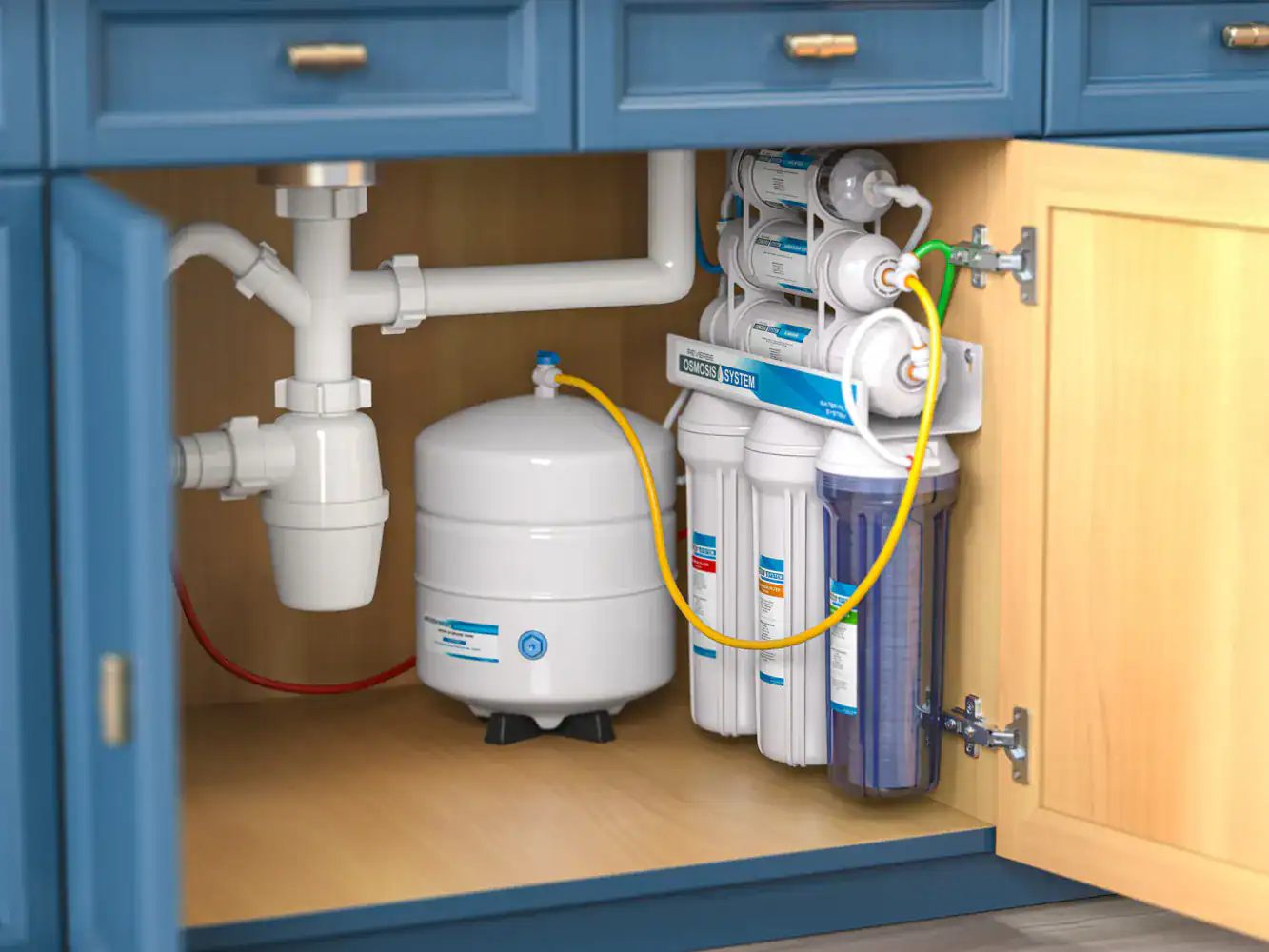
An undersink water filter system installs beneath your kitchen sink and treats water at that single point of use. You get filtered water from one dedicated faucet. Everything else in your home—showers, laundry, other sinks—still gets untreated water.
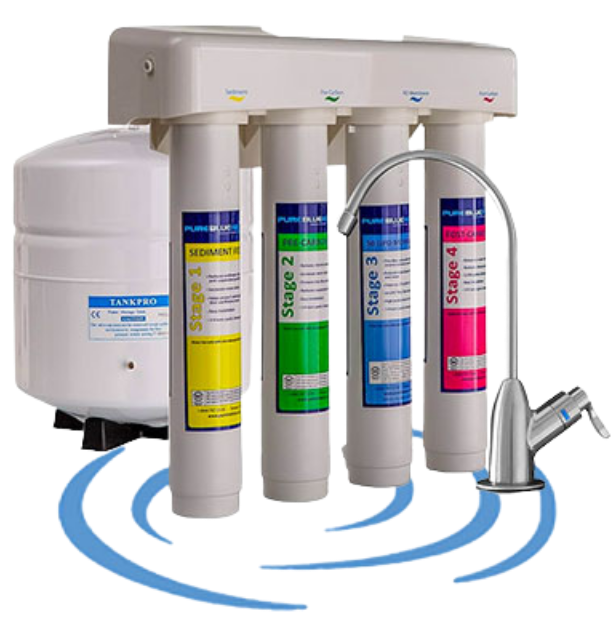
These systems range from basic carbon filters that remove chlorine and improve taste, to reverse osmosis units that strip out dissolved solids, heavy metals, PFAS, nitrates, and other contaminants that carbon alone can’t touch. The difference in what they remove is significant. A simple carbon filter handles taste and odor. A multi-stage RO system removes up to 99% of contaminants, including the ones you can’t see, taste, or smell.
Most under sink systems install in an hour or two. You don’t need to reroute your main water line or find space in your garage. The system sits in the cabinet under your sink, connects to your cold water line, and either feeds a separate faucet or ties into your existing one. Filter changes happen every six months to a year depending on the system and your water quality.
Under Sink Reverse Osmosis: What It Removes and Why It Matters
Reverse osmosis systems use a semipermeable membrane to filter water at the molecular level. Water molecules pass through. Contaminants don’t. It’s one of the few filtration methods that removes dissolved solids—the stuff that makes your water “hard” or leaves white buildup on fixtures.
RO systems remove lead, arsenic, fluoride, nitrates, chromium-6, radium, and PFAS (the “forever chemicals” that have been showing up in Florida water reports). They also remove bacteria, viruses, and pharmaceuticals that slip through municipal treatment. If your water comes from a well, or if you’ve seen your local water quality report and didn’t like what you read, RO is the technology that handles the widest range of threats.
The trade-off is water waste. Standard RO systems produce three to four gallons of wastewater for every gallon of purified water. Newer high-efficiency models cut that ratio closer to one-to-one, but you’re still sending water down the drain. That wastewater goes into your septic or sewer system—it’s not dangerous, just not purified.
RO systems also remove beneficial minerals like calcium and magnesium. Some systems add a remineralization stage to put those back in for taste. Others don’t. If you’re used to mineral-rich well water, straight RO water can taste flat. That’s fixable, but it’s something to know going in.
Installation cost for an under sink RO system runs between $400 and $1,000 depending on the system and whether you hire a pro or do it yourself. Annual filter replacements cost $100 to $250. The RO membrane itself lasts two to three years and costs another $100 to $200 when it’s time to replace.
If you’re spending $50 to $100 a month on bottled water, the system pays for itself in the first year. After that, you’re saving money every month while eliminating plastic waste.
Water Filter for Sink: Carbon vs Multi-Stage Systems
Not every under sink system uses reverse osmosis. Carbon filters are simpler, cheaper, and effective for specific problems—mainly chlorine, chloramines, volatile organic compounds (VOCs), and bad taste or odor.
Activated carbon works through adsorption. Contaminants stick to the surface of the carbon as water passes through. The more surface area the carbon has, the more it can trap. Block carbon filters pack more surface area into a smaller space than granular carbon, so they tend to perform better and last longer.
Carbon filters don’t remove dissolved minerals, so they won’t help with hard water. They don’t remove nitrates, fluoride, or heavy metals unless they’re specifically designed with additional media for those contaminants. If your water test shows high levels of lead, arsenic, or PFAS, carbon alone won’t cut it. You’ll need a multi-stage system that combines carbon with other filtration technologies, or you’ll need to step up to reverse osmosis.
Multi-stage systems layer different types of filtration. A typical setup might include a sediment pre-filter to catch dirt and rust, a carbon block filter for chlorine and VOCs, and a specialty filter for specific contaminants like lead or PFAS. These systems cost more than single-stage carbon filters, but less than full RO systems. They’re a middle ground when you need more than taste improvement but don’t want the complexity or waste of reverse osmosis.
The key is knowing what’s in your water before you choose a system. A free water test tells you whether you’re dealing with aesthetic issues (taste, odor, cloudiness) or health-related contaminants (lead, bacteria, nitrates). Once you know what you’re filtering, you can match the technology to the problem instead of guessing.

Whole House Water Filtration: When You Need It Everywhere
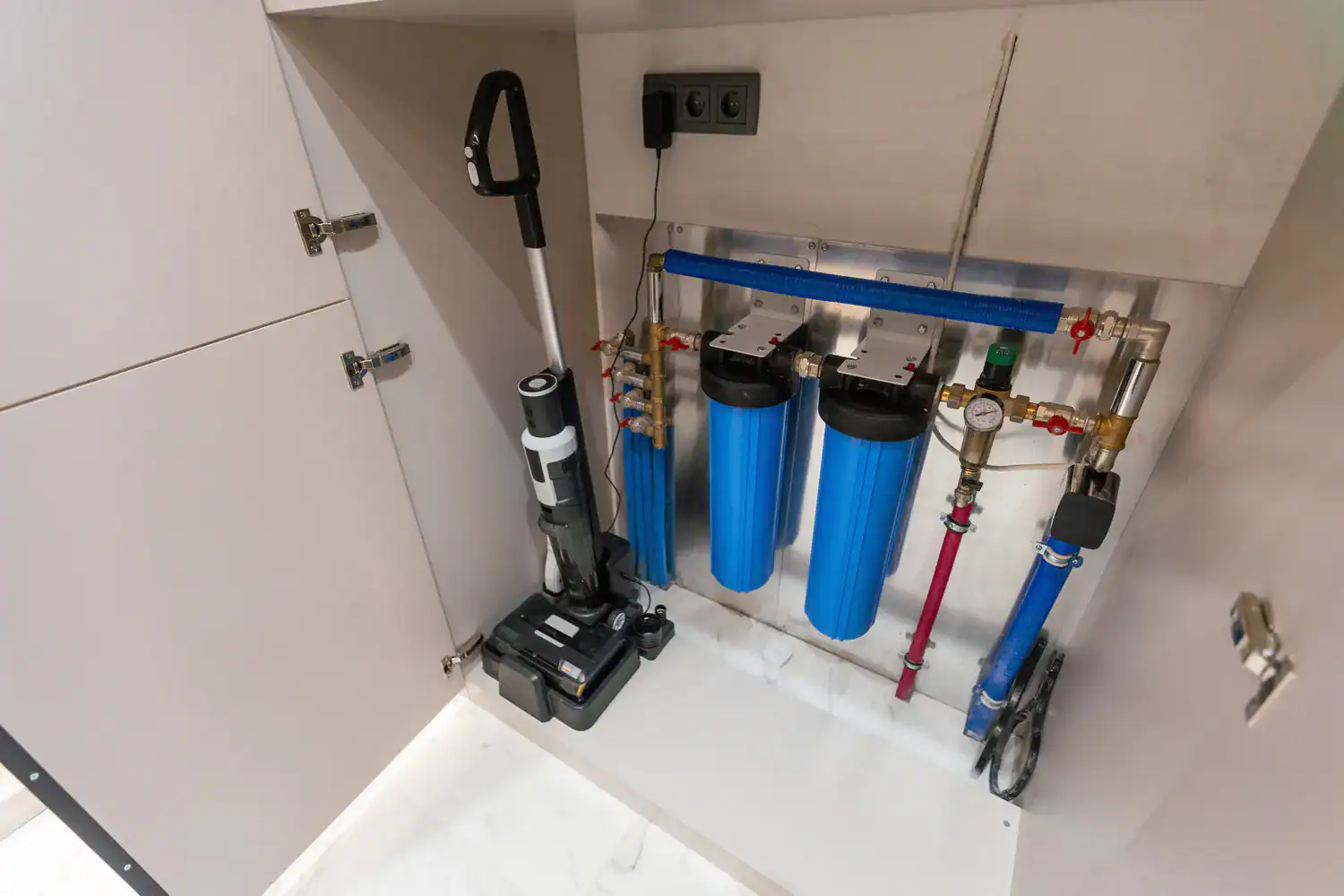
A whole house system installs at your main water line—the point where water enters your home. Every tap, shower, appliance, and toilet gets filtered water. You’re not just treating drinking water. You’re treating all of it.
Whole house systems handle different problems than under sink filters. They’re designed for high flow rates and large volumes. That means they focus on contaminants that affect your entire plumbing system: sediment, chlorine, iron, sulfur, and hardness. They protect your water heater from scale buildup. They keep rust stains off your sinks and toilets. They remove the chlorine that vaporizes in your shower and makes your skin dry and your hair brittle.
What they don’t do—at least not in most cases—is remove the same range of health-related contaminants that a point-of-use RO system removes. Whole house filters can reduce chlorine, sediment, iron, and sulfur. They can condition hard water to prevent scale. But they typically don’t remove PFAS, nitrates, or heavy metals unless you’re installing a very expensive, specialized system designed for that purpose. If you want comprehensive contaminant removal for drinking water, you’ll still need a point-of-use filter at the kitchen sink.
Whole House vs Under Sink: Coverage, Cost, and What You're Actually Solving
The biggest difference between whole house and under sink systems is coverage. Whole house systems treat every drop of water that enters your home. Under sink systems treat only the water from one faucet.
If your problem is chlorine taste in your drinking water, an under sink carbon filter solves that for a few hundred dollars. If your problem is chlorine smell in your shower, rust stains on your laundry, and scale buildup in your dishwasher, an under sink filter doesn’t help. You need a whole house system.
Whole house systems cost more upfront—typically $1,500 to $5,000 depending on the type of system, the size of your home, and what contaminants you’re treating. Installation is more involved because you’re tying into the main water line, usually in the garage or utility room. You need space for the tank and the system components. If you’re on well water and dealing with iron, sulfur, or bacteria, you might need pre-treatment equipment in addition to the main filtration system.
Maintenance is simpler in some ways, more complex in others. You’re maintaining one system instead of multiple under sink filters, but that one system has larger filters, more expensive media, and sometimes requires professional service. Filter changes for whole house systems happen every six months to a year. Media replacement (for things like iron or sulfur filters) can run into the hundreds of dollars.
The cost-effectiveness depends on what you’re solving. If you’re replacing water heaters every five years instead of every ten because of scale buildup, a whole house system pays for itself in appliance longevity. If you’re just trying to make your drinking water taste better, it’s overkill.
When You Need Both: Layering Whole House and Point-of-Use Filtration
Some homes need both systems. That’s not upselling—it’s solving two different problems that one system can’t handle.
If you’re on well water in Marion County, FL, you might have iron, sulfur, hardness, and bacteria. A whole house system handles the iron and sulfur so you don’t get rust stains and rotten egg smell. It conditions the hardness so your appliances last longer. It might include UV purification to kill bacteria. But it’s not removing nitrates, arsenic, or PFAS from your drinking water. For that, you add an under sink RO system at the kitchen.
If you’re on city water and dealing with chlorine, chloramines, and disinfection byproducts throughout your home, a whole house carbon filter removes those before they reach your shower and appliances. Then you add an under sink system to remove the contaminants that the whole house filter doesn’t catch—things like lead from your home’s plumbing, or PFAS that made it through municipal treatment.
This layered approach costs more upfront, but it’s often the only way to address both whole-home water quality and point-of-use drinking water safety. The whole house system does the heavy lifting for volume and flow rate. The under sink system provides the final barrier for the water you ingest.
The key is testing your water first. You don’t want to install a whole house iron filter if you don’t have an iron problem. You don’t want to pay for RO if your water is already clean. A professional water test shows you exactly what you’re dealing with, and a qualified installer designs a system that treats those specific issues without over-engineering (or under-protecting) your setup.

Choosing the Right Water Filtration System for Your Marion County, FL Home
The right system depends on your water source, your water quality, and what you’re trying to fix. Under sink filters make sense when you want cleaner drinking and cooking water without treating the entire house. Whole house systems make sense when you’re dealing with problems that affect your plumbing, appliances, and bathing water. And in many cases, the best solution is both—whole house filtration for volume and protection, plus point-of-use treatment for the water you drink.
Before you buy anything, test your water. Not a guess, not a neighbor’s report—your water, from your tap. That test tells you whether you’re dealing with aesthetic issues or health hazards, and it shows you which filtration technology actually solves your problem.
If you’re in Marion County, FL and you want to know what’s in your water and what system makes sense for your home, we offer free professional water testing and custom system design based on your results—not a sales pitch, just the solution that fits.