Summary:
What Makes Whole House Water Filtration Different From Other Home Improvements
Most home improvements lose money the second you finish them. You spend $30,000 on a kitchen remodel and add maybe $26,000 to your home’s value if you’re lucky. That’s not an investment. That’s an expense you’re trying to justify.
A whole house water filtration system works differently. It solves problems that are actively costing you money right now. And it keeps solving them for the next 10 to 15 years while protecting the most expensive systems in your home.
Instead of filtering water at one sink or shower, the system treats every drop of water the moment it enters your house. That means every faucet, every appliance, every shower gets clean, filtered water. No more buying separate filters for different rooms. No more wondering if the water in your guest bathroom is as clean as the water in your kitchen.
How a Whole House Water Filter Actually Works
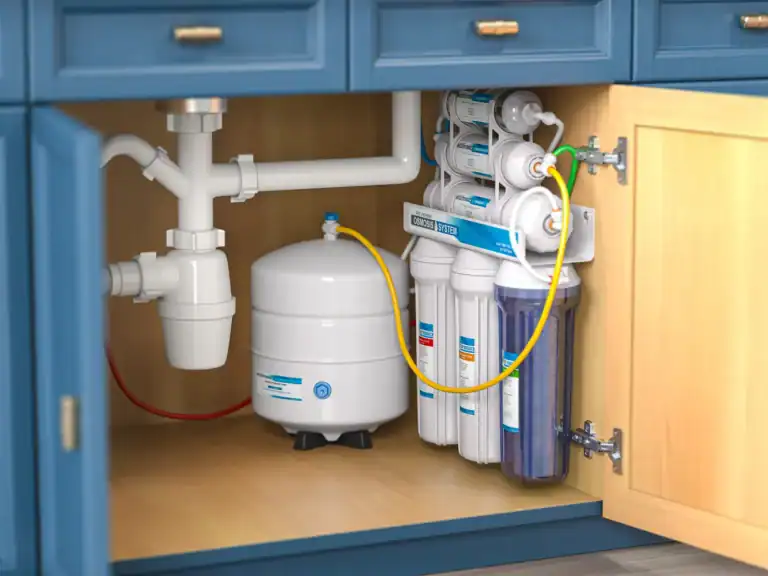
The system installs at your main water line—the point where water first enters your home. From there, it uses multiple stages of filtration to remove different types of contaminants before they reach your pipes, appliances, or taps.
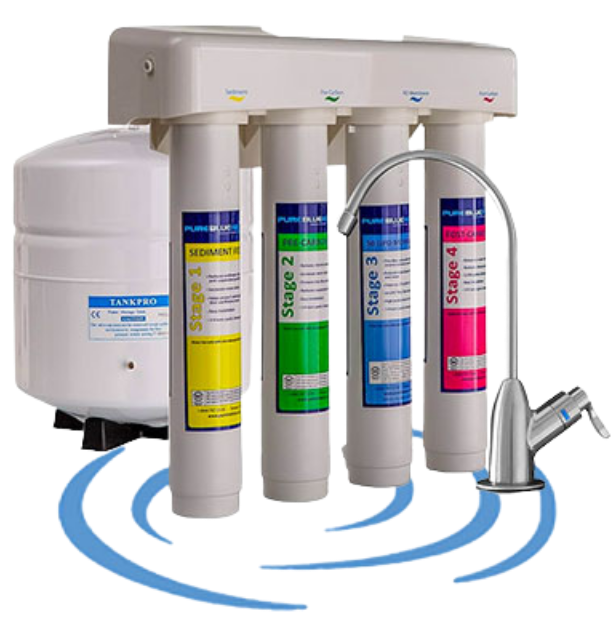
Most quality systems start with a sediment pre-filter that catches dirt, sand, and larger particles. This protects the more advanced filters downstream and keeps your plumbing clear. Next, the water passes through activated carbon or catalytic carbon filters. These remove chlorine, chloramines, pesticides, and the chemicals that make your water taste or smell bad.
For Lake County homeowners dealing with well water, there’s usually an additional stage. Iron and sulfur are common here because of our limestone aquifer system. An air injection oxidation filter or specialized media bed converts dissolved iron and hydrogen sulfide into particles that can be trapped and flushed away during a backwash cycle. This is what eliminates that rotten egg smell and prevents the orange staining on your fixtures.
The whole process is automatic. The system monitors water flow and backwashes itself when needed to stay clean and efficient. You’re not adding chemicals. You’re not constantly changing filters. The system does its job in the background while you use water normally throughout your home.
What you get on the other end is water that doesn’t smell, doesn’t stain, and doesn’t damage everything it touches. And because the filtration happens before water reaches your appliances, your water heater, dishwasher, and washing machine aren’t dealing with the minerals and contaminants that shorten their lifespan.
Why Lake County Water Needs More Than a Basic Filter
Lake County sits on top of the Floridan Aquifer, a massive limestone formation that gives us abundant groundwater. That’s the good news. The bad news is that limestone is loaded with minerals, and as water moves through it, it picks up iron, sulfur, calcium, and magnesium. That’s why so many homes here deal with hard water, sulfur smells, and iron staining.
If you’re on well water, the problem is even more pronounced. Private wells pull from deeper in the aquifer where sulfur-reducing bacteria thrive in low-oxygen environments. These bacteria convert sulfates into hydrogen sulfide gas—the source of that rotten egg smell. Iron exists in multiple forms down there too. Ferrous iron is clear when it comes out of the tap, but it oxidizes when exposed to air and turns into the rusty red stains you see everywhere.
Then there’s the issue of contamination. Lake County has seen concerns about landfill runoff near Mount Dora and agricultural chemicals seeping into groundwater from the farming areas around us. Pesticides like atrazine and glyphosate don’t just disappear. They end up in the water table. Municipal treatment plants aren’t designed to remove pharmaceuticals, PFAS, or many of the newer contaminants we’re learning about.
A basic pitcher filter or fridge filter isn’t built for this. Those are designed to improve taste at one faucet. They can’t handle the iron levels, sulfur concentrations, or contaminant loads that Central Florida water throws at them. You need a system that’s engineered specifically for the water conditions we deal with here. That means multi-stage filtration with media beds that can handle oxidation, bacterial growth, and mineral removal all at once.
We specialize in exactly this kind of system. We’re not selling you a one-size-fits-all solution shipped from out of state. We’re building systems based on what your specific water test shows and what problems your household is actually facing. That’s the difference between a system that works and one that doesn’t.

The Real ROI of a Whole House Water Filtration System
Let’s talk about what this investment actually returns. Because if you’re spending a few thousand dollars on a system, you want to know it’s worth it.
Start with the appliances. Your water heater is probably the biggest energy user in your home. When it’s filled with hard water and iron, scale builds up inside the tank and on the heating elements. That makes it work harder to heat water, which increases your energy bill. Worse, the scale causes the tank to fail years earlier than it should. Replacing a water heater costs $1,200 to $2,500 depending on the size and type. A whole house water filter prevents that scale from forming in the first place.
Same goes for your dishwasher and washing machine. These appliances aren’t cheap to replace, and hard water with iron shortens their lifespan significantly. Filtered water keeps them running efficiently and extends how long they last. That’s real money you’re not spending on repairs and replacements.
How Much You Save on Bottled Water and Cleaning
If your tap water tastes like chlorine or smells like sulfur, you’re probably buying bottled water. Most families in that situation spend $100 to $150 a month on cases of water. That’s $1,200 to $1,800 a year. Over 10 years, you’re looking at $12,000 to $18,000 just on bottled water.
A whole house water filtration system eliminates that expense completely. You’ll have clean, great-tasting water from every tap in your house. No more loading cases of bottles into your car. No more running out of water at inconvenient times. And no more contributing to the 40 billion plastic bottles Americans throw away every month.
Then there’s the cleaning. If you’ve got iron in your water, you know how much time you spend scrubbing orange stains off toilets, sinks, and tubs. You’re also going through more cleaning products trying to keep things looking decent. Filtered water doesn’t leave those stains. Your fixtures stay cleaner with less effort, and you’re not constantly buying harsh chemicals to deal with mineral buildup.
Even your laundry benefits. Hard water makes detergent less effective, so you use more of it. It also leaves mineral deposits in fabric that make clothes feel stiff and look dingy. Soft, filtered water means your detergent works better, your clothes last longer, and you’re using less product overall. These aren’t huge savings individually, but they add up month after month.
The average household sees a return on their whole house water filter investment within five to ten years just from these direct cost savings. That’s before you factor in the avoided costs of appliance replacements, plumbing repairs, and the increased resale value of your home.
What a Whole House Water Filter Adds to Your Home's Resale Value
Home buyers in 2026 aren’t just looking at granite countertops and open floor plans anymore. They’re asking about systems that protect their investment and lower their operating costs. A whole house water filtration system checks both boxes.
Real estate data shows that homes with whole house filtration systems can see a 3% to 5% increase in resale value. On a $350,000 home in Lake County, that’s $10,500 to $17,500 in added value. More importantly, it makes your home stand out in a market where buyers are more cautious and more informed than ever.
Think about it from a buyer’s perspective. They’re comparing two similar homes. One has a whole house water filter already installed and working. The other doesn’t. Which one feels like less hassle? Which one suggests the current owner actually took care of the property? The home with the filtration system signals that the owner invested in quality and protection, not just cosmetic updates.
Buyers also recognize that installing a system after they move in means dealing with contractors, figuring out which system to buy, and spending money they’d rather use on furniture or other priorities. If it’s already done, that’s one less thing on their list. That peace of mind has value, and it often translates into a faster sale and a better offer.
This is especially true in areas like Lake County where water quality issues are well known. Buyers doing their research will find out about the iron, sulfur, and hard water problems here. If your home already has the solution in place, you’ve removed a major objection before they even tour the property. That’s a competitive advantage that matters when you’re ready to sell.

Making the Investment That Actually Pays You Back
Most home improvements are expenses you’re calling investments. A whole house water filter is different. It solves real problems, saves you real money, and protects the most expensive systems in your home for the next decade or more.
You’re not just getting better-tasting water. You’re eliminating bottled water costs, extending appliance lifespans, reducing cleaning time and expenses, and increasing your home’s resale value. And you’re doing it with a system that requires minimal maintenance and works automatically in the background.
If you’re in Lake County, FL and you’re dealing with sulfur smells, iron staining, or hard water issues, this isn’t something you put off. Every month you wait is another month of damage to your appliances, money spent on bottled water, and frustration with water that doesn’t work the way it should. We specialize in whole house purification systems built specifically for the water challenges we face here. We’ll test your water, recommend the right system for your situation, and install it correctly the first time.