Summary:
You’ve probably heard about reverse osmosis filtration. Maybe you’re even using a traditional RO system right now and dealing with the slow refill times, the bulky tank under your sink, or that nagging question about how long water’s been sitting in there. Tankless reverse osmosis systems solve those exact problems by filtering water on-demand instead of storing it. No tank. No waiting. No stagnation. But how do they actually work, and are they worth the investment? Let’s walk through what makes tankless RO different, how the technology functions, and what you should know before deciding if it’s the right fit for your home.
How Does a Tankless Reverse Osmosis System Work?
A tankless reverse osmosis system filters your water the moment you turn on the faucet. Instead of slowly filling a storage tank and waiting for pressure to build, it uses a high-efficiency pump and advanced membrane to produce purified water in real time. Water flows from your cold supply line through pre-filters that remove sediment and chlorine, then gets pushed through the reverse osmosis membrane at high pressure. Contaminants get flushed to the drain while clean water goes straight to your tap.
The key difference is the pump. Traditional systems rely on your home’s water pressure and compensate for slow filtration by storing water ahead of time. Tankless systems use built-in booster pumps to maintain consistent pressure and flow, so you’re not dependent on a reservoir. That means you get fresh water every single time, and you’ll never run out mid-pot or mid-pitcher.
What Makes the Osmosis Water Filter Work Without a Tank?
The reverse osmosis membrane is the heart of any RO system, tankless or not. It’s a semi-permeable barrier with pores so small—about 0.0001 microns—that only water molecules can pass through. Dissolved solids, heavy metals, bacteria, and chemical contaminants get trapped and flushed away. In a traditional setup, this process is slow, which is why manufacturers added tanks to store filtered water.
Tankless systems solve the speed problem with more powerful pumps and optimized membrane configurations. Many use higher GPD (gallons per day) rated membranes, like 400, 600, 800, or even 1600 GPD models, compared to the 50 or 75 GPD membranes in older tank systems. That higher capacity allows the system to keep up with your demand in real time.
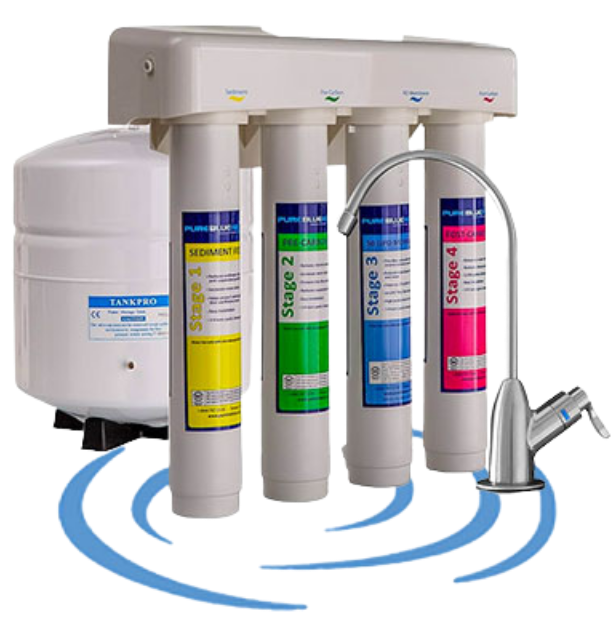
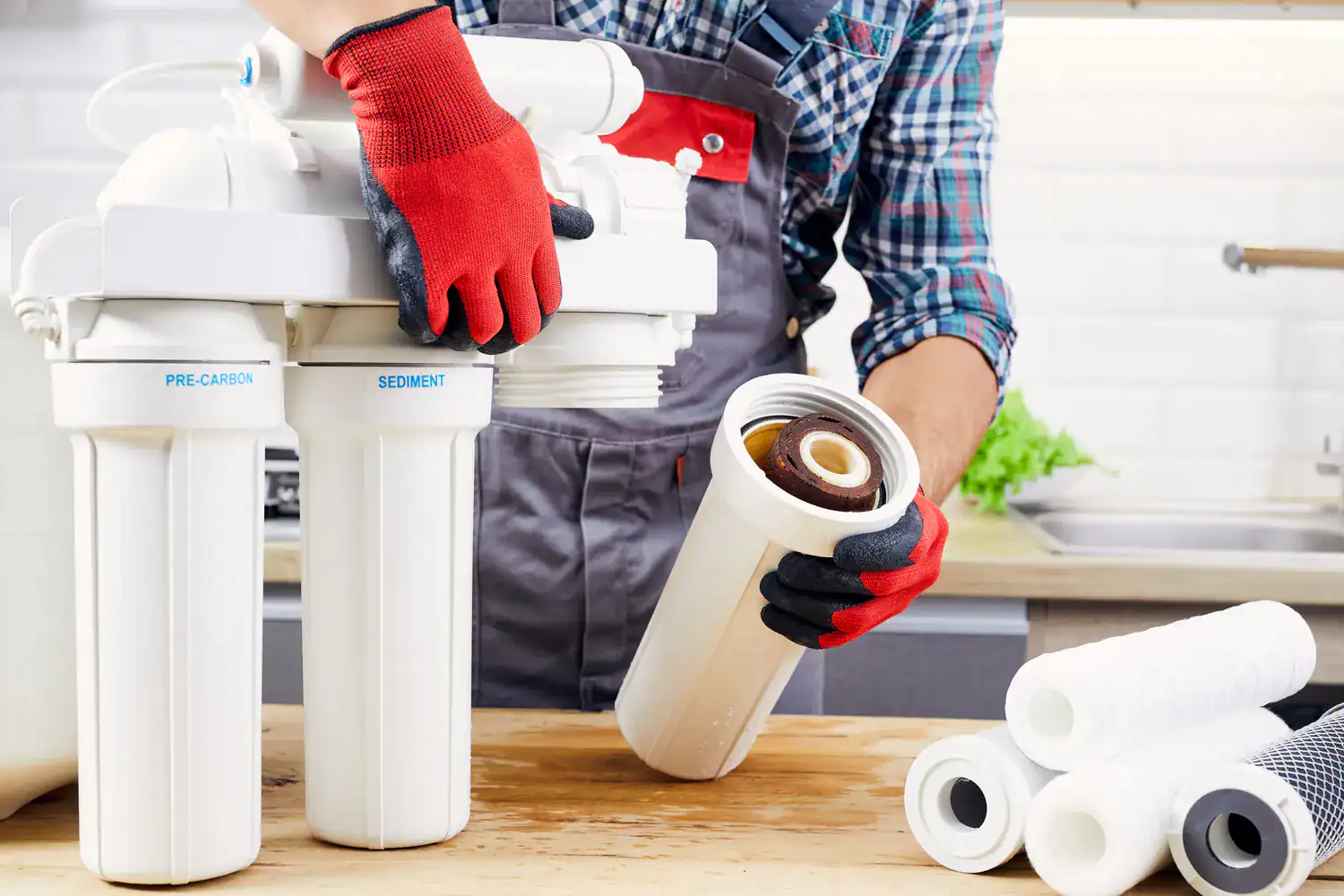
The filtration stages are similar to traditional RO. You’ll typically see a sediment pre-filter to catch rust and particles, a carbon block filter to remove chlorine and VOCs, the RO membrane itself, and a post-filter for final polishing. Some systems add remineralization stages to put beneficial minerals back into the water, and others include UV sterilization for well water applications. The difference isn’t what gets removed—it’s how and when the water gets delivered.
Because there’s no tank, the system has to be efficient. Most tankless models run at a 1:1 or 2:1 pure-to-drain ratio, meaning for every gallon of clean water produced, only one or two gallons go to waste. Traditional tank systems often waste three or four gallons for every gallon of purified water. Over time, that adds up, especially if you’re in an area with high water costs or drought restrictions like we’ve seen in Marion County, FL.
How the Osmosis Water System Delivers Continuous Flow
One of the biggest frustrations with traditional RO systems is running out of water. You’re filling a pasta pot, and halfway through, the flow slows to a trickle. Now you’re standing there waiting for the tank to refill, which can take anywhere from 30 minutes to a few hours depending on your home’s water pressure. Tankless systems eliminate that problem entirely.
When you open the faucet, the system kicks on and starts filtering immediately. As long as you have water pressure feeding the system, it keeps producing. That doesn’t mean the flow rate is instant like a regular tap—most tankless systems deliver around 0.4 to 0.6 gallons per minute, which fills a glass in about 10 to 15 seconds. It’s not lightning fast, but it’s steady and it doesn’t run out.
For families that use a lot of filtered water—whether for drinking, cooking, coffee, or even pet bowls—this makes a real difference. You’re not rationing water or timing your usage around tank refills. You just turn it on and go.
The trade-off is that tankless systems need electricity. There’s a pump running every time you use water, so you’ll need an outlet under your sink. If you lose power, you lose filtration. Traditional tank systems, on the other hand, can still dispense stored water during an outage. It’s a small consideration, but worth thinking about if power reliability is an issue in your area.
Another thing to know: the first few seconds of water from a tankless system can have slightly higher TDS (total dissolved solids) than water that’s been flowing for a bit. This is called “TDS creep,” and it happens because the pump takes a moment to reach full pressure. It’s not a health risk, and it’s usually unnoticeable unless you’re testing with a meter. Once the system is running, the water quality stabilizes and stays consistent.
Tankless vs. Traditional RO: What's the Real Difference?
If you’re trying to decide between a tankless reverse osmosis system and a traditional tank model, it comes down to a few practical factors: space, water usage, upfront cost, and how much you care about fresh vs. stored water. Both types do the same job—removing contaminants through reverse osmosis—but the experience of using them is different.
Traditional systems are simpler and usually cheaper upfront. They don’t need electricity, they work entirely on water pressure, and they’ve been around for decades, so the technology is proven. The downside is the bulky 3- to 4-gallon tank under your sink, the slow refill times, and the fact that water can sit in that tank for days or weeks if you’re not using it regularly. That raises concerns about stagnation and bacterial growth, especially if maintenance gets neglected.
Tankless systems cost more initially—usually a few hundred dollars more for the unit itself, plus installation. But they save space, waste less water, and deliver fresher water on demand. If you have a small kitchen, a large family, or you just hate waiting for water, tankless makes sense. If you’re on a tight budget and have plenty of under-sink room, a traditional system might be the better call.
Space, Efficiency, and Maintenance Differences
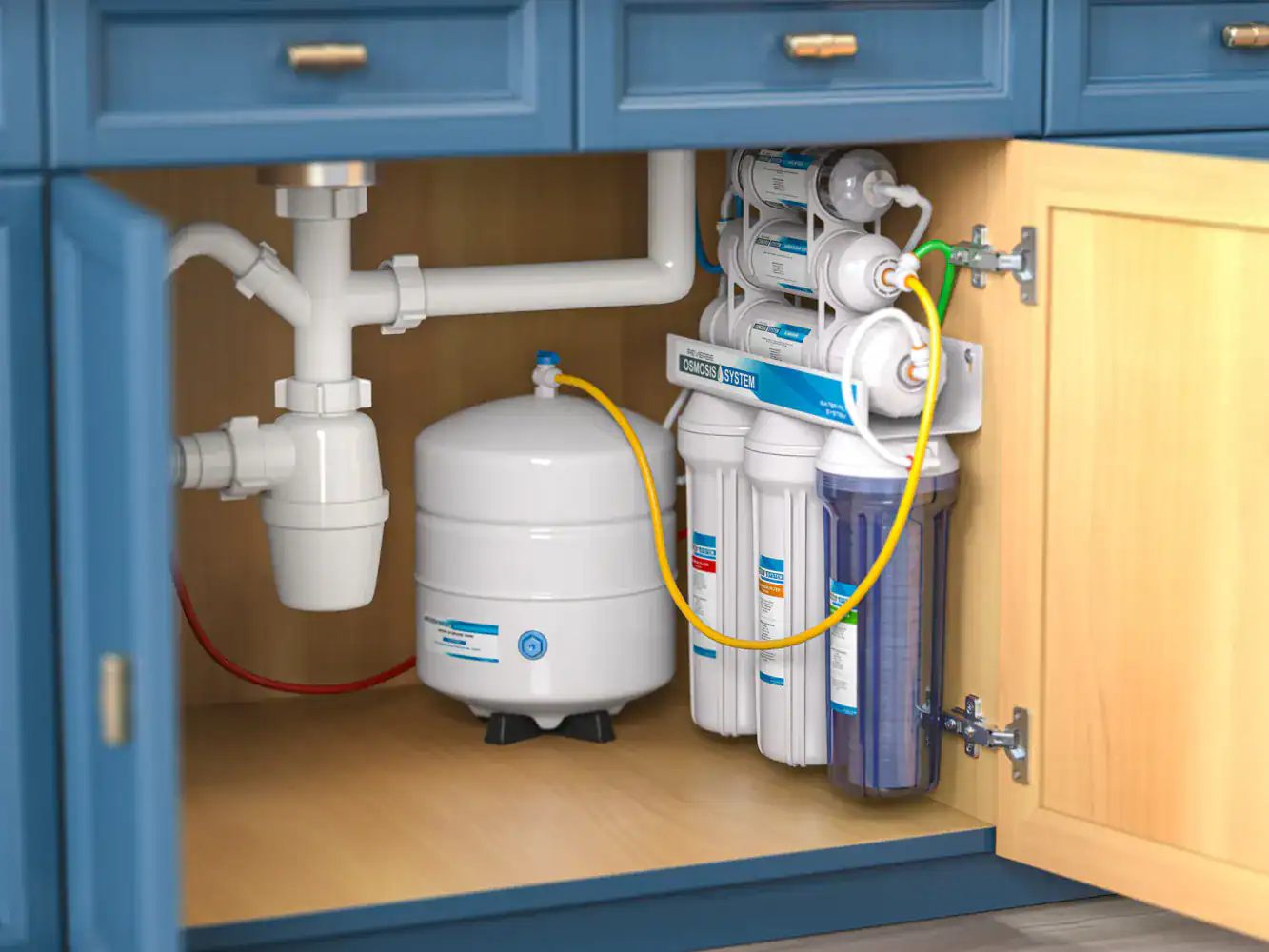
Let’s talk about what actually changes day-to-day. A traditional RO system with a tank takes up a lot of room. The tank alone is usually the size of a small propane cylinder, and when you add the filters, membrane housing, and all the tubing, you’re looking at most of your under-sink cabinet being occupied. If you store cleaning supplies, trash bags, or anything else under there, it gets cramped fast.
Tankless systems are about a third of the size. Most units are roughly the dimensions of a large shoebox and mount flat against the cabinet wall. That frees up 50% to 70% of your under-sink space, which is a big deal if your kitchen storage is already tight. Installation is also a bit easier in cramped spaces since there’s less to maneuver.
Water efficiency is another major difference. Traditional systems produce a lot of wastewater because they run continuously to keep the tank full, then shut off and dump the reject water. Tankless systems only run when you’re using water, and because they use more advanced membranes and pumps, they’re far more efficient. A 1:1 pure-to-drain ratio means you’re wasting half as much water as a 2:1 system, and way less than the 3:1 or 4:1 ratios common in older tank models. In areas facing drought or water restrictions—like Marion County has seen recently—that efficiency matters.
Maintenance is simpler with tankless systems in most cases. Filters are often integrated into quick-change cartridges that twist out in seconds. Many systems have smart monitoring that tells you when it’s time to replace filters, so you’re not guessing or keeping track manually. Traditional systems require more hands-on work—replacing individual filter housings, sanitizing the tank periodically, and sometimes dealing with more complex plumbing connections.
That said, tankless systems do require filter changes just like traditional ones. Pre-filters and post-filters typically need replacing every 6 to 12 months, and the RO membrane lasts about 2 to 5 years depending on your water quality and usage. The difference is the process is usually faster and less messy. And because you’re not dealing with a tank that could harbor bacteria, there’s one less thing to worry about.
One thing to watch for: not all tankless systems are created equal. Some cheaper models cut corners on pump quality or membrane performance, which can lead to inconsistent flow or shorter lifespans. If you’re investing in tankless technology, it’s worth going with a reputable brand and, more importantly, working with a company that tests your water first and sizes the system properly. Selling you a system without knowing what’s in your water is a recipe for disappointment.
Cost, Installation, and Long-Term Value
Upfront cost is where tankless systems lose some people. A quality under-sink tankless RO system typically runs between $300 and $950 installed, compared to $150 to $600 for a traditional tank system. That’s a noticeable difference, especially if you’re on a budget. But when you factor in water savings, filter longevity, and the fact that you’re not buying bottled water anymore, the payback period is usually under a year.
Let’s say your family spends $100 a month on bottled water. That’s $1,200 a year. A tankless RO system pays for itself in less than a year, and from that point on, you’re saving money every month. Even if you’re not a heavy bottled water user, the savings add up over time. Plus, you’re eliminating the plastic waste, which is better for the environment and one less thing to haul from the store.
Installation for both types of systems requires similar steps: connecting to your cold water line, running a drain line for wastewater, and installing a dedicated faucet. The main difference is that tankless systems need an electrical outlet under the sink. If you don’t already have one, that’s an additional cost—usually $100 to $200 for an electrician to add a GFCI outlet. It’s a one-time expense, but it’s worth budgeting for if your cabinet doesn’t have power.
Professional installation is highly recommended for either system. Yes, some people DIY it, and manufacturers include instructions, but a bad installation can lead to leaks, poor performance, or even voided warranties. A licensed plumber or water treatment specialist will make sure everything is connected correctly, test for leaks, check water pressure, and verify the system is producing the quality and flow rate it should. In Marion County and throughout North and Central Florida, working with a local company that knows the area’s water issues—hard water, well water contaminants, chlorine levels—makes a big difference in getting the right system for your situation.
Long-term value comes down to reliability and service. Some companies sell systems and disappear. Others, like us at Quality Safe Water of Florida, service what we sell and even maintain systems from other brands like Culligan, Kinetico, and Leaf. That kind of support matters when you need a filter change, a membrane replacement, or troubleshooting help down the road. A tankless system is only as good as the company standing behind it.
Is a Tankless RO System Right for Your Home?
Tankless reverse osmosis systems aren’t the answer for every household, but they’re a smart choice if you value space, efficiency, and continuous fresh water. They work best for families that use a lot of filtered water, homes with limited under-sink space, or anyone who’s frustrated with the limitations of traditional tank systems. If you’re in Marion County, FL, where water quality can vary and drought conditions make efficiency important, a tankless system offers both performance and peace of mind.
The most important step before choosing any RO system—tankless or traditional—is getting your water tested. Not all water is the same, and not all systems are designed to handle the same contaminants. A comprehensive water test tells you exactly what you’re dealing with, so you can choose a system that actually solves your problem instead of just guessing. Companies that skip this step and sell you equipment without testing are doing you a disservice.
If you’re ready to explore whether a tankless RO system makes sense for your home, reach out to us at Quality Safe Water of Florida. We’ll test your water, walk you through your options, and help you make a decision based on your actual needs—not a sales pitch.