Summary:
Your morning shower smells like sulfur. Your coffee tastes like chlorine. Orange stains keep showing up on your fixtures no matter how much you scrub. If any of this sounds familiar, you’re experiencing what thousands of Marion County homeowners deal with every day. Florida’s water comes with challenges that a simple pitcher filter can’t handle. The good news? A properly designed whole house water filtration system addresses these issues at the source, delivering clean water to every tap in your home. Here’s what you need to know before investing in one.
How Whole House Water Filtration Systems Work
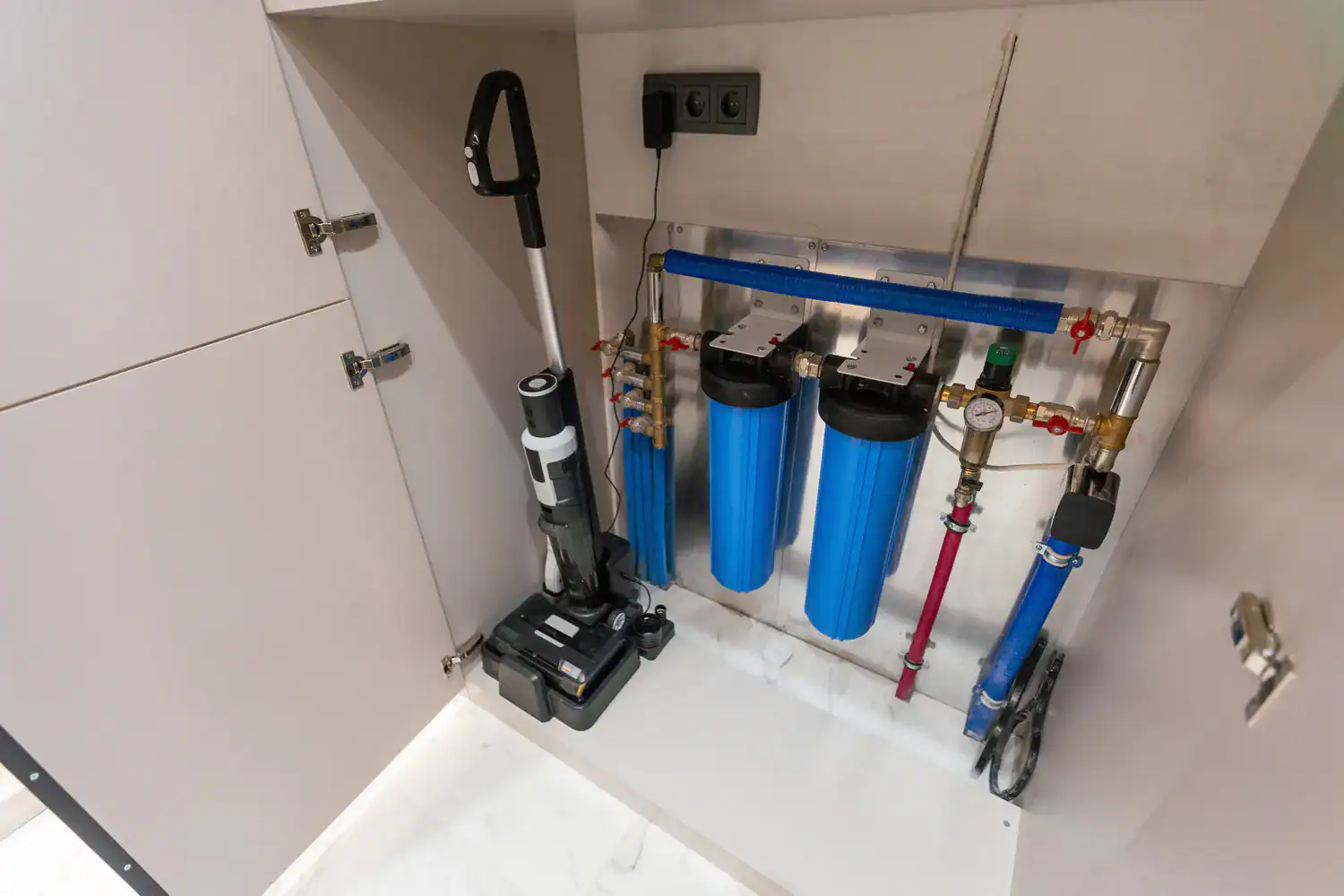
A whole house water filtration system installs directly on your main water line, right where water enters your home. Think of it as a checkpoint that treats every drop before it reaches your kitchen, bathrooms, laundry room, or outdoor spigots.
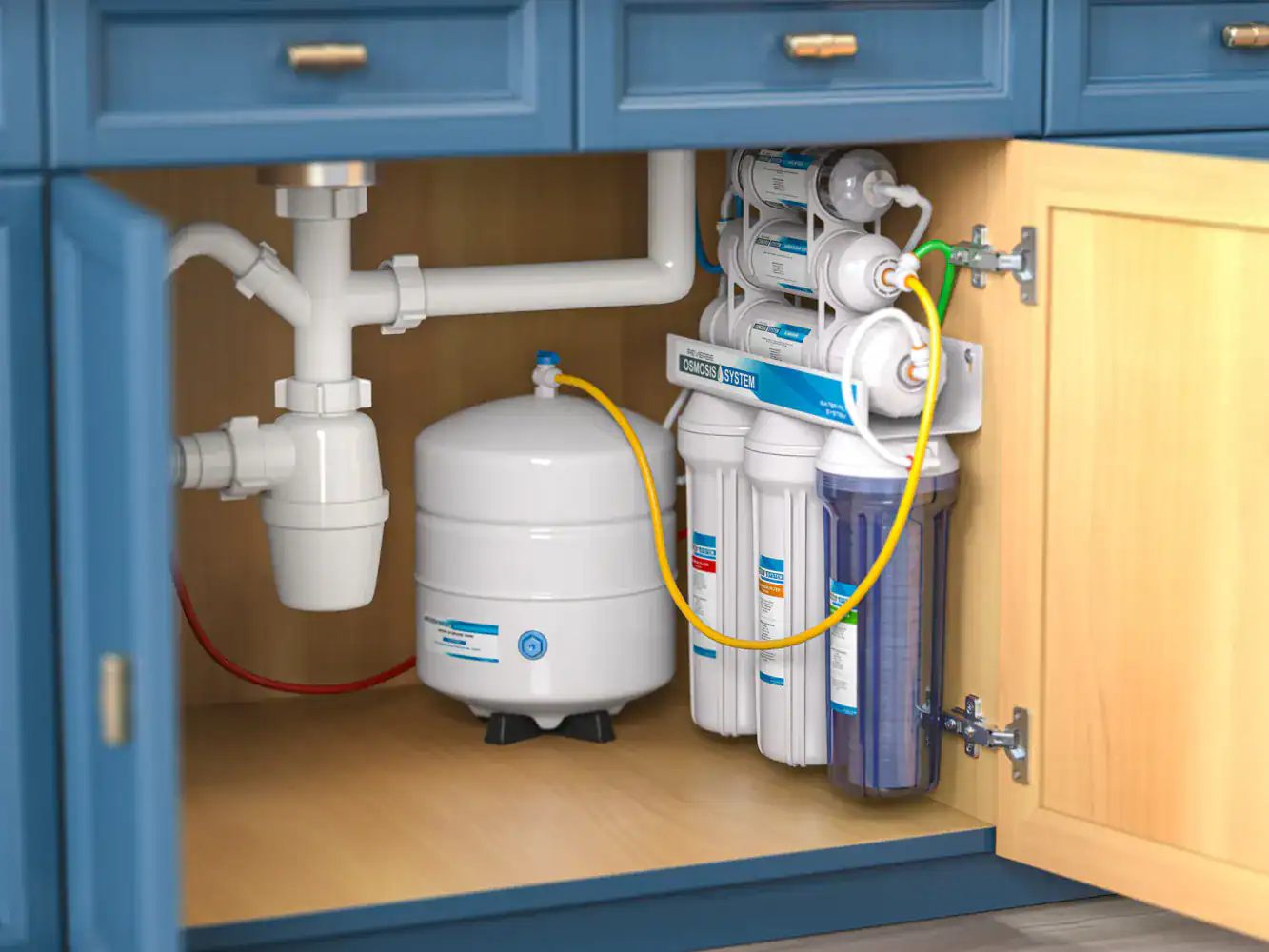
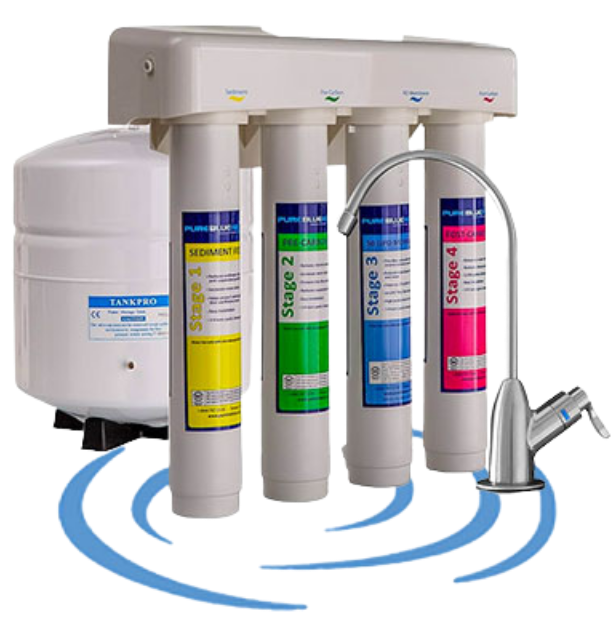
Unlike under-sink filters that only treat water at one faucet, these systems are point-of-entry solutions. Water flows through multiple stages of filtration designed to remove specific contaminants. The filtered water then distributes throughout your entire plumbing system.
Most systems include a sediment pre-filter that catches larger particles like rust, sand, and silt. This protects the more advanced filtration stages that follow. Next comes the main filtration media, typically activated carbon or specialized materials targeting your specific water issues. Some configurations add UV sterilization or reverse osmosis stages depending on what’s in your water.
What Water Filter for Entire House Systems Actually Remove
The contaminants a system removes depend entirely on its design and the filtration media inside. That’s why testing your water first matters so much. You need to know what you’re dealing with before choosing a system.
Activated carbon filters excel at removing chlorine and chloramines, those chemicals municipalities add for disinfection that make your water taste like a swimming pool. They also capture volatile organic compounds, pesticides, and industrial solvents. If your main complaint is taste and odor, carbon filtration handles it effectively.
For Florida homeowners dealing with iron, you need oxidation filtration or specialized iron removal media. Iron causes those stubborn orange stains on sinks, toilets, and laundry. Standard carbon filters won’t touch it. The same goes for sulfur, which creates that rotten egg smell many well water users know too well.
Hard water requires a different approach entirely. Calcium and magnesium minerals that cause scale buildup need either a water softener or salt-free conditioner working alongside your filtration system. These minerals aren’t health hazards, but they shorten the life of your water heater, clog your showerheads, and leave spots on your dishes.
Sediment filters handle the visible stuff: sand, silt, rust particles from aging pipes. If your water looks cloudy or you find grit in your faucet aerators, sediment filtration is non-negotiable. UV sterilization adds another layer for well water users concerned about bacteria, viruses, and other microorganisms that chemical treatment doesn’t address.
Here’s what matters: matching the filtration technology to your actual water quality. A system designed for city water won’t solve well water problems. A carbon filter won’t remove hardness. Testing tells you what you need, not what a salesperson wants to sell you.
The Difference Between City Water and Well Water Treatment
Where your water comes from determines what kind of system you need. City water and well water face completely different challenges, and the filtration approach has to match.
Municipal water in Marion County already goes through treatment at the utility. They add chlorine or chloramines to kill bacteria during transport through the distribution system. That’s why your water might taste or smell like chemicals. It’s safe to drink by EPA standards, but those disinfectants affect taste, smell, and even your skin and hair during showers. City water systems focus on removing these treatment chemicals, along with any contaminants picked up from aging pipes between the treatment plant and your home.
Well water skips municipal treatment entirely. You’re responsible for everything. Common well water issues in Florida include sulfur bacteria creating that rotten egg smell, iron causing staining, hardness from dissolved minerals, and potential contamination from agricultural runoff or septic systems. Well water systems often need more aggressive treatment: oxidation for iron and sulfur, UV sterilization for bacteria, and sometimes reverse osmosis for nitrates or other dissolved contaminants.
The filtration stages are different too. A typical city water system might use sediment filtration followed by carbon to remove chlorine and improve taste. A well water system might need sediment filtration, oxidation, carbon filtration, and UV sterilization all working together. That’s why professional water testing matters. You can’t guess what’s in well water, and assuming city water is perfect just because it’s treated is a mistake.
Your system needs to be sized correctly for your home’s water usage too. A family of four uses more water simultaneously than a couple, which means you need higher flow rates to avoid pressure drops when multiple fixtures run at once. Flow rate, measured in gallons per minute, determines whether your shower pressure stays strong or becomes a trickle when someone starts the dishwasher.
One more thing: well water chemistry can change seasonally or after heavy rains. A system that works in dry months might struggle during wet season if surface contamination increases. That’s why ongoing water testing and professional service matter just as much as the initial installation.
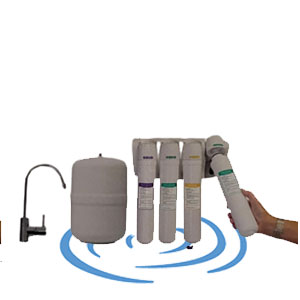
Choosing the Right Whole Home Water Filtration System
Walk into any big box store and you’ll find whole house filters ranging from a few hundred to several thousand dollars. The price difference isn’t just marketing. It reflects capacity, filtration technology, build quality, and how long the system lasts before needing major maintenance.
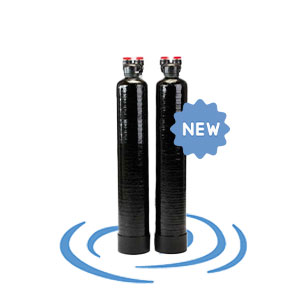
Cartridge-based systems use replaceable filter housings that you swap out every few months to a year. They’re less expensive upfront but create ongoing costs and maintenance requirements. Tank-based systems use larger volumes of filtration media that last several years, sometimes up to a decade. Higher initial cost, lower long-term hassle.
Flow rate determines whether your system keeps up with your household’s water demand. A system rated for 9 gallons per minute works fine for a home with one to three bathrooms. Four to six bathrooms need 12 GPM or higher. Undersized systems create pressure drops that affect everything from shower performance to appliance efficiency.
What to Look for in Installation and Service
Installation isn’t a weekend DIY project unless you have serious plumbing experience. These systems tie into your main water line, which means shutting off water to your entire house, cutting into existing plumbing, and making sure everything is sealed correctly to avoid leaks. Professional installation typically takes a few hours and costs between a few hundred to over a thousand dollars depending on your plumbing setup and whether modifications are needed.
But here’s what separates a good installation from a headache: the installer’s experience with your specific water issues and system type. Someone who installs water heaters for a living isn’t necessarily qualified to configure a multi-stage filtration system. You want WQA-certified water treatment professionals who understand how different filtration media work together and can adjust the system based on your water test results.
The installation location matters too. Most systems install in a garage, utility room, or basement where there’s access to the main water line. The system needs adequate space for the tanks or filter housings, plus room to work when it’s time for maintenance. Outdoor installation is possible in Florida’s climate, but you’ll want weather-resistant housings and protection from direct sun exposure.
After installation comes the part most people don’t think about until something goes wrong: ongoing service. Filters need changing. Media eventually exhausts. Systems require periodic sanitization. If you buy from a company that doesn’t service what they sell, you’re on your own when problems arise. That’s why reputation and local service availability matter as much as the equipment itself.
Ask about warranty coverage too. What’s covered, for how long, and who handles warranty service? A lifetime warranty sounds great until you realize it only covers the tank, not the valve, media, or any of the parts that actually do the filtering. Read the fine print.
Cost vs Value: What You're Actually Paying For
Whole house water filtration systems range from under a thousand dollars to well over five thousand, depending on size, technology, and features. That’s a wide range, and understanding what drives the cost helps you avoid overpaying for features you don’t need or underbuying a system that won’t solve your problems.
Basic carbon filtration systems for city water start around $850 to $1,500 installed. These handle chlorine removal and taste improvement. They’re straightforward, relatively low-maintenance, and effective for homes without major water quality issues. If your only complaint is chlorine taste and you’re on municipal water, this tier probably works.
Mid-range systems in the $2,000 to $3,500 range typically add multiple filtration stages, higher capacity media, better flow rates, and longer service intervals. These systems handle more complex water chemistry: chloramines, volatile organic compounds, some heavy metals, and moderate sediment. They’re built for homeowners who want comprehensive treatment without stepping into commercial-grade equipment.
High-end systems above $4,000 include specialized treatment for specific contaminants like PFAS, arsenic, or whole-house reverse osmosis. They might incorporate UV sterilization, smart monitoring technology, or dual-tank designs that provide continuous soft water even during regeneration cycles. These make sense for well water with multiple issues or for homeowners who want the highest level of purification throughout their entire home.
Installation adds another layer to the cost. Simple installations where the main water line is easily accessible and no plumbing modifications are needed run $300 to $500 for labor. Complex installations requiring rerouting pipes, adding electrical connections for UV systems, or working in tight spaces can push labor costs higher.
Then there’s ongoing maintenance. Budget $100 to $300 per year for filter replacements, depending on your system type and water usage. Sediment pre-filters might need changing every six months. Carbon media in tank systems can last five years or more. UV bulbs need annual replacement. Factor these costs into your decision, not just the sticker price.
Compare that to buying bottled water for drinking and cooking. A family spending $30 a week on bottled water pays over $1,500 a year. A whole house system pays for itself in a few years while also protecting your appliances, improving your showers, and eliminating plastic waste. The value isn’t just in the filtered water. It’s in the scale buildup you avoid in your water heater, the longer life of your dishwasher and washing machine, and the softer skin and hair from showering in chlorine-free water.

Making the Right Choice for Your Home
Whole house water filtration systems aren’t one-size-fits-all solutions. What works for a family on city water in Ocala won’t necessarily work for someone on well water in a rural part of Marion County. The key is starting with professional water testing to identify your specific contaminants, then matching the filtration technology to those results.
Look for companies with proven experience in Florida water treatment, professional certifications like WQA membership, and a track record of standing behind their installations with ongoing service. The cheapest system isn’t a bargain if it doesn’t solve your problems or if the company disappears when you need help. Neither is the most expensive system if you’re paying for features your water quality doesn’t require.
Your water affects everything in your home: what you drink, how your skin feels after a shower, how long your appliances last, even how your coffee tastes. Investing in the right system means investing in your family’s comfort and your home’s long-term maintenance costs. If you’re ready to stop dealing with sulfur smells, chlorine taste, iron stains, or hard water damage, we can test your water, explain exactly what’s in it, and design a system that actually solves your specific issues.