Summary:
Most people in Leesburg don’t think much about their water until something forces them to. Maybe it’s the white crust building up around the faucet. The orange ring in the toilet bowl that won’t scrub off. The water that smells faintly like a swimming pool, or worse. Or maybe you read something recently about PFAS or fluoride and started wondering what’s actually coming out of your tap.
Whatever brought you here, you’re asking the right question. Leesburg’s water quality is worth understanding—and once you do, the path forward becomes a lot clearer.
Leesburg, FL Water Quality: What the Data Actually Shows
Every drop of municipal water in Leesburg comes from the Floridan Aquifer—one of the most productive underground water sources in the world, and one of the most mineral-rich. The City operates five separate treatment facilities across Lake County, all drawing from the same aquifer within the Ocklawaha Watershed. Because it’s a limestone aquifer, the water picks up calcium, magnesium, and other dissolved minerals on its way up.
The city’s water system serves more than 44,000 people. According to available monitoring data, Leesburg’s water has at least one contaminant recorded above EPA health-based guidelines. PFAS compounds—often called “forever chemicals”—were also detected in Leesburg’s water system during the EPA’s most recent unregulated contaminant monitoring program, which ran from 2023 through 2025. The EPA finalized new PFAS drinking water rules in 2024, and monitoring requirements are continuing through 2029.
Does Leesburg, FL Have Hard Water?
Yes—and it’s not subtle. Florida’s water hardness averages between 7 and 12 grains per gallon statewide, which already puts most of the state in the “hard” category by plumbing-industry standards. Anything over 7 grains per gallon qualifies. The Floridan Aquifer, depending on where you’re drawing from, can push water hardness as high as 1,900 parts per million in some zones. Most Leesburg households are dealing with water running at double or triple the hard water threshold.
Hard water isn’t a health risk—that’s worth saying plainly. But it does real damage to your home over time. That chalky white buildup on your showerhead and faucet handles? That’s mineral scale. The spots on your dishes that won’t come off no matter how much you rinse? Same cause. The soap that never quite lathers the way it should, and the dry, tight feeling your skin has after a shower? Hard water is why.
What’s actually happening in that shower is that the calcium and magnesium in your water are reacting with soap to form a residue—soap scum—that stays on your skin instead of rinsing away. With soft water, soap lathers easily and rinses completely. People who’ve made the switch often describe it as finally understanding what “clean” actually feels like.
Inside your appliances, the story is the same. Scale builds up inside water heaters, dishwashers, and washing machines, reducing efficiency and shortening the lifespan of equipment you’ve paid good money for. A water heater running through years of hard Leesburg water is working harder than it should—and it’ll show you that on the repair bill.
PFAS, Fluoride, and Other Water Treatment Concerns in Lake County
Hard water is the most visible problem, but it’s not the only one Leesburg residents are asking about right now. PFAS detection in the local water supply has drawn attention since the EPA’s monitoring program flagged it. These are synthetic compounds that don’t break down easily in the environment or in the body—hence the “forever chemicals” label. The EPA set maximum contaminant levels of 4 parts per trillion for PFOA and PFOS individually, and ongoing monitoring is required through 2029. Current data shows no Leesburg PFAS readings above those EPA health-based guidelines, but the presence of these compounds in the system at any level is something informed homeowners are paying attention to.
Fluoride is a separate but equally active conversation in Lake County right now. In late 2024, Leesburg voted on whether to move forward with its fluoride facility. Neighboring Tavares is also reconsidering its fluoride program. About 70% of Floridians currently live in areas where water is fluoridated, but that number is shifting as municipalities across the state revisit the policy. For homeowners who want control over what’s in their drinking water regardless of how those policy debates resolve, a point-of-use reverse osmosis system is the most direct answer—it removes fluoride, PFAS compounds, and a wide range of other contaminants at the tap.
Then there’s lead. The City of Leesburg has banned lead in new construction and plumbing repairs, which is the right move. But dissolved lead can’t be seen, smelled, or tasted—the only way to know if it’s present in your water is to test for it through a state-approved laboratory. If your home has older plumbing, it’s worth knowing.
Leesburg’s water meets legal standards, and the city publishes an annual Consumer Confidence Report. But meeting a legal standard and having water you’re genuinely comfortable with are two different things. Most of the homeowners we talk to already sense that—they’re just looking for someone to give them a straight answer about what’s actually in their water and what, if anything, to do about it.
Water Softener Options in Leesburg, FL: What Actually Works Here
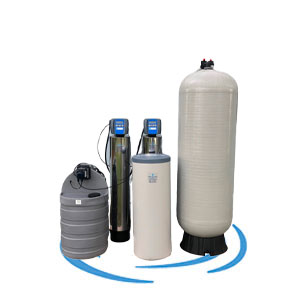
Given what’s in Leesburg’s water, the most common solutions homeowners reach for are whole-house water softeners, whole-house filtration systems, and under-sink reverse osmosis units—sometimes in combination. The right answer depends on what your water actually contains, which is why a water test comes before any recommendation worth trusting.
A traditional salt-based water softener addresses hardness by replacing calcium and magnesium ions with a small amount of sodium through a process called ion exchange. For most Leesburg households dealing with hard water from the Floridan Aquifer, this is the most direct solution to scale buildup, skin dryness, and appliance wear. For homeowners who prefer to avoid salt entirely, salt-free treatment systems are a real option—they use no electricity and produce no wastewater, which makes them an appealing choice for households that want results without the ongoing maintenance of a salt tank.
Whole-House Filtration vs. Point-of-Use: Which One Do Leesburg Homes Need?
This is one of the most common questions we hear, and the honest answer is that it depends on what you’re trying to solve. A whole-house filtration system connects at the main water line, which means every tap in your home—every shower, every appliance, every faucet—is running treated water. That’s the right choice when your concern is hardness, chlorine taste and odor, or anything that affects the water throughout your home. It protects your plumbing, your appliances, and your daily routine all at once.
A point-of-use system, like an under-sink reverse osmosis unit, treats water at a single tap. It’s more targeted and typically more thorough in terms of what it removes—a well-designed RO system can address PFAS compounds, fluoride, lead, and a long list of other contaminants that a softener alone won’t touch. Many Leesburg homeowners end up with both: a whole-house softener or filtration system to handle hardness and protect their appliances, and an RO unit under the kitchen sink for drinking and cooking water.
Well water customers in Lake County are in a slightly different situation. The rural and semi-rural character of parts of the county means a significant number of households aren’t on city water at all. Private well water in this region commonly contains iron and hydrogen sulfide—the compound responsible for that rotten egg smell. Iron shows up as orange or reddish staining on toilets, sinks, and laundry. A basic water softener won’t address iron or sulfur on its own; those require specific treatment stages designed for that chemistry. Getting the water tested first is the only way to know what you’re actually dealing with and design a system that handles it.
The key thing to understand is that no single system is right for every home. The water chemistry in a Leesburg home on city water is different from a home on a private well in Lake County. The right system is the one designed around what your water actually contains—not a package pulled off a shelf.
What to Look for in a Water Treatment Company in Leesburg, FL
The water treatment industry in Florida has a real reputation problem, and it’s earned. High-pressure sales tactics, one-size-fits-all systems, and companies that install equipment and then become unreachable when something needs service—these are documented patterns, not edge cases. Florida consumer watchdogs have flagged them repeatedly.
When you’re evaluating any water treatment company in Leesburg, a few things matter more than the sales pitch. First, do they test your water before recommending anything? A company that shows up with a pre-packaged solution before they’ve seen your water chemistry is selling, not solving. Second, are they certified? The Water Quality Association issues product and professional certifications that require third-party testing to NSF/ANSI standards—these aren’t just badges you pay for. NSF/ANSI 44, for example, is the primary certification standard for water softeners, covering hardness reduction, material safety, and system efficiency.
Third, will they still be reachable after installation? This is where the industry fails most often, and it’s worth asking directly. BBB accreditation is another signal worth checking. An A+ rating with zero complaints on file is not common in this industry, particularly in Central Florida. It’s the kind of record that only holds up if a company is consistently doing right by its customers over time—not just at the point of sale.
For active military, veterans, and first responders in Lake County, it’s also worth knowing that some local providers offer meaningful discounts. We offer $500 off for military and first responders—a real number, not a token gesture.

Free Water Test in Leesburg, FL: The Easiest Way to Know What You're Working With
You don’t have to guess what’s in your water. A free water analysis takes the speculation out of it—you find out exactly what your water contains, and from there, the right solution becomes obvious rather than overwhelming. No pressure, no one-size-fits-all pitch. Just an honest look at what’s coming out of your tap and what, if anything, makes sense to do about it.
Leesburg is a city built around water. It’s part of what makes Lake County worth living in. The water inside your home should reflect that—clean, clear, and something you don’t have to think twice about. If it doesn’t feel that way right now, that’s fixable.
Reach out to Quality Safe Water of Florida LLC to schedule your free water analysis. We’re based right here in Leesburg, we’re available seven days a week, and we’ll give you a straight answer about what your water actually needs.