Summary:
Most Lake County homeowners don’t think much about their water — until something forces them to. Maybe it’s the film left on dishes after the dishwasher runs. Maybe it’s a water heater that died years too soon. Maybe it’s just the taste, that faint chemical edge that makes you reach for a bottle instead of the tap.
Whatever brought you here, you’re asking the right question. Reverse osmosis is one of the most effective residential water treatment technologies available, and it’s worth understanding before you spend a dollar on anything. Here’s what it actually does, how it compares to other options, and what makes it especially relevant if you’re living in Lake County, FL.
What Is Reverse Osmosis Water and How Does It Work?
Reverse osmosis works by pushing water through a semi-permeable membrane at a pore size of 0.0001 microns — small enough to block dissolved minerals, heavy metals, chemical compounds, and a wide range of other contaminants that pass right through standard filters. What comes out the other side is water that’s been stripped down to near-pure form.
The process typically runs through multiple stages. Water passes through a sediment pre-filter first, then a carbon stage that handles chlorine and disinfection byproducts, then the RO membrane itself, and finally a post-filter polish stage before it reaches your tap. Each stage handles something the previous one can’t. That layered approach is what separates a well-designed reverse osmosis water filter from a basic carbon pitcher or a faucet attachment.
What Does RO Water Actually Remove?
The short answer is: a lot more than most people expect. Reverse osmosis can remove up to 99 percent of 65 different contaminants, including lead, fluoride, chlorine, dissolved salts, PFAS compounds, arsenic, nitrates, perchlorate, and hexavalent chromium. Those last few are worth paying attention to — they’re the ones that carbon filters, pitcher filters, and faucet-mounted units simply cannot touch.
This distinction matters in Lake County specifically. The water here draws from the Floridan Aquifer, a massive limestone formation that naturally contributes high levels of dissolved minerals to groundwater throughout Central Florida. That geology is why Lake County water frequently tests very hard — sometimes in the 20 to 30 grains per gallon range — and why TDS (total dissolved solids) levels often exceed what the EPA considers optimal. Standard filtration can improve taste and reduce chlorine. It won’t touch the mineral load, the radium that’s been detected in Tavares municipal water, or the trihalomethanes that form when chlorine disinfectant reacts with organic matter during the treatment process itself.
RO water also tends to taste noticeably different — cleaner, lighter, without the mineral edge that makes a lot of Lake County tap water unpleasant to drink straight. For homeowners who’ve been buying bottled water out of habit, that shift tends to happen immediately after installation. The average American household spends around $400 per year on bottled water. An RO system runs roughly $100 per year to operate. The math isn’t complicated.
One concern that comes up frequently is whether RO water is “too pure” — whether removing minerals makes the water unhealthy. Essential minerals are absorbed most effectively through food, not water. If that’s still a concern, modern RO systems can include a remineralization stage that adds beneficial minerals back after filtration.
RO Water vs. What Comes Out of a Lake County Tap
There’s a persistent assumption that because Lake County water is municipally treated, it’s been fully handled. That assumption deserves a closer look.
Municipal treatment removes a lot — bacteria, sediment, many regulated contaminants. But it also introduces new ones. Chlorine and chloramine, the disinfectants used to treat municipal water, react with naturally occurring organic matter in the water supply to form trihalomethanes and other disinfection byproducts. Those byproducts are present in treated water that leaves the plant and travels through miles of aging distribution infrastructure before it reaches your tap. The treatment process doesn’t eliminate them — it creates them.
Radium is a separate issue entirely. Radium-226 and radium-228 are naturally occurring radioactive elements that enter groundwater as it moves through Lake County’s mineral-rich geological formations. They’re not a product of treatment failure. They’re a product of the geology underlying this region, and they’ve been detected in Tavares municipal water. Long-term radium exposure is associated with increased risk of certain cancers, particularly bladder, breast, and bone. Standard municipal treatment doesn’t address radium at the level that reverse osmosis does.
PFAS compounds — sometimes called “forever chemicals” — present a third category of concern. These synthetic compounds don’t break down in the environment, they accumulate in the body over time, and they pass through standard municipal treatment essentially untouched. RO is one of the few residential technologies capable of reducing them meaningfully.
For drinking water specifically, the evidence suggests that an additional layer of filtration — particularly one that operates at the membrane level — is worth serious consideration for Lake County residents.
Choosing the Right Water Filter for Your Home
Reverse osmosis is one technology among several, and it’s not always the only answer — though for Lake County’s water profile, it tends to be the most comprehensive one. Understanding how the main filtration types compare makes it easier to figure out what your home actually needs, rather than buying something based on a sales pitch or a box claim.
The most important thing to know upfront: no single filter type handles everything. The best water filtration system for a given home depends on what’s actually in that home’s water. That’s why a professional water analysis — one that tests your specific supply and identifies your actual contaminant load — is the logical starting point before any purchase decision.
This is one of the most common questions we hear from Lake County homeowners, and it makes sense — both technologies are widely marketed, and the overlap in language makes them easy to confuse.
A water softener uses ion exchange to address hardness. It swaps calcium and magnesium ions — the minerals responsible for scale buildup, appliance damage, and that dry, tight feeling on skin after showering — for sodium ions. It does this job very well. Hard water is a real and costly problem in Lake County; the mineral content from the Floridan Aquifer can cost the average homeowner between $13,800 and $22,300 in appliance and plumbing damage over ten years. A water softener addresses that.
What it doesn’t address is everything else. An ion exchange water filter doesn’t remove lead, PFAS, nitrates, radium, disinfection byproducts, or dissolved chemical compounds. It’s not designed to. The water coming out of a softener is softer, but it still carries whatever else was in the source water.
Reverse osmosis works differently. The membrane rejects dissolved solids across a much broader spectrum — including the hardness minerals a softener removes, plus the contaminants a softener leaves behind. An RO system installed at the drinking water tap gives you purified water at the point of use. A whole house reverse osmosis water system extends that protection to every fixture in the home.
For many Lake County homeowners, the practical answer is both. A water softener protects the plumbing and appliances throughout the house. An RO system — whether under-sink or whole-house — handles the drinking water. They solve different problems, and they work well together.
This is where most homeowners get stuck, and it’s worth spending a moment on because the right answer genuinely depends on your situation.
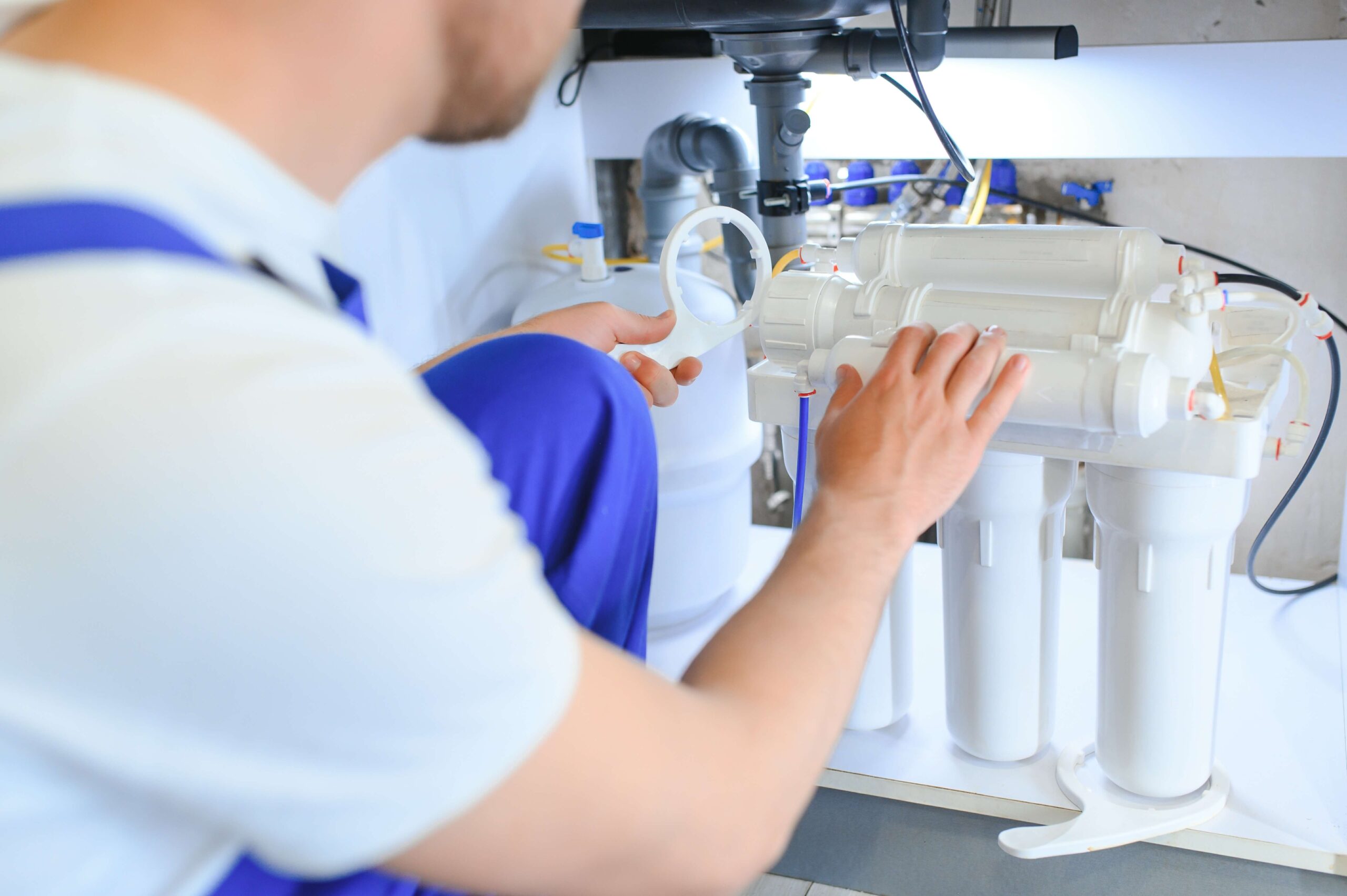
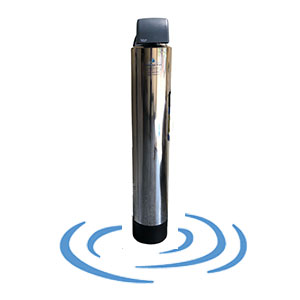
An under-sink reverse osmosis system is a point-of-use solution. It’s installed beneath the kitchen sink, filters water at that single tap, and is the most common entry point for homeowners new to RO. It handles your drinking water and cooking water. It’s a meaningful upgrade over unfiltered tap water or bottled water, and it’s typically the more accessible option in terms of installation scope.
A whole house RO system — sometimes called a point-of-entry system — is installed where the water supply enters the home, so every tap, shower, appliance, and fixture in the house receives filtered water. This is the more comprehensive solution, and it’s particularly relevant in Lake County where the hardness and mineral load affect not just drinking water but also skin and hair during showering, laundry, and the lifespan of water-using appliances.
The tankless reverse osmosis system is a newer format worth knowing about. Traditional RO systems use a storage tank that holds filtered water until it’s needed. Tankless systems filter water on demand, which means no tank taking up cabinet space under the sink, faster flow rates, and fresher water that hasn’t been sitting. For homeowners with limited space or higher daily water demand, tankless systems are an increasingly popular choice.
The best water filtration system for your home depends on what your water actually contains. A whole house UV water filter, for example, is excellent at neutralizing bacteria and microorganisms — but it doesn’t touch dissolved minerals or chemical contaminants. A whole house carbon water filter handles chlorine and some organic compounds well, but it won’t address TDS, hardness, or radium. These technologies are often most effective when layered, and the right combination for your home starts with knowing what you’re dealing with.
That’s why we offer a free water analysis before recommending anything. We test your water, review the results with you, and explain what each number means in plain terms. No pressure, no upsell — just an honest look at what’s coming out of your tap and what, if anything, would actually help.
How to Find a Water Filtration Company in Lake County You Can Actually Trust
The Florida Attorney General has specifically flagged the water treatment industry for deceptive sales tactics and fraudulent water testing. That’s a real pattern in this market, and it’s why the credentials a company carries matter more here than in most industries. When you’re evaluating local water filtration companies, look for verifiable signals: BBB accreditation with a clean complaint record, membership in the National Water Quality Association, and NSF/ANSI 58 certified systems whose contaminant reduction claims have been independently tested — not just printed on a label.
It also matters whether the company will still answer the phone two years after installation. Getting a system installed is the easy part. Finding a company that services what it sells, knows your specific water chemistry, and treats a follow-up call like it matters — that’s where most homeowners in this market have been let down before.
We’re based right here in Leesburg and available seven days a week. If you have questions about your water in Lake County or you’d like to start with a free water analysis and no-pressure conversation about your options, Quality Safe Water of Florida LLC is ready to help.