Summary:
You turn on your tap and wonder what’s actually in that water. Maybe you’ve noticed a smell. Maybe you’re concerned about what you can’t see—nitrates from nearby agriculture, lead from older plumbing, bacteria from your well. You’re not alone in asking these questions.
Thousands of Marion County, FL homeowners face the same uncertainty every day, especially those on private wells where water quality is entirely their responsibility. A reverse osmosis system removes the contaminants that other filtration methods miss. It’s not magic—it’s pressure, membranes, and physics working together to separate clean water from everything you don’t want your family drinking, cooking with, or bathing in.
Whether you’re looking at a compact under-sink unit for your kitchen or a comprehensive whole-house system that protects every tap, understanding how this technology actually works helps you make a decision that fits your water, your home, and your budget. Let’s start with how the process removes what’s in your water.
How Does Reverse Osmosis Remove Contaminants From Water
Reverse osmosis works by forcing water through a tightly woven semipermeable membrane under pressure. Think of it like a microscopic screen—except the openings are so small that only water molecules can squeeze through. Everything else gets blocked and flushed away.
The membrane’s pores measure about 0.001 microns. To put that in perspective, a human hair is about 75 microns wide. These pores are small enough to trap particles you can’t see, taste, or smell—dissolved lead, arsenic, nitrates, pharmaceuticals, and even some viruses. The contaminants get caught and flushed away as wastewater, while purified water flows through to your faucet or storage tank.
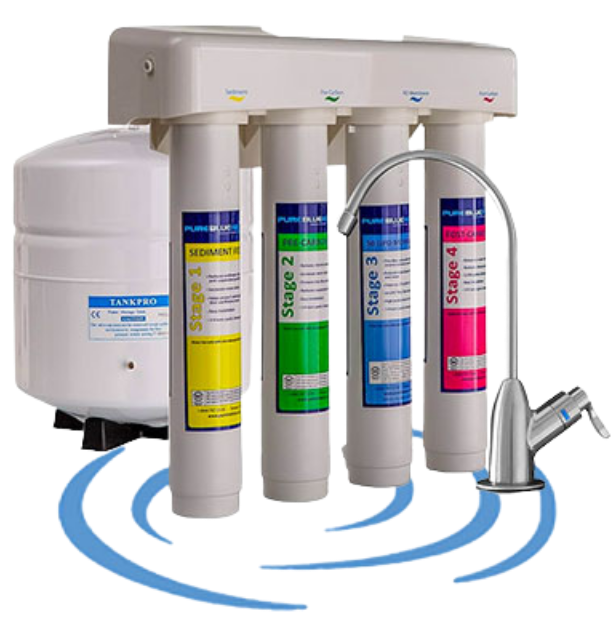
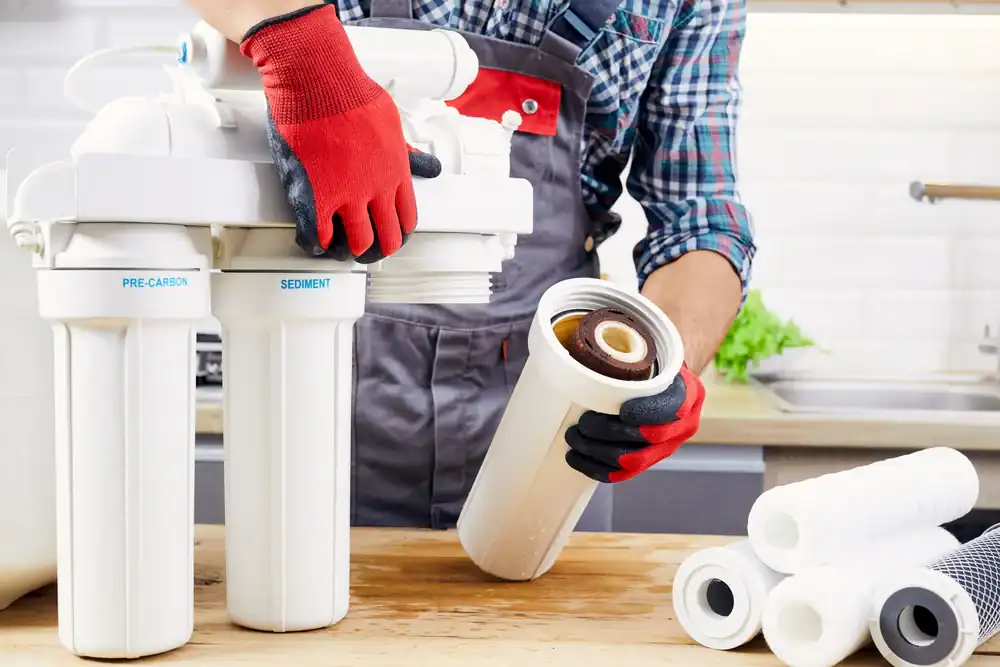
Most reverse osmosis systems don’t rely on the membrane alone. They use multiple stages of filtration to protect the membrane and improve water quality. A sediment filter catches larger particles like sand, rust, and dirt first. Then a carbon filter removes chlorine and chemicals that could damage the delicate RO membrane. After the water passes through the membrane, some systems include a final polishing filter to remove any lingering tastes or odors. The result is water that’s as close to pure H2O as you can get from a residential system.
What Contaminants Does a Reverse Osmosis Water Filter Remove
A properly functioning reverse osmosis water filter removes 85-99% of most common contaminants, depending on what you’re targeting and how well-maintained your system is. The numbers are impressive when you look at specific contaminants. Lead gets reduced by 95-98%—critical if you have older plumbing or service lines. Fluoride, which many homeowners want removed, drops by 85-92%. Nitrates, a serious concern in Florida’s agricultural areas where fertilizer runoff can contaminate wells, get reduced by 60-75%.
Heavy metals don’t stand a chance against a reverse osmosis membrane. Arsenic gets knocked down by 92-96%. Mercury, chromium, and cadmium all see 95-98% reduction. PFAS—those “forever chemicals” making headlines for contaminating water supplies across the country—get reduced by 90-99% in most certified RO systems. This is significant because PFAS don’t break down naturally and standard filtration can’t touch them.
Sulfates, which contribute to that rotten egg smell common in Florida well water, get reduced by 96-98%. Pesticides see up to 99% reduction. Pharmaceuticals that make it into water supplies get removed. The system also handles total dissolved solids (TDS) like calcium, magnesium, and sodium, reducing them by 85-98%. This is why reverse osmosis water tastes different—cleaner, lighter, almost neutral. You’re removing the minerals that give water its “taste,” along with everything else that was dissolved in it.
Here’s what matters for Florida homeowners specifically. If you’re on a private well in Marion County, FL, you’re likely dealing with some combination of iron (which causes orange staining), sulfur (that rotten egg smell), hard water minerals (scale on fixtures), and potentially nitrates from agricultural runoff or aging septic systems. A reverse osmosis water purifier addresses all of these simultaneously, but you need to know what’s in your water first. Testing tells you what you’re actually removing and helps you size the right system for your contaminant levels.
One critical thing to understand—RO membranes remove contaminants based on molecular size and charge. Bacteria and viruses are typically too large to pass through, but if your water source has confirmed biological contamination, you want a system with UV disinfection added as an extra safeguard. Most RO manufacturers specify that their systems should be used with microbiologically safe water unless UV treatment is included. If you’re on a well and haven’t tested for bacteria, that’s your starting point.
Reverse Osmosis Water Purifier vs Standard Water Filters
Standard filters—like the one in your refrigerator or a pitcher filter on your counter—use activated carbon to improve taste and remove chlorine. They’re fine for making water taste better and catching some sediment, but they don’t touch dissolved solids, heavy metals, or most chemical contaminants. The technology is fundamentally different from what an ro water purifier does.
A carbon filter works through adsorption—contaminants stick to the surface of the activated carbon as water flows through. This works great for chlorine, some VOCs (volatile organic compounds), and taste/odor issues. But once the carbon surface is saturated, it stops working. And it never removes dissolved minerals or heavy metals because those don’t adsorb to carbon effectively.
A reverse osmosis water purifier goes several levels deeper. Where a carbon filter might reduce chlorine taste, an RO system removes lead, arsenic, nitrates, fluoride, and pharmaceuticals that carbon can’t touch. The difference is the membrane—that’s the component that separates RO technology from everything else. RO uses pressure and molecular separation, forcing water molecules through microscopic pores while blocking larger contaminant molecules. Standard filtration uses absorption and physical barriers that can’t achieve the same level of purification.
This is why you’ll see the best reverse osmosis system certified to reduce 60, 80, even 90+ contaminants, while basic carbon filters might list 5-10. The technology isn’t comparable. RO systems typically include carbon filtration as one stage in a multi-stage process, so you get the benefits of both technologies working together.
The trade-offs? RO systems cost more upfront—anywhere from $200 for a basic countertop unit to $8,000 for a whole-house system. They require more maintenance because you’re replacing multiple filters and the membrane on different schedules. And they produce wastewater—typically 1-4 gallons of reject water for every gallon of purified water, depending on the system’s efficiency rating. Newer high-efficiency models waste less, but it’s still a factor to consider if you’re on a well with limited water supply.
But here’s the reality. If your water test shows lead above 15 parts per billion, nitrates above 10 mg/L, arsenic, or TDS over 500 ppm, a standard filter won’t solve it. You need the membrane. That’s where reverse osmosis becomes not just an upgrade, but the only residential option that actually works for those contaminants.
For Florida well water—where you’re often dealing with iron, sulfur, hardness, agricultural chemicals, and potentially bacteria—RO is frequently part of a larger treatment strategy. You might pair an under-sink RO system for drinking water with a whole-house water softener for hardness, an iron filter for staining, and UV disinfection for bacteria. Each component addresses a specific problem that your water test identified. This is why testing first matters—you’re not guessing at solutions, you’re targeting actual measured contaminants.
Reverse Osmosis Filter Types: Which System Fits Your Home
Not all reverse osmosis filter systems are built for the same job. A countertop unit solves a different problem than an undersink water filter system, and a whole-house setup is a completely different investment with different goals.
The system you need depends on what you’re trying to protect—just your drinking water, or every tap, shower, and appliance in your home. It also depends on your water source and what contaminants your test revealed. Well water in Marion County, FL often requires more aggressive treatment than municipal water, which means different equipment, different staging, and different costs. Let’s break down the main types so you can see where each one actually fits.
Under Sink Reverse Osmosis and Water Filter for Sink Options
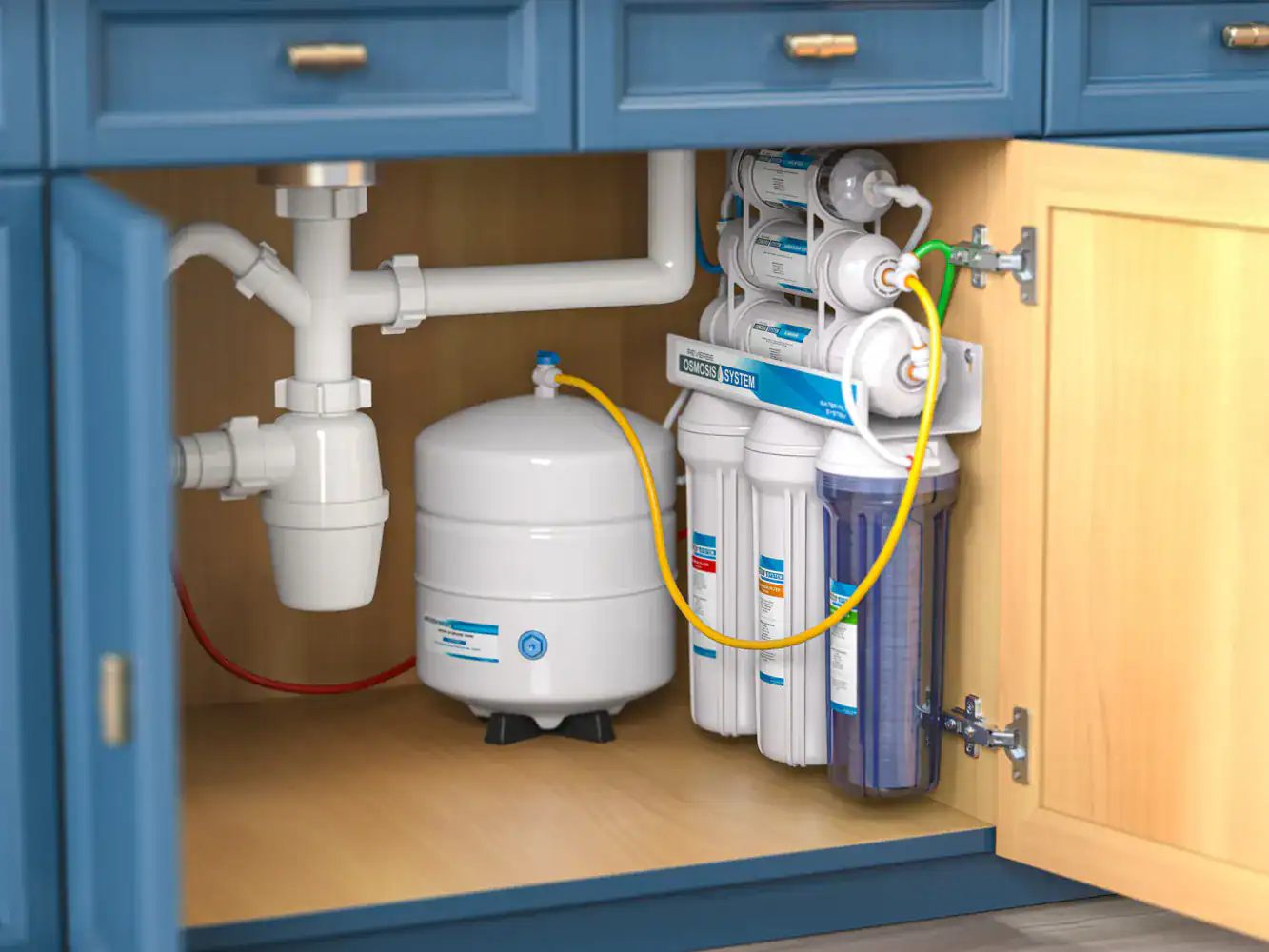
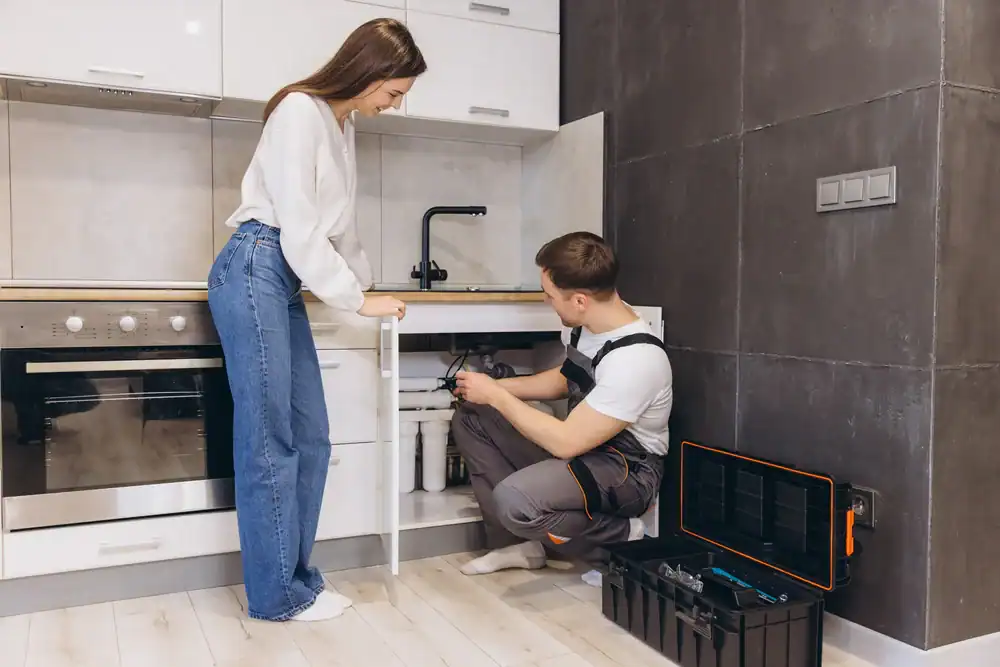
An under sink reverse osmosis system is the most common choice for homeowners who want purified drinking and cooking water without treating their entire house. It installs beneath your kitchen sink, connects to your cold water line, and delivers filtered water through a dedicated faucet on your countertop. You turn the faucet, you get RO water. Simple.
These systems typically produce 50-100 gallons per day (GPD), which is more than enough for a family’s drinking, cooking, coffee, ice maker, and any other consumption needs. They include a small pressurized storage tank—usually 2-4 gallons—so you have filtered water available on demand without waiting for the system to slowly process it through the membrane. When you draw water from the faucet, it comes from the tank. The system then refills the tank automatically over the next few hours.
Installation requires some basic plumbing work. You’re connecting to your cold water line under the sink, drilling a hole in your sink or countertop for the RO faucet (unless you use an existing sprayer hole), and running a drain line for the wastewater that gets flushed during filtration. Most systems come with everything you need—tubing, fittings, faucet, filters. Installation takes 2-3 hours for someone comfortable with basic DIY, or you can have a plumber handle it.
Cost for an under sink reverse osmosis system typically runs $200-$950 installed, depending on the brand, number of filtration stages (3-stage, 5-stage, 7-stage systems are common), and whether you’re adding features like remineralization (adds healthy minerals back after purification) or UV disinfection for bacteria protection. The best ro system for your needs isn’t necessarily the most expensive—it’s the one that targets your specific water test results.
Countertop reverse osmosis systems are the portable alternative. They sit on your counter, connect to your faucet with a diverter valve, and require zero permanent installation. Some models you fill manually like a pitcher. Others connect temporarily when you need filtered water. They’re ideal for renters who can’t modify plumbing, small apartments with limited under-sink space, or anyone who wants the flexibility to move the system between locations.
The best countertop reverse osmosis system gives you the same purification technology as under-sink models, just in a more compact, portable package. The trade-off is capacity—they typically hold less water (0.5-2 gallons) and filter more slowly than under-sink models with larger membranes. But they’re affordable ($200-$500), easy to move, and simple to maintain. If you’re only filtering drinking water for one or two people, they work fine. If you have a family of four and you’re cooking with RO water, you’ll find countertop models frustrating because they can’t keep up with demand.
Here’s what matters for Florida homeowners. If your well water has high TDS, iron, or hardness, an under-sink RO system handles your drinking and cooking water perfectly. But it doesn’t protect your water heater, washing machine, dishwasher, or shower. You’re still dealing with scale buildup, iron staining on toilets and tubs, and hard water effects on your skin and hair everywhere else in the house. That’s the limitation of point-of-use systems—they only treat water at one location. If you need whole-home protection, you’re looking at a different category of equipment.
Whole House Reverse Osmosis System and Best Whole House Options
A whole house reverse osmosis system treats every drop of water entering your home before it reaches any fixture. Showers, toilets, washing machine, dishwasher, ice maker, outdoor hose bibs—everything gets RO-purified water. It’s installed at your main water line (called point-of-entry), and it includes a large atmospheric storage tank (150-500 gallons) plus a repressurization pump to maintain normal water pressure throughout your home.
This is a significant investment, and it’s important to understand what you’re actually buying. Whole-house RO systems typically cost $4,800-$8,000 installed for the RO equipment alone. That doesn’t include pretreatment equipment you’ll almost certainly need if your water has high iron, hardness, or sediment—all common in Florida well water. Pretreatment can add another $1,000-$3,000 for a water softener, sediment filter, or iron removal system that protects the expensive RO membranes from fouling or damage.
So why would anyone spend $6,000-$11,000 on water treatment? Because some water problems can’t be solved any other way, and the cost of not solving them is higher. If your well water has nitrates above safe drinking levels (10 mg/L is the EPA limit), arsenic, or TDS levels above 500 ppm, a whole house reverse osmosis system protects your entire home. Your appliances last longer because they’re not fighting scale and mineral buildup. Your water heater runs more efficiently. Your skin and hair feel better in the shower. You’re not drinking, bathing in, cooking with, or washing clothes in contaminated water.
The best whole house reverse osmosis system for your property depends on daily water usage and your specific contaminants. A household of two people might need a 400-500 GPD system. A family of four typically needs 800-1,200 GPD. Larger homes or properties with high water usage might need 1,500-2,500 GPD capacity. Undersizing the system means you’ll run out of treated water during peak usage times. Oversizing wastes money on equipment capacity you don’t need.
Tankless reverse osmosis systems are a newer category that eliminates the storage tank by producing filtered water on demand at a high enough flow rate to supply your home directly. For under-sink applications, tankless units typically cost $350-$600 and they’re more compact than traditional tank-based systems. They don’t have the stale water taste that can develop in storage tanks if water sits too long, and they’re generally more efficient—wasting less water during the filtration process.
The best tankless reverse osmosis system for whole-house use is still emerging technology and significantly more expensive than traditional systems because you need extremely high GPD capacity to supply an entire home without storage. Most whole-house applications still use storage tanks because they’re more economical and reliable for high-volume demand.
For Marion County, FL homeowners, the decision between point-of-use and whole-house often comes down to your water test results and your budget. If your well water has multiple contaminants affecting every tap—high TDS, nitrates, hardness, iron—and you want comprehensive protection, whole-house makes sense despite the cost. If it’s primarily drinking water quality you’re concerned about and your shower/laundry water is acceptable, under-sink is far more cost-effective. A comprehensive water test tells you which route actually solves your specific problem instead of guessing.
Reverse Osmosis System Price and What You're Actually Paying For
Reverse osmosis system price varies dramatically based on type, capacity, brand, and features. You can spend $150 on a basic countertop unit or $15,000 on a commercial-grade whole-house system. Understanding what drives the cost helps you evaluate whether you’re getting value or paying for features you don’t need.
For under-sink systems, prices range from $200-$950 installed. At the low end, you’re getting a basic 3-stage system with standard components—sediment filter, carbon filter, RO membrane. It works, but filter life might be shorter and the flow rate slower. Mid-range systems ($400-$600) typically offer 5-7 stages of filtration, better quality membranes that last longer, higher GPD production, and features like remineralization or upgraded faucets.
Premium under-sink systems ($700-$950) give you the longest-lasting filters (some rated for 2+ years), the highest efficiency ratios (less water waste), smart monitoring that tells you when filters need changing, and certifications from NSF or WQA for specific contaminant reduction claims. You’re paying for convenience, longevity, and verified performance.
Whole house reverse osmosis system prices are harder to pin down because every installation is custom. The equipment itself runs $3,000-$6,000. Installation adds $500-$2,000 depending on complexity—how far the system is from your main water line, whether you need electrical work for the pump, how your drain line is routed. Pretreatment equipment adds $1,000-$3,000. You’re looking at $5,000-$11,000 total for most residential installations.
What are you actually paying for at that price point? A system that produces 400-1,500 gallons of purified water per day. A storage tank that holds 165-500 gallons so you never run out during showers or laundry. A repressurization pump that maintains 40-60 PSI throughout your home. Pre-filters that protect the expensive RO membranes. The membranes themselves, which can cost $200-$800 each to replace every 2-4 years. Professional installation by licensed plumbers who understand water treatment, not just pipe fitting.
Here’s the honest calculation. If you’re spending $40-$60 per month on bottled water because you don’t trust your tap, that’s $480-$720 per year. An under-sink RO system pays for itself in 6-18 months. If you’re replacing a water heater every 8 years instead of 12 because hard water is destroying it, that’s $1,500-$2,000 in premature replacement costs. If your appliances are failing early from scale buildup, add another $500-$1,000 per appliance over time.
Reverse osmosis isn’t cheap. But for many Florida homeowners dealing with well water issues, the cost of not treating the water—in bottled water, appliance replacement, plumbing repairs, and health concerns—adds up to more than the system costs.