Reach Out Today
Please provide your email address so that we can stay in touch and answer any questions you have! We will be reaching back out shortly.


Hear from Our Customers
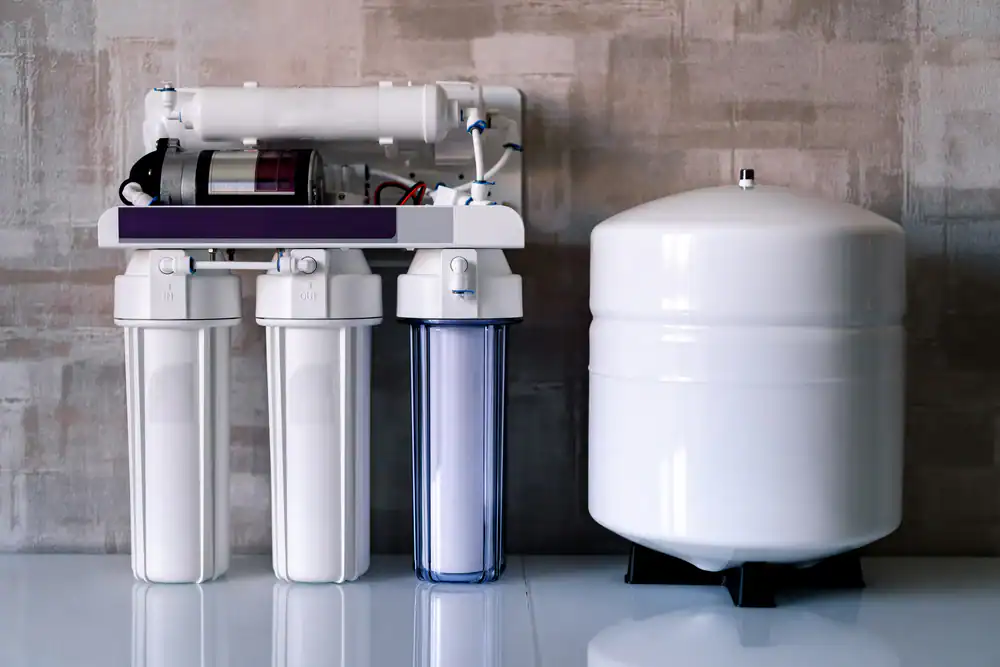
You stop buying bottled water because what comes out of your tap actually tastes good. Your skin doesn’t feel tight after a shower. Your clothes last longer because chlorine isn’t breaking down the fibers every time you wash them.
Your appliances run longer too. Water heaters, dishwashers, washing machines – they all take a beating from hard water and chlorine. A point-of-entry system filters everything before it enters your home, which means less scale buildup, fewer repairs, and appliances that actually reach their expected lifespan.
You’ll see it in the small things. No more cloudy spots on glassware. No more orange staining in the toilets or sinks. Your coffee tastes better. Your ice cubes are clear. It’s not dramatic, but it’s the kind of difference you notice every single day.
We have an A+ Better Business Bureau rating and a 5-star review average with zero complaints. That’s not luck – it’s what happens when you focus on doing the work right and standing behind it.
We’re members of the National Water Quality Association, which means we follow industry standards and stay current on water treatment technology. We also support military members and first responders with a $500 discount, and we’re involved with the Tunnels to Towers Foundation because we believe in giving back to the community we serve.
West Colonial homeowners deal with the same water issues most of Florida faces: hard water from limestone aquifers, chlorine from municipal treatment, and contaminants that seep into groundwater through porous soil. We’ve been handling these problems long enough to know what works and what doesn’t.

We start with a water test. Not a generic one – a test that tells us exactly what’s in your water so we can size and configure a system that actually addresses your specific issues.
Once we know what we’re dealing with, we recommend a system based on your home size and water usage. For most homes with 1-3 bathrooms, a 9 GPM system works. Larger homes with 4-6 bathrooms need 12 GPM, and anything beyond that gets a 20 GPM unit. The goal is full filtration with zero drop in water pressure.
Installation happens at your main water line – that’s the point-of-entry. Everything gets filtered before it splits off to different fixtures. We size the system correctly, install it properly, and make sure it’s working before we leave. You’ll notice the difference immediately, especially if you’ve been dealing with chlorine taste or hard water buildup.
Most systems we install use multi-stage sediment filtration combined with whole home carbon filters. Some homes also need a water softener combination if hardness levels are high. The filter media backwashing cycle runs automatically to keep everything clean and functioning without you having to think about it.

Ready to get started?
A whole house water filter in West Colonial, FL needs to handle hard water, chlorine, sediment, and depending on your source, iron or sulfur. That’s why most effective systems use multiple stages – sediment filtration to catch particles, carbon filtration to remove chlorine and organic contaminants, and often a softener to handle the mineral content.
Florida’s water comes from aquifers that run through limestone, which is why nearly everyone here has hard water. City water gets treated for bacteria and disinfected with chlorine, but that’s about it. Well water can have additional issues like iron, sulfur, or higher contamination risk because Florida’s soil is porous and the water table is high.
A properly designed system addresses all of this. You get sediment filters that catch rust, sand, and particles. You get carbon media that removes chlorine, chloramines, and organic compounds that cause taste and odor issues. If hardness is a problem, the softener handles calcium and magnesium before they can build up in your pipes and appliances.
The system we install is sized for your home and your water. It’s built to run without losing pressure, and it’s designed so the filter media gets maximum contact time with the water – that’s what actually removes contaminants. Cheap systems rush water through too fast and don’t filter effectively.
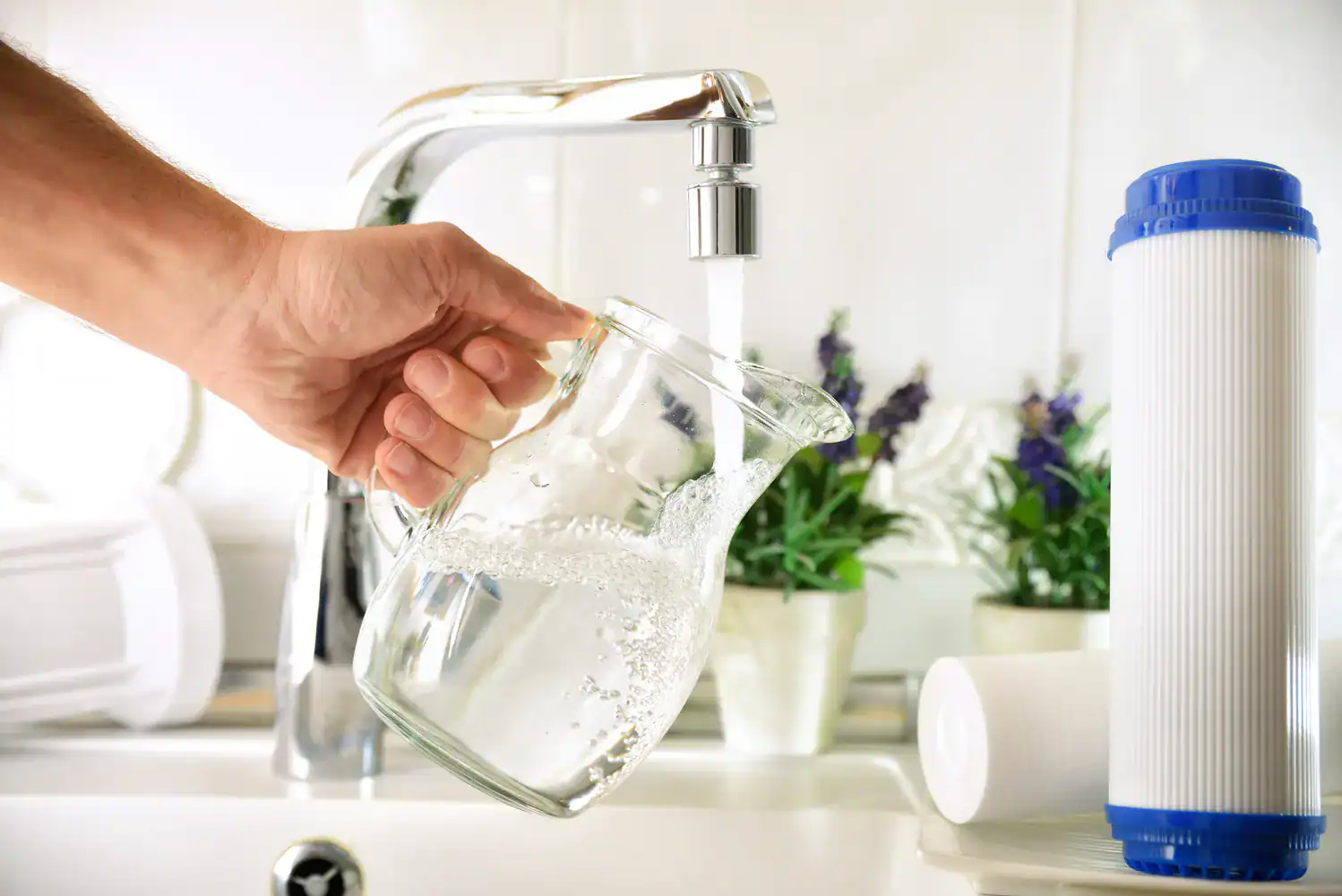
For a basic system that handles sediment and chlorine, you’re looking at around $1,000 to $3,500 installed. If you need a more comprehensive setup that includes a water softener, iron or sulfur removal, or a larger capacity system for a bigger home, the range is typically $3,000 to $8,000 installed.
The price depends on what’s actually in your water and what size system your home needs. A 1,500 square foot home with three bathrooms has different requirements than a 3,500 square foot home with six bathrooms. We test your water first so you’re not paying for treatment you don’t need, and we’re not undersizing a system that won’t keep up with your usage.
Installation is included in those prices. That means properly sizing the system, installing it at the point-of-entry, making sure there’s no pressure loss, and confirming everything works correctly before we leave.
Not if it’s sized correctly. Pressure loss happens when a system is too small for the home’s flow rate or when it’s installed incorrectly. That’s why we size systems based on how many bathrooms you have and your peak water usage, not just square footage.
A home with 1-3 bathrooms typically needs a 9 GPM system. Homes with 4-6 bathrooms need 12 GPM, and larger homes need 20 GPM or more. When the system matches your actual demand, water flows through the filters without restriction.
We also use high-quality filter media and properly sized tanks. Cheap systems use undersized housings or low-flow media that create bottlenecks. You’ll see the difference in how your shower feels and how quickly your washing machine fills – there shouldn’t be any noticeable change from before the system was installed.
It depends on the system configuration, but a properly designed multi-stage system removes sediment, chlorine, chloramines, heavy metals like lead and mercury, volatile organic compounds, and contaminants that cause taste and odor issues. If you add a softener, it also removes the calcium and magnesium that cause hard water problems.
Sediment filters catch rust, sand, dirt, and particulates. Carbon filters remove chlorine and chloramines that municipalities use for disinfection, plus organic chemicals and compounds that affect taste. If your water has specific issues like iron, sulfur, or high levels of certain contaminants, additional filtration stages handle those.
What a whole house filter doesn’t do is remove dissolved solids to the level a reverse osmosis system does. For drinking water, some homeowners add a point-of-use RO system at the kitchen sink. But for whole-home protection – showers, laundry, appliances, and general use – a well-designed point-of-entry system handles the most important contaminants.
Most whole house systems we install have filter media that lasts 5-7 years before needing replacement, not every few months like pitcher filters or fridge filters. The system backwashes itself automatically to keep the media clean, so you’re not doing manual maintenance constantly.
Sediment pre-filters may need changing every 6-12 months depending on your water quality, but that’s a simple cartridge swap. Carbon media and softener resin last much longer because the system is designed to regenerate and clean itself through the backwashing cycle.
We recommend an annual check to make sure everything’s functioning properly, but these aren’t high-maintenance systems. They’re built to run in the background without constant attention. When it is time to replace media, we handle it – you don’t need to figure out what parts to order or how to service it yourself.
In West Colonial, FL, you almost certainly need both. Hard water is a given here because of the limestone aquifers, and city water contains chlorine. Well water has hardness plus potential iron, sulfur, or other contaminants. A softener handles the hardness, and a filter handles everything else.
A water softener removes calcium and magnesium through an ion exchange process. That stops scale buildup in pipes and appliances, eliminates spotting on dishes, and makes soap actually lather. But it doesn’t remove chlorine, sediment, or organic contaminants – that’s what the filtration stages do.
The most effective approach for Florida water is a combination system: sediment filtration first to catch particles, then carbon filtration to remove chlorine and taste/odor issues, then softening to handle hardness. Some systems integrate all of this into one unit, others use separate tanks. Either way, you need both functions to actually solve the water quality problems most homes here deal with.
Please provide your email address so that we can stay in touch and answer any questions you have! We will be reaching back out shortly.
"*" indicates required fields