Reach Out Today
Please provide your email address so that we can stay in touch and answer any questions you have! We will be reaching back out shortly.


Hear from Our Customers
Most Sanibel homeowners don’t realize that IWA’s reverse osmosis treatment — as good as it is — still introduces chlorine into the distribution system to keep the water safe on its way to your home. By the time that water reaches your tap, your showerhead, or your washing machine, it carries disinfection byproducts that the utility itself has documented. Our point-of-entry systems intercept all of it before it ever enters your home.
That matters more on an island than it does almost anywhere else. Sanibel’s salt air environment already puts stress on pipes, fixtures, and appliances. Chlorinated water accelerates that wear — degrading rubber seals, corroding internal components, and shortening the lifespan of equipment in homes that cost well over $800,000 to own. When we filter at the point of entry, every fixture, every appliance, and every shower in your home works with clean water, not just your kitchen sink.
For homeowners who spend part of the year off-island, this matters even more. Water sitting in pipes for months in a coastal environment, without filtration, creates conditions that no one wants to come home to. Our whole house systems keep working whether you’re on Periwinkle Way or back in Ohio for the summer.
Quality Safe Water of Florida LLC has been in the water treatment business for more than 50 years. Not as a franchise. Not as a national brand with a local phone number. We’re a Florida-based, water-focused specialist that knows this state’s geology, its aquifer systems, and its municipal treatment practices from the ground up — including the unique situation on Sanibel, where the IWA draws from the Suwannee Aquifer and treats brackish groundwater before it ever reaches your street.
Our BBB A-rating with zero complaints on file isn’t a marketing line — it’s a public record you can verify right now at bbb.org. The 5-star review average reflects real customers, real installs, and real follow-through after the job is done. Our WQA membership means there’s an industry ethics standard behind every recommendation we make.
Sanibel is a small, tight-knit community. Residents talk. Referrals matter. We’re the kind of company that earns them.

It starts with a water test — not a sales pitch. Before we recommend anything, we test your home’s water to understand exactly what’s in it. On Sanibel, that means looking at what IWA’s treatment process leaves behind: chlorine levels, haloacetic acid presence, and any other contaminants that survived or were introduced during distribution. The test tells us what your home actually needs, and that’s what we recommend — nothing more.
From there, we design a multi-stage point-of-entry system sized for your home’s flow rate and contaminant profile. The system installs at the main water line, before water reaches any tap, appliance, or fixture in the house. For Sanibel homes — whether you’re in The Dunes, Shell Harbor, or along the Gulf — we account for the salt air environment, the construction characteristics of the home, and any post-Ian renovation work that may have changed the plumbing layout. We handle Florida state licensing requirements and any applicable Lee County or City of Sanibel permit requirements as part of the process.
After installation, we walk you through what was installed, how it works, and what maintenance looks like going forward. Filter replacements, service calls, and warranty support are part of our relationship — not an afterthought. On an island where crossing the causeway is a real logistical consideration for any contractor, our commitment to follow-through isn’t optional. It’s the job.
Ready to get started?
Sanibel’s water supply is genuinely different from what most Florida homeowners deal with. The Island Water Association starts with brackish groundwater from the Suwannee Aquifer — already an unusual source — and runs it through reverse osmosis before adding chlorine, sodium hydroxide, and corrosion inhibitor. The finished water is mildly soft at 56 parts per million, with a pH around 7.6. It’s not hard water in the traditional sense, but it carries disinfection byproducts — specifically haloacetic acids — that the Environmental Working Group’s Tap Water Database has documented in IWA’s system. Radon has also been detected in IWA’s finished water samples per the utility’s own public notices.
Our whole house filtration systems address that specific contaminant profile. Depending on what your water test shows, the system may include activated carbon filtration for chlorine and byproduct removal, additional media stages for any other contaminants identified, and sediment pre-filtration to protect the system and your plumbing. Every configuration is based on your actual test results — not a standard package pushed on every homeowner regardless of what their water contains.
If you’re active military, a veteran, or a first responder, you receive a $500 discount on your system. That’s a straightforward reduction on an investment that typically ranges from $1,200 to $6,500 or more depending on system size and configuration. We’re also a proud supporter of the Tunnels to Towers Foundation, which provides mortgage-free homes to catastrophically injured veterans and fallen first responder families — because clean water and strong communities go hand in hand.
IWA’s water meets federal and state drinking water standards — that’s not in question. But “meets standards” and “contains no contaminants worth addressing” are two different things. The Environmental Working Group’s Tap Water Database documents haloacetic acids in IWA’s finished water supply, and IWA’s own public notices have recorded radon detections in finished water samples. These are byproducts of the chlorination process used to keep water safe during distribution — not evidence of a failing utility, but a real reason to consider additional filtration at the home level.
Our point-of-entry whole house filters don’t replace IWA’s treatment — they add a layer of protection that catches what arrives at your Sanibel home after traveling through the distribution system. For homeowners who are drinking the water, bathing in it, and running it through appliances in a home they’ve invested significantly in, that additional layer is worth understanding. A water test will tell you exactly what’s in your specific home’s water so you can make an informed decision rather than a guesswork one.
Sanibel’s water is actually on the softer side. IWA’s finished water has a hardness of 56 parts per million — about 3.28 grains per gallon — which IWA characterizes as mildly soft and not scale-forming. That’s meaningfully different from many inland Florida communities where groundwater hardness can run well above 200 parts per million and scale buildup on fixtures and in water heaters is a constant issue.
That said, softer water doesn’t mean filtration isn’t warranted. The contaminant concern on Sanibel isn’t primarily hardness — it’s the chlorine and disinfection byproducts introduced during treatment. Our whole house carbon filtration systems address those without the need for a traditional salt-based softener in most Sanibel homes. When you get a water test done, the results will confirm whether softening is needed alongside filtration or whether filtration alone is the right call for your home. We don’t recommend softeners to homeowners who don’t need them — it’s not how we operate.
The honest answer is: it depends on the system and what’s in your water. A properly configured multi-stage point-of-entry system can remove or significantly reduce chlorine and chloramines, haloacetic acids and other disinfection byproducts, sediment and particulates, certain heavy metals depending on media used, and biological contaminants depending on filtration type. For Sanibel homes specifically, the primary targets based on IWA’s documented water profile are chlorine and haloacetic acids — the byproducts of the chlorination step that follows IWA’s reverse osmosis treatment.
The reason a water test matters so much is that “whole house water filter” describes a category, not a single product. A carbon block system handles chlorine and byproducts well. A system with additional media stages handles a broader contaminant range. If your test shows anything beyond the baseline IWA profile — which can happen in older pipes, post-renovation plumbing, or homes that experienced flooding during Hurricane Ian — the system gets configured accordingly. You shouldn’t be paying for filtration stages you don’t need, and you shouldn’t be missing ones you do.
Ian’s storm surge pushed up to 10 feet of Gulf water across Sanibel, and that water reached salinity levels matching the open Gulf — approximately 30 parts per thousand. Freshwater systems on the island, including interior plumbing in flooded homes, were exposed to saltwater intrusion at a scale most homeowners had never experienced. The City of Sanibel has since invested heavily in stormwater infrastructure — a $10 million state grant funded a comprehensive stormwater master plan update — but the effects on individual home plumbing are a separate matter.
Homes that were flooded, rebuilt, or significantly renovated after Ian may have new plumbing that hasn’t been tested, older sections of pipe that were exposed to saltwater and then returned to service, or simply a new owner who doesn’t know the history of the home’s water system. In any of those situations, a water test is the starting point — not an assumption. If the test shows elevated contaminants, sediment, or biological concerns consistent with post-flood plumbing, we configure the filtration system to address them. If the water is clean, we’ll tell you that too.
A well-installed point-of-entry system can last 10 to 20 years or more, depending on the system type, water conditions, and how consistently it’s maintained. The filtration media and filter cartridges within the system need periodic replacement — typically every six to twelve months depending on usage and what the system is removing — and that’s the primary ongoing maintenance requirement. On Sanibel, where salt air affects everything from window seals to HVAC components, keeping up with filter replacement schedules matters more than it might in an inland community.
For seasonal residents who leave the island for months at a time, we plan maintenance scheduling around your calendar. A system that’s been sitting with exhausted filter media for a full off-season isn’t protecting your home the way it should. We work with second-home owners and snowbirds to set up service timing that fits your actual presence on the island, not a generic annual reminder. Filter replacements, system checks, and any service calls are part of the ongoing relationship — not something you have to chase us down for.
Please provide your email address so that we can stay in touch and answer any questions you have! We will be reaching back out shortly.
"*" indicates required fields
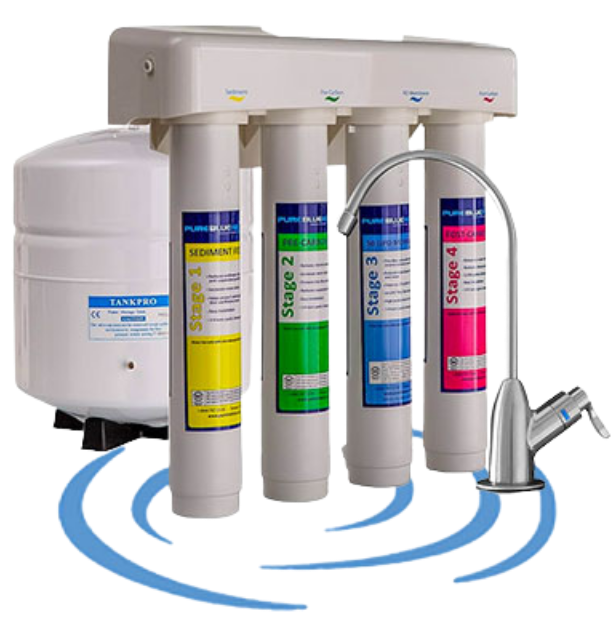
Get a free reverse osmosis drinking water system with the purchase of any whole-home water purification system.
*Cannot be combined with other offers. Mention this special when you call.