Reach Out Today
Please provide your email address so that we can stay in touch and answer any questions you have! We will be reaching back out shortly.


Hear from Our Customers
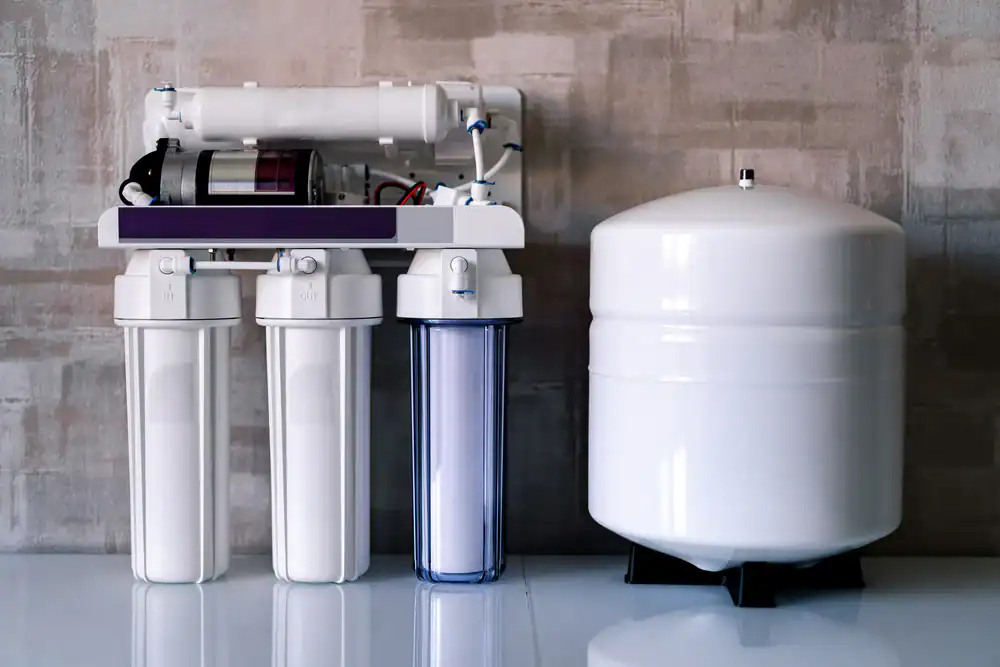
When a whole house filtration system goes in at the point of entry, every faucet, showerhead, and appliance in your Polo Ridge home gets treated water — not just the one under your kitchen sink. That means no more white scale crusting on your fixtures, no more chlorine smell when the hot water runs, and no more wondering what’s actually in the water you’re cooking with or bathing in every morning.
For Polo Ridge homeowners specifically, this matters more than most people realize. The homes here were built between 1999 and 2002, and they’ve been pulling water from the Floridan Aquifer — one of the hardest water sources in central Florida — for over two decades. That limestone-heavy groundwater has been depositing calcium and magnesium scale inside your water heater, your pipes, and your dishwasher the entire time. A filtration and softening system doesn’t just improve taste. It stops the slow, expensive damage that’s already been in progress for 25 years.
There’s also the health side of it. The Villages of Lake-Sumter water system has documented contaminants on record — including haloacetic acids, which are disinfection byproducts formed when chlorine reacts with organic matter, and trace levels of radium and PFAS-related compounds. These are in publicly available utility data. And for residents who are managing their health carefully in retirement, knowing what’s in your water — and doing something about it — is just a sensible call.
We’ve been in the water treatment business for over 50 years. That’s not a marketing number — it means we’ve been installing and servicing whole house systems through multiple generations of technology, changing regulations, and plenty of Florida water conditions that would humble a less experienced company. We’re a Water Quality Association member, which holds us to a professional and ethical standard that a lot of local competitors simply aren’t subject to.
Our BBB A-rating comes with something more meaningful than the letter itself: zero complaints on file. In an industry that Florida consumer groups have flagged repeatedly for high-pressure sales tactics and post-installation disappearing acts, that record stands out. We’re already a recognized water treatment provider in The Villages community — Polo Ridge residents don’t have to take a chance on an unknown company.
We also offer a $500 discount for military veterans and first responders. In a neighborhood like Polo Ridge, where a significant portion of residents have served, that’s not a footnote — it’s a real financial benefit for a large part of this community.

It starts with a professional water test — not a theatrical demonstration designed to shock you into signing something, but an actual analysis of what’s in your specific home’s water supply. For Polo Ridge homes drawing from The Villages’ CDD utility system, that test typically reveals elevated hardness from the Floridan Aquifer, along with disinfection byproducts and sometimes trace contaminants that don’t show up in the standard utility report. The results of that test drive the recommendation. Nothing gets proposed until the data says it’s warranted.
From there, the right system gets designed around your home’s actual needs. A multi-stage whole house filtration setup is installed at the main water line — the point of entry — so everything downstream is treated before it reaches any fixture or appliance. That typically includes sediment pre-filtration, activated carbon stages for chlorine and disinfection byproduct removal, and a softening component to address the hardness that’s been the primary complaint of Polo Ridge residents for years. Installation is handled by our experienced technicians, and because Polo Ridge falls under The Villages Community Development District utility system rather than a standard municipal connection, the process accounts for any CDD-specific requirements before work begins.
Once the system is in, you’ll notice the difference quickly. The water feels different in the shower. Fixtures stop scaling. And you’re not running to Publix on CR 466 for another case of bottled water because you don’t trust what’s coming out of the tap.

Ready to get started?
A whole house water filter from us isn’t a single cartridge doing one job. It’s a multi-stage point of entry system built to address the specific contaminant profile of your home — not a generic setup pulled off a shelf. For Polo Ridge, that means targeting the hardness that’s endemic to Sumter County’s groundwater, the chlorine and haloacetic acids present in the treated municipal supply, and any sediment or additional contaminants that show up in your individual water test.
The system protects your plumbing and appliances just as much as it protects your health. With homes in Polo Ridge now well into their second decade of hard water exposure, scale buildup in water heaters, washing machines, and dishwashers is an active problem — not a hypothetical one. Softening the water going forward reduces that accumulation and extends the usable life of appliances that would otherwise need replacement sooner. That’s a real, calculable financial benefit for homeowners who aren’t looking to absorb an unexpected $1,500 water heater replacement on a fixed income.
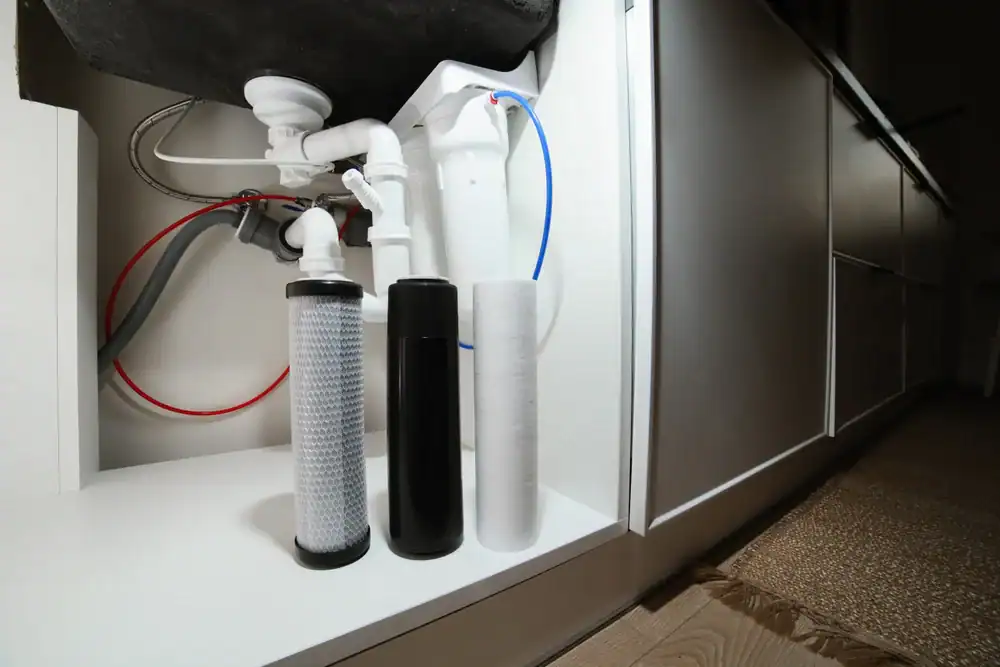
We also install point-of-use reverse osmosis systems for the kitchen when drinking water quality is the primary concern, and standalone water softeners when hardness is the dominant issue. Every engagement starts with the water test, so the recommendation always matches the actual problem — not the most expensive option on the menu.
The short answer is that the water meets regulatory minimums — but meeting a legal threshold and being optimal for your health aren’t the same thing. The Villages of Lake-Sumter water system has publicly documented contaminants that include haloacetic acids, which are disinfection byproducts formed during the chlorination process, along with trace levels of radium and a PFAS-related compound called perfluorohexane sulfonate. These are in the EWG Tap Water Database and aren’t disputed.
Beyond the contaminant question, the water in Polo Ridge is genuinely hard. It comes from the Floridan Aquifer, which runs through limestone geology and picks up calcium and magnesium along the way. That hardness causes real, visible problems — scale on showerheads and fixtures, spots on glassware, reduced efficiency in water heaters — and it’s been accumulating in Polo Ridge homes since they were built around 1999 to 2002. Whether you need filtration depends on what your specific water test shows, but the conditions here make it a legitimate question worth answering with actual data.
Hard water leaves calcium and magnesium deposits — called scale — on every surface it touches on the way through your home. Inside a water heater, that scale builds up on the heating element and the tank walls, forcing the unit to work harder to heat the same amount of water. Studies have shown that even a quarter-inch of scale buildup can reduce a water heater’s efficiency measurably, and the cumulative effect over years is a shorter lifespan and higher energy bills.
For Polo Ridge homeowners, this isn’t a future concern — it’s a present one. Homes here have been receiving hard water from the Floridan Aquifer since construction wrapped up around 2002. That’s over 20 years of scale accumulation in water heaters, washing machines, dishwashers, and ice makers. A whole house filtration and softening system stops the buildup from continuing, which protects whatever serviceable life remains in those appliances. It won’t undo 20 years of scale, but it stops the clock on further damage — and that has real dollar value when you’re looking at the cost of appliance replacement.
They solve different problems, and in a place like Polo Ridge, you often need both. A water softener specifically targets hardness — it removes or neutralizes the calcium and magnesium ions that cause scale buildup and that rough, dry feeling on your skin after a shower. It does that job well, but it doesn’t remove chlorine, disinfection byproducts, sediment, or other contaminants from your water.
A whole house water filter — particularly a multi-stage system installed at the point of entry — addresses a broader range of issues. Depending on the stages included, it can remove chlorine and chloramines, sediment, haloacetic acids, and other contaminants that show up in treated municipal water. For Polo Ridge residents dealing with both documented hard water and the disinfection byproducts present in the Villages of Lake-Sumter water system, the most complete solution is typically a combination: a softening component paired with multi-stage filtration. The water test done at the start of the process determines exactly which combination makes sense for your home.
Yes — and this is actually one of the most common reasons Polo Ridge residents look into whole house filtration in the first place. The chlorine smell you notice when the hot water runs isn’t just unpleasant. During a hot shower, chlorine and chloramines become airborne in the steam, which means you’re inhaling them and absorbing them through warm, open skin — not just drinking them. A pitcher filter on the kitchen counter does nothing about your shower water.
A whole house point of entry system treats every gallon before it reaches any fixture in your home, including every showerhead, every bathtub, and every faucet. The activated carbon stages in a multi-stage system are specifically effective at removing chlorine and the compounds that cause that chemical smell and taste. For residents in Polo Ridge who have noticed the smell getting stronger when they run hot water — which is common in homes where the water heater has scale buildup that concentrates certain compounds — a whole house system addresses it at the source rather than one fixture at a time.
The range is wide because the right system depends on what your water test shows and how many stages of filtration your home actually needs. In the Polo Ridge and Villages area, whole house filtration installations typically range from around $1,200 on the lower end for a more straightforward setup to $4,000 to $6,500 or more for a comprehensive multi-stage system that includes softening, sediment filtration, and carbon treatment. The national average installation cost sits around $2,273, which is a reasonable midpoint for a solid whole house system.
For Polo Ridge homeowners who qualify — veterans, active military, and first responders — we offer a $500 discount that brings the real cost down meaningfully. It’s also worth doing the math on what you’re currently spending on bottled water. A household buying $75 worth of bottled water per month is spending $900 a year — and that water does nothing for your shower, your appliances, or anything outside the kitchen. Over a decade, that’s $9,000 in bottled water alone. A whole house system pays for itself, and it covers the whole house.
Please provide your email address so that we can stay in touch and answer any questions you have! We will be reaching back out shortly.
"*" indicates required fields