Reach Out Today
Please provide your email address so that we can stay in touch and answer any questions you have! We will be reaching back out shortly.


Hear from Our Customers
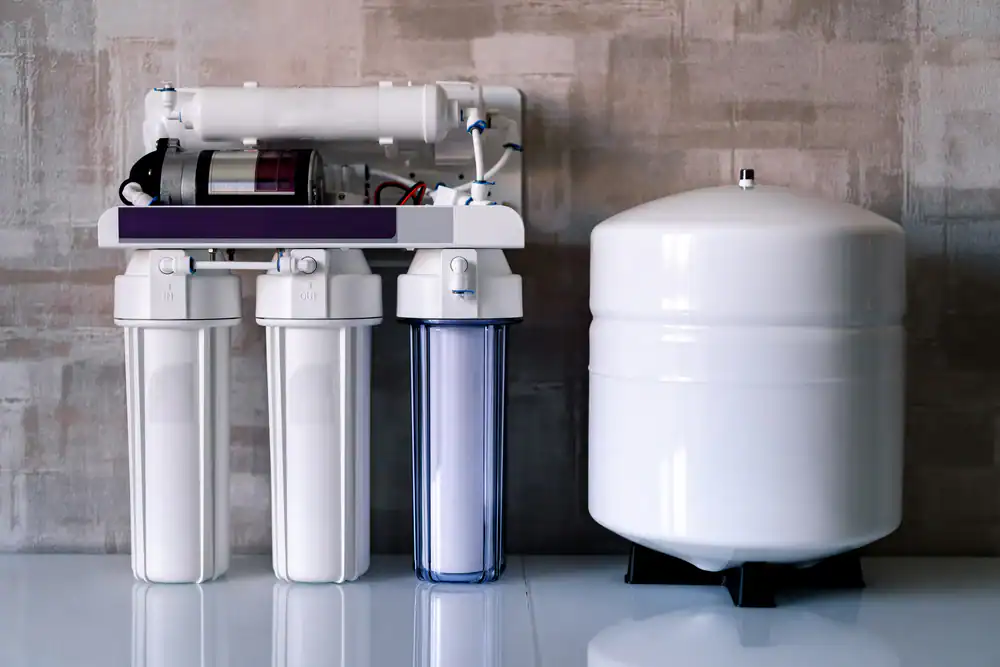
Your coffee tastes better. Your shower doesn’t smell like a pool. The white crust around your faucets stops forming, and your washing machine isn’t fighting a losing battle against minerals every time you run a load.
That’s what happens when you install a whole house water filter designed for the specific problems Plymouth homeowners face. You’re not masking the issue at one sink. You’re treating the water as it enters your home, so every tap, every appliance, every shower gets clean, filtered water.
Hard water wears out water heaters, dishwashers, and washing machines faster than they should fail. Chlorine dries out your skin and damages clothing fibers. Iron leaves rust stains that don’t come out. A whole home carbon filter combined with the right filtration media handles all of it at once, and you stop paying for the damage bad water causes.
We’ve been installing water treatment systems across Florida since the 1970s. We’re A-rated with the Better Business Bureau, hold a 5-star rating with zero complaints, and we’re members of the National Water Quality Association. That’s not marketing language—it’s a track record you can verify.
Plymouth sits in Lake County, where hard water and high chlorine levels are standard. We’ve tested hundreds of wells and city water lines in this area. We know what’s in your water before we walk in the door, and we know which systems hold up and which ones don’t.
We don’t sell plumbing services or water heaters. We do one thing: water treatment. That focus means you’re working with people who understand filtration systems, not generalists trying to upsell you on ten other services. We also offer a $500 discount for military personnel and first responders, and we’re proud supporters of the Tunnels to Towers Foundation.

We start with free water testing. Not a sales pitch disguised as a test—actual lab analysis of what’s in your water. That tells us whether you’re dealing with hard water, iron, sulfur, chlorine, sediment, or a combination.
Once we know what we’re treating, we size the system based on your home’s water usage and the number of people living there. A point-of-entry system gets installed where your main water line enters the house, so it treats everything before it reaches your pipes. Most installations take a few hours, and our technicians clean up when they’re done.
After installation, you’ll notice the difference immediately. If your water had a chlorine smell, it’s gone. If you had iron staining your sinks, it stops. The system uses multi-stage sediment filtration and activated carbon to remove contaminants, and depending on your water, we may combine it with a water softener to handle mineral content. Some systems use filter media backwashing to clean themselves automatically, so you’re not constantly replacing parts.
We also service what we install. If something needs adjustment or maintenance, we’re the ones who come back out. No runaround, no pointing at contract clauses.

Ready to get started?
A whole house water filter for a Plymouth home typically includes the main filtration unit, installation at your point of entry, and a system designed specifically for what your water test revealed. If you need a water softener combination to handle Lake County’s hard water, that gets built into the setup. If chlorine is the main issue, we focus on carbon filtration. If you’re on well water with iron or sulfur, the system addresses that.
You’re also getting a system that’s sized correctly. Undersized filters don’t keep up with demand, and oversized systems waste money. We calculate flow rate and usage so the system works when multiple people are showering, running the dishwasher, and doing laundry at the same time.
Florida water is tough on equipment. High mineral content, chlorine oxidation, and sediment all contribute to premature appliance failure. Whole home carbon filters reduce that wear significantly, and over time, you’ll replace fewer parts and deal with fewer repairs. That’s not a guarantee your dishwasher will last forever, but you’re removing one of the main things killing it early.
We also provide ongoing support. If you have questions six months later, or if something needs servicing, you’re calling the same company that installed it. We’ve been in business for over 50 years, and we’re not disappearing.

Most whole house water filtration systems in Florida fall between $800 and $3,000, but that range shifts depending on what you’re treating and how big your home is. If you need a basic sediment and carbon filter for city water with mild chlorine, you’re on the lower end. If you’re on well water with iron, sulfur, and hard water, and you need a water softener combination with multi-stage filtration, the price goes up.
We don’t give quotes over the phone because your water isn’t the same as your neighbor’s water. We test it first, then price the system based on what it actually needs to do. That’s why we offer free water testing—it’s the only way to give you an accurate number.
The other cost to consider is what you’re already spending on bottled water, appliance repairs, and cleaning products that barely work because your water is fighting you. A filtration system is an upfront expense, but it usually pays for itself in what you stop spending elsewhere.
Yes. Chlorine is one of the easiest things to remove with a whole home carbon filter, and it makes an immediate difference in taste and smell. Activated carbon attracts and traps chlorine as water passes through, so by the time it reaches your tap, the chlorine is gone.
Plymouth gets its water from city lines that use chlorine for disinfection, which is why your water smells like a pool and your tea tastes off. A point-of-entry carbon filter handles that at the source, so you’re not just filtering drinking water—you’re filtering shower water, laundry water, and everything else.
Chlorine also dries out your skin and hair, and it breaks down the elastic in clothing over time. Removing it improves more than just taste. You’ll notice softer skin, clothes that last longer, and water that doesn’t smell like chemicals when you turn on the shower.
A water softener removes hardness minerals like calcium and magnesium. A whole house filter removes contaminants like chlorine, sediment, iron, and chemicals. They do different jobs, and depending on your water, you might need both.
Lake County water is hard, which means it has high mineral content. That’s what causes the white buildup on faucets, the soap scum in your shower, and the scale inside your water heater. A softener handles that by exchanging hardness minerals for sodium or potassium.
But a softener doesn’t remove chlorine, iron, or sediment. If your water smells like sulfur or leaves rust stains, you need filtration in addition to softening. That’s why a water softener combination system makes sense for a lot of Plymouth homes—you’re treating hardness and filtering out everything else at the same time. We test your water first and recommend what actually fixes the problem, not just what’s easiest to sell.
It depends on the system and what it’s filtering. Most whole home carbon filters need media replacement every 3 to 5 years, but that timeline shifts based on water quality and usage. If you’re filtering heavy iron or sediment, you’ll need more frequent attention than someone filtering mild chlorine from city water.
Some systems use filter media backwashing, which means they clean themselves automatically by flushing out trapped sediment. Those require less hands-on maintenance, but you still need to check them periodically to make sure everything’s working.
We don’t install systems and disappear. When we set up your filtration system, we’ll walk you through what to expect and when to schedule service. Most of our customers in Plymouth set up annual checkups, which gives us a chance to inspect the system, test the water, and replace anything that’s worn out before it becomes a problem. Regular maintenance keeps the system running efficiently and extends its lifespan, so you’re not replacing major components earlier than necessary.
Yes, but well water usually needs more aggressive filtration than city water. Wells in Lake County often have high iron, sulfur, hardness, and sediment. You might also be dealing with tannins, manganese, or bacteria depending on where your well is located and how deep it goes.
A basic carbon filter won’t cut it for well water. You need a system with multi-stage sediment filtration to catch particles before they clog your pipes, plus media designed to remove iron and sulfur. If your water smells like rotten eggs, that’s hydrogen sulfide, and it requires specific treatment. If you have rust stains in your sinks and toilets, that’s dissolved iron, and it needs oxidation and filtration to remove it.
We test well water differently than city water because the contamination profile is different. Once we know what’s in your well, we design a point-of-entry system that handles all of it. That might include a sediment pre-filter, an iron filter, a carbon filter, and a softener—whatever it takes to give you clean water at every tap. Well water systems are more complex, but they’re also more customized, so you’re only treating what’s actually in your water.
Please provide your email address so that we can stay in touch and answer any questions you have! We will be reaching back out shortly.
"*" indicates required fields