Reach Out Today
Please provide your email address so that we can stay in touch and answer any questions you have! We will be reaching back out shortly.


Hear from Our Customers
You stop buying bottled water. Your coffee tastes better. Your skin doesn’t feel tight after a shower.
The rust stains in your toilets and sinks disappear. Your water heater lasts longer because scale isn’t building up inside it. Your soap lathers the way it’s supposed to, and your dishes don’t have spots anymore.
A point-of-entry system treats water at the source—before it splits off to your kitchen, bathrooms, laundry room, and outdoor spigots. That means every drop that enters your home gets filtered. You’re not just fixing the drinking water. You’re fixing all of it.
Hard water wears out appliances. Iron leaves stains. Sulfur smells like rotten eggs. Bacteria is a health risk. A whole house water filter handles all of that upstream, so you’re not dealing with the consequences in every room.
We’ve been solving water problems across North Florida since the 1970s. We’re A-rated by the Better Business Bureau with zero complaints and a 5-star rating. We’re members of the National Water Quality Association, which means we follow industry standards that matter.
We’re not a national franchise that sells you a system and disappears. We’re local. We answer the phone. We come back if something needs adjusting.
Ortega Forest sits in an area where well water and municipal supply both come with challenges—hardness, iron, occasional sulfur, and bacterial contamination aren’t uncommon. We’ve tested water from hundreds of homes in this area. We know what you’re dealing with, and we know how to fix it without overselling you on equipment you don’t need.

We start with a free water analysis at your home. We test for hardness, iron, sulfur, bacteria, pH, and total dissolved solids. This isn’t a sales call disguised as a test—it’s actual data that tells us what’s in your water and what needs to come out.
Based on those results, we design a system that fits your water chemistry and your household size. If you have high iron and bacterial contamination, we might recommend multi-stage sediment filtration combined with UV disinfection. If it’s mostly hardness and sulfur, a whole home carbon filter with a salt-free conditioner might be the better route. One size doesn’t fit all, and we don’t pretend it does.
Installation takes a few hours. We connect the system to your main water line—that’s your point of entry. From there, all water flows through the filter media before it reaches any fixture or appliance. Depending on the system, filter media backwashing happens automatically to keep everything running clean. You’re not adding salt or chemicals. You’re not wasting water. The system just works.
After installation, we walk you through basic maintenance and schedule a follow-up if needed. Most systems need minimal attention—maybe a filter change once a year or a UV bulb replacement. We handle that, or we show you how.

Ready to get started?
Your whole house water filter is custom-built based on what we find in your water test. That might include sediment pre-filters to catch rust and debris, a carbon tank to remove chlorine and sulfur, a salt-free water conditioner to prevent scale, or an iron removal system if your water runs orange.
If bacteria shows up in the test—E. coli, coliform, or bacterial iron—we add a UV purification system. Ultraviolet light kills waterborne organisms without adding anything to your water. It’s fast, effective, and requires almost no maintenance beyond an annual bulb swap.
In Ortega Forest, iron and hardness are common. The soil composition and aquifer sources in this part of Jacksonville mean well water often carries dissolved iron that stains everything it touches. Municipal water tends to be heavily chlorinated, which helps with bacteria but leaves your water tasting and smelling like a pool. A water softener combination with carbon filtration addresses both.
We also offer eco-friendly systems that use no salt, no electricity, and no water waste. These are popular with customers who want effective treatment without the environmental impact or ongoing costs of traditional softeners. They work by altering the structure of hardness minerals so they don’t stick to pipes and appliances—you get the benefits without the sodium.

You’ll know because something’s off. Your water tastes metallic or smells like sulfur. You see rust stains in your sinks and toilets. Your soap doesn’t lather. Your skin feels dry after every shower. Your appliances are breaking down faster than they should.
Those are signs that your water has hardness, iron, chlorine, or sulfur—and possibly bacteria. A water test confirms it. We do that for free at your home, and it takes about 20 minutes.
If your test shows contamination or high mineral content, a point-of-entry filtration system is the most effective fix. It treats water before it gets distributed throughout your house, so you’re not just patching the problem at one faucet.
A water softener removes hardness minerals—calcium and magnesium—that cause scale buildup. It does that through an ion exchange process, usually with salt. It’s great for protecting pipes and appliances, but it doesn’t filter out chlorine, iron, sulfur, or bacteria.
A whole house water filter does the filtering. It removes sediment, chemicals, odors, and contaminants depending on what media is inside the tank. Some systems use activated carbon. Others use specialized media for iron or sulfur.
Most homes need both. That’s why we often install a water softener combination system—softening plus filtration in one setup. You get scale protection and clean water without needing two separate units. If you want to avoid salt, we can use a salt-free conditioner that prevents scale without the ion exchange process.
A standard filter won’t kill bacteria—it might catch some in the sediment stage, but it’s not designed for disinfection. If your water test shows E. coli, coliform, or bacterial iron, you need a UV purification system.
UV light destroys bacteria, viruses, and other microorganisms by damaging their DNA so they can’t reproduce. It’s installed after your filtration stages, right before water enters your home’s plumbing. The process is chemical-free, and it works instantly as water flows past the bulb.
We see bacterial contamination fairly often in Ortega Forest well water, especially after heavy rains or if the well hasn’t been maintained. A UV system handles it without affecting taste, pH, or adding anything to your water. You just replace the bulb once a year, and you’re covered.
It depends on the system and your water quality, but most need very little. If you have a carbon filter, you’re looking at a media change every 3 to 5 years depending on usage and contamination levels. Sediment pre-filters might need swapping every 6 to 12 months if your water is particularly dirty.
Systems with automatic backwashing clean themselves. The filter media gets rinsed on a schedule—usually once a week—so it doesn’t clog or lose effectiveness. You don’t have to do anything. If you have a UV system, the bulb needs replacing annually, and that takes about 10 minutes.
We offer service plans if you’d rather not think about it. We’ll come out, check the system, swap filters or bulbs, and make sure everything’s running the way it should. Or we can show you how to do it yourself. Most of our customers in Ortega Forest handle their own basic maintenance without any issues.
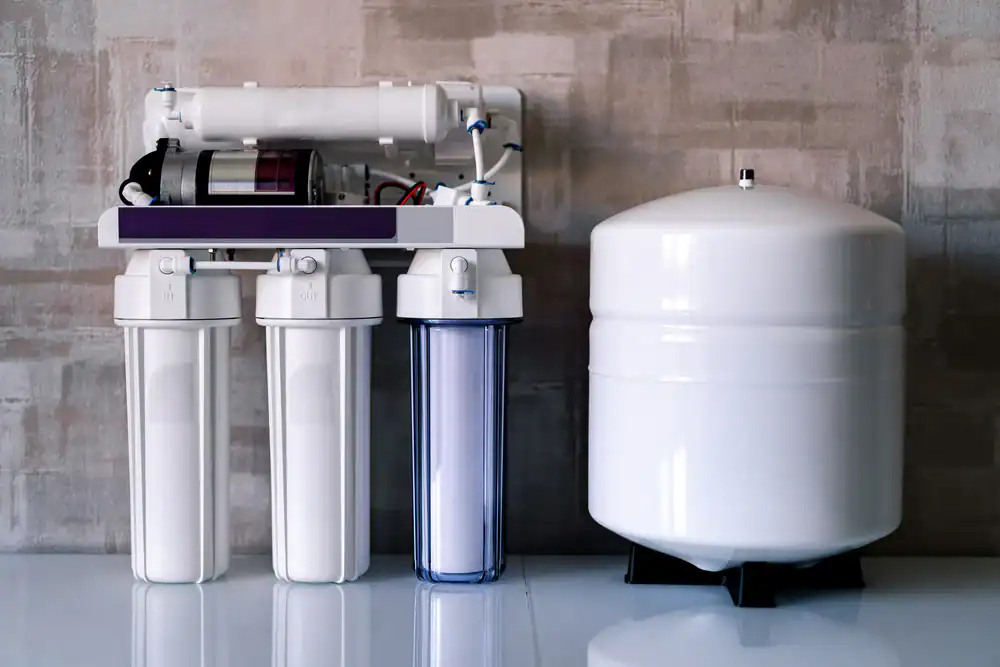
No. Reverse osmosis systems waste water because they push it through a membrane and flush out the rejected contaminants. That’s necessary for RO, but it’s not how whole house filtration works.
A point-of-entry system filters water as it flows through—no wastewater, no drain line, no constant flushing. The media inside the tank captures or neutralizes contaminants, and the clean water continues into your home. When the system backwashes to clean itself, it uses a small amount of water, but that’s maybe a few gallons once a week—not the constant waste you see with under-sink RO units.
If water conservation matters to you, whole home carbon filters and salt-free conditioners are some of the most efficient treatment options available. They don’t need electricity either, so you’re not adding to your power bill. You’re just improving your water without the environmental cost.
Please provide your email address so that we can stay in touch and answer any questions you have! We will be reaching back out shortly.
"*" indicates required fields