Reach Out Today
Please provide your email address so that we can stay in touch and answer any questions you have! We will be reaching back out shortly.


Hear from Our Customers
You know the drill. Orange rings around the toilet that won’t come off no matter how hard you scrub. Laundry that comes out with rust-colored streaks. That rotten egg smell when you turn on the shower, especially embarrassing when you have guests over.
It’s not just annoying. It’s costing you money every time you replace a corroded fixture or buy another jug of bottled water because your tap water tastes metallic. Hydrogen sulfide doesn’t just smell bad—it eats away at your copper pipes and brass fittings, shortening the life of your water heater and forcing expensive replacements years earlier than they should happen.
A whole house water filter addresses these problems at the source. You get clean water at every tap—kitchen, bathroom, laundry room, everywhere. No more choosing which faucet is “safe” or hauling bottled water from the store. The iron that’s staining everything gets filtered out before it reaches your fixtures. The sulfur that’s making your water smell gets eliminated before it hits your showerhead. And if you’re on well water in Orange Lake, you’re protecting against bacterial contamination that you can’t see, smell, or taste.
We specialize in whole house water filtration for homes in Orange Lake and throughout Lake County. We’re not plumbers who also sell filters on the side. We’re not a national company that installs your system and disappears. This is what we do, and we’ve built our reputation on actually servicing what we sell.
We’re A-rated with the Better Business Bureau with a 5-star rating and zero complaints. We’re members of the National Water Quality Association, which means we’re held to professional standards for water treatment. And we’re locally based, which means when you need filter replacements or have questions six months down the road, we’re still here.
Orange Lake sits on top of Florida’s limestone aquifer system, where iron leaches into well water from iron-rich soil layers and sulfur comes from the limestone deposits beneath Central Florida. We’ve installed point-of-entry systems throughout this area, and we know exactly what you’re dealing with because we see it every day.

First, we test your water to see exactly what we’re dealing with. Iron levels, sulfur content, hardness, pH, bacterial contamination if you’re on well water—we need to know what’s in there before we recommend a system. This isn’t a one-size-fits-all situation.
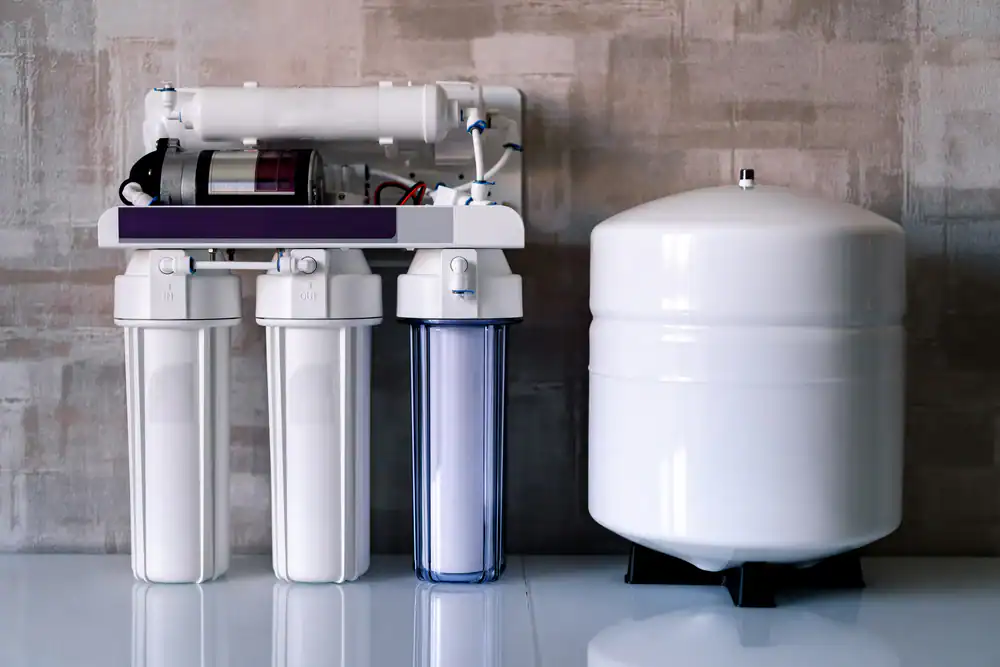
Based on those results, we size and configure a system for your home. That usually means multi-stage sediment filtration to catch particles and debris, whole home carbon filters to remove chlorine and organic compounds, and depending on your water chemistry, a water softener combination or specialized media for iron and sulfur removal. The system gets installed at your main water line—the point of entry—so every drop of water coming into your house gets treated.
Most installations take three to five hours. We connect the system to your main line, set up the filter media backwashing schedule so the system cleans itself automatically, test the water pressure at multiple taps to make sure everything’s flowing properly, and verify that the filtered water meets the standards we discussed. Before we leave, you’ll know how to monitor the system, when filters need replacing, and how to reach us if something comes up.
You’ll have clean water flowing from every tap before we’re done. The difference is immediate—no more orange water, no sulfur smell, no metallic taste.

Ready to get started?
Orange Lake’s water comes from the Floridan Aquifer, which serves over 300,000 residents across the region. If you’re on well water, you’re pulling from limestone formations that naturally contain iron and sulfur. If you’re on municipal water, you’re still dealing with chlorine, hardness, and the occasional taste and odor issues that come with treating surface water.
Our whole house systems handle the full range of Central Florida water problems. Iron removal eliminates the orange staining on fixtures and laundry. Sulfur treatment gets rid of that rotten egg smell that’s worse in hot water. Carbon filtration removes chlorine taste and odor along with organic compounds. And for homes on well water, we include options for bacterial treatment because aging septic systems and agricultural runoff in Lake County create real contamination risks.
The system maintains your water pressure even when multiple taps are running. It’s sized for your home’s flow rate, not some generic capacity that works for a 1,200 square foot house but fails in a 2,500 square foot home. Filter replacement happens every six to twelve months depending on your water quality and usage, and we’ll remind you when it’s time. Everything’s designed to work with Florida plumbing and local codes, installed by technicians who know the difference between what works here versus what works somewhere else.

For most homes in Orange Lake, you’re looking at $2,500 to $8,000 depending on the size of your house and what’s in your water. A basic sediment and carbon system for a smaller home with relatively clean municipal water sits at the lower end. A comprehensive point-of-entry system with iron removal, sulfur treatment, water softening, and bacterial protection for a larger home on well water sits at the higher end.
The cost depends on how many gallons per minute your house uses at peak demand, what contaminants we’re removing, and how many treatment stages you need. A 2,000 square foot home typically needs a system rated for 10-15 gallons per minute to maintain pressure when multiple fixtures run simultaneously. Add iron and sulfur issues common in Lake County well water, and you need specialized filter media that costs more than standard carbon.
Here’s the thing—installing proper filtration costs less than replacing a water heater every five years because hydrogen sulfide corroded it, or replacing a washing machine because iron buildup destroyed the valves. You’re protecting appliances that cost thousands to replace while eliminating the ongoing expense of bottled water. We offer a $500 discount for military and first responders, and we’ll give you an exact price after testing your water.
Not if it’s sized correctly. That’s the difference between a system that’s properly engineered for your home versus one that’s undersized to hit a price point.
Water pressure depends on flow rate—how many gallons per minute your system can handle. Most homes need 10-15 GPM to run multiple fixtures simultaneously without pressure loss. That means you can run the shower, washing machine, and kitchen sink at the same time without noticing a drop. If your system is only rated for 6-8 GPM because someone sold you a smaller unit, you’ll absolutely notice reduced pressure.
We size systems based on your home’s actual demand, not what’s cheapest to install. The filter housing, media type, and pipe diameter all affect flow rate. We also test pressure at multiple taps after installation to verify you’re getting the performance you expect. If you have low pressure now, filtration won’t make it worse—but we’ll tell you upfront if your existing pressure is too low to begin with and what’s causing it.
Point-of-entry means the filter treats all the water coming into your house at the main line. Point-of-use means you’re filtering water at individual taps—usually just the kitchen sink.
A point-of-entry system gives you filtered water everywhere. Your shower, washing machine, toilets, outdoor hose connections, every faucet in the house. That matters in Orange Lake because iron staining doesn’t just affect your drinking water—it stains your toilet bowls, shower walls, and laundry. Sulfur smell isn’t just a kitchen problem—it’s worse in hot water, which means your shower smells like rotten eggs. A whole house system eliminates these problems at the source.
Point-of-use systems are cheaper upfront, but they only treat water at one location. You’re still showering in sulfur water, still washing clothes in iron-laden water, still scrubbing orange stains off fixtures. For homes dealing with Central Florida water quality issues, point-of-use filtration doesn’t solve the problem—it just gives you one clean tap while everything else stays the same. That’s why most homeowners in this area choose whole house systems once they understand the difference.
Filter cartridges typically need replacing every six to twelve months depending on your water quality and how much water your household uses. The filter media in backwashing systems lasts three to five years before it needs replacement. And the system itself should get a professional inspection annually to check valves, seals, and pressure settings.
Most of the maintenance is straightforward. Sediment pre-filters catch particles and need changing more frequently if you have high sediment in your well water. Carbon filters remove chlorine and organic compounds, and their lifespan depends on how much chlorine your municipal system uses or how much organic matter is in your well. If you have iron or sulfur issues, those specialized media filters need backwashing—which happens automatically on a timer—but eventually the media gets exhausted and needs replacing.
We set up a reminder system so you know when it’s time for filter changes. You can handle cartridge replacements yourself if you want, or we can do it during a service visit. The important thing is staying on schedule. A clogged filter reduces flow rate and stops removing contaminants effectively. Skip maintenance long enough and you’re back to orange stains and sulfur smell, except now you’ve also got a system that’s not protecting your appliances.
Yes, but you need the right type of filtration. Standard sediment and carbon filters don’t remove bacteria. You need either UV sterilization, which kills bacteria with ultraviolet light, or a specialized filter media designed for bacterial reduction.
This matters in Orange Lake because well water can get contaminated with E. coli and coliform bacteria from aging septic systems, agricultural runoff, or surface water infiltration during heavy rains. Lake County has plenty of all three. The problem with bacteria is you can’t see it, smell it, or taste it—your water looks and tastes fine even when it’s contaminated.
If you’re on well water, we recommend testing for bacteria before installing a system. If the test comes back positive, we add UV sterilization to your whole house system. The UV chamber installs after your sediment and carbon filters—those pre-filters remove particles that could shield bacteria from the UV light—and the UV kills 99.99% of bacteria as water flows through. The UV bulb needs replacing annually, but it’s a straightforward swap. For homes with recurring bacterial contamination, this is the most reliable long-term solution.
Please provide your email address so that we can stay in touch and answer any questions you have! We will be reaching back out shortly.
"*" indicates required fields