Reach Out Today
Please provide your email address so that we can stay in touch and answer any questions you have! We will be reaching back out shortly.


Hear from Our Customers
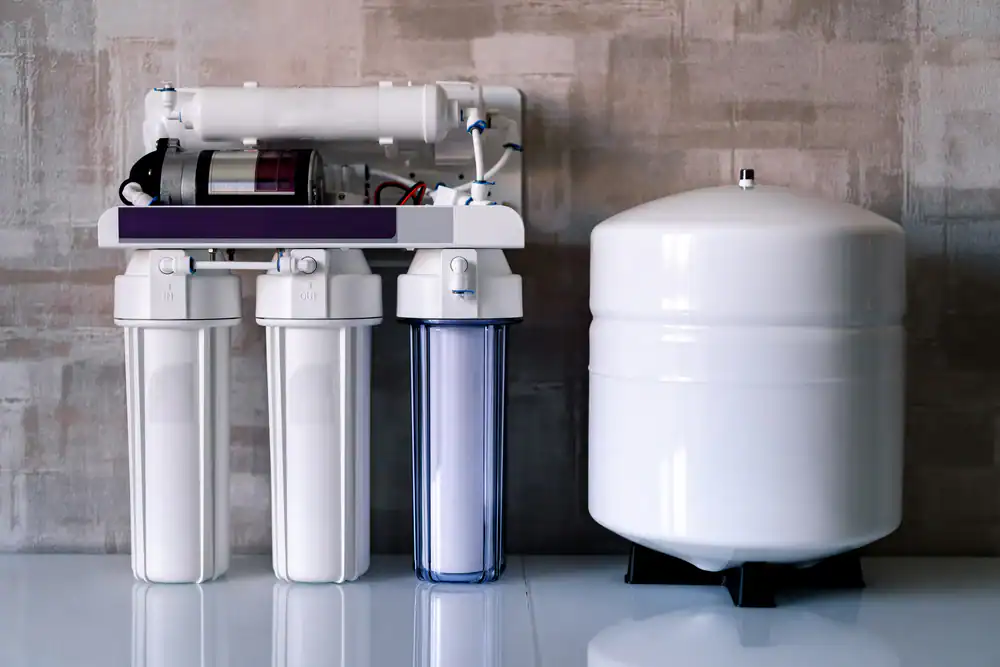
Your dishes stop coming out of the dishwasher with white spots. Your shower doesn’t leave that film on the glass door. Your clothes last longer because they’re not being beaten up by minerals every wash cycle.
That’s what a whole home carbon filter and multi-stage sediment filtration system does. It removes what’s causing the problems before the water gets to your appliances, your skin, or your glass.
In Oceanway, FL, most of the water comes from the Floridan Aquifer, which means it’s picking up calcium, magnesium, iron, and sometimes sulfur as it moves through limestone. The result is hard water that averages between 100 and 300 parts per million. That’s not a health risk, but it’s rough on everything it touches.
A water softener combination with filtration handles the hardness. An iron removal system stops the rust stains in your sinks and toilets. A sulfur filter gets rid of that rotten egg smell if you’re on well water. And a carbon stage removes the chlorine taste that shows up even in treated city water.
You’re not just filtering one faucet. You’re treating the water at the point of entry, so every tap, every shower, every appliance gets the same clean water.
We’ve been installing whole house water filtration systems across Florida since the 1970s. We’re members of the National Water Quality Association, A+ rated with the Better Business Bureau, and we’ve built a reputation on actually servicing what we sell.
That last part matters more than you’d think. A lot of companies will install a system and disappear. We don’t do that. We’re here when your filter media needs backwashing, when you need a new cartridge, or when something just doesn’t seem right.
We also know Oceanway’s water. We’ve tested it, treated it, and installed systems in homes just like yours for decades. We know what the aquifer does to your plumbing. We know why your water heater didn’t last as long as it should have. And we know how to fix it.
If you’re military or a first responder, we offer a $500 discount. It’s one way we say thanks.

First, we test your water. Not the city’s report—your actual water, from your actual tap. That tells us what’s in it, how hard it is, and what kind of system will handle it.
Then we design a system based on your water analysis and how much water your household uses. One size doesn’t fit all. A family of two doesn’t need the same setup as a family of five. A home on city water doesn’t need the same filtration as a home on a well.
Once the system is designed, we install it at your main water line. That’s the point of entry—the spot where water comes into your house before it splits off to different fixtures. The system typically includes a sediment pre-filter to catch rust and particles, an activated carbon stage to remove chlorine and chemicals, and depending on your water, a softener or iron filter.
After installation, the system runs automatically. Some stages backwash themselves to stay clean. Others just need a filter cartridge swap every six to twelve months, depending on your water quality and usage.
We handle the maintenance. You just use the water.

Ready to get started?
Every system we install starts with a free water analysis. We’re not guessing what’s in your water—we’re testing it. That analysis determines whether you need a basic carbon and sediment setup or something more specialized like an iron removal system or sulfur filter.
Most systems include multiple stages. A sediment filter catches the visible stuff—rust, dirt, particles. A carbon filter removes chlorine, which is what causes that chemical taste and smell. If you’ve got hard water, which most Oceanway homes do, a water softener combination handles the calcium and magnesium that causes scaling and appliance damage.
If your water has iron, you’ll see rust stains in your toilets, sinks, and laundry. An iron filter removes that before it stains anything. If you’re on well water and dealing with sulfur, a sulfur filter eliminates the rotten egg smell.
Some homes also benefit from a UV stage, which destroys bacteria and viruses. That’s more common with well water, but it’s an option for anyone who wants that extra layer of protection.
The system gets installed at your main line, usually in the garage or outside near the meter. It doesn’t take up much space, and once it’s in, it works automatically. Filter media backwashing happens on a schedule, and we’ll set you up with a maintenance plan so you’re not guessing when something needs attention.

Most systems run between $2,500 and $5,800 installed, depending on what your water needs. A basic carbon and sediment setup costs less than a system that also handles iron, sulfur, and hardness.
The price includes the equipment, installation, and usually a year of service. After that, you’re looking at filter replacements once or twice a year, which typically cost between $100 and $300 depending on the system.
Compared to replacing appliances early or buying bottled water for ten years, the system pays for itself. Most homeowners break even within two to four years, and after that, it’s just saving money and protecting what you’ve already invested in your home.
Yes. That’s one of the main reasons people install these systems. Oceanway’s city water is treated with chlorine, and even though it’s safe to drink, a lot of people don’t like the taste or smell.
A whole home carbon filter removes chlorine at the point of entry, so every faucet, shower, and appliance gets dechlorinated water. You’ll notice the difference immediately—water tastes cleaner, and your showers don’t smell like a pool.
Carbon filters also remove chloramines, which some water systems use instead of chlorine. If you’ve ever noticed that the taste doesn’t go away even after the water sits out, that’s probably chloramines. A good carbon stage handles both.
It depends on the system and your water quality, but most need attention once or twice a year. Sediment filters and carbon filters get replaced every six to twelve months. If you’ve got a softener, you’ll need to add salt periodically.
Some systems have automatic backwashing, which means they clean themselves on a schedule. You don’t have to do anything—the system flushes out trapped sediment and resets itself.
We set up a maintenance schedule when we install the system, and we’ll remind you when it’s time for service. A lot of customers just have us handle it. We come out, swap the filters, check the system, and you’re good for another year.
Yes, but you need the right system. A standard carbon filter won’t remove iron or sulfur—you need a dedicated iron filter or sulfur filter designed for those specific contaminants.
Iron shows up as rust stains in your sinks, toilets, and laundry. It also clogs up appliances and leaves orange residue on everything. An iron removal system uses a special filter media that traps the iron before it gets into your house.
Sulfur is that rotten egg smell. It’s common in well water across Florida, and it’s caused by bacteria breaking down organic material underground. A sulfur filter removes the smell and prevents the bacteria from building up in your plumbing. If you’ve got both iron and sulfur, we can install a system that handles both at the same time.
A filter alone won’t fix hard water—you need a water softener for that. Hard water is caused by dissolved calcium and magnesium, and those minerals cause scaling inside your pipes, water heater, dishwasher, and washing machine.
A water softener combination removes those minerals through an ion exchange process. The result is softer water that doesn’t leave deposits or cause buildup. Your appliances last longer, your plumbing stays clearer, and you use less soap because it actually lathers.
In Oceanway, where water hardness averages between 100 and 300 parts per million, a softener makes a big difference. Most of our customers notice their water heater lasts years longer than it used to, and their dishwasher stops leaving white spots on everything.
Please provide your email address so that we can stay in touch and answer any questions you have! We will be reaching back out shortly.
"*" indicates required fields