Reach Out Today
Please provide your email address so that we can stay in touch and answer any questions you have! We will be reaching back out shortly.


Hear from Our Customers
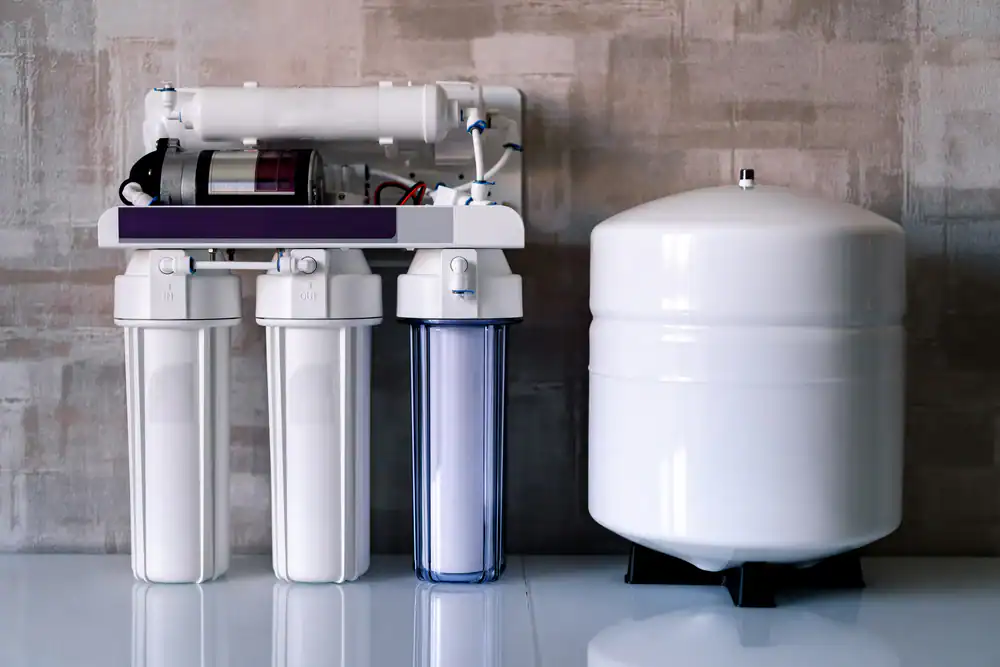
You stop seeing mineral buildup around your faucets. Your dishes come out of the dishwasher without spots. The rotten egg smell disappears when you turn on the tap.
Your water heater lasts longer because it’s not fighting sediment buildup. Your washing machine doesn’t have to work overtime against hard water. Your skin and hair feel better after every shower because the chlorine is gone.
Point-of-entry systems filter water before it reaches any fixture in your home. That means every drop—whether it’s for drinking, cooking, bathing, or washing—gets treated. You’re not just fixing one problem at one sink. You’re protecting your entire home and everything in it.
We’ve been handling water treatment in Central Florida for over five decades. We’re A-rated with the Better Business Bureau, hold a 5-star rating with zero complaints, and we’re members of the National Water Quality Association.
We don’t do plumbing. We don’t install water heaters. We focus entirely on water treatment—purification, filtration, and softening. That’s what we know, and that’s what we do well.
New Berlin homeowners deal with the same water issues most of Central Florida faces: hard water that damages appliances, chlorine that dries out skin, iron that leaves stains, and sulfur that smells terrible. We test your water first, then design a system based on what’s actually in it—not a one-size-fits-all approach.

We start with a free water analysis at your home. No obligation. We test your water to see what’s in it—hardness levels, chlorine content, iron, sulfur, pH balance. That tells us what needs to be addressed.
Once we know what we’re dealing with, we design a custom system. Multi-stage sediment filtration removes particles and debris. Whole home carbon filters take out chlorine and organic compounds. If you need a water softener combination to handle hardness, we build that in. Some systems include filter media backwashing to keep everything running efficiently without constant maintenance.
Installation happens at your main water line—the point of entry before water reaches any part of your home. After that, every faucet, every shower, every appliance gets filtered water. We handle the installation, walk you through how the system works, and we’re available if you ever need service.

Ready to get started?
Florida water is hard—typically between 100 and 300 parts per million. That’s considered hard to very hard. It’s why you see buildup on fixtures, why your water heater fails earlier than it should, and why your appliances wear out faster.
A whole house water filter addresses that. You get protection from the calcium and magnesium that cause scaling. You remove the chlorine that’s drying out your skin and damaging your plumbing. If you’re dealing with iron or sulfur—common in New Berlin well water—those get filtered out too.
Your system is custom-designed based on your water test results and your household’s water usage. We use NSF-certified components and WQA-certified systems, which means they’ve been independently tested to actually do what they’re supposed to do. And if you’re military or a first responder, you get $500 off.
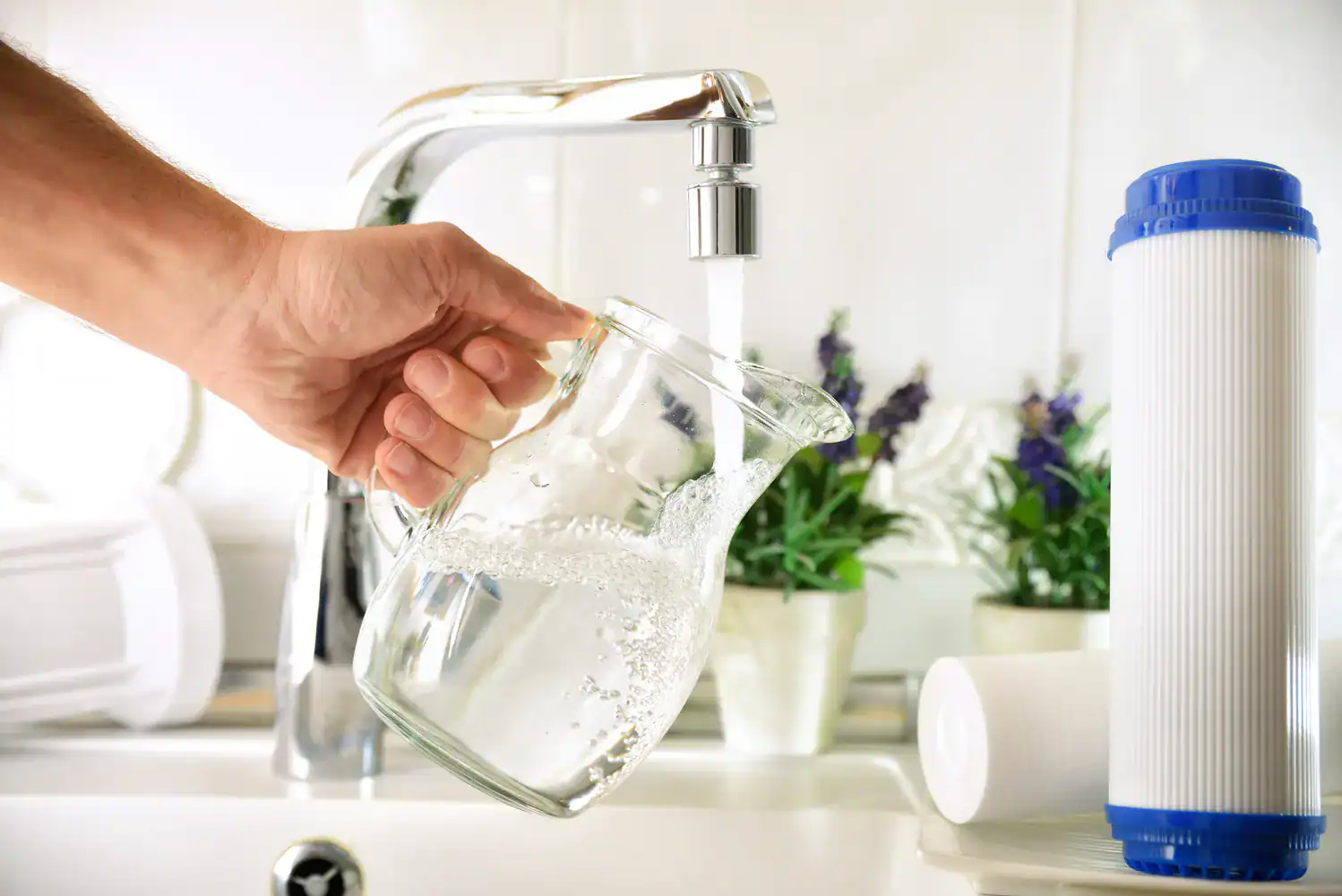
The total cost depends on what your water test shows and what your home needs. Most systems fall between $3,300 and $7,500 over ten years when you factor in installation, maintenance, and filter replacements.
Compare that to bottled water, which averages around $12,000 over the same period—and bottled water only covers drinking. It doesn’t protect your appliances, your plumbing, or your skin and hair from chlorine and hard water.
The break-even point usually hits within two to four years. After that, you’re saving money while also extending the life of your dishwasher, washing machine, water heater, and pipes. The return isn’t just financial—it’s also about not dealing with constant maintenance and replacements.
Yes. Sulfur—the rotten egg smell—is common in Florida well water, and it’s one of the most frequent complaints we hear in New Berlin.
A properly designed system with the right filtration media removes hydrogen sulfide, which is what causes that smell. We test your water first to confirm sulfur is the issue and measure the concentration. Then we recommend the filtration setup that handles it.
Once the system is installed, the smell is gone at every tap. You’re not just masking it or filtering at one faucet. The sulfur gets removed before water enters your home, so showers, laundry, dishes—everything smells and tastes clean.
It depends on your water hardness level. If your water test shows high calcium and magnesium—which is typical in New Berlin—then yes, a water softener combination makes sense.
Filtration handles contaminants like chlorine, sediment, iron, and sulfur. Softening handles hardness, which is what causes scale buildup, soap scum, and appliance damage. They work together, not as replacements for each other.
Some homeowners only need filtration. Others need both. That’s why we test first. We’re not trying to sell you more than you need—we’re trying to solve the actual problems in your water. If softening isn’t necessary, we’ll tell you.
Most systems need filter replacements every six to twelve months, depending on your water quality and household usage. Some filter media backwashing systems are designed to clean themselves automatically, which reduces hands-on maintenance.
We walk you through the maintenance schedule when we install your system. It’s straightforward—usually just swapping out a filter cartridge or scheduling a service visit if your system needs media replacement.
We also service all water treatment brands, not just the ones we install. So if you move into a home that already has a system, or if you’ve had a system installed by someone else, we can handle the upkeep. You’re not stuck trying to track down the original installer.
Point-of-entry (POE) systems filter water as it enters your home—before it reaches any faucet, shower, or appliance. That’s what a whole house water filter is. Every drop of water in your home gets treated.
Point-of-use (POU) systems filter water at a specific location, like under your kitchen sink or on your refrigerator. They’re useful for drinking water, but they don’t protect your plumbing, appliances, or shower water.
If you’re dealing with hard water, chlorine, iron, or sulfur, a point-of-use filter won’t solve it. You’ll still have buildup on your fixtures, damage to your water heater, and dry skin from chlorinated showers. A POE system handles all of that because it treats water at the source.
Please provide your email address so that we can stay in touch and answer any questions you have! We will be reaching back out shortly.
"*" indicates required fields