Reach Out Today
Please provide your email address so that we can stay in touch and answer any questions you have! We will be reaching back out shortly.


Hear from Our Customers
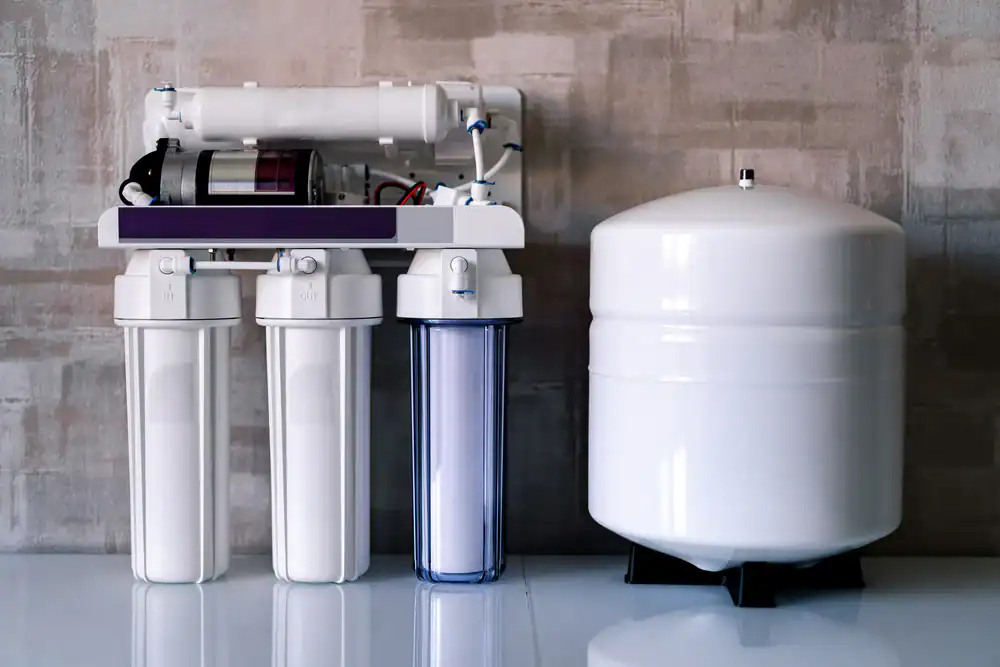
Your water stops tasting like chlorine. Your skin and hair feel softer after showers because you’re not washing in chemicals anymore. Your coffee tastes better, your ice cubes are clearer, and you’re not second-guessing whether it’s safe to fill your kid’s water bottle from the tap.
A point-of-entry system filters water before it reaches any faucet in your home. That means every shower, every glass of water, every load of laundry gets treated. You’re not just filtering drinking water—you’re protecting your whole household from contaminants that show up in Martin County’s water supply.
And you stop spending $100 a month on bottled water. Most families don’t realize they’re paying over $1,200 a year for bottles when a whole house system costs a fraction of that to run. You get better water for less money, and you’re not hauling plastic home from the store every week.
We focus exclusively on water purification, softening, and filtration. We don’t do plumbing. We don’t install water heaters. We specialize in making sure the water coming into your Martin County home is clean, safe, and properly treated.
We’re A-rated with the Better Business Bureau, with a 5-star rating and zero complaints. We’re members of the National Water Quality Association, which means we follow industry standards and stay current on water treatment technology. And we offer a $500 discount to military members and first responders because we believe in supporting the people who serve our community.
When you call us, you’re working with people who understand Martin County’s water issues—the PFAS contamination, the chlorine taste, the hard water that’s common along Florida’s coast. We test your water, design a system that addresses what’s actually in it, and install equipment that handles your household’s flow rate without dropping water pressure.

First, we test your water. We come to your home and run a free water analysis to see what contaminants are present and at what levels. This isn’t a sales pitch—it’s diagnostic work. We need to know what’s in your water before we can recommend the right filtration system.
Then we design a system based on your results and your household size. A home with 1-3 bathrooms needs different flow capacity than a home with 7+ bathrooms. We match the system to your needs so you maintain at least 9 gallons per minute at every tap—no pressure drops, no waiting for the shower to warm up while someone’s running the dishwasher.
We install the system at your main water line, before water reaches any fixture. We install multi-stage sediment filtration and whole home carbon filters that remove chlorine, chloramine, PFAS, and other contaminants. If you need water softening, we can integrate that too. The system runs quietly and only requires sediment filter changes a few times a year.
After installation, you get filtered water everywhere—kitchen, bathrooms, laundry, refrigerator, outdoor spigots. Every drop that enters your home gets treated.

Ready to get started?
Martin County water has specific issues that whole house filtration addresses. PFAS contamination—those “forever chemicals” used in household products since the 1940s—shows up in 63% of Florida spring vent samples. These compounds don’t break down, and they’re linked to liver disease, high cholesterol, and reduced immune function. Our systems use activated carbon and reverse osmosis technology to reduce PFAS by up to 99%.
Chlorine and chloramine get added to municipal water for disinfection, but they leave a taste and smell that most people don’t want in their drinking water or showers. When chlorine mixes with organic matter, it forms haloacetic acids and trihalomethanes—byproducts you don’t want to consume or absorb through your skin. Whole home carbon filters pull these out.
Hard water is prevalent along Florida’s coastline. It leaves buildup on fixtures, makes soap less effective, and dries out your skin and hair. A water softener combination system addresses hardness while the filtration handles contaminants. You protect your plumbing and appliances from corrosion and buildup, which extends their lifespan and cuts down on maintenance costs.
Bacterial contamination occasionally shows up in local recreational water sites, with Enterococcus levels exceeding state guidelines. While municipal treatment handles most of this, a whole house system adds another layer of protection. You’re filtering out sediment, metals, pesticides, herbicides, and microorganisms that can slip through or enter your water through aging pipes.
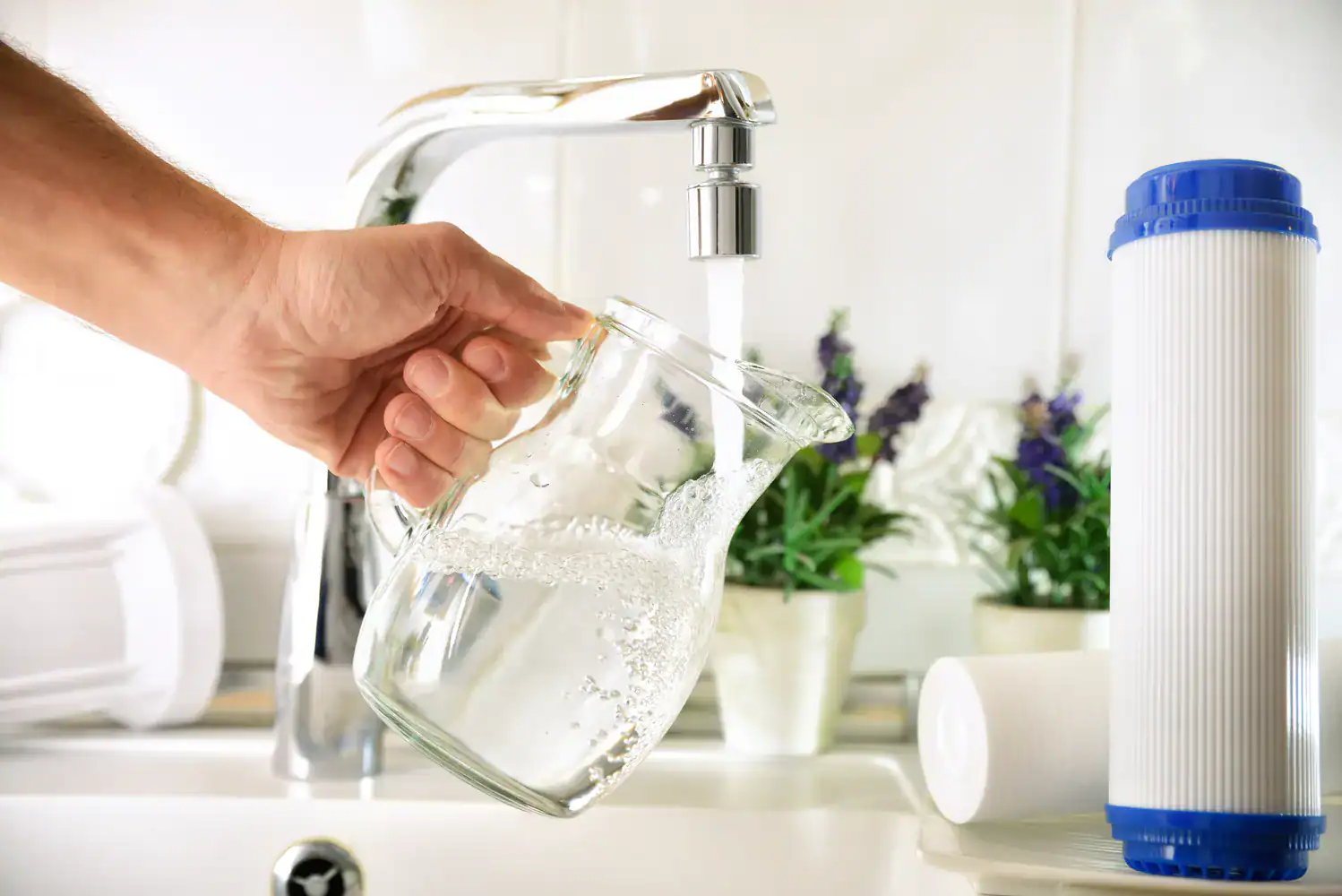
If your family drinks the recommended eight glasses of water per day and you’re buying bottled water, you’re spending around $1,400 per year. Most families buying cases at the store spend $100 a month, which adds up to $1,200 annually. That’s triple what it costs to run a whole house filtration system.
A whole house system has an upfront cost, but the annual maintenance is minimal—just sediment filter changes a few times a year. You’re not buying bottles every week, you’re not storing plastic in your garage, and you’re not contributing to the 167 disposable bottles per person per year that Americans use, 80% of which end up in landfills.
The cost comparison gets even better when you factor in what filtered water does for your appliances. Your water heater, washing machine, and dishwasher last longer when they’re not dealing with sediment and hard water buildup. You’re saving money on repairs and replacements down the line.
Not if it’s sized correctly. Water pressure loss happens when a system can’t handle your household’s flow rate. That’s why we match the system to your home size and usage.
Our systems are built to maintain at least 9 gallons per minute, which is what you need to run multiple fixtures at once without noticing a drop. A home with 1-3 bathrooms gets a system rated for 9 GPM. A home with 4-6 bathrooms gets 12 GPM. Larger homes with 7+ bathrooms get systems that handle up to 20 GPM.
This is one area where a lot of competitors cut corners. They install undersized systems to save money, and homeowners end up with weak showers and slow-filling sinks. We don’t do that. You get a system that delivers high-quality filtered water at the flow rate your household actually needs.
PFAS contamination is the biggest concern right now. These “forever chemicals” have been detected in 63% of Florida spring vent samples and 68% of spring run samples. PFAS don’t break down naturally, and they’re linked to kidney cancer, testicular cancer, liver disease, and immune system problems. If you’re on municipal water or a well in Martin County, there’s a good chance PFAS are present.
Chlorine and chloramine are added to municipal water for disinfection, but they create byproducts like haloacetic acids and trihalomethanes when they interact with organic matter. These byproducts are regulated, but that doesn’t mean you want to drink them or shower in them. A whole home carbon filter removes chlorine, chloramine, and their byproducts.
Hard water is common along Florida’s coast, and Martin County is no exception. Hard water causes buildup in pipes and appliances, makes your skin and hair feel dry, and reduces the effectiveness of soap and detergent. Bacterial contamination occasionally shows up in local water testing, with Enterococcus levels exceeding state guidelines at recreational sites. While municipal treatment addresses most bacteria, a whole house system adds extra protection.
Sediment filters need changing a few times a year, depending on your water quality and household usage. That’s the main maintenance task. The system runs quietly in the background, and filter changes are straightforward—most homeowners can handle them, or we can do it for you.
Carbon filters last longer, typically a year or more, depending on the system and your water conditions. Some systems include filter replacement alerts, so you’re not guessing when it’s time to swap them out. We’ll walk you through the maintenance schedule when we install your system, and we’re available if you have questions down the road.
Compare that to pitcher filters or faucet-mounted filters, which need replacing every month or two and only filter a fraction of your water. Whole house systems require far less frequent maintenance and treat every drop that enters your home. The cost per gallon is significantly lower, and you’re not constantly buying and disposing of small cartridge filters.
Yes, but not all systems do it effectively. PFAS removal requires specific filtration technologies—activated carbon and reverse osmosis are the most reliable. Our systems use NSF-certified filtration media that reduces PFAS by up to 99%.
PFAS are called “forever chemicals” because they don’t break down naturally. They’ve been used in household products since the 1940s, and they’re now showing up in water supplies across Florida. Martin County has detectable levels in both spring vents and spring runs. These compounds are linked to serious health issues—cancer, liver disease, high cholesterol, reduced immune function.
If PFAS removal is a priority for you, make sure the system you’re considering is independently certified. 92% of filtration buyers prefer certified filters, and 81% feel more confident in products with certification seals. We only install systems that meet National Water Quality Association standards and carry NSF certification for the contaminants they claim to remove. You’re not guessing whether it works—you’re getting verified performance.
Please provide your email address so that we can stay in touch and answer any questions you have! We will be reaching back out shortly.
"*" indicates required fields