Reach Out Today
Please provide your email address so that we can stay in touch and answer any questions you have! We will be reaching back out shortly.


Hear from Our Customers
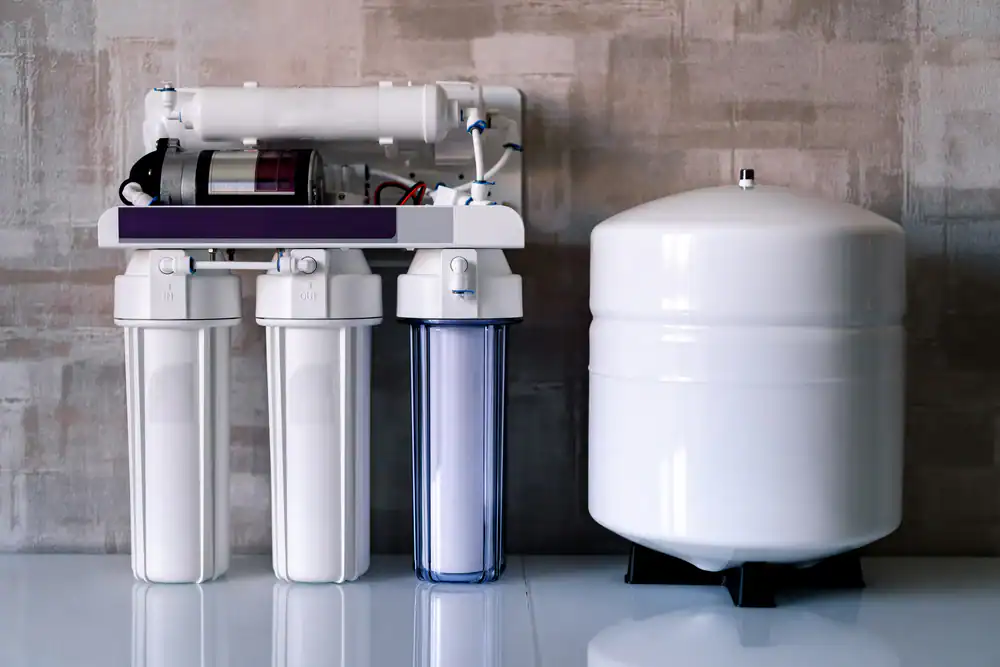
Your appliances stop fighting mineral buildup. Water heaters that should last 12 years don’t die at 7. Dishwashers don’t leave white film on every glass.
Your skin doesn’t feel tight after a shower. Your hair stops feeling like straw. The water you drink doesn’t taste like a swimming pool.
You stop buying bottled water by the case. You stop scrubbing orange stains off toilets and sinks. You stop wondering what’s actually coming out of your tap.
A whole home carbon filter or multi-stage sediment filtration system installed at the point where water enters your house handles everything. Every shower. Every load of laundry. Every glass of water. You’re not filtering one faucet and hoping for the best—you’re treating the entire supply before it reaches your family.
We have an A+ Better Business Bureau rating with zero complaints and a 5-star customer rating. We’re members of the National Water Quality Association, which means we follow industry standards that actually matter.
We don’t do plumbing. We don’t install water heaters. We focus entirely on water treatment, and we’ve spent over 50 years combined doing it. That focus means when you call, you’re talking to someone who knows the difference between a sediment filter and a catalytic carbon filter—and why that difference matters for Irvine water.
Lake County water comes with its own challenges. High mineral content. Chlorine levels that vary by season. Iron in well water that stains everything it touches. We test your water first, then design a system that actually addresses what’s in it—not what a national company assumes might be there.

We start with a free water analysis at your home. Not a guess based on your zip code—an actual test of what’s coming through your pipes. We’re looking at hardness levels, chlorine or chloramine content, iron, manganese, pH, and any contaminants specific to your water source.
Once we know what we’re dealing with, we recommend a system. That might be a water softener combination with whole home carbon filters for chlorine. It might be multi-stage sediment filtration if you’re on well water with high iron. It might be a point-of-entry system with filter media backwashing to handle multiple issues at once. The system fits your water, not a sales quota.
Installation happens at the main water line where it enters your home. Everything gets filtered before it splits off to your kitchen, bathrooms, laundry, and appliances. The process typically takes a few hours, and you’ll have water back on the same day.
We come back 1 to 3 months later to test again. If the system isn’t removing what we designed it to remove, we work for free until it does. That’s not a marketing line—it’s how we operate.

Ready to get started?
A point-of-entry system treats all the water entering your home, not just one sink. The specific components depend on what’s in your water, but most Irvine installations include some combination of sediment filtration, carbon filtration, and water softening.
Sediment filters catch particles—rust, dirt, sand, anything solid floating in the supply. Carbon filters remove chlorine, chloramines, and organic compounds that affect taste and smell. Water softeners handle the calcium and magnesium that cause hardness, scaling, and appliance damage. Some homes need iron filters if they’re on well water. Others need pH adjustment if their water is too acidic and eating through copper pipes.
Filter media backwashing is part of the maintenance. The system periodically flushes itself to clear out trapped sediment and regenerate the filter media. You’re not manually cleaning anything or replacing cartridges every month. The system handles it.
We don’t use one-size-fits-all equipment. Water quality varies between Irvine’s municipal supply and private wells in the area, and even within the same neighborhood depending on your pipes and how far you are from the treatment plant. Your system is built for your water, tested after installation, and backed by a performance guarantee that we actually honor.
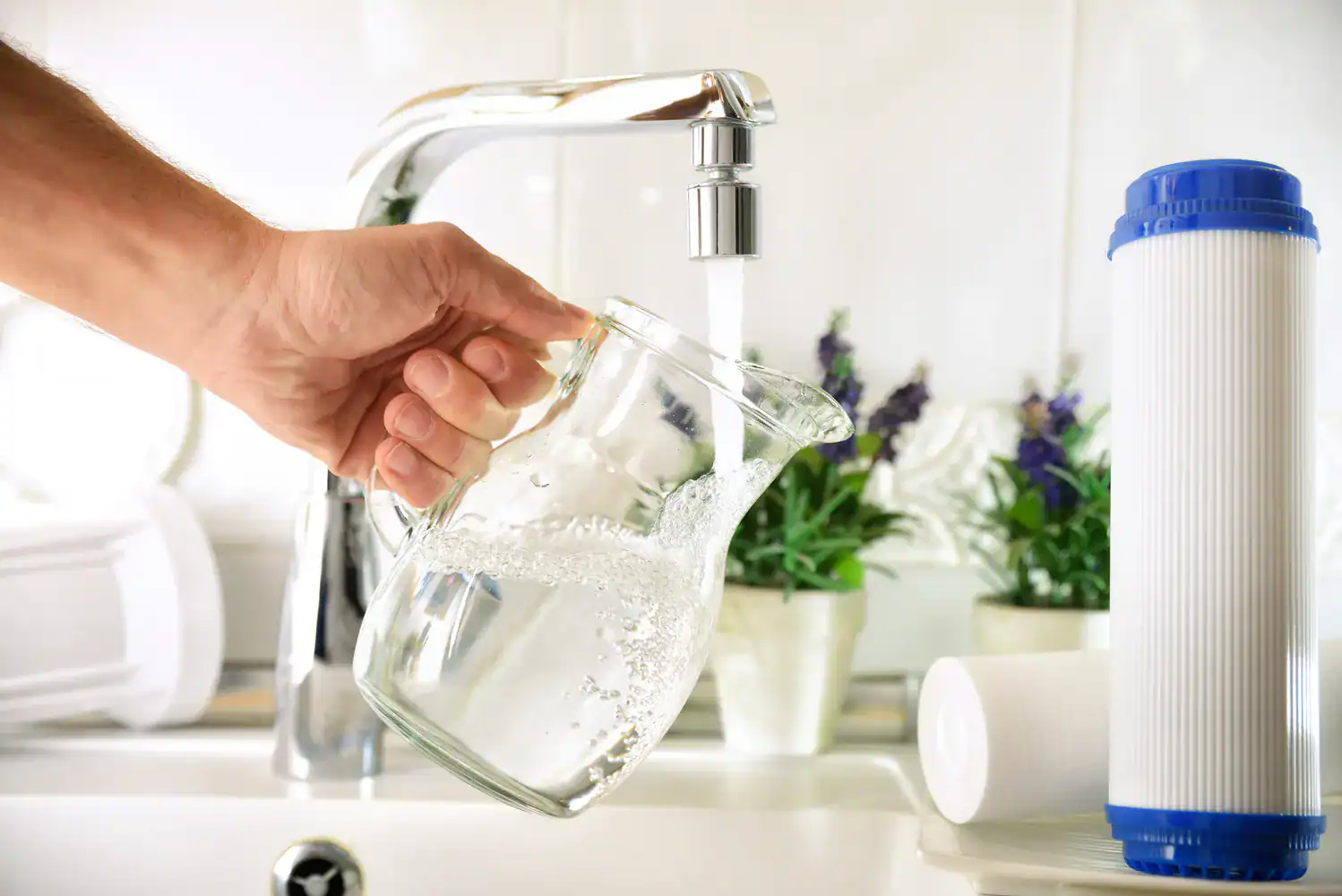
Most whole house water filtration systems in Irvine run between $2,000 and $6,000 depending on what you need installed. A basic sediment and carbon filter setup for municipal water with mild hardness sits on the lower end. A comprehensive point-of-entry system with water softening, multi-stage filtration, and iron removal for well water costs more.
The price includes the equipment, professional installation at your main water line, and the initial water testing. It doesn’t include ongoing maintenance, but most systems only need filter media replacement or salt refills once or twice a year, which runs $100 to $300 depending on your water usage.
What matters more than the upfront cost is what you stop paying for. Hard water costs Irvine homeowners $1,100 to $2,000 per year in appliance damage, extra detergent, energy waste, and plumbing repairs. A water heater that should last 12 years fails at 7 because of mineral buildup. A filtration system pays for itself in 2 to 4 years just from the damage you avoid—not counting the bottled water you stop buying or the soap you stop wasting.
We offer free water testing and a written estimate before you commit to anything. We also provide a $500 discount for military members and first responders.
A properly designed whole house water filter removes sediment, chlorine, chloramines, heavy metals, iron, manganese, sulfur, and organic compounds. It also reduces hardness if you include a water softener as part of the system. What it removes specifically depends on what’s in your water and how the system is configured.
Sediment filters catch rust, dirt, sand, and particulates down to 5 microns or smaller. Carbon filters remove chlorine and chloramines used to disinfect municipal water, plus volatile organic compounds that cause taste and odor issues. Water softeners remove calcium and magnesium that cause hardness and scaling. Iron filters handle ferrous and ferric iron common in Lake County well water.
Some systems also reduce haloacetic acids and trihalomethanes—disinfection byproducts that form when chlorine reacts with organic matter in the water supply. These are regulated by the EPA but still present in trace amounts in treated water.
What a whole house filter doesn’t do is remove every possible contaminant to the level of a reverse osmosis system. If you need that level of purification for drinking water, we can add an under-sink RO unit in the kitchen. But for most Irvine homes, a point-of-entry system handles the bulk of what matters—hardness, chlorine, sediment, and metals—across your entire house.
Most whole house water filtration systems need attention once or twice a year. The exact schedule depends on your water quality, how much water you use, and what type of system you have installed.
Sediment filters typically need replacement every 6 to 12 months. If your water has high sediment or iron content, you might need to change them more often. Carbon filters last 12 to 18 months in most cases, but that shortens if you have high chlorine levels or heavy usage. Water softeners need salt refills every 4 to 8 weeks depending on hardness and household size.
Filter media backwashing happens automatically. The system flushes itself on a schedule to clear trapped particles and regenerate the media. You don’t need to do anything manually unless something malfunctions.
We recommend annual water testing even after your system is installed. Water quality changes. The city adjusts chlorine levels seasonally. Well water fluctuates based on rainfall and aquifer conditions. Testing confirms your system is still removing what it should, and it catches problems before they become expensive.
We offer maintenance plans that include filter replacements, system checks, and annual testing. Most customers prefer that over trying to track it themselves, but you can handle it on your own if you’d rather.
A properly sized and installed whole house water filter should not noticeably reduce water pressure. If it does, the system is either undersized for your home’s flow rate, the filters are clogged and need replacement, or the installation wasn’t done correctly.
Whole house systems are rated by flow rate, measured in gallons per minute. A typical home needs 10 to 15 GPM to handle multiple fixtures running at once—someone showering while the dishwasher is on and a toilet flushes. If your system is rated for 8 GPM and your house needs 12, you’ll notice a pressure drop when demand is high.
Sediment buildup also restricts flow. If your filters are clogged with rust, dirt, or iron, water can’t pass through as easily. That’s why filter replacement matters. A filter that’s overdue doesn’t just stop working—it chokes your water supply.
We size systems based on your home’s plumbing, fixture count, and peak usage. We also install pressure gauges so you can monitor performance. If pressure drops after installation, we come back and fix it. If it drops later because filters need changing, we’ll walk you through what to replace or handle it as part of a maintenance plan.
Most customers don’t notice any pressure difference after a whole house filter goes in. What they do notice is that their water doesn’t smell like chlorine and their fixtures aren’t covered in white scale.
Most Irvine homes benefit from both. A water softener removes hardness—the calcium and magnesium that cause scaling and appliance damage. A whole house filter removes chlorine, sediment, and other contaminants that affect water quality. They solve different problems, and Florida water typically has both.
Hard water is the bigger issue in this area. Lake County water ranges from moderately hard to very hard depending on your location. That hardness shortens appliance life, increases energy costs, and leaves residue on everything. A water softener handles that by exchanging calcium and magnesium ions for sodium ions, which don’t cause scaling.
But softening doesn’t remove chlorine. It doesn’t filter out sediment. It doesn’t touch iron or manganese if you’re on well water. That’s where whole home carbon filters or multi-stage sediment filtration come in. You need both systems working together to address the full range of what’s in Florida water.
Some systems combine softening and filtration in one unit. Others use separate tanks installed in sequence. We test your water first, then recommend the most efficient setup for what you’re dealing with. If your water is soft but has high chlorine, you might only need a carbon filter. If it’s hard with iron, you need softening plus iron filtration. The configuration depends on the test results, not a standard package.
Please provide your email address so that we can stay in touch and answer any questions you have! We will be reaching back out shortly.
"*" indicates required fields
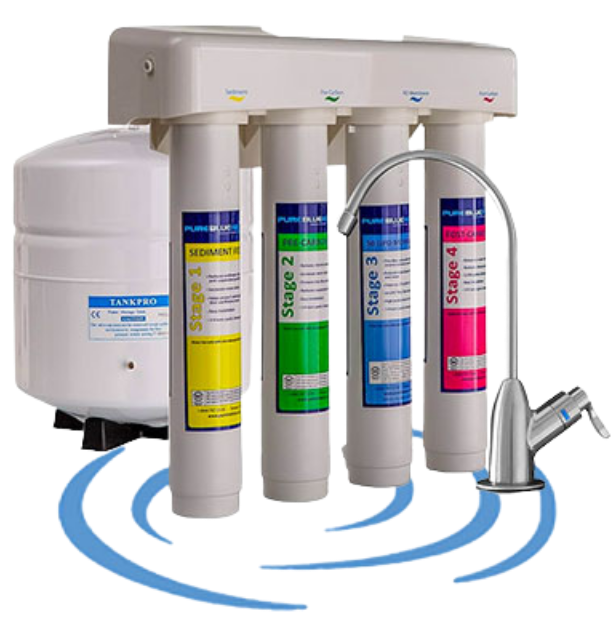
Get a free reverse osmosis drinking water system with the purchase of any whole-home water purification system.
*Cannot be combined with other offers. Mention this special when you call.