Reach Out Today
Please provide your email address so that we can stay in touch and answer any questions you have! We will be reaching back out shortly.


Hear from Our Customers
Your appliances last longer because they’re not fighting mineral buildup every day. Water heaters, dishwashers, and washing machines run cleaner and break down less often. That’s real money saved over time.
Your laundry comes out without rust stains. Your dishes don’t have spots. Your shower doesn’t smell like rotten eggs, and your skin doesn’t feel like it’s coated in film after you wash.
Drinking water tastes like water should. Cooking doesn’t add metallic flavors to your food. You stop buying bottled water because what comes from your tap is actually clean. A point-of-entry system treats everything before it reaches a single faucet, so every drop in your home gets filtered.
This isn’t about luxury. It’s about fixing a problem that costs you money, embarrassment, and peace of mind every single day.
We have over 50 years of combined experience treating the exact water issues you’re dealing with in Hoyt and across North Florida. We’re not a national franchise that doesn’t understand local water. We’re Florida-based, and we know what’s in your well water because we’ve tested and treated thousands of homes in Lake County.
We’re A+ rated with the Better Business Bureau with zero complaints. We’re members of the National Water Quality Association. Those aren’t just badges—they mean we’re held to standards and we actually meet them.
We start with free water testing because guessing doesn’t work. Your neighbor’s system won’t necessarily work for you. Water quality varies by location, well depth, and usage. We design systems based on what’s actually in your water and how much your household uses.

We start with a free water analysis at your home. We test for iron, sulfur, bacteria, hardness, pH, and other contaminants common in Hoyt well water. This tells us exactly what needs to be filtered and how aggressive the treatment needs to be.
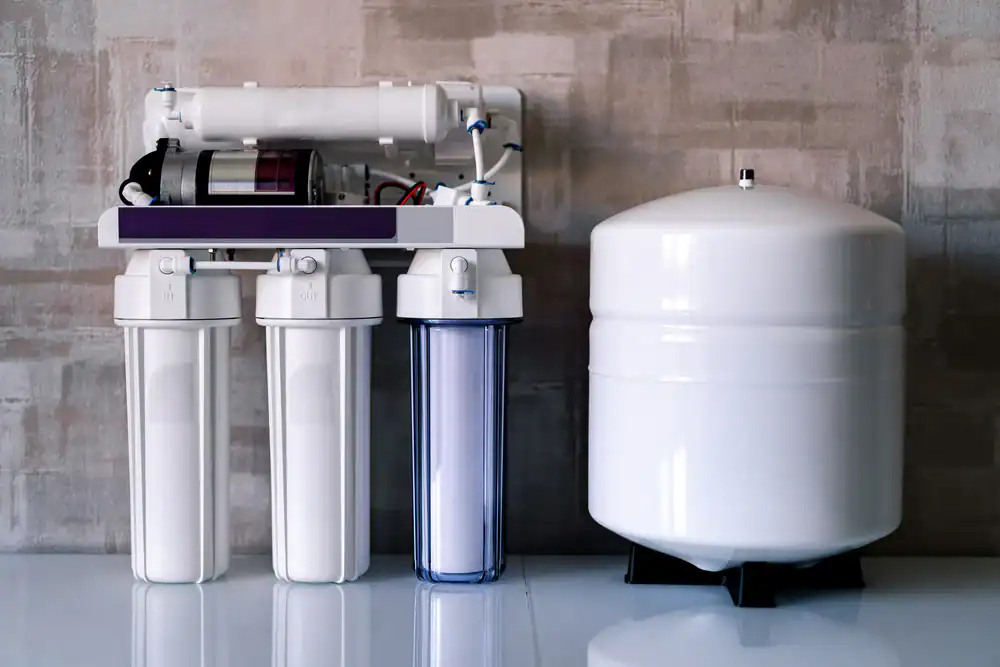
Based on your results and household size, we design a custom system. That might include multi-stage sediment filtration to catch particles, whole home carbon filters to remove chlorine and odors, a water softener combination to handle hardness, or UV purification to kill bacteria. Some homes need all of it. Some need two components. We don’t sell you more than you need.
Installation happens at your main water line—the point of entry before water reaches any fixture. That’s how a whole house system works. Once it’s in, every tap, shower, toilet, and appliance gets treated water. The filter media backwashing process keeps the system clean and effective over time.
We handle the installation, walk you through how the system operates, and set up a maintenance schedule. Most systems need minimal attention—media replacement or salt refills depending on your setup. We service what we sell, and we also service systems installed by other companies if you need help down the road.

Ready to get started?
A whole house water filter isn’t one piece of equipment. It’s a system designed around your water test results. If you have iron in your water—and most Hoyt homes do—you’ll need an iron removal component that handles rust and bacterial iron. If your water smells like sulfur, you need a filtration stage that targets hydrogen sulfide gas.
Hard water requires a softener or a salt-free conditioner, depending on whether you want traditional ion exchange or an eco-friendly option that prevents scale without adding sodium. Bacterial contamination means adding UV light purification, which kills E. coli and other organisms without chemicals.
Every system includes sediment filtration to catch particles before they reach your fixtures. Carbon filtration removes tastes, odors, and chlorine if you’re on county water. The configuration depends entirely on what’s in your water and what problems you’re trying to solve.
We also offer systems for homes with high water usage or specific concerns like low pH or tannins. Lake County water varies significantly even within a few miles, so what works in Astor won’t necessarily work in Hoyt. Local water quality matters, and your system should reflect that.
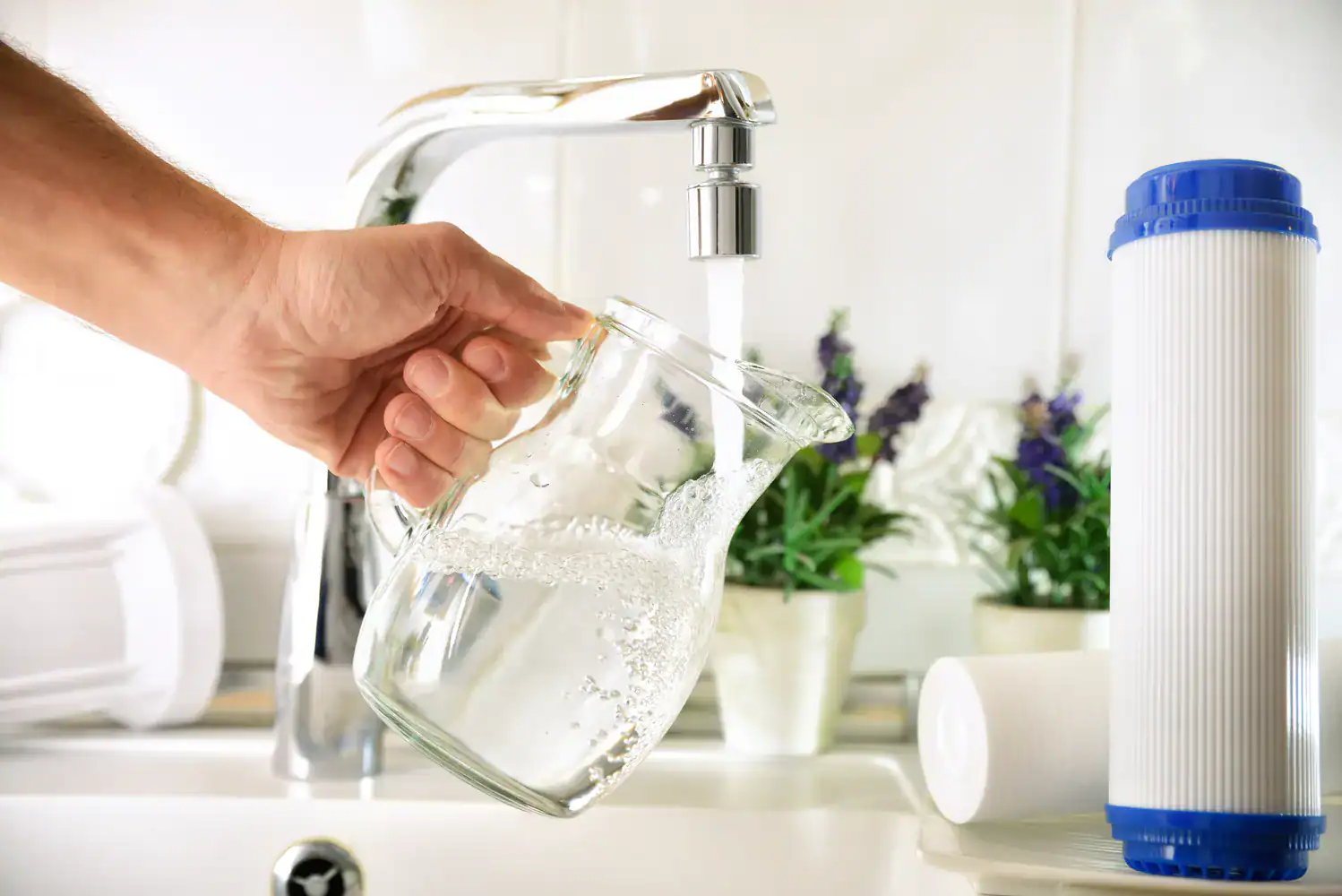
If you’re seeing rust stains on your sinks, toilets, or laundry, you have iron in your water. If your water smells like rotten eggs, that’s hydrogen sulfide from sulfur. If your soap doesn’t lather well and you have white buildup on faucets and showerheads, you have hard water.
These are the most common issues in Hoyt because most homes are on well water, and the aquifer in this area has high mineral content. You might also notice your water heater needs replacing more often than it should, or your appliances break down early. That’s usually from untreated hard water causing scale buildup inside the equipment.
The only way to know for sure what’s in your water is to test it. We do that for free. A basic test covers hardness, iron, sulfur, pH, and bacteria. If you’ve had issues with staining, odor, or appliance problems, a whole house system will likely solve it. If your water tests clean, we’ll tell you that too.
A drinking water filter—usually installed under the sink or on the countertop—only treats water at that one faucet. It’s designed for consumption, so it focuses on taste, odor, and contaminants you’d ingest. It does nothing for the water going to your shower, washing machine, dishwasher, or toilets.
A whole house water filter installs at the point of entry, where your main water line enters the home. It treats all the water before it splits off to different fixtures. That means every tap, every appliance, and every shower gets filtered water. You’re protecting your plumbing, your appliances, your skin, and your drinking water all at once.
If you have hard water or iron, a drinking water filter won’t stop the damage to your water heater or the stains in your toilet. You need a whole house system to handle that. Some people install both—a whole house system for general treatment and a reverse osmosis system at the kitchen sink for ultra-purified drinking water. But if you’re dealing with hard water, iron, or sulfur, the whole house system is the foundation.
It depends entirely on what your water test shows and what size system your home needs. A basic softener and sediment filter setup costs less than a multi-stage system with iron removal, carbon filtration, and UV purification. Your household size also matters—a family of two uses less water than a family of six, so the equipment is sized differently.
Most whole house systems for a typical Hoyt home range from a few thousand dollars to higher-end installations for more complex water issues. That includes equipment, installation, and setup. We don’t give quotes over the phone because your water quality and your home’s plumbing setup affect the price. We’d rather test your water, show you what you need, and give you an accurate number.
What we can tell you is that a properly installed system pays for itself over time. You’ll spend less on bottled water, appliance repairs, and early replacements of water heaters and other equipment. You’ll use less soap and detergent because soft water lathers better. And you won’t be scrubbing iron stains off everything. The upfront cost is real, but so are the long-term savings.
It depends on the type of system and how much water your household uses. A traditional water softener needs salt refills every few months, depending on your hardness level and water usage. The resin tank might need cleaning or replacement every few years, but that’s not frequent.
Carbon filters need media replacement roughly once a year, sometimes longer if your water usage is low. Iron filters require backwashing to clean the media, and some systems do this automatically on a schedule. Sediment filters need cartridge changes every few months to a year depending on how much sediment is in your water.
UV systems need an annual bulb replacement because the UV light loses effectiveness over time, even if it still looks like it’s working. The quartz sleeve that protects the bulb should be cleaned periodically to make sure the light penetrates the water effectively.
We set up a maintenance schedule based on your specific system and send reminders when service is due. Most of our customers handle salt refills themselves and call us for media replacement or annual UV bulb changes. If you don’t want to think about it, we offer service plans that cover everything. The key is staying on schedule—neglected systems lose effectiveness and can cause problems down the line.
A standard sediment or carbon filter won’t kill bacteria. You need a UV purification system for that. UV light destroys the DNA of bacteria, viruses, and other microorganisms so they can’t reproduce or cause illness. It’s highly effective against E. coli, coliform bacteria, and other pathogens that can show up in well water.
The UV system installs as part of your whole house setup, usually after the sediment and carbon filters. Water flows through a chamber where it’s exposed to UV light. The process is chemical-free, doesn’t change the taste of your water, and works continuously as long as the bulb is functioning.
If your water test shows bacterial contamination, we’ll recommend UV as part of your system. It’s common in Hoyt because well water can be affected by surface runoff, especially during heavy rains. Some homes also have bacterial iron, which is a type of iron-related bacteria that causes slimy buildup in pipes and toilets. A combination of iron filtration and UV treatment handles that.
UV doesn’t remove sediment, chemicals, or minerals—it only disinfects. That’s why it works best as one component of a multi-stage system. If bacteria is your only issue, UV might be all you need. But most homes benefit from a combination approach that addresses multiple contaminants at once.
Please provide your email address so that we can stay in touch and answer any questions you have! We will be reaching back out shortly.
"*" indicates required fields