Reach Out Today
Please provide your email address so that we can stay in touch and answer any questions you have! We will be reaching back out shortly.


Hear from Our Customers
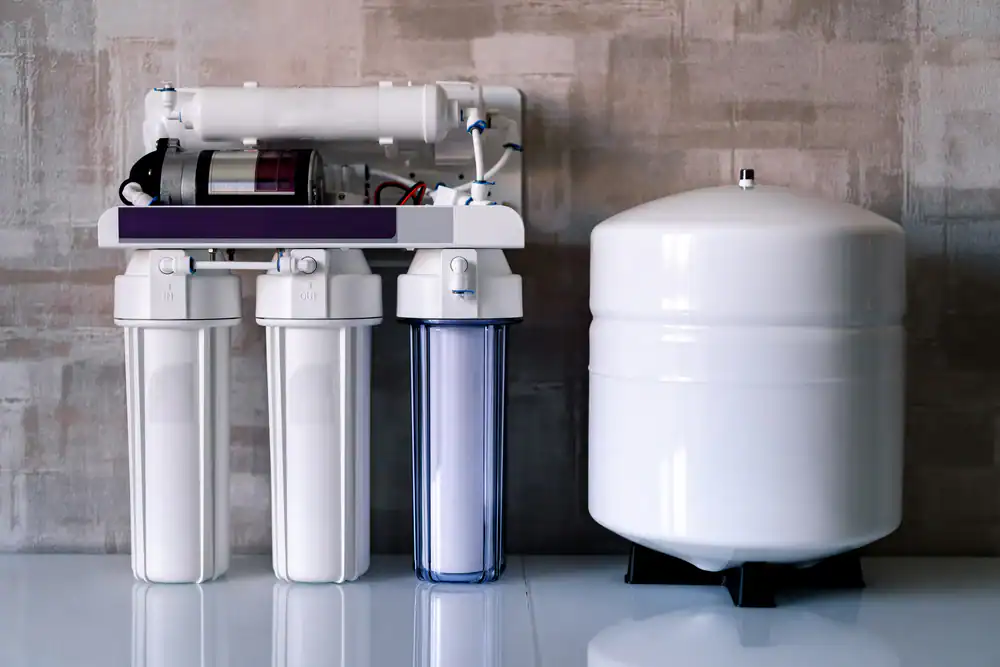
The white crust on your showerhead isn’t a cleaning problem. It’s a water problem. Country Club’s water supply pulls from the Biscayne Aquifer — a shallow limestone formation that naturally carries high mineral content into your pipes. That calcium buildup is quietly scaling your water heater, shortening the life of your dishwasher, and leaving film on every surface water touches. A whole house point of entry system stops that at the source, before the water ever reaches your appliances.
Then there’s what you can’t see. Miami-Dade uses chloramine as its primary disinfectant — not standard chlorine — and it stays active all the way to your tap. The Environmental Working Group’s database documents chromium-6 in Miami-Dade water at 4.3 times their recommended safe level, alongside PFAS compounds, trihalomethanes, and lead detected at up to 3.6 parts per billion in distribution system sampling. These are public record.
When a whole house filtration system is installed where the main line enters your home, every drop gets treated — the water your kids drink, the water you shower in, the water running through your laundry machine. You stop buying cases of plastic bottles. Your appliances run cleaner and last longer. And you stop wondering what’s actually in the water your family uses every single day.
We’ve been in the water treatment business for over 50 years. That kind of track record doesn’t happen by accident — it happens because we actually service what we sell and stay reachable long after installation day.
Our BBB A-rating carries zero complaints on file. That’s verifiable right now at the Better Business Bureau’s website, before you make a single call. In a market like northwest Miami-Dade — where aggressive in-home sales tactics and post-sale disappearing acts are well-documented — a clean public record means something real. We’re also a member of the Water Quality Association, which holds its members to a formal code of ethics that many local and national operators simply aren’t bound by.
Families in Country Club — from the established subdivisions near the Country Club of Miami to newer communities along NW 138th Street — deserve a company that shows up, does the work right, and picks up the phone when something needs attention six months later. That’s the standard we’ve operated by for five decades.

It starts with a water test, not a sales pitch. Before anything is recommended, we evaluate what’s actually in your water. For Country Club homes on Miami-Dade’s municipal supply, that typically means testing for chloramine levels, hardness, PFAS, disinfection byproducts, and heavy metals — the specific contaminants documented in the Biscayne Aquifer source water. What the test shows determines what the system needs to do. You won’t be sold a configuration your water doesn’t require.
Once the right multi-stage system is identified, installation happens at the point of entry — where the main water line comes into your home. This is a plumbing connection, and depending on the scope of work, Miami-Dade County may require a permit. We handle this process with the experience of a company that has navigated Florida’s permitting requirements for decades. You don’t have to figure that out on your own.
After installation, the system runs quietly in the background. Every tap, every shower, every appliance in your home pulls from treated water. Chlorine removal, hard water mineral reduction, multi-stage filtration — it all happens before the water ever reaches you. Filter maintenance and service are handled by the same team that installed the system, not a national call center that doesn’t know your address.

Ready to get started?
A whole house water filter in Country Club isn’t a one-size product. Miami-Dade’s water profile — chloramine disinfection, limestone-driven hardness, documented PFAS and heavy metal presence — calls for a system configured specifically for what’s in the water here, not a box pulled off a shelf and installed without testing.
Our whole house systems use multi-stage filtration designed to address the full range of contaminants common in South Florida municipal water. That includes chlorine and chloramine removal, sediment reduction, scale prevention for the hard water that comes standard with Biscayne Aquifer supply, and filtration stages targeting disinfection byproducts and chemical compounds. For Country Club homes built in the 1970s through 1990s — where aging plumbing has already accumulated years of mineral scale — the right system does double duty: it treats incoming water and reduces the ongoing stress on pipes and fixtures that hard water causes.
Every system is sized for your home’s actual water usage and flow rate. Active military, veterans, and first responders receive $500 off — a meaningful number in a community that includes many Miami-Dade County first responder households. And because we service what we sell, filter replacements, maintenance visits, and any post-installation questions are handled by the same local team, not a franchise support line.
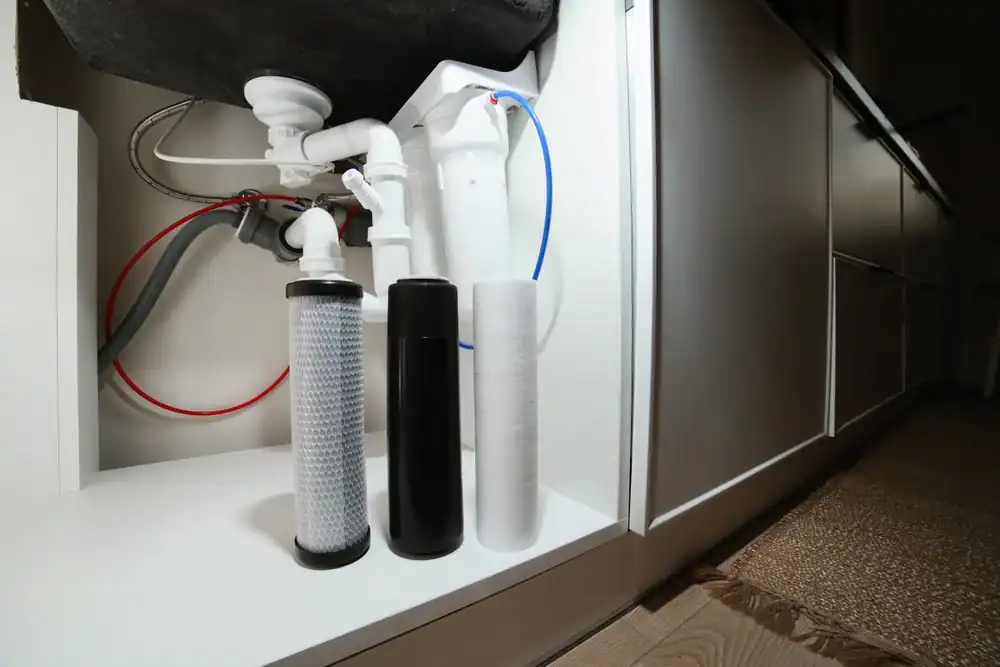
Miami-Dade’s water meets federal legal standards — but meeting the legal limit and being free of health concerns aren’t the same thing. The Environmental Working Group’s Tap Water Database, which applies stricter health-based guidelines than the EPA’s legal thresholds, documents several contaminants in Miami-Dade’s water supply at levels above their recommended maximums. Chromium-6 comes in at 4.3 times the EWG’s health guideline. PFAS compounds have been detected. Lead was found in distribution system sampling at up to 3.6 parts per billion as recently as 2021 — and the CDC states there is no safe level of lead exposure for children.
So the honest answer is: the water won’t make you sick tomorrow, but the long-term picture is worth paying attention to — especially if you have kids in the house. A whole house filtration system addresses the contaminants that legal compliance doesn’t require utilities to eliminate, giving your family a meaningfully cleaner baseline from every tap in your Country Club home.
Miami-Dade Water and Sewer Department uses chloramine — a combination of chlorine and ammonia — as its primary disinfectant rather than chlorine alone. Chloramine is more chemically stable than chlorine, which means it doesn’t dissipate as quickly in the distribution system. For homes in Country Club, which sit at the end of long municipal supply lines running through northwest Miami-Dade, chloramine concentrations at the tap can be significant. The county’s running annual average is 2.5 parts per million, with samples recorded as high as 5 ppm.
The reason this matters beyond the smell: most standard pitcher filters and basic carbon block filters are not designed to effectively remove chloramine. If you’re running your water through a refrigerator filter or a countertop pitcher and wondering why the smell persists, that’s likely why. A whole house system with the right filtration media addresses chloramine at the point of entry, so it’s gone before it reaches any tap or showerhead in your home.
Yes — and it’s been doing it quietly for years. Country Club’s water comes from the Biscayne Aquifer, a porous limestone formation that naturally dissolves calcium and magnesium into the water supply as it moves through the rock. That’s what hard water is: elevated mineral content. And in South Florida, it’s not mild.
The visible signs are the white mineral deposits on your faucets, the film on your glass shower doors, and the spots on your dishes after the dishwasher runs. The less visible damage is happening inside your water heater, where scale buildup reduces heating efficiency and shortens the unit’s lifespan. It’s happening in your washing machine’s internal components and in the supply lines running through your walls. For Country Club homes built in the 1970s, 1980s, or 1990s, that’s decades of accumulation. A whole house filtration system with a softening component stops new scale from forming and reduces the ongoing wear hard water puts on every appliance and fixture in your home.
An under-sink or pitcher filter treats one point of use — typically the kitchen faucet. Everything else in your home is untouched. The shower where you inhale steam for ten minutes every morning, the bath your kids take, the washing machine running your family’s clothes, the ice maker, the bathroom sink — all of that still runs on unfiltered water.
A whole house point of entry system installs where the main water line enters your home, so every gallon that flows anywhere in the house has already been filtered. For Country Club homeowners dealing with chloramine, hard water minerals, and the disinfection byproducts documented in Miami-Dade’s water supply, that distinction is significant. Chloramine exposure through showering and bathing is a real concern — your skin and lungs absorb what’s in the water, not just your digestive system. A whole house system is the only solution that addresses the full picture, not just the one faucet you happen to drink from.
The range is wide because the right system depends on your home’s size, water usage, and what the water test shows. Nationally, whole house water filter installation averages around $2,273, with a typical range of $1,129 to $3,538. In South Florida, where the water profile often calls for multi-stage filtration that addresses chloramine, hard water, and chemical compounds simultaneously, systems commonly run between $1,200 and $6,500 depending on configuration.
What’s worth factoring into that number: a household spending $60 per month on bottled water is spending $720 a year — and over ten years, that’s $7,200 for water that’s regulated less rigorously than filtered tap water. Add the cost of appliance repairs and reduced efficiency from hard water scale, and the investment in a whole house system starts looking different. For active military, veterans, and first responders in Country Club, we apply a $500 discount — ask about it when you call.
Please provide your email address so that we can stay in touch and answer any questions you have! We will be reaching back out shortly.
"*" indicates required fields