Reach Out Today
Please provide your email address so that we can stay in touch and answer any questions you have! We will be reaching back out shortly.


Hear from Our Customers
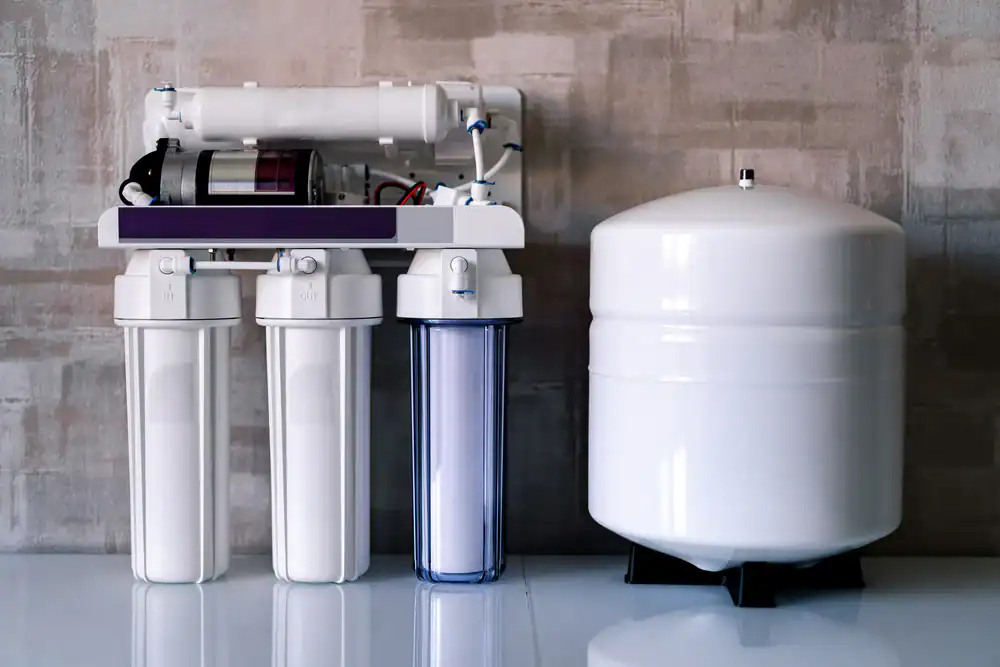
Collier was built in 2013 on one of the most mineral-heavy groundwater systems in the country. The Floridan Aquifer delivers water that is naturally loaded with calcium and magnesium — and third-party databases specifically flag elevated hardness levels for the utilities serving your ZIP code. That hardness doesn’t just affect how your water tastes. It slowly coats the inside of your water heater, clogs your showerhead, etches your glass shower doors, and wears down your dishwasher and washing machine faster than they should go.
A point of entry system treats the water before it reaches any of that. Your appliances run cleaner, last longer, and work the way they were designed to. Your fixtures stop collecting that white mineral film. Your laundry comes out softer. These aren’t small things — in a home you’re living in full-time, they’re daily.
There’s also the chlorine side of this. The utilities serving Collier treat your groundwater with chlorine before it reaches your home — which is standard practice, but it means chlorine is in your shower, your cooking water, and the steam you breathe during a hot bath. Multi-stage filtration removes it at the source, so you’re not managing it tap by tap. Residents who make the switch consistently describe the difference in how their water smells, how their skin feels, and how their drinking water tastes — without buying a single bottle.
We have been treating Florida water for more than 50 years — and the Floridan Aquifer’s hard water profile is not a new problem for us. We’ve worked throughout Collier and across The Villages community in Sumter County, and we understand exactly what comes out of the ground in this part of the state and what it takes to treat it properly.
Our BBB A-rating with zero complaints on file is not a marketing claim — it’s a public record you can look up yourself. In an industry with a documented history of high-pressure sales tactics and companies that disappear after installation, that record matters. We’re also a member of the Water Quality Association, which holds its members to a professional code of ethics that many local operators simply don’t meet.
If you’re a veteran, active military, or first responder, we offer a $500 discount — a real number, not a token gesture. And for every system we install, our commitment to the Tunnels to Towers Foundation reflects the kind of company we are beyond the sale.

It starts with a water quality assessment. Before anything is recommended or installed, we evaluate what’s actually in your water — hardness levels, chlorine content, and any additional contaminants flagged for the utilities serving your area of Collier. This matters because the Villages of Lake-Sumter water treatment plants and Little Sumter Utilities have documented water quality profiles that include not just hardness, but disinfection byproducts like trihalomethanes and haloacetic acids. Knowing what you’re dealing with is how you choose the right system, not just any system.
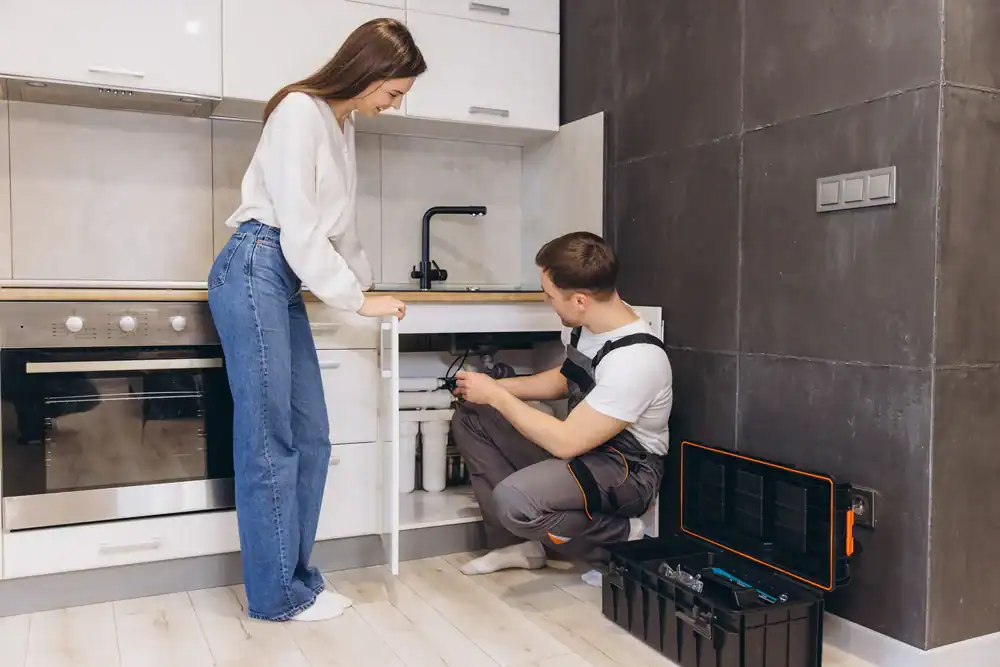
Once the assessment is complete, installation happens at your main water line — the point of entry into your home. That means every faucet, every shower, your dishwasher, your washing machine, your ice maker, and your water heater all receive filtered water from that point forward. The work is done by licensed professionals and complies with Florida state contractor licensing requirements and Sumter County’s applicable building standards. No shortcuts, no unlicensed workarounds.
After installation, the system runs quietly in the background. Filter maintenance and service calls are handled by the same team that installed it — not a national call center. Collier residents who are home full-time notice the difference quickly: the smell is gone, the taste changes, and the white buildup on fixtures stops accumulating. That’s the system doing exactly what it was designed to do.
Ready to get started?
A whole house water filter from Quality Safe Water of Florida is a point of entry system — meaning it connects to your main water supply line and treats everything that enters your home, not just the water at one faucet. For Collier homeowners dealing with the Floridan Aquifer’s naturally hard water, that comprehensive coverage is what makes the difference between a partial fix and a real one.
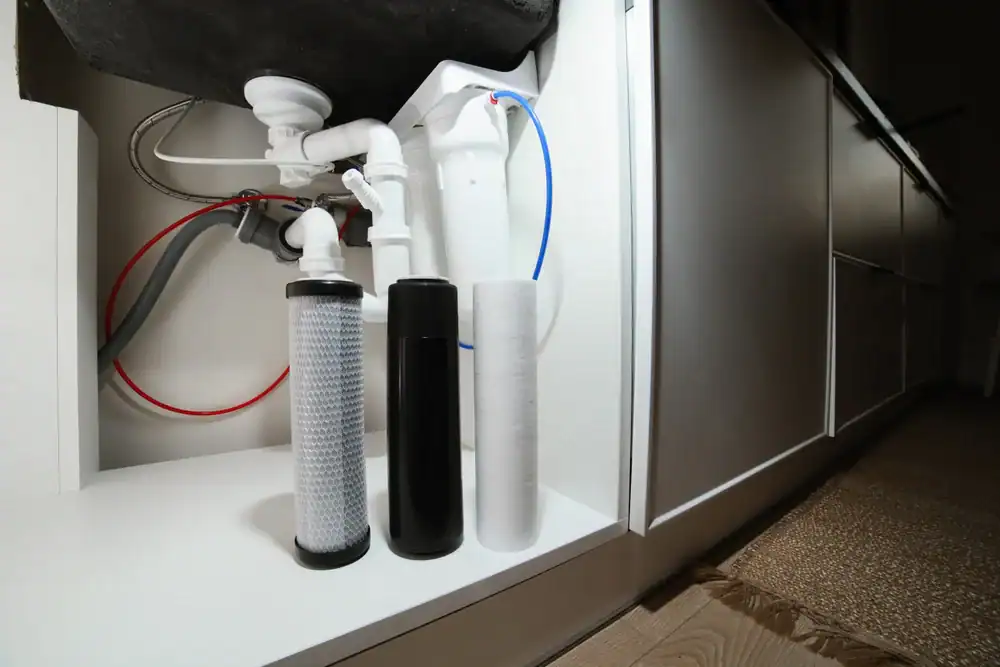
The multi-stage filtration process is built to address the specific water quality profile of this area. That includes hardness minerals that cause scale buildup on your fixtures and inside your appliances, chlorine and chloramines used in the treatment process, and disinfection byproducts — including trihalomethanes and haloacetic acids — that are documented in the regional water supply. Each stage of the system targets a different layer of the problem, so what comes out of every tap in your home is measurably cleaner than what came in.
Homes in Collier were built around 2013 — newer construction, but still fully subject to the same aquifer-sourced water supply as every other neighborhood in the area. Whether you’re in a Patio Villa or a Premier Home, the water quality challenge is the same. The system is sized and configured to match your home — and we service what we install, so you’re not left managing filter replacements on your own.
It’s not overstated. Collier’s water comes from the Floridan Aquifer, which runs through limestone geology and naturally picks up dissolved calcium and magnesium along the way. Third-party water quality databases — including EWG’s tap water database — specifically flag elevated hardness levels for the Villages of Lake-Sumter water treatment plants and Little Sumter Utilities, which serve the 32163 ZIP code. Hard water is a documented, measurable characteristic of the water supply here, not a sales pitch.
You’ll see the evidence in your home whether you’ve thought about it or not. The white mineral deposits around your faucets and showerheads, the film on your glass shower enclosure, the reduced water pressure from a clogged showerhead — all of that is hard water at work. A whole house water filtration and softening system addresses it at the point of entry, so every fixture and appliance in your home receives treated water from the start.
Hardness is the most visible issue, but it’s not the only one. The water utilities serving Collier treat groundwater with chlorine before distribution, which is standard practice — but chlorine reacting with organic matter in the water produces disinfection byproducts. EWG’s tap water database documents the presence of total trihalomethanes (TTHMs) and haloacetic acids (HAA5) in the regional water supply. EWG’s health guideline for TTHMs is 0.15 parts per billion, a level defined to represent a one-in-one-million lifetime cancer risk. The water meets federal legal standards — but federal limits haven’t been updated in nearly 20 years.
Additional contaminants flagged for the regional system include bromochloroacetic acid, chromium (hexavalent), arsenic, and several trace minerals. None of this means the water is dangerous in the immediate sense, but it does mean that regulatory compliance and health-optimal water are two different things. For residents who are managing long-term health in retirement, that distinction is worth taking seriously — and it’s exactly what a properly configured multi-stage filtration system is designed to address.
The appliance protection benefit is real and it’s calculable. Hard water scale builds up inside water heaters, dishwashers, washing machines, and coffee makers over time — and research shows that hard water scale can reduce water heater efficiency by up to 48%. That means your water heater is working harder and costing you more every month just to compensate for mineral buildup. Eventually, it fails earlier than it should.
In a home like those in Collier — where residents are home full-time and running appliances at a higher frequency than a typical commuter household — this wear accumulates faster. You’re not leaving for work and giving your water heater a break. You’re cooking, running the dishwasher, doing laundry, and using your home the way it was meant to be used. A point of entry filtration system removes the hardness minerals before they reach your appliances, which directly extends equipment life and reduces repair and replacement costs over time.
For most homes in Collier, installation of a whole house point of entry system takes between two and four hours depending on the configuration of your main water line and the specific system being installed. You’ll need to be home at the start so the technician can walk through the setup with you and confirm where the system will connect — typically near your main shutoff valve, which in most Collier-area homes built around 2013 is accessible in the garage or utility area.
Florida state law requires that this type of work be performed by a licensed contractor, and our installations comply with both state licensing requirements and Sumter County’s applicable building standards. That matters because unlicensed installation can create complications with your homeowner’s insurance. Once the system is in, the technician walks you through basic operation and filter maintenance before leaving — and they’re the same people you call when you need service, not a national support line.
If you’re spending $50 to $100 a month on bottled water — which is common for Collier residents who don’t love the taste or smell of their tap water — you’re spending $600 to $1,200 a year on a partial solution. Bottled water only addresses what you drink. It does nothing for your shower, your laundry, your dishwasher, or your appliances. Over 10 years, that’s $6,000 to $12,000 on water that is actually regulated less rigorously than municipal tap water and comes in single-use plastic.
A whole house filtration system delivers clean, treated water from every tap in your home — drinking, cooking, bathing, and everything else. The upfront investment for a quality system typically runs in the range of $1,500 to $5,000 depending on the configuration, and it pays back through eliminated bottled water costs, reduced appliance wear, and lower energy bills from a water heater that isn’t fighting through scale buildup. For a homeowner on a fixed retirement income who wants to stop throwing money at a problem that isn’t getting solved, the math holds up.
Please provide your email address so that we can stay in touch and answer any questions you have! We will be reaching back out shortly.
"*" indicates required fields