Reach Out Today
Please provide your email address so that we can stay in touch and answer any questions you have! We will be reaching back out shortly.

Hear from Our Customers
The sulfur smell disappears completely. No more rotten egg odor when someone turns on the shower or runs the dishwasher. Your guests won’t notice anything unusual about your water because there’s nothing to notice.
The orange and rust stains stop forming on your toilets, sinks, and tubs. Your fixtures stay clean without constant scrubbing. Your laundry comes out looking like it should, not tinged with rust or smelling off.
Your appliances last longer. Your water heater doesn’t corrode from the inside out in three years. Your dishwasher and washing machine run cleaner and need fewer repairs. The water flowing through your home stops destroying the things it touches.
You stop buying bottled water for drinking and cooking. The water from your tap tastes clean because it is clean. You’re not second-guessing every glass or worrying about what your kids are drinking.
We focus specifically on whole-house water treatment for homes with private wells. We’re members of the National Water Quality Association and maintain an A-rating with the Better Business Bureau with zero complaints.
York and the surrounding Lake County area sit on limestone geology loaded with sulfur compounds. That’s not a rare problem here—it’s the standard. We size and install iron removal systems, hydrogen sulfide treatment, and bacteria disinfection systems designed for the exact conditions you’re dealing with.
We test first, recommend second, and install systems that actually match your water chemistry. We also service what we sell, which apparently isn’t a given in this industry anymore.
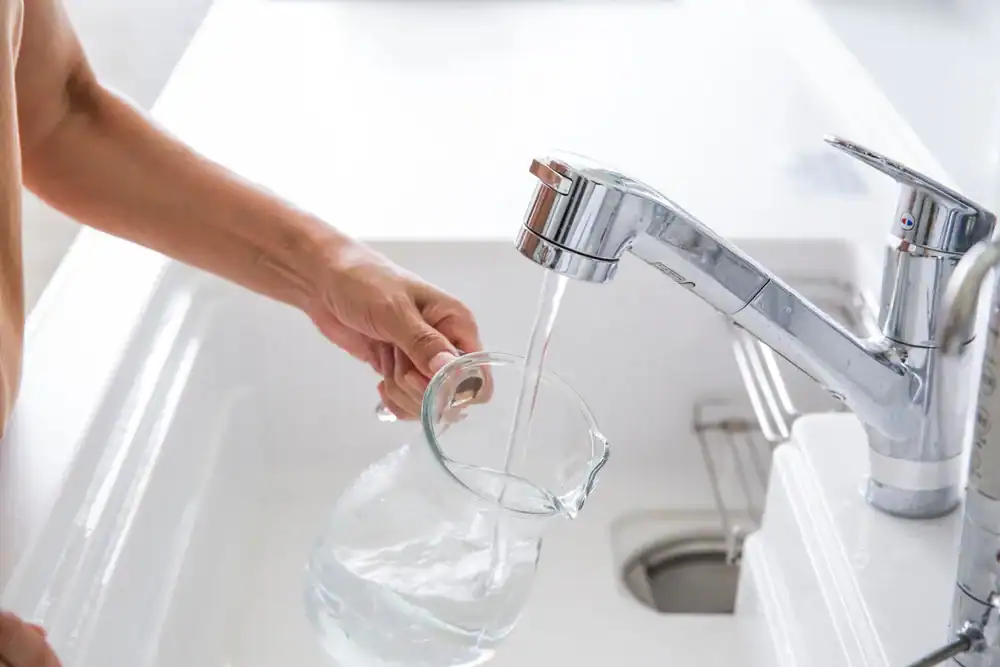
We start with water testing because you can’t fix what you haven’t measured. We test for iron content, sulfur levels, bacteria, pH, hardness, and anything else that affects how your water behaves. This tells us exactly what we’re solving for.
Once we know what’s in your water, we size the treatment system to match your home’s water usage and the specific contaminants present. A family of five needs different flow rates than a couple. High iron concentrations need different oxidation methods than low levels. There’s no one-size-fits-all here.
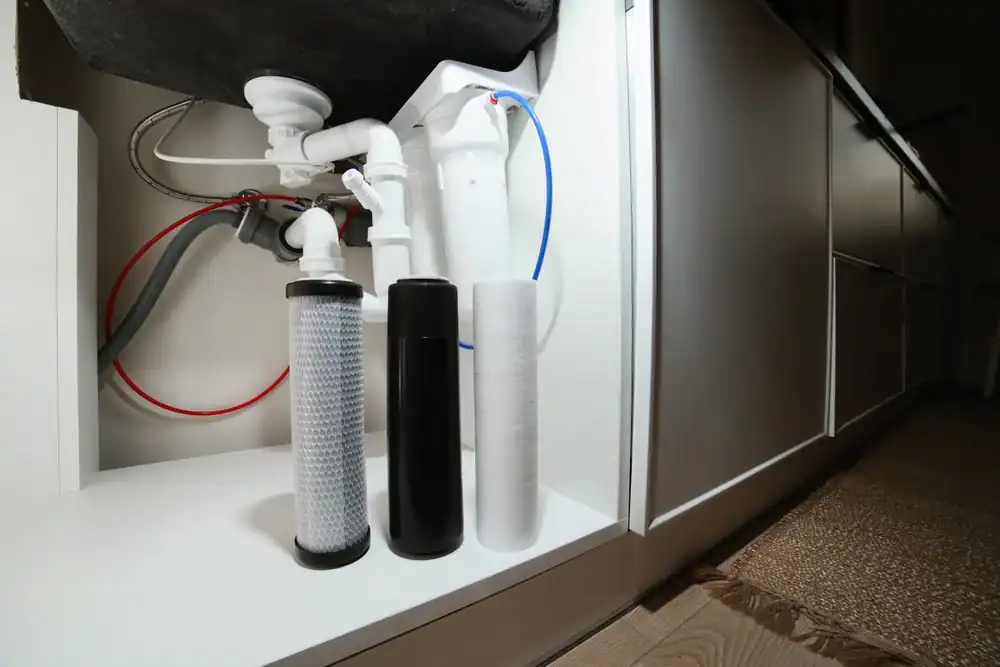
Installation typically involves setting up the treatment system where your well line enters the house. For iron and sulfur, that usually means an air injection oxidation system or hydrogen peroxide injection system that oxidizes the contaminants before filtration. For bacteria, we install UV disinfection or chlorination systems that kill organisms before they reach your taps.
After installation, we test again to confirm everything’s working as it should. Then we walk you through basic maintenance—what to watch for, when to change filters, how to monitor system performance. Most systems need minimal attention once they’re dialed in correctly.
Ready to get started?
Your system gets sized specifically for your water test results and household demand. We’re not installing an off-the-shelf unit and hoping it works. The treatment method matches what’s actually in your water.
For iron removal, we typically install air injection oxidation systems that pull oxygen into the water, oxidize the dissolved iron, then filter it out before it reaches your fixtures. These systems handle the clear water iron that looks fine in the well but turns everything orange once it hits air.
Hydrogen sulfide treatment uses either oxidation or catalytic carbon filtration depending on concentration levels. The rotten egg smell comes from gas dissolved in the water, and it takes specific treatment methods to eliminate it completely—not just mask it temporarily.
Bacteria disinfection usually involves UV light systems that kill organisms as water flows through, or chlorination systems for higher contamination levels. Both methods are proven and effective when properly sized.
Every installation includes proper backwash systems, bypass valves for maintenance, and pressure management to keep everything running smoothly. We’re installing systems built to last years, not months.

The obvious signs are sulfur smell, orange staining on fixtures, or cloudy water. But those are just the visible problems.
Bacteria contamination has no smell, no taste, and no color. You won’t know it’s there without testing. Same with some dissolved minerals that damage your appliances slowly over time without obvious symptoms.
Get your water tested annually at minimum. More often if you notice any changes in smell, taste, appearance, or if there’s been flooding or heavy rain that could introduce surface contamination. Testing costs far less than replacing a water heater or dealing with a bacterial illness.
Water softeners remove hardness minerals like calcium and magnesium through ion exchange. They make water feel slippery and prevent scale buildup in pipes.
Iron removal systems oxidize dissolved iron and filter it out before it can stain anything. They use completely different treatment methods—usually air injection or chemical oxidation followed by filtration.
You might need both. Hard water and iron contamination are separate issues that require separate solutions. A softener won’t remove iron effectively, and an iron filter won’t soften your water. Trying to use a softener to remove iron just fouls the resin bed and ruins the unit.
Whole house systems typically range from $2,000 to $6,000 depending on what you’re treating and your household size. A basic iron filter for a small home costs less than a complex multi-stage system treating iron, sulfur, and bacteria for a large family.
The system needs to be sized correctly or it won’t work. Undersized systems can’t keep up with demand during peak usage. Oversized systems waste money upfront and cost more to operate.
Testing determines what you actually need. Some wells only need iron removal. Others need iron, sulfur, and bacteria treatment. The cost follows the complexity of your specific water chemistry, not some average price.
Yes, but only if it’s designed specifically for hydrogen sulfide removal. Not every filtration system treats sulfur effectively.
The rotten egg smell comes from hydrogen sulfide gas dissolved in your water. It forms when sulfur-reducing bacteria break down organic matter in the oxygen-depleted environment deep underground. Florida’s limestone geology makes this extremely common here.
Treatment usually involves oxidizing the hydrogen sulfide into sulfur particles, then filtering those particles out. Air injection systems work well for this. Catalytic carbon filters handle it differently but also effectively. The method depends on your sulfur concentration levels and pH.
A standard carbon filter or water softener won’t touch it. You need a system built for sulfur treatment specifically.
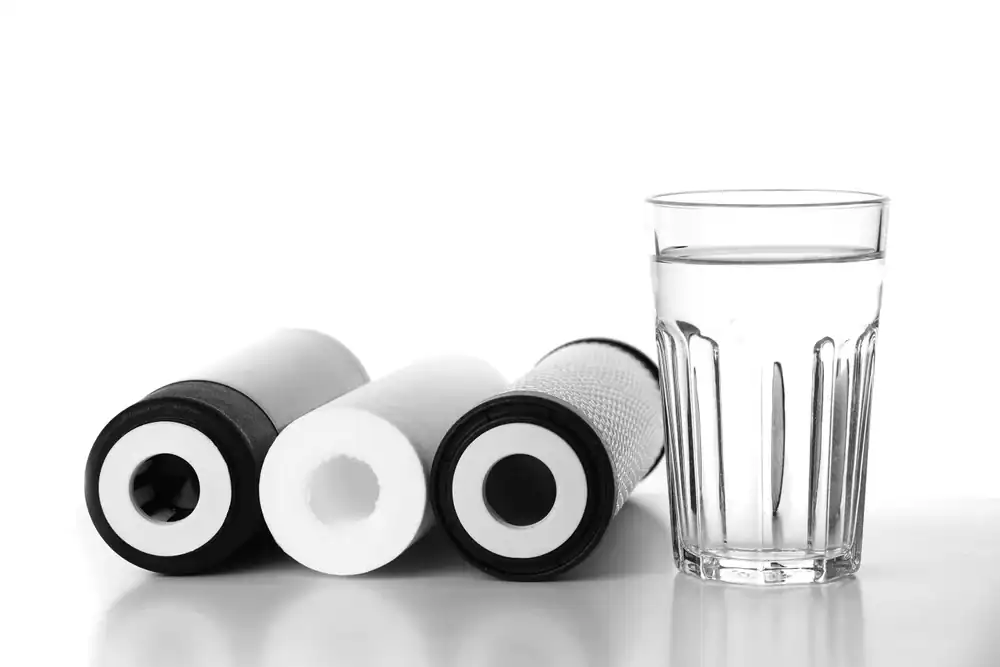
Most systems need filter changes every 6 to 12 months depending on your water usage and contamination levels. Higher iron or sediment loads mean more frequent changes.
Air injection systems need the air injection valve checked periodically to ensure it’s pulling enough oxygen. The media bed eventually needs replacement, usually every 5 to 8 years.
UV systems need annual bulb replacement because the UV output degrades over time even if the bulb still lights up. The quartz sleeve that protects the bulb needs cleaning whenever it gets cloudy.
We recommend annual professional inspections to catch small issues before they become expensive problems. A $150 service call beats a $3,000 system replacement because something failed and you didn’t notice until it damaged other components.
Please provide your email address so that we can stay in touch and answer any questions you have! We will be reaching back out shortly.
"*" indicates required fields