Reach Out Today
Please provide your email address so that we can stay in touch and answer any questions you have! We will be reaching back out shortly.

Hear from Our Customers
No more orange stains creeping across your sinks, tubs, and laundry. No more sulfur smell that hits you the second someone turns on a faucet. No more wondering if what’s coming out of your tap is safe for your family to drink.
That’s what proper well water filtration does. It removes the iron before it oxidizes and stains. It eliminates hydrogen sulfide so your water stops smelling like rotten eggs. It protects your appliances from the corrosive damage that shortens their lifespan by years.
You stop buying bottled water. You stop scrubbing rust stains. You stop making excuses when guests visit. Your water just works the way it should have from the start.
We’ve been handling well water problems across Lake County since long before most filtration companies existed. We’re A+ rated with the Better Business Bureau and members of the National Water Quality Association, which means we’re held to standards most companies don’t even know about.
We don’t sell plumbing services or water heaters. We focus entirely on water treatment, which is why we’re good at it. Weirsdale sits right on top of Florida’s limestone aquifer system, and we’ve seen every variation of iron, sulfur, and bacteria that comes with it.
We offer a $500 discount to military members and first responders because some things matter more than profit. And we’re involved with the Tunnels to Towers Foundation because supporting the people who serve this country is just what you do.
First, we test your water. Not with a basic kit, but a real analysis that tells us exactly what’s in there and at what levels. Iron, sulfur, bacteria, pH, hardness—all of it matters because it determines which system will actually fix your problem instead of just masking it.
Once we know what we’re dealing with, we design a system specific to your water and your household’s usage. For most homes around Weirsdale, that means either an air injection oxidation system or hydrogen peroxide injection combined with catalytic carbon filtration. Both oxidize dissolved iron and neutralize hydrogen sulfide, but which one depends on your water chemistry.
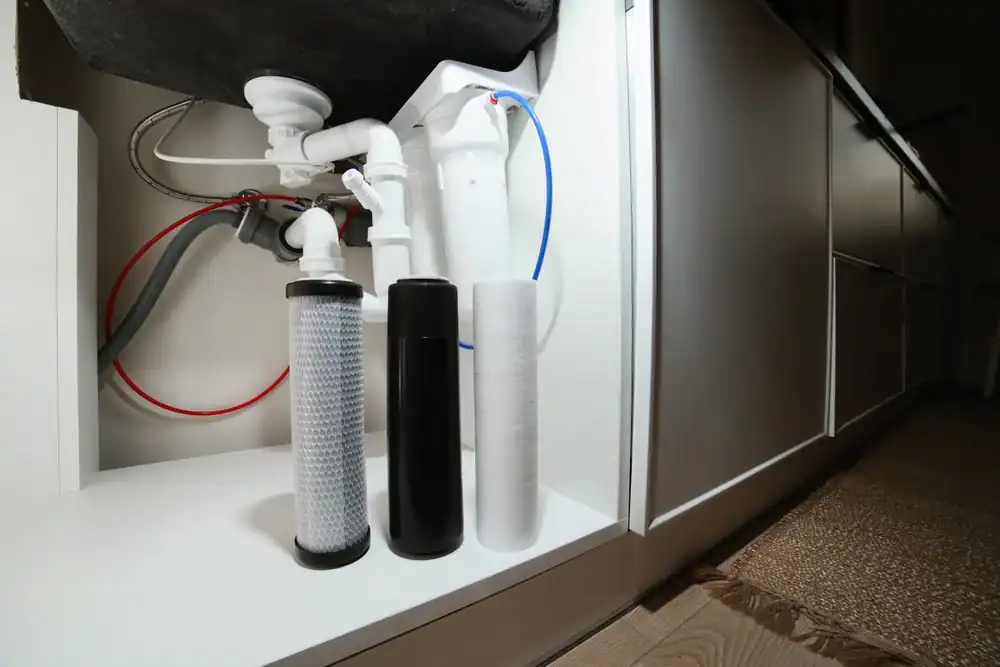
We install the system at your pressure tank so it treats every drop of water entering your home. Then we walk you through how it works and what basic maintenance looks like. Most systems need a filter change once or twice a year. That’s it.
You’ll notice the difference immediately. Clear water. No smell. No stains. And if anything ever needs service, we’re the ones who show up, not some national call center that doesn’t know your system.
Ready to get started?
This isn’t a filter you screw onto your kitchen faucet. It’s a whole-house well water filtration system that treats water before it reaches any fixture, appliance, or tap in your home.
For iron removal, we typically use air injection oxidation or hydrogen peroxide injection. Both methods oxidize dissolved iron so it can be filtered out before it stains anything. Air injection is chemical-free and works well for moderate iron levels. Hydrogen peroxide injection handles higher concentrations and also destroys iron bacteria that form slimy buildup in your pipes.
For hydrogen sulfide treatment, the same oxidation process converts the gas into solid sulfur particles that get trapped in the filter media. No more rotten egg smell in your water, on your dishes, or in your laundry.
If bacteria shows up in your water test, we add a disinfection stage using UV light or chlorine injection, depending on what makes sense for your system. Around Weirsdale, bacteria contamination is common because of the shallow water table and Florida’s rainy season. It’s not a rare problem. It’s just part of living on well water in Lake County, and it’s fixable.

That smell is hydrogen sulfide gas, and it forms when sulfur-reducing bacteria break down sulfates in your groundwater. Florida’s limestone geology is loaded with sulfur compounds, so these bacteria have plenty of fuel. They thrive in warm, low-oxygen environments like the inside of your well and plumbing.
The smell isn’t just unpleasant. Hydrogen sulfide is corrosive. It eats away at copper and brass fixtures, shortens the life of your water heater’s anode rod, and can cause nausea or headaches in sensitive people, especially kids and elderly family members.
The fix is oxidation. We inject air or hydrogen peroxide into your water, which converts the hydrogen sulfide gas into solid sulfur particles. Those particles get filtered out, and the smell disappears completely. You’re not masking it with chemicals or carbon. You’re removing the source.
Iron enters your water as it passes through iron-rich soil and rock. It’s dissolved, so it looks clear when it first comes out of your tap. But once it hits oxygen, it oxidizes and turns into rust. That’s what causes the orange stains on everything.
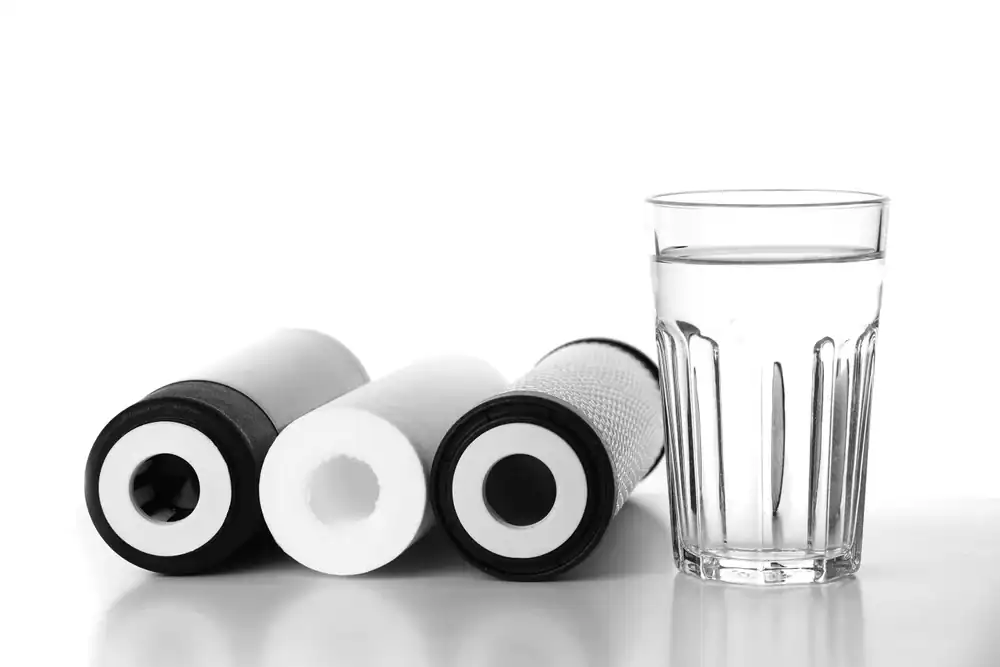
Iron removal systems work by forcing that oxidation to happen inside the tank instead of inside your home. We inject oxygen (through air) or hydrogen peroxide into the water. The dissolved iron oxidizes immediately and turns into solid rust particles. Those particles get trapped in a catalytic carbon filter, and what comes out the other side is clear, iron-free water.
The system backwashes itself periodically to flush out the trapped rust, so you’re not manually cleaning anything. You just change the filter media every few years depending on your iron levels. For most Weirsdale homes, that’s every 3 to 5 years.
No. A water softener removes hardness (calcium and magnesium), not iron or sulfur. Some softeners claim they can handle low levels of iron, but what actually happens is the iron fouls the resin bed and you end up with a broken softener and the same staining problem you started with.
Iron and sulfur need to be removed before the water reaches your softener. That’s why most whole-house systems in Lake County use a multi-stage setup: oxidation and filtration first to remove iron and sulfur, then softening if your water is hard.
Trying to use a softener to fix iron is like using a broom to mop up water. It’s the wrong tool, and it won’t work. You need a system designed specifically for oxidation and filtration, and that’s what we install.
It depends entirely on what’s in your water and how much water your household uses. A basic air injection system for moderate iron and sulfur typically runs between $2,500 and $4,500 installed. If you need hydrogen peroxide injection, UV disinfection, or a larger system for high flow rates, you’re looking at $4,000 to $7,000.
That might sound like a lot until you consider what you’re already spending. Replacing a water heater costs $1,200 to $2,000. A washing machine is another $800 to $1,500. Iron and sulfur damage both, plus your dishwasher, your plumbing fixtures, and anything else that touches your water. You’re either paying for filtration now or paying for replacements later.
We offer free water testing and a no-obligation quote, so you know exactly what you need and what it costs before we do anything. And military members and first responders get $500 off, which helps.
Most systems need a filter change once or twice a year, depending on your iron and sulfur levels. That’s something you can do yourself in about 10 minutes, or we can do it for you as part of a service plan.
The filter media inside the tank (usually catalytic carbon or manganese greensand) lasts 3 to 5 years before it needs replacing. We’ll let you know when that’s coming up based on how your system’s performing. If you have a hydrogen peroxide injection system, you’ll need to refill the peroxide tank every few months. It’s just like refilling a salt tank on a softener.
The system backwashes itself automatically, so there’s no manual cleaning. If something stops working right, we’re local and we service everything we install. That’s a big difference from national companies that sell you a system and disappear.
Please provide your email address so that we can stay in touch and answer any questions you have! We will be reaching back out shortly.
"*" indicates required fields