Reach Out Today
Please provide your email address so that we can stay in touch and answer any questions you have! We will be reaching back out shortly.

Hear from Our Customers
You stop scrubbing orange stains off your shower. Your water stops smelling like sulfur when someone turns on the tap. Your appliances last longer because they’re not clogged with iron buildup.
That’s what happens when your well water filtration system is designed for Florida’s water—not just sold to you by someone reading off a script. Switzerland sits in an area where iron, hydrogen sulfide, and bacteria show up regularly in private wells. Most national systems aren’t built to handle that combination, which is why so many homeowners end up with equipment that underperforms or breaks down within a year.
A whole-house system handles everything at the point of entry. That means every faucet, every shower, every appliance gets treated water. You’re not just filtering one tap and hoping for the best.
We work with homeowners in Switzerland and throughout North Florida who need their well water treated correctly the first time. We’re members of the National Water Quality Association, hold an A+ rating with the Better Business Bureau, and maintain a 5-star review record with zero complaints.
That matters because a lot of companies will sell you a system and disappear when something goes wrong. We don’t do plumbing or water heaters—we focus on water treatment, and we service everything we install. If your water changes or your system needs adjustment, we’re the ones who show up.
Switzerland homeowners deal with specific water issues tied to the local geology. High iron content, sulfur smell from hydrogen sulfide gas, and occasional bacterial contamination aren’t rare here—they’re expected. We test your water before recommending anything, and we design systems around what’s actually in your well.
We start with a free water test. Not a sales pitch disguised as a test—an actual lab analysis that tells us what contaminants are in your water and at what levels. That determines which treatment method makes sense.
If you’ve got iron, we’ll likely use an air injection oxidation system or a hydrogen peroxide injection setup depending on your iron concentration and pH levels. Both methods convert dissolved iron into a solid form that gets filtered out before it reaches your faucets. For hydrogen sulfide, the same oxidation process neutralizes the gas that causes that rotten egg smell.
Bacterial contamination gets handled with UV disinfection. The UV light destroys bacteria and other microorganisms as water passes through, and it doesn’t add chemicals or change your water’s taste.
Once we know what you need, we install the system at your point of entry—where water comes into your house from the well. Everything gets treated before it splits off to your kitchen, bathrooms, and appliances. After installation, we test again to confirm the system is performing, and we walk you through maintenance so you know what to expect.
Ready to get started?
A complete well water filtration system for a Switzerland home typically includes iron removal, sulfur treatment, and bacteria disinfection—because those are the three most common issues in this area. Depending on your test results, you might also need a water softener if your hardness levels are high, or a sediment filter if you’re dealing with sand or silt.
Iron removal systems use either air injection oxidation or hydrogen peroxide injection. Air injection works well for moderate iron levels and doesn’t require chemicals. Hydrogen peroxide injection handles higher concentrations and also treats sulfur and bacteria at the same time, which can simplify your setup if you’re dealing with multiple contaminants.
Sulfur treatment eliminates hydrogen sulfide gas. If your water smells like rotten eggs, that’s hydrogen sulfide, and it’s common in Florida wells due to decaying organic material and certain geological formations. The same oxidation systems that remove iron also handle sulfur, so you’re often treating both with one piece of equipment.
Bacteria disinfection uses UV light. If your water test shows coliform bacteria or other microorganisms, a UV system kills them without adding chlorine or other chemicals. It’s a straightforward, chemical-free disinfection method that works as long as the UV bulb is replaced on schedule.

Get your water tested. That’s the only way to know for sure what’s in it and whether it’s safe.
Most Switzerland homeowners notice problems before they test—orange or brown stains on fixtures, a sulfur smell when they run hot water, or water that tastes metallic or leaves a film on dishes. Those are signs of iron, hydrogen sulfide, or high mineral content. But bacteria and other contaminants don’t always have obvious symptoms, which is why testing matters even if your water looks and smells fine.
We offer free water testing that checks for iron, sulfur, hardness, pH, bacteria, and other common contaminants in Florida well water. The test results tell us what treatment methods will actually work for your specific water, and they give you a baseline to compare against after your system is installed.
They treat different problems. An iron removal system takes out iron before it stains your fixtures and clogs your appliances. A water softener removes hardness minerals like calcium and magnesium that cause scale buildup and make your water feel harsh on skin.
Iron removal typically uses oxidation—either through air injection or hydrogen peroxide injection. The process converts dissolved iron into a solid particle that gets filtered out. Water softeners use a different process called ion exchange, where hardness minerals are swapped out for sodium or potassium.
If your water has both iron and hardness, you usually need both systems. The iron filter goes first to remove iron before it reaches the softener, because iron can damage softener resin and reduce its effectiveness. A lot of Switzerland wells have both issues, so it’s common to see combined setups in this area.
It depends on what’s in your system, but most setups need attention every six to twelve months. That’s not complicated maintenance—it’s usually replacing a filter, checking a UV bulb, or adding media to a tank.
Air injection oxidation systems need the least maintenance. You’ll occasionally need to check the air valve and clean the filter screen, but there are no chemicals to add or cartridges to replace. Hydrogen peroxide systems require refilling the peroxide tank every few months depending on your water usage. UV disinfection systems need a new bulb once a year and a quartz sleeve cleaning to keep the light effective.
Water softeners need salt added regularly, and the resin bed eventually needs replacement after several years. Sediment filters need new cartridges every few months if your water has a lot of particulate matter.
We service everything we install, and we’ll set you up on a maintenance schedule so nothing gets missed. Most homeowners handle the simple stuff themselves and call us for annual checkups or when something needs professional attention.
Yes, if it’s designed to treat hydrogen sulfide. That rotten egg smell comes from hydrogen sulfide gas, and it’s one of the most common complaints we hear from Switzerland homeowners with private wells.
The most effective treatment is oxidation. Either air injection or hydrogen peroxide injection will convert the hydrogen sulfide gas into sulfur particles that get filtered out. Hydrogen peroxide is usually more effective for higher concentrations of sulfur, and it also handles iron and bacteria at the same time, which makes it a good option if you’re dealing with multiple contaminants.
Some people try to treat sulfur with carbon filters or other methods, but those usually don’t last long or handle the problem completely. Oxidation treats it at the source and keeps it from coming back as long as the system is maintained. After treatment, your water won’t smell like sulfur anymore—not in your shower, not in your hot water, not anywhere in your house.
It depends on what your water test shows and what equipment you need. A basic iron removal system starts around a few thousand dollars. If you need iron removal, sulfur treatment, bacteria disinfection, and a water softener, the cost goes up because you’re installing multiple components.
The price includes equipment, installation, and initial testing. We don’t charge for the water test upfront, and we don’t push equipment you don’t need. If your water only has one issue, we’ll design a system that treats that issue. If you’ve got multiple contaminants, we’ll explain what each piece of equipment does and why it’s part of the recommendation.
Financing is available if you don’t want to pay everything upfront. We also offer a $500 discount for military members and first responders. The bigger cost to consider isn’t the system itself—it’s what happens if you don’t treat your water. Iron and hard water destroy appliances, stain everything they touch, and cost you more in repairs and replacements over time than a filtration system costs upfront.
Please provide your email address so that we can stay in touch and answer any questions you have! We will be reaching back out shortly.
"*" indicates required fields
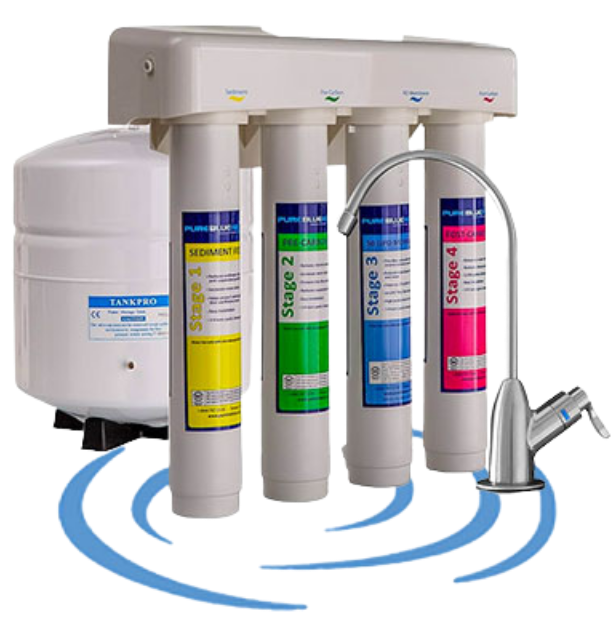
Get a free reverse osmosis drinking water system with the purchase of any whole-home water purification system.
*Cannot be combined with other offers. Mention this special when you call.