Reach Out Today
Please provide your email address so that we can stay in touch and answer any questions you have! We will be reaching back out shortly.


Hear from Our Customers
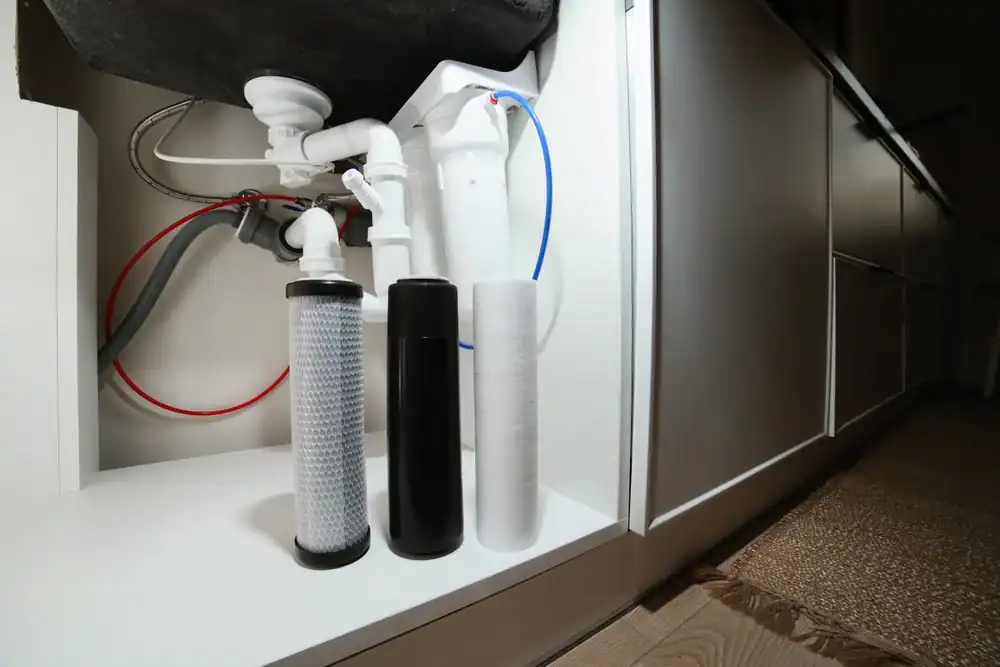
That rotten egg smell hitting you the moment you turn on the shower — that’s hydrogen sulfide, and it’s one of the most common complaints from homeowners drawing from the Floridan Aquifer in St. James. It doesn’t mean your well is broken. It means your water has a chemistry profile that needs to be addressed at the source, before it ever reaches your fixtures, your appliances, or your family.
The orange staining on your driveway pavers and the rust ring in your toilet bowl are iron. The same iron coating the inside of your pipes and quietly shortening the life of your water heater. In a neighborhood like St. James — where homes along Buena Vista Boulevard were built around 2011 and 2012 — that’s over a decade of untreated well water working its way through your plumbing. The damage is real, and it compounds quietly until something fails.
When a whole-house filtration system is installed correctly, you stop managing symptoms and start drinking, cooking, and bathing in water that’s actually clean. No more orange staining on the pavers. No more sulfur smell in the morning. No more wondering whether your water is accelerating appliance wear. That’s what changes — and it changes throughout your entire home, at every tap, from day one.
We’ve been working with Florida’s groundwater chemistry for over 50 years. That’s not a general water treatment background — it’s decades of hands-on experience with the Floridan Aquifer, Sumter County’s specific contaminant profile, and the real problems homeowners in St. James deal with every day.
The credentials are verifiable. An A+ rating with the Better Business Bureau, a 5-star customer rating, and zero filed complaints — in an industry the Florida Attorney General has had to step in and police. Membership in the National Water Quality Association means we’re held to a professional code of ethics that most competitors haven’t bothered to pursue. You can look all of it up before you ever make a call.
Every system we design is built around your water test results, not a sales pitch. We serve the Central Florida region — including all of Sumter County — through a direct local line at 352-460-0345. When you call, you reach someone who knows St. James and the surrounding area, not a national call center.
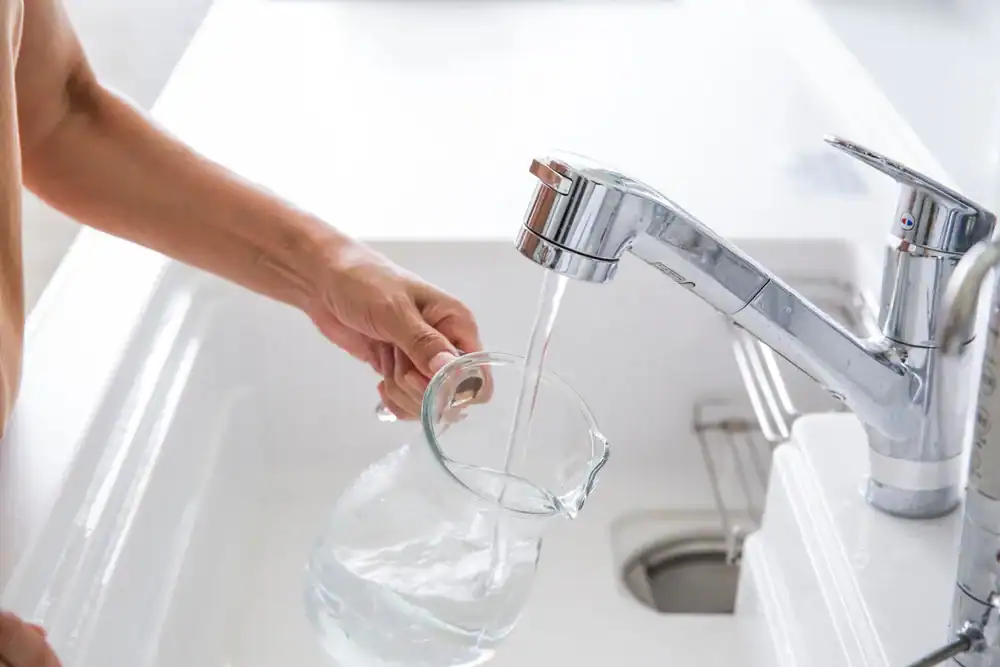
It starts with a free water analysis. Not a theatrical demonstration with dye drops — an actual test that tells you exactly what’s in your water. Iron levels, sulfur content, hardness, manganese, bacterial presence — whatever the Floridan Aquifer is delivering to your home in St. James gets identified and measured. That data is what the system gets designed around.
Once the analysis is complete, you get a clear picture of what your water contains and what it’s going to take to fix it. For most St. James well water, that means a multi-stage whole-house system — typically addressing sediment, iron and sulfur removal, water softening for hardness, and UV purification for bacterial safety. These aren’t sold as separate add-ons. They’re engineered together as one system because your water usually has more than one issue, and a piecemeal approach leaves gaps.
Installation is completed in a single day. The system goes in at the point of entry, which means every tap in your home is running filtered water by the time the job is done. No multi-day disruption, no contractors back and forth through your home all week. Sumter County’s warm climate means sulfur bacteria are active year-round — not just in summer — so there’s no ideal “waiting season.” If your water has a problem now, the right time to address it is now.

Ready to get started?
The USGS has specifically documented that groundwater in lower-lying areas of Sumter County — where aquifer recharge is slower — carries elevated concentrations of iron, manganese, sulfide, calcium, and bicarbonate. That’s not a Florida-generic statement. That’s the documented chemistry of the aquifer running beneath St. James. A water softener alone won’t touch the sulfur smell. An iron filter alone won’t address hardness or bacteria. The only approach that actually works is one designed around the full picture of what your water contains.
We build whole-house well water systems that handle the complete contaminant profile in a single installation. That means sediment pre-filtration, iron and manganese removal, hydrogen sulfide treatment, water softening for calcium and magnesium hardness, and UV purification to address bacterial contamination — all integrated, all working together, all installed in one day.
It’s also worth knowing that not every home in St. James is on a private well. Some residents receive treated community water through systems like Little Sumter Utilities, which draws from the same Floridan Aquifer via 20 community wells serving roughly 25,000 residents in this area. Even treated community water can carry disinfection byproducts like haloacetic acids and trihalomethanes that federal compliance doesn’t flag — but that current health guidelines consider problematic. If you’re on community water and want to know what’s actually coming out of your tap, the free water analysis applies to you too. If you’re a military veteran or first responder, a $500 discount applies to your system — no fine print.

That smell is hydrogen sulfide — a gas produced naturally when sulfur bacteria interact with organic material in groundwater. In St. James, the Floridan Aquifer’s chemistry in lower-lying areas creates exactly the conditions where this happens. The smell tends to be strongest when water is heated, which is why it’s most noticeable in the shower or when your dishwasher runs. It also intensifies when water sits in pipes for several hours, so if your home is a part-time residence or has been unoccupied, the smell when you return can be particularly strong.
Hydrogen sulfide isn’t just unpleasant — it’s corrosive. It can damage plumbing fixtures, water heaters, and appliances over time. The fix isn’t a filter you attach to your showerhead. It requires treatment at the point of entry, before the water reaches any fixture in your home. An air injection oxidation system is typically the most effective solution for sulfur removal at the whole-house level, and it works continuously without ongoing chemical additives.
Orange and rust-colored staining is iron — specifically ferrous iron that oxidizes when it contacts air or surfaces. It’s one of the most common complaints from homeowners drawing from the Floridan Aquifer in St. James, and it’s not just a cosmetic issue. The same iron leaving stains on your driveway pavers and toilet bowl is coating the inside of your pipes, accumulating in your water heater, and depositing on the heating elements of your dishwasher and washing machine.
For homes in St. James that were built around 2011 and 2012, that’s over a decade of iron exposure inside the plumbing. Appliances that should last 15 years are aging faster. Water heaters are losing efficiency. These are real costs that most homeowners don’t connect back to their water until something fails. A whole-house iron removal system eliminates the iron before it ever enters your home’s plumbing — stopping the staining, protecting your appliances, and extending the life of everything the water touches.
It depends on what you’re trying to solve. If your only concern is drinking water taste and you’re on treated community water, a point-of-use filter at the kitchen sink can address that specific issue. But if you’re dealing with iron staining, sulfur smell, hard water scale, or bacterial concerns — which are common in St. James well water — an under-sink filter does nothing for those problems. It only treats the water at one tap, and it can’t handle the volume or the contaminant load that well water typically carries.
The practical reality is that iron and sulfur affect every tap in your home — your showers, your laundry, your dishwasher, your ice maker. Hard water scale builds up inside every pipe and appliance connected to your water supply. A point-of-use filter is a Band-Aid on a whole-house problem. For most St. James homeowners dealing with the Floridan Aquifer’s characteristic chemistry, the right answer is a whole-house system installed at the point of entry, so every drop of water in your home is treated before it reaches anything.
The honest answer is that you don’t know without testing. Private wells in Florida are not monitored by any government agency on an ongoing basis — there’s no routine inspection, no annual report, no notification if something changes. A Florida Department of Health surveillance program that sampled nearly 48,000 wells across the state found that roughly 9% had chemical concentrations exceeding state or federal drinking water standards. That’s a significant number, and it doesn’t include the wells that technically pass federal thresholds but still contain contaminants at levels that current health science considers concerning.
The standard compliance tests that community water systems use are also not the same as a comprehensive health assessment. If you’re on a private well in the St. James area, the only way to know what’s in your water is to test it. We provide a free water analysis that measures the full contaminant profile — iron, manganese, sulfide, hardness, bacteria, and more — and gives you an accurate picture of what you’re actually drinking. There’s no obligation attached to the test. You get the results either way.
In most cases, a whole-house system is fully installed in a single day. The work is done at your home’s point of entry — where the water line comes in — so there’s no need to run new plumbing through your walls or disrupt the rest of your home. By the time the installation is complete, every tap in your house is running filtered water. Most homeowners in St. James are able to go about their normal day while the work is being done, and the disruption is minimal.
The one variable that can affect timing is the complexity of your existing plumbing setup. Homes in St. James were built in a relatively consistent window around 2011 and 2012, so the plumbing configurations tend to be straightforward and familiar. If your water analysis reveals a particularly heavy contaminant load — very high iron levels, for example — the system design may include additional stages, but that’s determined before installation begins, not discovered mid-job. You’ll know exactly what’s going in and how long it will take before anyone picks up a wrench.
Please provide your email address so that we can stay in touch and answer any questions you have! We will be reaching back out shortly.
"*" indicates required fields