Reach Out Today
Please provide your email address so that we can stay in touch and answer any questions you have! We will be reaching back out shortly.

Hear from Our Customers
That rotten egg smell when you turn on the faucet isn’t normal, and neither are the orange stains in your toilet or the metallic taste in your coffee. If you’re on a private well in St. Augustine South, you’re probably dealing with hydrogen sulfide, iron, or both—and you’ve likely been told it’s just “Florida water.”
It’s not something you have to live with. The right whole house water filtration system eliminates the sulfur odor completely, removes the iron before it stains anything, and gives you water that actually tastes clean.
You’ll stop buying bottled water. Your appliances will last longer because they’re not clogged with mineral buildup. Your fixtures stay clean, and you’re not embarrassed when guests use your bathroom. That’s what properly treated well water looks like—and it’s what you should expect from a system that’s designed for the specific problems North Florida well water creates.
We hold an A+ Better Business Bureau rating and a five-star review record with zero complaints. That doesn’t happen by accident in an industry where national companies routinely sell equipment and disappear when something breaks.
We’re members of the National Water Quality Association because this work requires real training, not just a sales pitch. When you’re dealing with iron bacteria, hydrogen sulfide, and the limestone-heavy geology that makes St. Augustine South well water so challenging, you need someone who understands how to test properly and design systems that actually handle Florida conditions.
We’ve built our reputation by solving problems other companies either can’t or won’t touch. You’re not getting a one-size-fits-all system from a big-box store—you’re getting equipment that’s sized correctly for your water and installed by people who’ll still answer the phone two years from now.
First, we test your well water to identify exactly what contaminants you’re dealing with. This isn’t a sales pitch disguised as a test—it’s a real analysis that shows what’s actually in your water. Most St. Augustine South wells have some combination of iron, sulfur, hard water minerals, and occasionally bacteria.
Next, we design a system based on your specific water problems. If you have iron and sulfur, we’ll recommend equipment that handles both—usually a combination of hydrogen peroxide injection or air injection oxidation paired with proper filtration. If you’ve got iron bacteria, we’ll address that separately because it requires a stronger oxidizer to kill the bacteria before we can filter out the iron.
Installation typically takes a day. We’re not the guys who disappear after installation—if something needs adjustment or service down the road, we’re the ones who show up. You’ll notice the difference immediately: better-tasting water, no more staining, and appliances that actually work the way they’re supposed to.
Ready to get started?
Every well water filtration system we install in St. Augustine South is designed around your specific water test results. That means if your main issue is hydrogen sulfide—the rotten egg smell—you’re getting equipment that eliminates it completely, not just masks it. For most sulfur problems, we use either air injection oxidation or hydrogen peroxide injection, depending on the severity and whether you’ve also got iron or bacteria.
Iron removal systems work by oxidizing the dissolved iron in your water and filtering it out before it reaches your fixtures. In 85% of cases, this also eliminates the orange and brown staining that ruins sinks, toilets, and laundry. If you’ve got iron bacteria—a slimy buildup that clogs pipes and water heaters—we treat that with a stronger oxidation process that kills the bacteria before filtration.
Hard water is almost universal in North Florida because of the limestone deposits underground. A water softener extends the life of your dishwasher, washing machine, and water heater by 30% or more, and you’ll use less soap because soft water actually lets detergent work properly. In most cases, the system pays for itself in two to three years just from appliance savings and reduced maintenance costs.

Yes, the right system will completely eliminate sulfur smell caused by hydrogen sulfide gas in well water. Once installed, you’ll have odor-free water from every tap in your home.
The key is using the correct treatment method for your specific sulfur levels. For lower concentrations, an air injection oxidation system pulls the gas out of the water and vents it safely. For higher concentrations or if you also have iron or bacteria, hydrogen peroxide injection works better because it’s a stronger oxidizer that handles multiple contaminants at once.
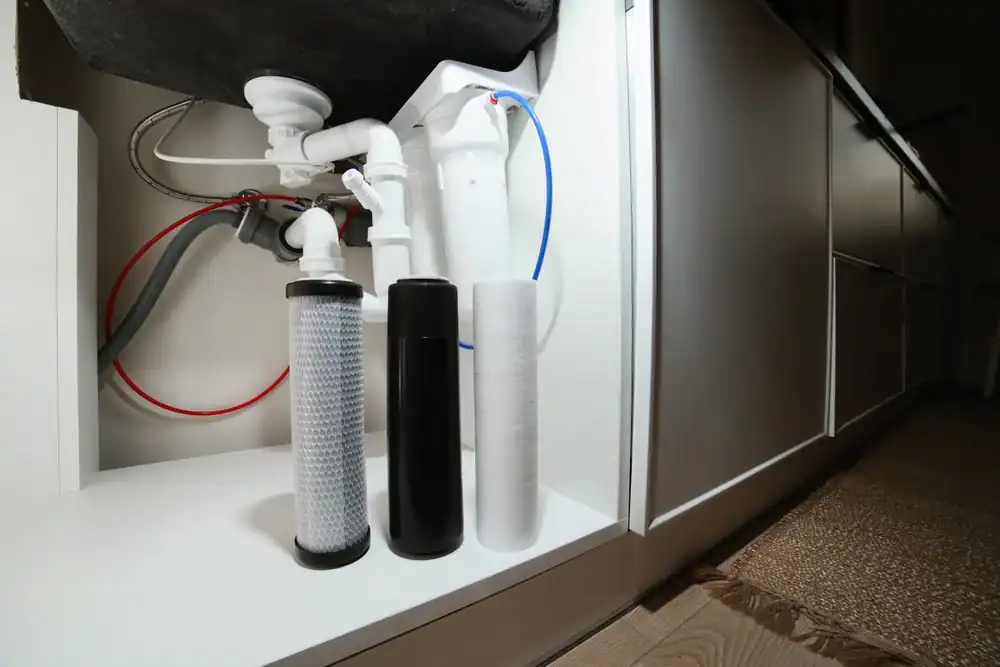
The sulfur smell comes from hydrogen sulfide gas that’s dissolved in your water—it’s a byproduct of decaying organic material reacting with the sulfur-heavy limestone deposits under St. Augustine South. You can’t filter it out without oxidizing it first, which is why carbon filters or sediment filters alone won’t work. You need a system that’s actually designed to treat hydrogen sulfide, not just improve taste.
Basic systems that address one issue—like iron or sulfur—typically start around $2,000 to $3,000 installed. More comprehensive systems that remove iron, sulfur, bacteria, and hard water minerals typically range from $3,500 to $5,000.
The real question isn’t what it costs upfront—it’s what you’ll save long-term. Hard water destroys water heaters, dishwashers, and washing machines. Replacing a water heater costs $1,200 to $1,800. A washing machine is another $600 to $1,000. If your filtration system extends the life of those appliances by even a few years, it’s already paid for itself—and that’s before you factor in the money you’re not spending on bottled water, extra cleaning products, or constantly scrubbing iron stains.
We provide honest pricing upfront with no hidden fees or surprise charges after installation. Military and first responders get a $500 discount because we believe in supporting the people who serve our community.
Air injection oxidation works by injecting air into your water, which converts dissolved iron and hydrogen sulfide into particles that can be filtered out. It’s effective for moderate iron and sulfur levels, and it doesn’t require any chemicals—just air and proper filtration media.
Hydrogen peroxide injection uses a diluted peroxide solution to oxidize contaminants. It’s a stronger oxidizer than air, so it handles higher levels of iron and sulfur, and it also kills iron bacteria, which air injection can’t do. The peroxide breaks down into water and oxygen, so there’s no chemical residue left in your water.
Which one you need depends on your water test results. If you’ve got light to moderate iron or sulfur and no bacteria, air injection is usually the simpler, lower-maintenance option. If you’re dealing with heavy contamination, iron bacteria, or a combination of problems, hydrogen peroxide is the better choice. That’s why we test first—so you’re not guessing or paying for equipment that’s not built for your specific situation.
Iron bacteria creates a slimy, rust-colored buildup in your toilet tanks, inside your pipes, and around well components. If you see a rainbow-colored sheen on standing water or a thick, gel-like substance in your toilet tank, that’s usually iron bacteria.
It’s not harmful to drink, but it clogs everything. Your water heater stops working efficiently. Your pipes get restricted. Water softeners and filtration systems fail prematurely because the bacteria creates a biofilm that coats the media and prevents it from working. About 10% of wells in Florida—new or old—have some level of iron bacteria contamination.
The only way to treat it properly is with a strong enough oxidizer to kill the bacteria before you try to filter the water. Hydrogen peroxide injection works because peroxide is a powerful disinfectant. Chlorine can work too, but it requires more equipment and careful handling. If you’ve had filtration systems fail quickly or noticed that your water treatment equipment needs constant maintenance, iron bacteria is probably the reason.
You can, but it usually doesn’t work the way you’re hoping. The systems sold at big-box stores are designed for average water conditions—not the high iron, sulfur, and mineral content that’s typical in St. Augustine South well water.
They’re also almost always undersized. A system rated for a three-bedroom house might technically fit your home, but if your water has heavy iron or hardness, it’ll clog or exhaust the media faster than it can regenerate. You’ll end up with a system that works for a few weeks or months, then stops, and you won’t know why.
The bigger issue is that without proper water testing, you’re guessing at what you actually need. If you’ve got hydrogen sulfide and you buy a carbon filter, it won’t do anything—you need oxidation first. If you’ve got iron bacteria and you install a standard iron filter, the bacteria will coat the media and kill the system within a year. Proper equipment, properly sized, and professionally installed costs more upfront, but it actually solves the problem instead of just moving it around.
Please provide your email address so that we can stay in touch and answer any questions you have! We will be reaching back out shortly.
"*" indicates required fields