Reach Out Today
Please provide your email address so that we can stay in touch and answer any questions you have! We will be reaching back out shortly.

Hear from Our Customers
You stop scrubbing orange stains off your sinks every week. Your guests don’t wrinkle their nose when they turn on the tap. Your water heater lasts years longer because it’s not clogged with rust sediment.
That’s what happens when you treat the problem at the source instead of managing symptoms. A properly designed whole house water filtration system removes iron, eliminates that rotten egg sulfur smell, and disinfects bacteria before any of it reaches your faucets or appliances.
You’re not just improving taste. You’re protecting everything that touches water in your home—from your coffee maker to your washing machine to your skin. And you’re doing it without hauling bottled water or second-guessing what’s coming out of your tap.
Quality Safe Water of Florida LLC doesn’t install water heaters or fix leaky pipes. We focus entirely on water purification, softening, and filtration—especially whole-house systems for well water.
We’re certified by the Water Quality Association and carry an A+ rating with the Better Business Bureau with zero complaints. That’s not luck. It’s what happens when you show up, do the work correctly, and service what you sell.
South Davis Shores homeowners deal with Florida’s unique water chemistry—high sulfur, iron-heavy aquifers, and limestone geology that accelerates bacterial growth. We’ve been treating these exact issues for years, and we design every system around your specific water test results, not a one-size-fits-all box from a big-box store.
We start with a free, professional water analysis at your home. Not a basic hardness test—a full breakdown of what’s actually in your water. Iron levels, sulfur content, bacteria, pH, and anything else that affects how your system should be designed.
Once we know what we’re dealing with, we build a custom treatment plan. That might include an air injection oxidation system to handle iron and sulfur without chemicals. Or a hydrogen peroxide injection setup for tougher contamination. Or UV disinfection if bacteria showed up in your test. Every system is different because every well is different.
Then we install it. You’ll see exactly how it works, where everything goes, and what to expect moving forward. Most installations wrap up in a day, and you’ll notice the difference immediately—clearer water, no odor, no staining.
We don’t disappear after installation. If something needs adjustment or servicing down the road, we handle it. That’s part of doing this correctly.
Ready to get started?
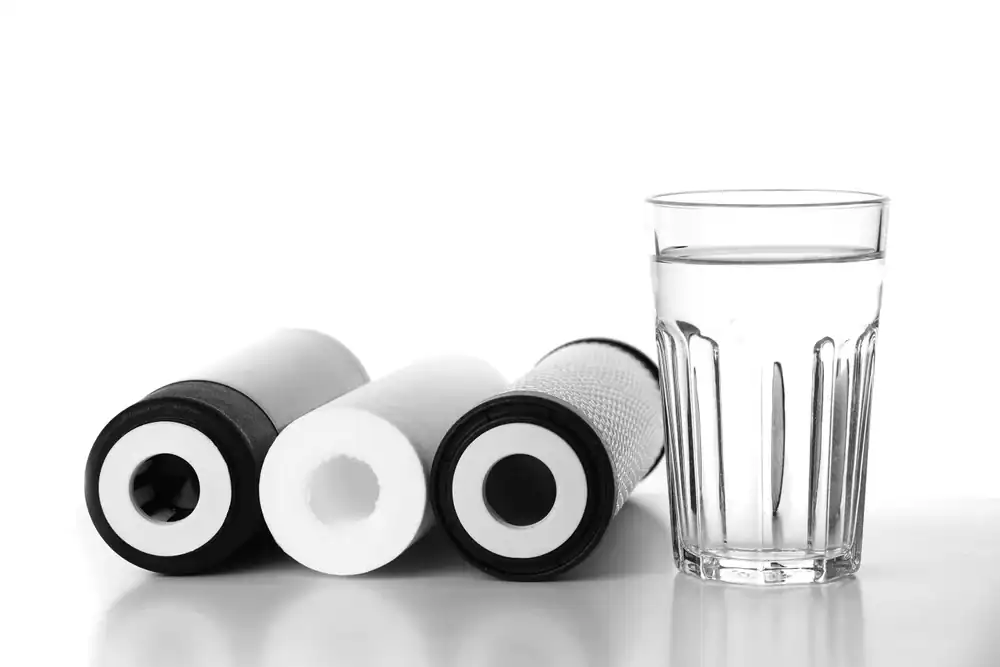
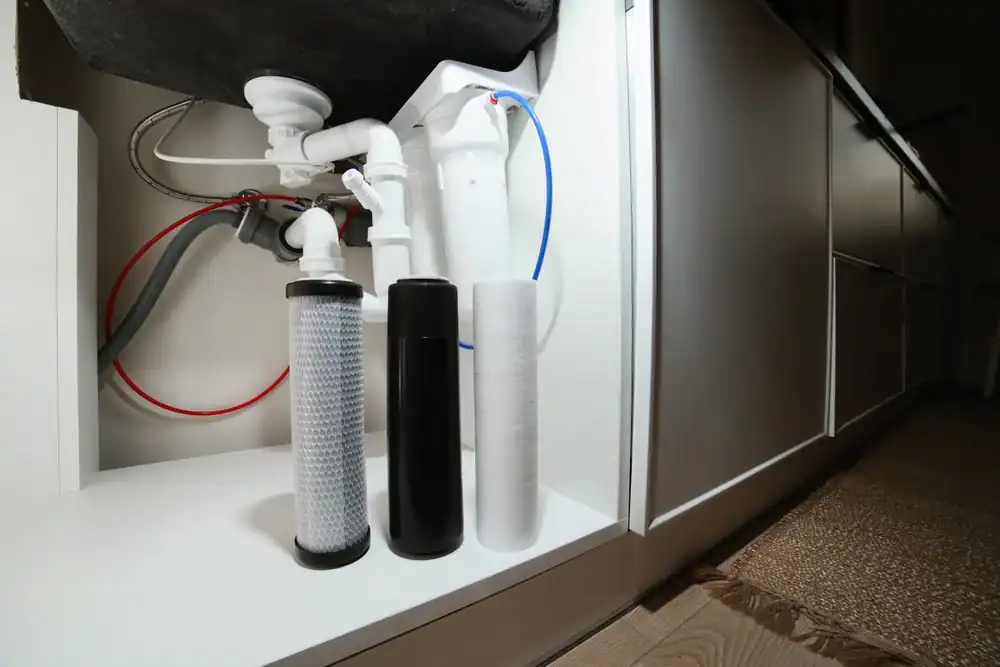
A complete well water filtration system in South Davis Shores typically includes multiple stages, each targeting a specific contaminant. Iron removal systems use oxidation—either through air injection or hydrogen peroxide injection—to convert dissolved iron into particles that get filtered out before they stain anything.
Hydrogen sulfide treatment tackles that sulfur smell. Florida’s limestone geology loads groundwater with sulfur compounds, and bacteria feed on it in oxygen-depleted aquifers. The result is that unmistakable rotten egg odor. Proper treatment oxidizes the sulfur, neutralizes the bacteria, and filters out the byproduct.
If your water tested positive for coliform or other bacteria, UV disinfection handles it without adding chemicals. The UV light destroys bacterial DNA as water passes through, making it safe to drink and use throughout your home.
Around 85% of North Port well systems show elevated iron and hydrogen sulfide—South Davis Shores deals with the same aquifer. You’re not alone in needing treatment, and the solution isn’t complicated when it’s designed correctly for Florida water.

You’ll usually know because your water is telling you. Orange or brown stains in your sinks, tubs, and toilets mean iron. A rotten egg smell when you turn on the tap means hydrogen sulfide. Cloudy water or sediment means you’ve got particulates that shouldn’t be there.
But some problems don’t announce themselves. Bacteria, for example, won’t always change how your water looks or smells—but it’s still a health risk. That’s why testing matters, even if everything seems fine.
If you’re on a well in South Davis Shores, you’re pulling from the same aquifer that supplies most of this area. That aquifer sits under porous limestone and thin soil, so surface contamination moves underground faster than in other parts of the country. The Florida Department of Health recommends testing your well water at least once a year. If you haven’t tested yours recently, that’s where you start.
Both methods oxidize dissolved iron so it can be filtered out, but they work differently. Air injection systems are chemical-free. They inject oxygen into your water, which reacts with the iron and turns it into rust particles. Those particles get trapped in a filter tank, and clean water moves through the rest of your house.
Hydrogen peroxide injection uses a small amount of peroxide to oxidize iron, sulfur, and certain bacteria all at once. It’s more aggressive, which makes it better for wells with high contamination or multiple issues. The peroxide breaks down into water and oxygen after it does its job, so nothing harmful stays in your water.
Which one you need depends on your water test. If you’ve got moderate iron and nothing else, air injection usually handles it. If you’re dealing with heavy iron, sulfur smell, and bacteria all together, hydrogen peroxide gives you a more complete solution in one system.
No, and trying to use one that way will wreck it. Water softeners are built to remove hardness—calcium and magnesium. They can handle trace amounts of dissolved iron, but anything above 0.3 mg/L will coat the resin bed and cause the softener to fail early.
Iron needs to be oxidized and filtered out before it ever reaches your softener. Same with sulfur. If you run high-iron or high-sulfur water through a softener without treating it first, you’re asking for problems—fouled resin, clogs, and a system that stops working years before it should.
The correct approach is to install an iron removal system or hydrogen sulfide treatment system upstream from the softener. That way, the softener only deals with hardness, which is what it’s designed for. Your appliances, plumbing, and the softener itself will last longer because they’re not fighting contamination they were never meant to handle.
It depends entirely on what your water test shows and what kind of system you need. A basic whole-house sediment and carbon filter might run a few hundred dollars. A complete iron removal system with air injection, filtration, and a softener typically ranges from a few thousand to several thousand, depending on the size of your home and the severity of contamination.
If you need hydrogen peroxide injection, UV disinfection, or a multi-stage setup to handle iron, sulfur, and bacteria all at once, you’re looking at a higher investment—but you’re also getting a system that solves multiple problems instead of just masking one.
Here’s the other side of that cost: replacing a water heater early because of iron sediment runs $1,200 to $1,800. A fouled water softener costs $1,500 or more to replace. Stained fixtures, ruined laundry, and constant cleaning add up fast. A properly installed filtration system pays for itself by protecting everything downstream and eliminating the recurring costs of untreated water.
Yes. Skipping the test is like diagnosing a car problem without looking under the hood. You might guess right, but you’ll probably waste money on the wrong fix.
Every well is different. One might have high iron and low pH. Another might have sulfur, bacteria, and hardness. You can’t see most of these contaminants, and you can’t design an effective system without knowing exactly what you’re treating.
We include a free professional water analysis because it’s the only way to do this correctly. We test for iron, sulfur, hardness, pH, bacteria, and anything else that affects your water quality. Then we build a system around those results—not around what we happen to have in stock or what worked for your neighbor. That’s how you end up with water that’s actually clean, not just “better than it was.”
Please provide your email address so that we can stay in touch and answer any questions you have! We will be reaching back out shortly.
"*" indicates required fields