Reach Out Today
Please provide your email address so that we can stay in touch and answer any questions you have! We will be reaching back out shortly.

Hear from Our Customers
Your sinks and toilets stay white. The rotten egg smell disappears completely. You stop buying bottled water because what comes from your tap actually tastes clean.
Your water heater lasts years longer. Your washing machine stops leaving rust stains on clothes. Guests don’t wrinkle their nose when they wash their hands.
That’s what happens when you treat well water correctly. Not just a filter stuck under one sink. A whole-house system designed around what’s actually in your water. Iron removal systems handle the orange stains. Hydrogen sulfide treatment kills the sulfur smell. Bacteria disinfection protects your family from contaminants you can’t see or smell.
Most Riverdale homeowners deal with at least two of these problems. The limestone aquifer that feeds local wells naturally contains iron, sulfur, and the bacteria that feed on both. It’s geology, not bad luck. And it requires the right equipment to fix it properly.
We serve North and Central Florida with one focus: whole-house water purification done right. We’re members of the National Water Quality Association, A-rated by the Better Business Bureau with a 5-star rating and zero complaints.
That reputation matters when you’re letting someone into your home and trusting them with your family’s water. We’re not a national franchise that sells systems and disappears. We test your water for free, design a custom system based on what we find, install it professionally, and service it long-term.
Riverdale sits in an area where well water issues aren’t occasional. They’re standard. Iron, sulfur, hardness, and bacteria show up in the majority of wells we test. We know Central Florida aquifer conditions because we work in them every day.
First, we test your water. Not a basic hardness test. A complete analysis that shows exactly which contaminants are present and at what levels. Iron, sulfur, bacteria, pH, hardness, manganese. You can’t design the right system without knowing what you’re treating.
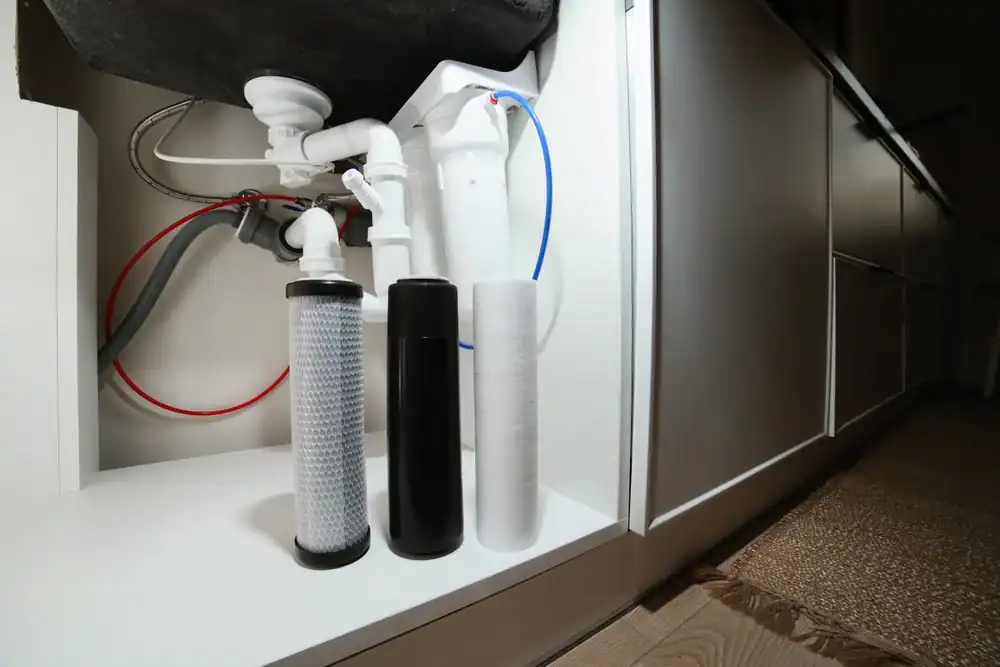
Then we design a system specific to your water and your household size. Most effective well water treatment uses either air injection oxidation or hydrogen peroxide injection to convert dissolved iron and sulfur into particles. Then a catalytic carbon filter removes those particles along with any remaining odors. If bacteria are present, we add UV disinfection or chlorine injection.
Installation takes one day for most homes. We install the system at your point of entry so every tap in your house gets filtered water. After installation, we test again to confirm everything’s working correctly. Then we show you how the system operates and what minimal maintenance it needs.
Ready to get started?
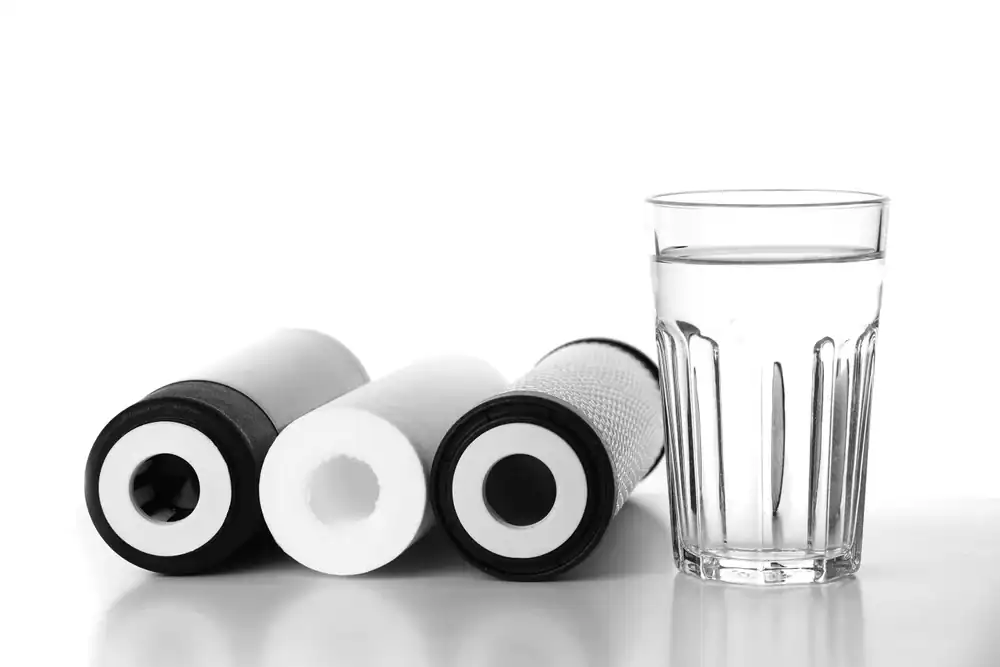
Your whole-house well water filtration system treats every drop before it reaches your plumbing. That means filtered water at every faucet, shower, toilet, and appliance. The system typically includes an oxidation stage using air injection or hydrogen peroxide injection, a catalytic carbon filter for iron and sulfur removal, and UV or chemical disinfection if bacteria are detected.
We size everything based on your household’s peak water usage. A family of four needs different flow rates than a couple. The system has to keep up during morning showers without pressure drops. Most systems also include a water softener because Central Florida’s limestone aquifer makes hard water nearly universal. Softening protects your plumbing and appliances while the filtration handles contaminants.
You get professional installation, a full system walkthrough, and ongoing service. We don’t sell systems and disappear. Annual maintenance typically involves replacing filters and checking system performance. Most whole-house systems last 10-15 years with proper maintenance, compared to the ongoing cost of bottled water or the damage iron and sulfur cause to appliances.
Military members and first responders receive a $500 discount. We also support the Tunnels to Towers Foundation because some things matter more than business.

A water softener only removes hardness minerals like calcium and magnesium. It stops scale buildup and makes soap lather better, but it doesn’t remove iron, sulfur, bacteria, or odors.
A well water filtration system removes contaminants that a softener can’t touch. Iron removal systems use oxidation to convert dissolved iron into particles, then filter those particles out. Hydrogen sulfide treatment eliminates the rotten egg smell. Bacteria disinfection uses UV light or chlorine to kill harmful microorganisms.
Most Riverdale homes need both. The filtration system removes contaminants, and the softener handles hardness. They work together as a complete whole-house system. Trying to use just a softener when you have iron or sulfur doesn’t work. The iron clogs the softener resin and the sulfur smell stays in your water.
That smell is hydrogen sulfide gas, and it’s extremely common in Central Florida wells. The most effective treatment uses either air injection oxidation or hydrogen peroxide injection followed by catalytic carbon filtration.
Air injection oxidation pulls air into your water, which converts the dissolved hydrogen sulfide into solid sulfur particles. Then a special catalytic carbon filter traps those particles and removes any remaining odor. Hydrogen peroxide injection works similarly but uses peroxide instead of air to oxidize the sulfur.
Both methods work well. Which one fits your situation depends on your water test results and how much sulfur is present. Some wells have low levels that air injection handles easily. Others have high concentrations that need hydrogen peroxide. A basic carbon filter alone won’t fix it because hydrogen sulfide is dissolved in the water. You have to oxidize it first, then filter it out.
Yes, and it’ll prevent new stains from forming. Those orange stains are iron oxidizing after it leaves your well. The iron is dissolved in your water, invisible when it first comes out of the tap. Then it contacts air and turns into rust.
Iron removal systems use the same oxidation process, but controlled. Air injection or hydrogen peroxide injection oxidizes the iron inside the system, converting it from dissolved to solid particles. Then a filter captures those particles before the water reaches your plumbing. No iron in your water means no more staining.
The existing stains won’t disappear on their own. You’ll need to clean those with an iron stain remover. But once your filtration system is running, new stains stop appearing. Your fixtures stay clean, your laundry stops getting rust spots, and your water heater stops filling with iron sediment that cuts its lifespan short.
Most complete systems for Riverdale homes run between $2,500 and $6,000 installed, depending on what your water test shows and how large your household is. That typically includes iron and sulfur removal, bacteria disinfection if needed, and a water softener.
Annual maintenance costs $80 to $500 depending on your system. Filter replacements are the main expense. Compare that to $1,200 per year if you’re spending $100 monthly on bottled water. Or the cost of replacing a water heater three years early because iron sediment destroyed it.
The system pays for itself through lower appliance replacement costs, no bottled water purchases, and increased home value. It’s not a small purchase, but it’s fixing a problem that damages your home and affects your family’s health every single day. We offer free water testing so you know exactly what you’re dealing with before making any decisions. Military and first responders get $500 off.
Most systems need annual service. That includes replacing filters, checking system performance, and making sure everything’s still calibrated correctly. Some components last longer. UV bulbs typically need replacement every 12 months. Carbon filters might go 3-5 years depending on your water quality and usage.
The oxidation components in air injection systems need occasional cleaning but rarely need replacement. Hydrogen peroxide injection systems need peroxide refills every few months, similar to adding salt to a water softener. None of this is complicated. Most homeowners handle the simple stuff themselves and call us for annual professional service.
Skipping maintenance is where people run into problems. A clogged filter stops working. An expired UV bulb stops disinfecting. The system might still run, but it’s not protecting your water anymore. Regular maintenance keeps everything working like it should and catches small issues before they become expensive repairs.
Please provide your email address so that we can stay in touch and answer any questions you have! We will be reaching back out shortly.
"*" indicates required fields