Reach Out Today
Please provide your email address so that we can stay in touch and answer any questions you have! We will be reaching back out shortly.

Hear from Our Customers
The orange rings around your toilet disappear. Your white laundry stays white instead of coming out with rust stains. The rotten egg smell that hits you when you turn on the shower is gone.
You stop scrubbing fixtures twice a week trying to keep up with the staining. Your water heater lasts longer because it’s not getting destroyed by iron bacteria buildup. You can actually drink from the tap without hesitation.
This isn’t about adding another appliance to your home. It’s about fixing a problem that affects your daily life in ways most people don’t realize until it’s solved. When your well water gets treated properly at the point it enters your home, every faucet, shower, and appliance gets clean water. That’s what whole-house filtration does.
We’ve spent over 50 years figuring out how to fix the specific water issues that come with living in this state. We’re A-rated by the Better Business Bureau with a 5-star rating and zero complaints. We’re members of the National Water Quality Association.
Ortega homeowners deal with unique challenges because of Florida’s limestone geology and the way sulfur and iron naturally occur in groundwater here. Generic solutions that work elsewhere often fail in these conditions. We design systems based on what’s actually in your water after testing it, not based on what usually works.
We service what we sell. That matters more than most people realize until they need help and can’t get it.
First, we test your water. Not a basic test—a complete analysis that shows us exactly what’s in there and at what levels. Iron, sulfur, bacteria, pH, hardness, everything that matters.
Then we design a system specifically for what your test shows. If you’ve got iron above 0.3 mg/L, which about 68% of wells in this area do, we’re likely looking at either air injection oxidation or hydrogen peroxide injection depending on your levels and water chemistry. If hydrogen sulfide is the issue, we address that with filtration designed to remove sulfur bacteria and the gas they produce.
Installation happens at the point where water enters your home, before it reaches any fixture or appliance. That means every drop gets treated. After installation, you’ve got a system that works automatically, and if you ever need service, we handle all brands—not just what we sell.
Ready to get started?
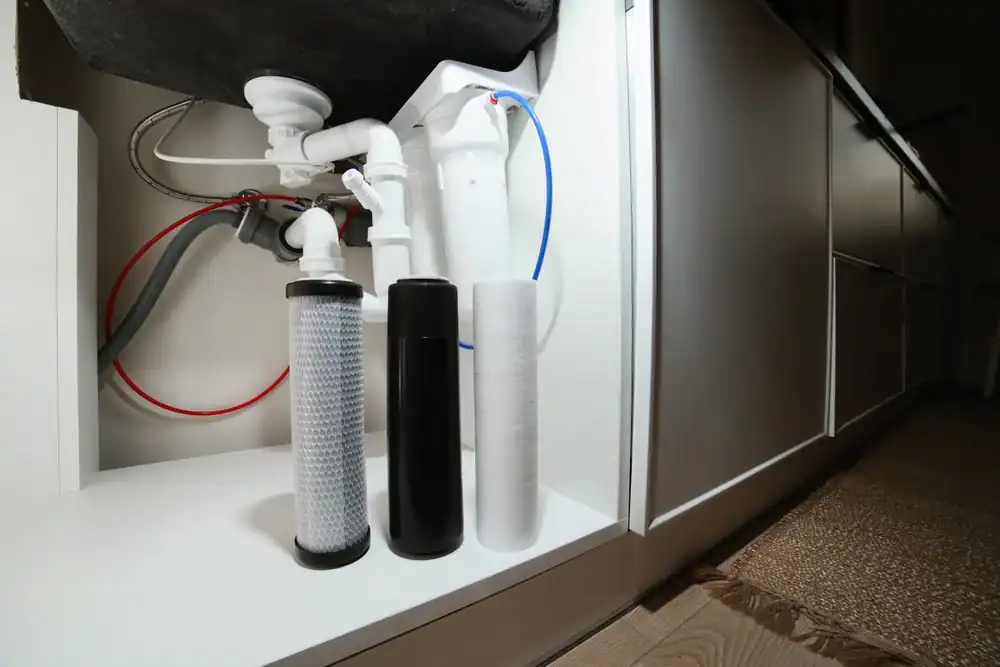
A complete well water filtration system handles multiple problems at once. Iron removal systems use either air injection oxidation or hydrogen peroxide injection to oxidize dissolved iron so it can be filtered out before it stains anything. Hydrogen sulfide treatment eliminates the sulfur bacteria and removes the gas that causes that rotten egg smell.
If bacteria testing shows contamination, UV disinfection kills organisms without adding chemicals to your water. The Purelight system uses ultraviolet light to eliminate waterborne bacteria including E.coli. For homes that also have hardness issues, we can integrate treatment that prevents scale buildup without requiring salt or electricity.
In Ortega specifically, we see a lot of homes built around 1972 dealing with aging well infrastructure combined with Florida’s naturally occurring iron and sulfur problems. The concentration of hydrogen sulfide typically gets worse during summer months when bacteria are more active in warmer groundwater. Your system needs to handle peak levels, not just average conditions.
We offer free in-home water analysis because guessing doesn’t work. Military members and first responders get a $500 discount because that’s who we are.

The rotten egg smell comes from hydrogen sulfide gas produced by sulfur bacteria living in your well or in your water heater. You notice it more at certain times because the bacteria are more active when water sits stagnant or when temperatures rise.
If the smell is strongest from your hot water, the bacteria are likely growing inside your water heater where it’s warm and oxygen-depleted. If it happens with cold water too, the source is your well itself. Florida’s limestone geology is loaded with sulfur compounds that these bacteria feed on.
The smell getting worse in summer is common here because warmer groundwater temperatures increase bacterial activity. The bacteria will keep growing back unless you install a well water filtration system that actually removes them and the sulfur they feed on. Shocking your well with chlorine might help temporarily, but it’s not a permanent fix.
Both methods oxidize dissolved iron so it can be filtered out, but they work differently. Air injection oxidation systems inject oxygen into your water, which converts clear water iron into rust particles that get trapped in a filter media. These systems don’t require chemicals and work well for moderate iron levels.
Hydrogen peroxide injection adds a small amount of peroxide to oxidize iron, sulfur, and manganese. It’s more aggressive and handles higher contamination levels that air injection can’t touch. The peroxide also kills iron bacteria, which air injection alone doesn’t do.
The tradeoff is cost. Hydrogen peroxide systems require you to refill a peroxide tank annually, usually running $200-$300 per year. Most people with serious iron problems consider that a small price for water that doesn’t stain everything. Your water test results determine which method makes sense for your specific situation.
Iron bacteria create a slimy, rust-colored buildup that’s different from regular iron staining. Look for thick, gel-like orange or reddish slime inside your toilet tank, around sink drains, or in your shower. It often has an oily sheen on the water surface.
Regular iron staining is just discoloration. Iron bacteria produce sticky biofilm that keeps coming back no matter how much you clean. You might also notice a musty or oily smell, not the rotten egg sulfur smell, but something that smells swampy or like fuel oil.
Iron bacteria are extremely difficult to eliminate once they’re established in your well. They create a protective slime layer that makes them resistant to chlorine shock treatments. Prevention through proper well water filtration is much easier than trying to kill an existing colony. A system with hydrogen peroxide injection or UV disinfection stops them before they can colonize your plumbing.
No. Water softeners remove hardness minerals like calcium and magnesium through ion exchange. They’re not designed to handle iron, sulfur, or bacteria, and using one for that purpose will destroy the resin bed quickly.
Some softeners claim they can handle small amounts of clear water iron—usually up to 0.3 mg/L. But most wells in this area test higher than that, and if you’ve got iron bacteria or hydrogen sulfide, a softener won’t touch those problems. You’ll end up with a fouled system that stops working and still have stained fixtures.
You need oxidation and filtration before softening. The iron and sulfur get removed first, then if you also have hardness issues, the softened water goes through after it’s already clean. Trying to do it backwards or expecting one system to handle everything is why a lot of people waste money on equipment that doesn’t solve their actual problem.
There’s no honest way to quote a price without testing your water first. A system designed for moderate iron removal costs differently than one that needs to handle high iron plus sulfur plus bacteria plus hardness.
Air injection systems for straightforward iron removal typically start in the mid-range for equipment and installation. If you need hydrogen peroxide injection, UV disinfection, and multi-stage filtration for complex contamination, you’re looking at a higher investment. Annual operating costs vary—hydrogen peroxide refills run $200-$300 per year, while air injection systems have minimal ongoing costs.
What matters more than the upfront cost is whether the system actually fixes your problem and whether the company services what they sell. Replacing a water heater every few years because iron bacteria keeps destroying it costs more than installing proper filtration once. We do free water analysis so you know exactly what you’re dealing with before any money changes hands.
Please provide your email address so that we can stay in touch and answer any questions you have! We will be reaching back out shortly.
"*" indicates required fields