Reach Out Today
Please provide your email address so that we can stay in touch and answer any questions you have! We will be reaching back out shortly.

Hear from Our Customers
That orange ring around your toilet disappears. The sulfur smell when you turn on the tap? Gone. Your water heater stops corroding from the inside out, and your washing machine quits leaving rust stains on white clothes.
This is what proper well water filtration does. It removes the iron, sulfur, and bacteria that make Florida well water so problematic. Not with a basic filter that clogs in six months, but with a system designed specifically for the high mineral content and bacterial activity we deal with here in Central Florida.
You stop buying bottled water for drinking. You stop scrubbing stains that won’t come out. Your appliances last longer because they’re not constantly battling corrosive minerals. And when guests come over, your water doesn’t announce itself before they even see you.
We’ve been handling Florida’s well water problems for over 50 years. We’re members of the National Water Quality Association, A-rated with the Better Business Bureau, and we maintain a 5-star rating with zero complaints.
That matters because Central Florida water is different. The limestone geology, shallow water table, and high humidity create specific contamination patterns you won’t find in other states. Iron bacteria thrives here. Hydrogen sulfide levels spike during summer months. The sandy soil lets organic material seep into groundwater faster than almost anywhere else in the country.
We don’t sell you a system and disappear. We test your specific water, design a solution for what’s actually in it, install it correctly, and service it when needed. Orange Blossom Hills homeowners deal with the same well water issues as the rest of Central Florida – we just happen to know exactly how to fix them.
First, we test your water. Not a basic hardness test – a full analysis that identifies iron levels, sulfur content, bacterial contamination, pH, and anything else that’s affecting your water quality. This tells us what we’re actually dealing with.
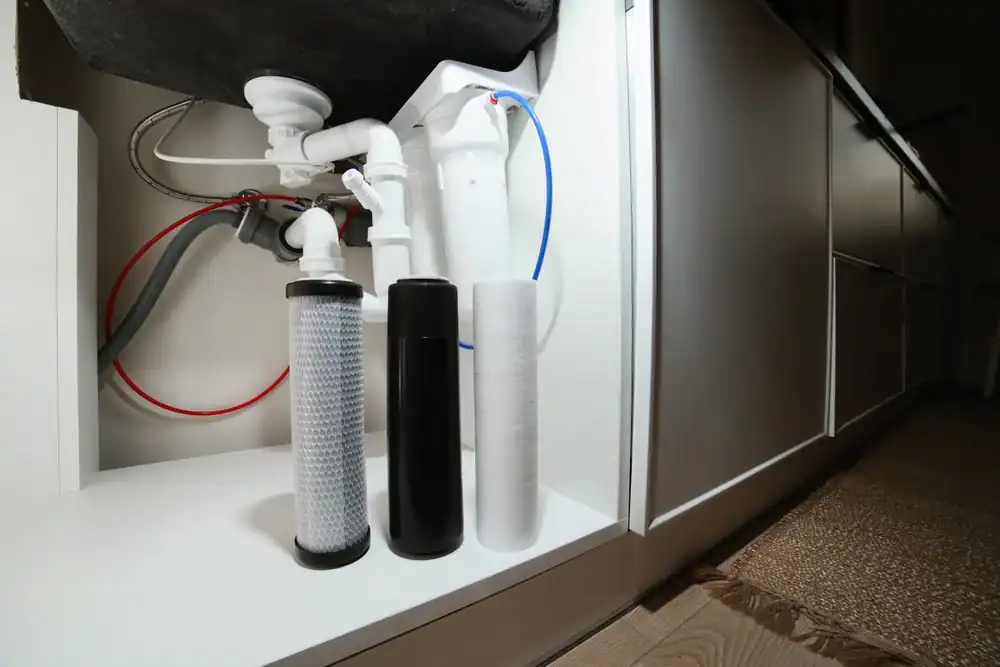
Then we design a system based on those results and your household’s water usage. For most Orange Blossom Hills homes with iron and sulfur problems, that means a multi-stage approach. Air injection oxidation converts dissolved iron and sulfur into particles. Those particles get filtered out before water reaches your house. If you’ve got bacterial iron – the slimy orange stuff – we add a disinfection stage using either hydrogen peroxide injection or UV treatment.
Installation typically takes a day. We set up the system at your well head or pressure tank, program it for your specific water chemistry, and test everything to make sure it’s working correctly. You’ll see results immediately – no smell, no staining, no metallic taste. We show you how the system works, what maintenance looks like, and give you our contact info for any questions down the road.
Ready to get started?
You get a custom-designed filtration system based on your water test results, not a one-size-fits-all unit. For iron removal, we typically use air injection oxidation systems – they’re chemical-free and handle the high iron concentrations common in Orange Blossom Hills well water. These systems inject oxygen into your water, oxidize the dissolved iron, then filter out the particles.
Sulfur treatment uses the same oxidation principle. Hydrogen sulfide gets converted to solid sulfur particles and filtered out. No more rotten egg smell, and no chlorine or harsh chemicals needed to mask it.
If your water test shows bacterial contamination – and many Central Florida wells do – we add a disinfection stage. Hydrogen peroxide injection kills iron bacteria and other microorganisms without leaving chemical residue. For E. coli or coliform bacteria, UV disinfection provides an additional safeguard.
The system includes professional installation, startup, and testing. We make sure everything’s dialed in before we leave. You also get our service support – we’re not a national company that sells you equipment and disappears. When you need filter media replaced or have questions about your system, you call us directly. We’ve been serving Florida homeowners for over 50 years, and we actually answer the phone.

If you smell rotten eggs when you turn on the tap, that’s hydrogen sulfide. If you see orange or brown staining on toilets, sinks, or laundry, that’s iron. If there’s a metallic taste or slimy orange buildup in your toilet tank, you’ve likely got iron bacteria.
These are the three most common well water problems in Central Florida, and they all require treatment. The limestone geology and shallow water table in this area make contamination almost inevitable. Even if your water looked fine when you first moved in, conditions change. Bacterial activity increases during warmer months. Heavy rains can temporarily spike mineral content.
The only way to know exactly what’s in your water is to test it. We do comprehensive water analysis that measures iron, sulfur, bacteria, pH, hardness, and other contaminants. That test tells us what treatment approach will actually work for your specific situation, not just what problems are obvious.
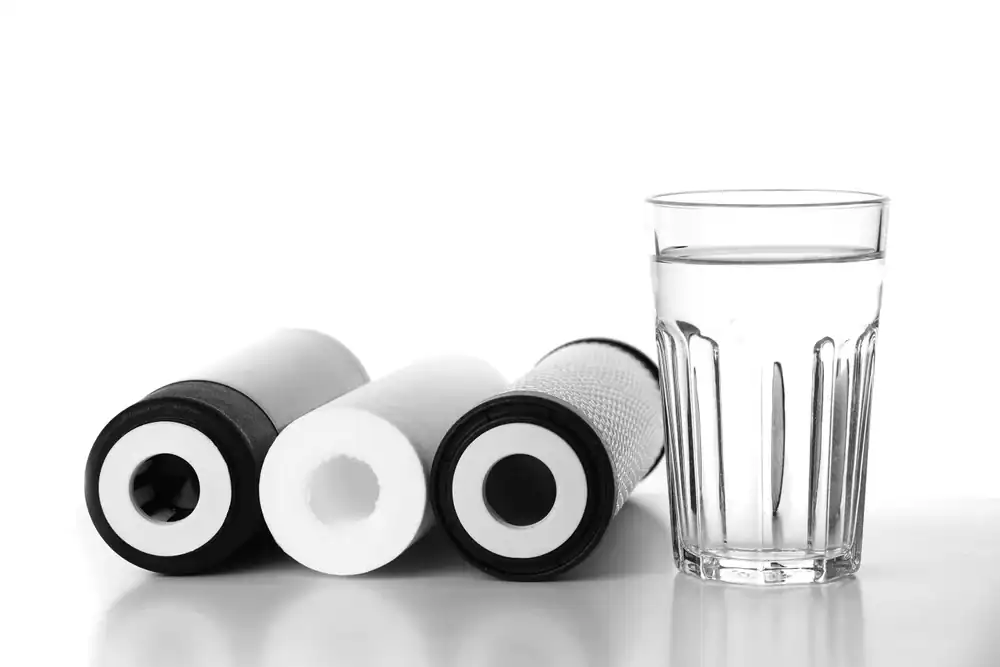
A basic sediment filter catches particles that are already solid – sand, rust flakes, debris. It doesn’t do anything about dissolved minerals or bacteria. That’s why a simple filter won’t fix iron or sulfur problems in Florida well water.
Dissolved iron and hydrogen sulfide are invisible until they react with oxygen. That’s when you get the staining and smell. A proper treatment system oxidizes these contaminants first – converting them from dissolved form into solid particles – then filters those particles out. Air injection oxidation is the most effective method for this. It’s chemical-free and handles the high contamination levels we see in Central Florida wells.
For bacterial issues, you need disinfection. Iron bacteria creates that orange slime and makes iron problems worse. E. coli and coliform bacteria are health hazards. Hydrogen peroxide injection or UV treatment kills these organisms before water enters your home. A basic filter can’t do any of this – it’ll just clog faster because it’s trying to catch contaminants it wasn’t designed to handle.
It depends on what’s in your water and how much treatment you need. A straightforward iron removal system runs differently than a multi-stage setup that handles iron, sulfur, and bacteria together.
Here’s what affects cost: your contamination levels, your household water usage, and whether you need additional treatment stages like hydrogen peroxide injection or UV disinfection. A home using 300 gallons per day needs different equipment capacity than one using 100 gallons per day.
The smarter way to think about cost is what you’re preventing. Replacing a water heater damaged by iron corrosion costs $1,200 to $2,000. A new washing machine runs $600 to $1,500. Iron and sulfur damage shorten appliance lifespan by 30 to 50 percent. You’re either paying for proper filtration now, or you’re paying for premature appliance replacement later – plus dealing with staining, odors, and buying bottled water in the meantime. We test your water first, then give you an exact price based on what system you actually need.
No. Water softeners remove hardness minerals like calcium and magnesium through ion exchange. They’re not designed to handle iron, sulfur, or bacteria – and using one for that purpose will damage the resin bed and void your warranty.
Some softeners claim they can handle small amounts of iron, usually up to 3 parts per million. But Central Florida well water often contains much higher iron levels, plus iron bacteria that creates additional problems. Running that through a softener just coats the resin with iron buildup, reduces the system’s effectiveness, and creates a breeding ground for bacteria.
You need oxidation and filtration before softening. Air injection oxidation removes iron and sulfur first. Then, if you want softer water for other reasons – less soap scum, softer laundry – you can add a water softener downstream. Trying to do it all with just a softener doesn’t work, and it’s an expensive mistake. We see homeowners make this error frequently, then call us after their softener fails within a year.
Air injection oxidation systems are low maintenance. The air injection valve and control head operate automatically – they backwash the filter media on a programmed schedule to flush out accumulated iron and sulfur particles. You don’t need to do anything for that.
Filter media typically lasts 5 to 7 years before it needs replacement. That’s the manganese dioxide or Filox media that captures oxidized contaminants. When it’s time to replace it, we handle that service call. Some systems use a sediment pre-filter that should be changed every 6 to 12 months depending on your water quality – that’s a simple cartridge swap you can do yourself or we can do during a service visit.
If your system includes hydrogen peroxide injection for bacterial treatment, you’ll need to refill the peroxide tank periodically – usually every few months depending on your water usage. UV systems require annual bulb replacement to maintain disinfection effectiveness. We set up service reminders and can handle all of this for you. The key difference between us and national companies is we’re actually here to service what we install. You’re not calling an 800 number and waiting weeks for a technician.
Please provide your email address so that we can stay in touch and answer any questions you have! We will be reaching back out shortly.
"*" indicates required fields