Reach Out Today
Please provide your email address so that we can stay in touch and answer any questions you have! We will be reaching back out shortly.

Hear from Our Customers
No more rotten egg smell when someone turns on the shower. No more orange rings in your toilets that won’t scrub out. No more ruined white laundry or that metallic taste in your coffee.
Your water heater stops filling with sediment. Your fixtures stay clean longer. Your appliances last the way they’re supposed to.
You stop buying bottled water for drinking and cooking. You stop worrying about what’s actually in your well. And when guests come over, you’re not embarrassed about the smell or the stains. The water just works the way it should have from the start.
We focus exclusively on whole-house water filtration and purification. We don’t do plumbing. We don’t install water heaters. We solve water quality problems, and that’s it.
We’re A+ rated with the Better Business Bureau with zero complaints and a 5-star rating. We’re members of the National Water Quality Association, which means we follow industry standards for testing, installation, and service. And we actually service what we install, which apparently isn’t a given in this industry.
Old City South sits in an area where limestone geology and sandy soil create ideal conditions for iron bacteria, sulfur-reducing bacteria, and hydrogen sulfide contamination. We’ve seen it all in this region, and we know what works and what doesn’t when it comes to treating Florida well water long-term.
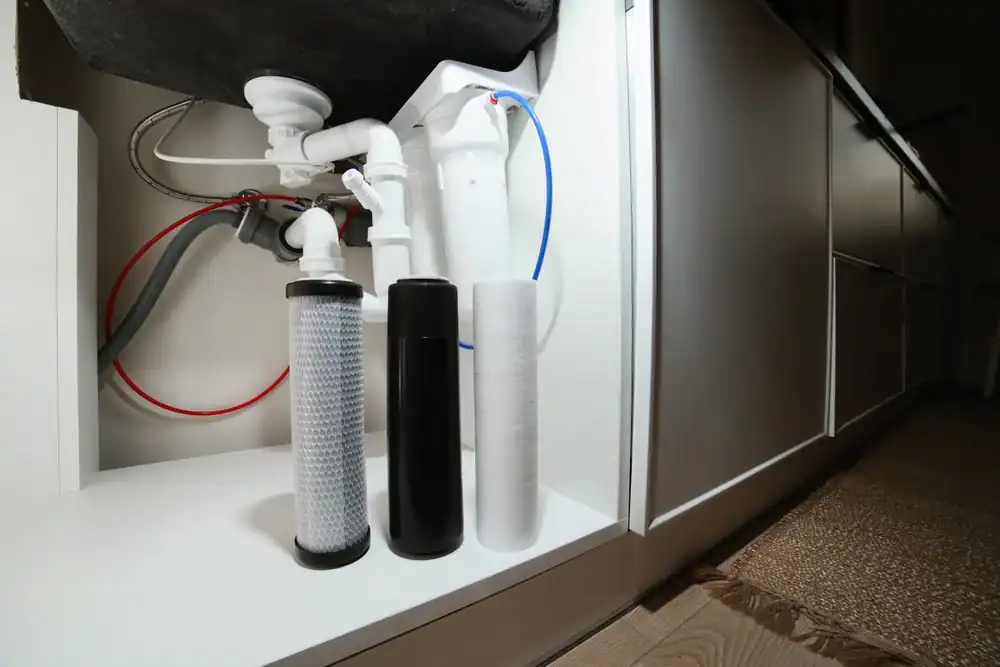
We start with a free water analysis at your home. We test for iron, sulfur bacteria, hydrogen sulfide, hardness, pH, and other contaminants common in Old City South wells. This isn’t a sales call disguised as a test. It’s an actual analysis.
Once we know what’s in your water, we design a system specifically for your home. One size doesn’t fit all when it comes to well water filtration. A home with high iron and low pH needs a different setup than one dealing with hydrogen sulfide and bacteria. We match the equipment to your water chemistry and your household size.
Installation typically takes a day. We install the system at your point of entry so every faucet, shower, and appliance gets treated water. After installation, we walk you through how the system works, what maintenance looks like, and when to call us for service. Then we follow up to make sure everything’s working the way it should.
Ready to get started?
Most Old City South homes need a combination approach. Iron removal systems handle the staining and sediment. Air injection oxidation systems are chemical-free and work by injecting oxygen to oxidize iron and sulfur before filtration. For hydrogen sulfide, we often use hydrogen peroxide injection, which eliminates the rotten egg smell without adding chlorine taste to your water.
If you’re dealing with iron bacteria or sulfur bacteria, we address that with well water bacteria disinfection before installing filtration. Bacteria colonize in your well casing and pipes, and if you don’t treat that first, they’ll just keep feeding your new system with contamination.
Hard water is almost universal in this area due to limestone geology. We include water softening when needed to prevent scale buildup in your new filtration system and your appliances. The goal is a complete solution that handles everything in your water, not just one problem while ignoring the others.
Every system is custom-designed based on your water test results. We’re not trying to sell you the same setup we sold your neighbor, because your water isn’t the same as your neighbor’s water.

That smell is hydrogen sulfide gas, and it’s common in Old City South because of the geology. Florida’s limestone bedrock contains sulfur compounds. When sulfur-reducing bacteria break down those compounds in your groundwater, they produce hydrogen sulfide.
The smell is usually worse in hot water because heat releases the gas faster. You’ll notice it most when someone first turns on the shower or runs the dishwasher. The warmer months make it worse because bacteria are more active in warm groundwater.
Hydrogen sulfide isn’t usually a health risk at the levels found in residential wells, but it’s corrosive. It damages copper pipes, stains fixtures, and makes your water undrinkable. Treating it requires oxidation, either through aeration, hydrogen peroxide injection, or chlorination, followed by filtration to remove the precipitated sulfur.
Iron. Old City South wells frequently contain dissolved iron that’s invisible when the water first comes out of your faucet. Once that water sits exposed to air, the iron oxidizes and turns orange or brown. That’s what you’re seeing in your toilet bowls, sinks, and tubs.
Iron levels above 0.3 mg/L will cause staining. Many wells in this area test between 1 and 5 mg/L, which means heavy staining and sediment buildup. The iron also feeds iron bacteria, which create slimy orange or reddish-brown biofilm in your toilet tanks and pipes.
The longer you let iron run through your plumbing, the more damage accumulates. It builds up in your water heater, shortening its lifespan by years. It clogs aerators and valve seats. And it ruins laundry. You can’t scrub it away or filter it at one faucet. You need a whole-house iron removal system that treats the water before it enters your plumbing.
Air injection oxidation (AIO) systems are chemical-free and work by injecting oxygen into your water to oxidize iron, manganese, and sulfur. Once oxidized, those contaminants become particles that can be filtered out before the water enters your home.
The system uses a small air compressor to inject air into a retention tank where oxidation happens. Then the water passes through a filter media that captures the oxidized particles. The system backwashes itself periodically to flush out accumulated iron and sulfur, sending it to your drain or septic system.
AIO systems work well for moderate iron and sulfur levels without adding chemicals to your water. They’re low-maintenance compared to chemical feed systems, and they don’t create the chlorine taste or require you to handle oxidizing agents. For Old City South homes with iron between 1 and 10 mg/L and hydrogen sulfide under 5 mg/L, AIO is usually the most practical solution.
No. Water softeners are designed to remove hardness (calcium and magnesium), not iron or sulfur. If you run water with iron through a standard softener, the iron will coat the resin beads and ruin the system. You’ll end up with a softener that doesn’t soften and needs expensive repairs or replacement.
Some softeners claim to handle small amounts of iron (under 0.3 mg/L), but that’s not realistic for Old City South wells. Most homes here have iron levels several times higher than that. And softeners do nothing for hydrogen sulfide or bacteria.
You need iron removal and sulfur treatment before softening. The correct sequence is: oxidation to convert dissolved iron and sulfur into particles, filtration to remove those particles, then softening to remove hardness. Trying to do it all with one piece of equipment doesn’t work and costs you more in the long run when that equipment fails.
It depends on your water chemistry and your system design, but most whole-house systems need professional service once a year. That includes checking your oxidation system, inspecting filters, testing your treated water, and making sure everything’s backwashing correctly.
If you have iron bacteria or sulfur bacteria, you might need more frequent attention early on. Bacteria can recolonize your well and plumbing if they’re not fully controlled, especially in the first six months after treatment. We typically recommend shock chlorination every six months for the first year if bacteria were present during your initial water test.
Filter media eventually exhausts and needs replacement, usually every 5 to 10 years depending on your water quality and household usage. Resin in softeners lasts longer but still needs eventual replacement. The key is catching small issues during annual service before they become expensive problems. A $200 service call beats a $3,000 system replacement because something wasn’t maintained.
Please provide your email address so that we can stay in touch and answer any questions you have! We will be reaching back out shortly.
"*" indicates required fields