Reach Out Today
Please provide your email address so that we can stay in touch and answer any questions you have! We will be reaching back out shortly.

Hear from Our Customers
No more orange stains creeping across your sinks and tubs. No rotten egg smell when you turn on the shower. No metallic taste in your morning coffee.
When your well water filtration system is dialed in correctly, your appliances last longer because they’re not fighting mineral buildup every day. Your water heater stops collecting sediment. Your washing machine doesn’t have to work overtime trying to rinse iron out of your clothes.
You stop buying bottled water by the case. You stop scrubbing rust stains every weekend. And when guests come over, you’re not embarrassed by the smell or worrying about what’s coming out of your tap.
That’s what happens when iron removal systems and hydrogen sulfide treatment are installed by someone who knows Florida wells. You get water that works the way it should, in every faucet, every time.
We have an A+ rating with the Better Business Bureau and zero complaints. We’re members of the National Water Quality Association, and we’ve spent five decades learning exactly what works in Central Florida’s unique geology.
Liberty Triangle sits in an area where iron, sulfur, and bacteria are common well water problems. The limestone aquifer that feeds your well is loaded with minerals that cause staining, odors, and equipment damage. We’ve treated hundreds of wells in Lake County and the surrounding region, so we know what you’re dealing with before we even test your water.
We don’t do plumbing or water heaters. We do water treatment, and we do it right. That focus means you’re working with specialists, not generalists trying to upsell you on things you don’t need.
First, we test your water. Not a basic hardness test—a full analysis that tells us what’s actually in your well. Iron levels, sulfur content, bacteria, pH, manganese, hardness. Everything that matters.
Once we know what we’re dealing with, we design a system that handles your specific problems. If you’ve got high iron and hydrogen sulfide, we might recommend air injection oxidation combined with a filtration tank. If bacteria is the issue, hydrogen peroxide injection kills it without adding harsh chemicals. Every system is different because every well is different.
Installation usually takes a day. We connect the system to your main water line so every faucet in your house gets treated water. Then we test it again to make sure everything is dialed in. You’ll see the difference immediately—clearer water, no smell, no staining.
We also show you how the system works and what minimal maintenance it needs. Most of our whole house water filtration systems are nearly maintenance-free, but we walk you through it anyway so there are no surprises.
Ready to get started?
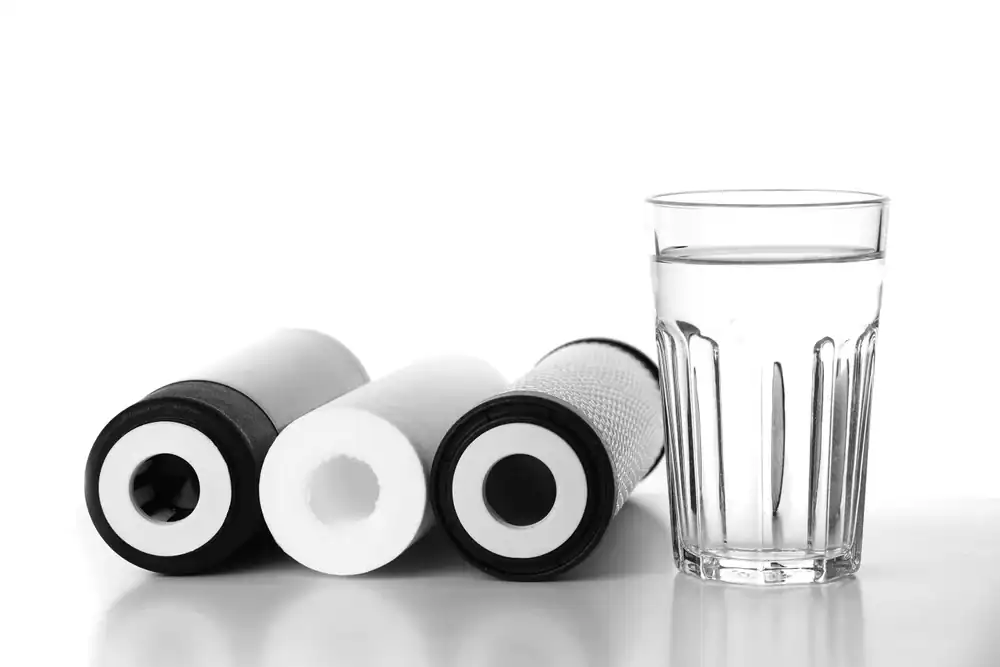
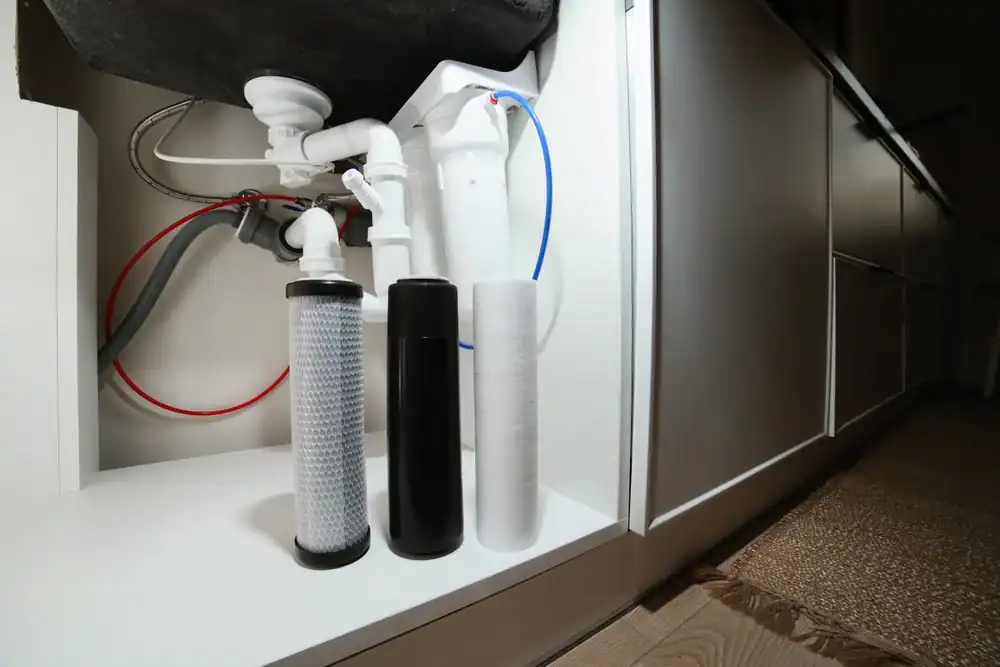
You’re getting a multi-stage filtration system designed specifically for the well water problems common in Liberty Triangle and Central Florida. That means equipment rated for high iron content, hydrogen sulfide gas, and the bacteria that thrive in our warm, oxygen-depleted aquifers.
Our iron removal systems use oxidation to convert dissolved iron into particles, then filter those particles out before they reach your faucets. For sulfur, we use air injection oxidation or hydrogen peroxide injection depending on your water chemistry. Both methods eliminate that rotten egg smell without adding salts or chemicals that create their own problems down the line.
If your well tests positive for coliform bacteria or E. coli—which happens more often than people think in rural areas with septic systems nearby—we install well water bacteria disinfection systems that kill contaminants on contact. Hydrogen peroxide treatment is effective and doesn’t leave a chlorine taste or require constant chemical refills.
The Florida Department of Health recommends testing your well at least once a year, and more often after heavy rains or flooding. In Liberty Triangle, where the water table is shallow and summer storms are intense, that’s not just a recommendation—it’s smart protection for your family. We help you stay ahead of contamination instead of reacting to it after the damage is done.

If you’re seeing orange or brown stains on your sinks, toilets, or laundry, that’s iron. If your water smells like rotten eggs, that’s hydrogen sulfide gas. If your water tastes metallic or leaves a film on dishes, you’ve got mineral content that needs treatment.
But some problems don’t show up as obviously. Bacteria contamination doesn’t always have a smell or taste, which is why testing is critical. In Liberty Triangle and the surrounding Lake County area, shallow wells and nearby septic systems increase the risk of coliform bacteria getting into your water supply, especially after heavy rain.
Even if your water looks fine, high mineral content is quietly destroying your appliances. Scale buildup in your water heater, dishwasher, and washing machine shortens their lifespan and costs you more in energy and repairs. A whole house water filtration system prevents that damage before it starts, which is a lot cheaper than replacing a water heater every few years.
A water softener removes hardness—calcium and magnesium—that causes scale buildup. It’s great for protecting appliances and making soap lather better, but it doesn’t remove iron, sulfur, or bacteria.
A well water filtration system is more comprehensive. It handles the contaminants that are common in Florida wells: iron that stains everything, hydrogen sulfide that smells like rotten eggs, manganese that leaves black streaks, and bacteria that can make you sick. Depending on your water test results, you might need both a filtration system and a softener, or just one or the other.
In Liberty Triangle, most well owners need filtration first because iron and sulfur are so prevalent. If your water is also hard—which it usually is in Central Florida—we can add a softener to the system. The key is testing your water first so you’re not guessing about what equipment you actually need.
Cost depends on what’s in your water and what equipment is needed to fix it. A basic iron removal system starts around a few thousand dollars. If you need hydrogen peroxide injection for bacteria or a multi-stage system for iron, sulfur, and hardness, the investment goes up from there.
That sounds like a lot, but compare it to what you’re already spending. Bottled water for a family of four can run $50 to $100 a month. Replacing a water heater damaged by sediment buildup costs $1,200 or more. A washing machine ruined by iron-laden water is another $800. Over time, untreated well water is expensive—you’re just paying for the damage instead of the solution.
We offer financing because we know the upfront cost is a barrier for a lot of homeowners. Flexible payment options let you get the system you actually need instead of settling for something that only half-solves the problem. And if you’re military or a first responder, we offer a $500 discount because we support the people who serve our community.
Yes, but only if it’s designed to treat hydrogen sulfide gas, which is what causes that rotten egg odor. Not all filtration systems handle sulfur, so you need equipment specifically built for it.
We typically use air injection oxidation or hydrogen peroxide injection for hydrogen sulfide treatment. Air injection pulls oxygen into the water, which converts the gas into a solid particle that gets filtered out. Hydrogen peroxide does the same thing chemically and also kills bacteria, so it’s a good option if your well has both sulfur and contamination issues.
The smell is more than just unpleasant—it’s a sign that your water chemistry is off and likely damaging your plumbing and appliances. In Liberty Triangle and Central Florida, hydrogen sulfide is extremely common because of the sulfur deposits in our limestone aquifer. The bacteria that create the gas thrive in oxygen-depleted groundwater, which is exactly what we have here. Treating it correctly eliminates the odor and protects your home’s plumbing system from corrosion.
Most of the systems we install are designed to be low-maintenance. Air injection oxidation systems and hydrogen peroxide injection systems don’t require constant chemical refills or complicated upkeep. You might need to replace a filter cartridge once or twice a year depending on your water quality and household usage, but that’s about it.
If your system includes a softener, you’ll need to add salt periodically—usually every few months. We show you how to check the levels and refill it yourself, which takes about five minutes.
The biggest maintenance task is annual water testing. Your well water chemistry can change over time due to seasonal fluctuations, heavy rainfall, or changes in the aquifer. Testing once a year ensures your system is still calibrated correctly and catching everything it should. We can handle that testing for you and make any adjustments needed to keep your water clear and safe.
Please provide your email address so that we can stay in touch and answer any questions you have! We will be reaching back out shortly.
"*" indicates required fields
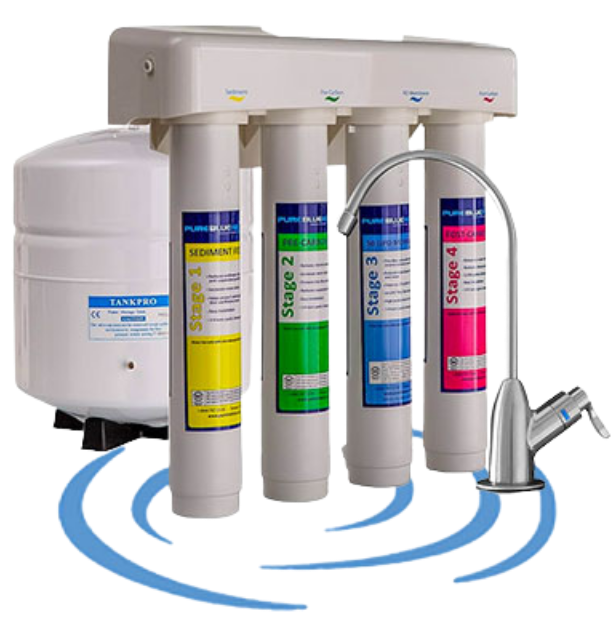
Get a free reverse osmosis drinking water system with the purchase of any whole-home water purification system.
*Cannot be combined with other offers. Mention this special when you call.