Reach Out Today
Please provide your email address so that we can stay in touch and answer any questions you have! We will be reaching back out shortly.


Hear from Our Customers
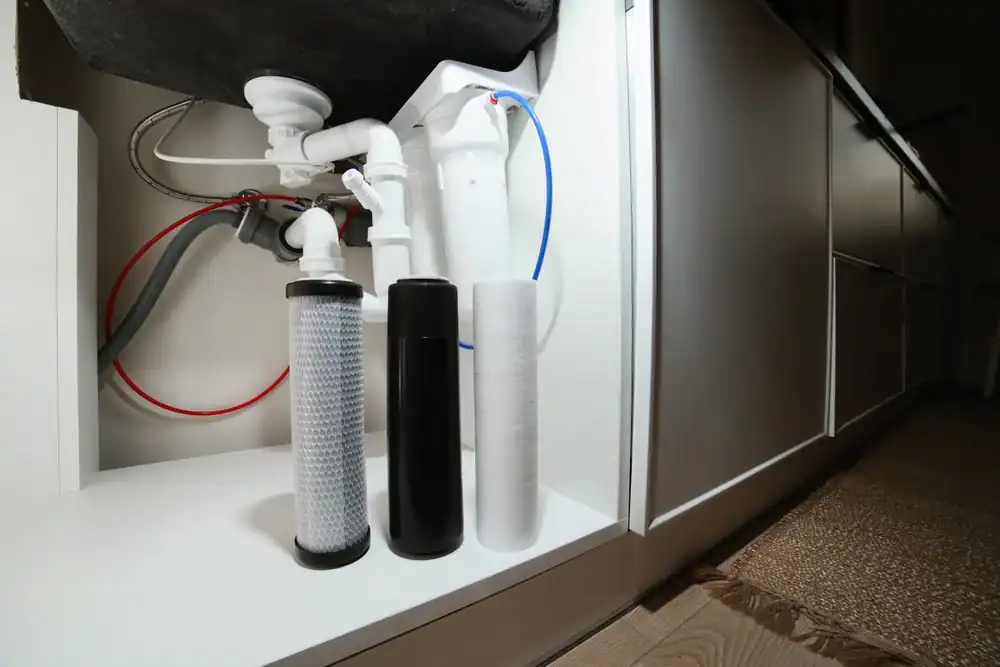
The orange ring around your toilet bowl isn’t a cleaning problem — it’s an iron problem. The rotten-egg smell that hits you the second you turn on the shower isn’t a plumbing issue — it’s hydrogen sulfide, produced by sulfur bacteria living in the warm, low-oxygen groundwater beneath the Pinellas Peninsula. These aren’t rare edge cases. They’re what Florida’s geology produces, and they don’t go away on their own.
Once your water is properly treated, the staining stops. The smell is gone. Your laundry comes out the color it’s supposed to be. Your water heater, dishwasher, and washing machine stop taking the hit from iron deposits and hard water scale building up inside them year after year. For homeowners in Largo — where a lot of the housing stock has been absorbing untreated well water for decades — that protection adds up fast in appliances that last longer and plumbing that doesn’t corrode ahead of its time.
There’s also the flooding reality. Roughly 54% of buildings in Largo carry documented flood risk, and every significant storm event opens a pathway for surface contaminants — bacteria, sediment, runoff — to enter a private well. A properly designed system with UV disinfection doesn’t just handle the everyday chemistry problems. It keeps your water safe when the weather doesn’t cooperate, which on Florida’s Gulf Coast is a real and recurring concern.
We’ve been solving well water problems across Florida for over 50 years. Not water problems in general — specifically the iron, sulfur, bacteria, and hardness issues that Florida’s geology creates. That distinction matters, because a company that sells the same system in Ohio and Nevada and Florida isn’t solving your problem. We’re solving yours.
The credential that sets us apart in a market like Largo is simple and verifiable: an A+ BBB rating, five stars, and zero complaints. In 2021, the Florida Attorney General shut down a water filtration company that was charging up to $9,700 using fraudulent health claims. Scam operations are a documented reality in this industry in Florida, and zero BBB complaints over a 50-year track record is the most direct answer to that concern. National Water Quality Association membership adds another layer — it’s a voluntary professional credential that requires passing a rigorous exam and committing to a code of ethics that most local competitors don’t hold.
If you or someone in your household has served in the military or as a first responder, there’s a $500 discount on your system — a genuine commitment to the Largo-area community that we back with action, including our ongoing support of the Tunnels to Towers Foundation.
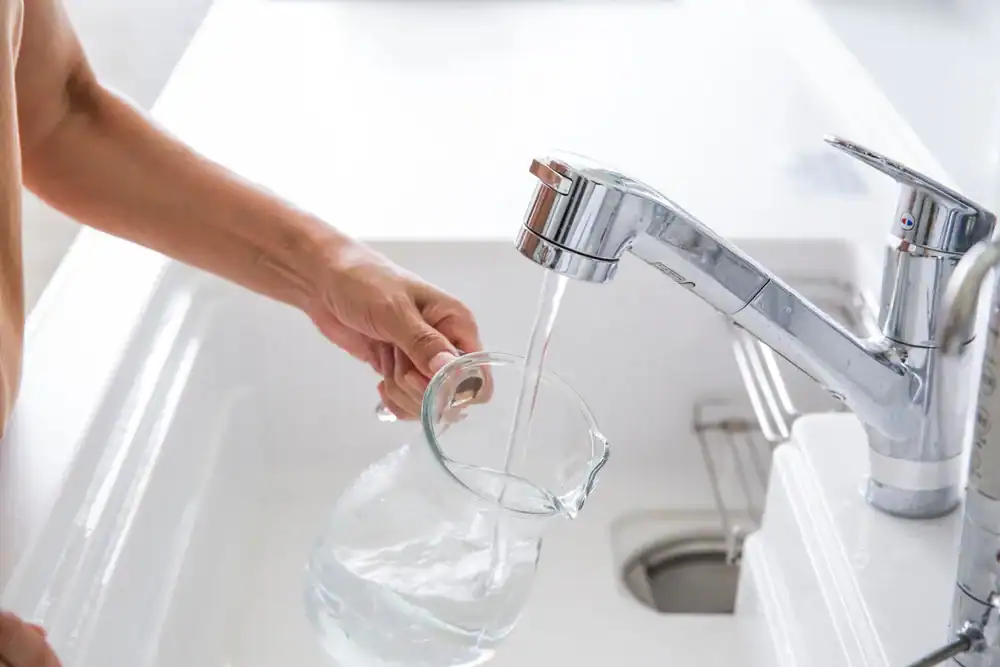
It starts with a free water analysis — not a sales pitch, not a theatrical demo with dye drops. An actual test of your specific well water chemistry. Largo’s surficial aquifer doesn’t produce the same water in every neighborhood, and what’s in your well on the western edge near Anona isn’t necessarily what’s in a well off Ulmerton Road. The analysis tells you exactly what’s there: iron levels, sulfur concentration, bacterial presence, hardness, manganese — the full picture.
From there, we design a system around your actual results and your household’s water usage. This isn’t a one-size package pulled off a shelf. If your water has iron and sulfur but no bacterial concern, you don’t need a UV system driving up your cost. If you’re post-storm and bacterial contamination is the immediate issue, that gets addressed first. The recommendation is built around what your water test shows, nothing more.
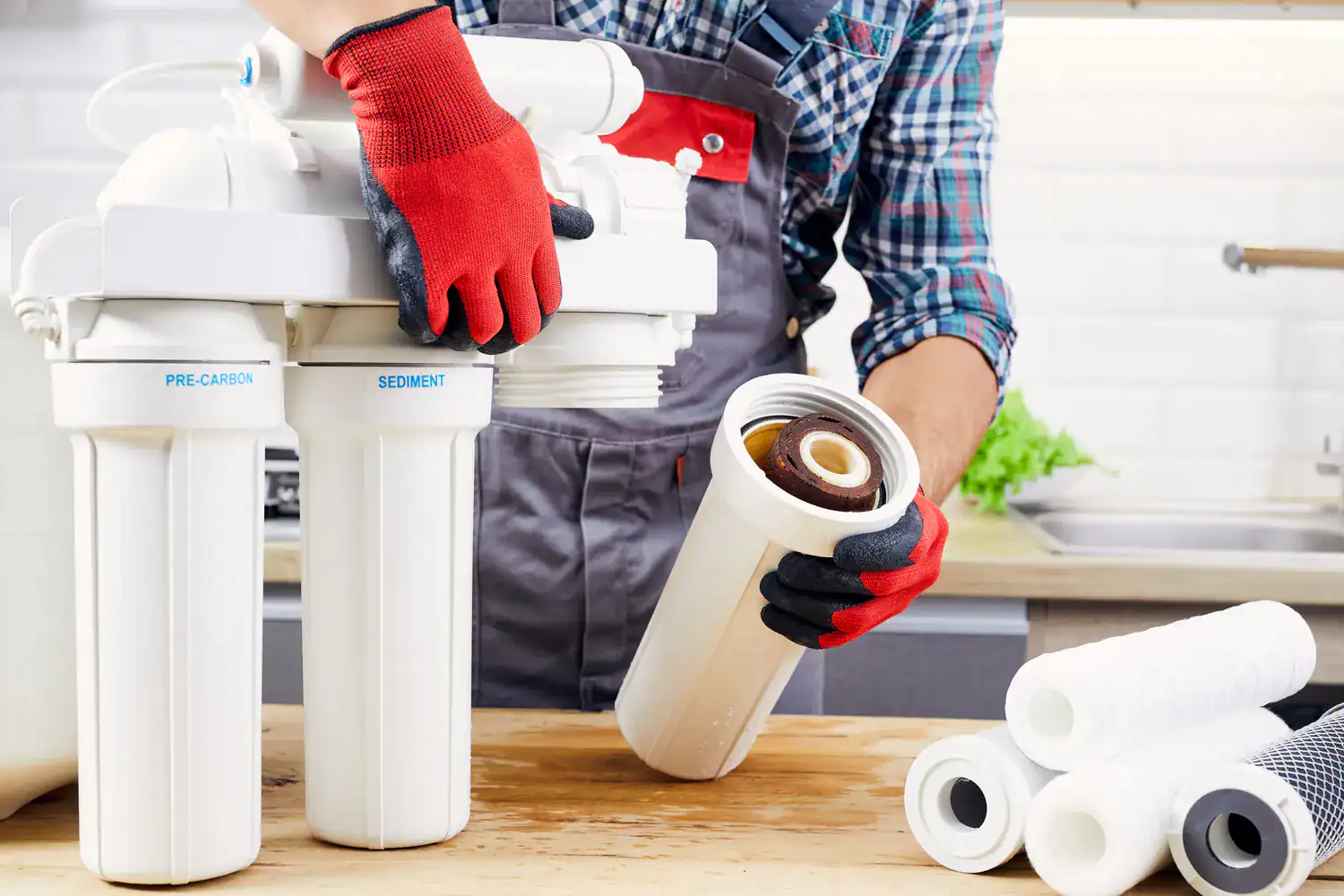
Installation happens in a single day. The system goes in at the point where water enters your home, which means every tap, every shower, every appliance in the house gets treated water from that day forward. No walls opened up, no multi-day project, no waiting on equipment. By the time the technician leaves, your water is different — and you’ll be able to tell.
Ready to get started?
Whole-house well water purification is the core of what we do — and it’s the only thing we do. No plumbing side work, no water heaters, no distraction from the one service we’ve spent 50 years getting right. For Largo homeowners on private wells, that focus translates into a multi-stage system that handles the full range of what Pinellas County’s shallow aquifer produces.
Iron removal comes first for most Largo wells. Dissolved ferrous iron is invisible in the well but turns to rust the second it hits oxygen — staining fixtures, laundry, and driveways with the orange deposits that no amount of scrubbing fully removes. Sulfur treatment addresses the hydrogen sulfide that Florida’s warm groundwater generates, using air injection oxidation or catalytic carbon filtration depending on concentration levels. For bacterial concerns — which are especially relevant in Largo given the city’s flood exposure and subtropical heat — UV disinfection provides continuous protection without chemicals. Manganese reduction and water softening are layered in where the water test indicates they’re needed.
The result is a system calibrated to your well, your water, and your home — not a package designed to be sold at volume. Private well owners in Largo carry full responsibility for their own water quality. There’s no municipal treatment backstop. What comes out of your tap is entirely what your system produces, which is exactly why the system has to be right.

That smell is hydrogen sulfide gas — produced by sulfur bacteria that live in the anaerobic, low-oxygen conditions of Florida’s groundwater. It’s not a sign that your well is broken or contaminated in a dangerous way. It’s a function of the chemistry in Pinellas County’s surficial aquifer, combined with the warm groundwater temperatures that Florida’s subtropical climate produces. The smell tends to get worse in the summer months when heat accelerates bacterial activity.
The fix is a treatment system designed specifically for hydrogen sulfide — typically air injection oxidation (AIO) or hydrogen peroxide injection with catalytic carbon filtration, sized to your well’s specific flow rate and sulfur concentration. A standard water softener won’t touch it. A generic retail filter won’t touch it either. The right system eliminates the smell permanently, not temporarily, and it starts with testing your water to confirm exactly what you’re dealing with before any equipment is recommended.
It’s a legitimate concern specific to where you live. Largo sits on the Pinellas Peninsula with documented flood risk affecting roughly 54% of its buildings. When flooding occurs — from a tropical storm, a hurricane, or even heavy seasonal rainfall — surface water carrying bacteria, sediment, and chemical runoff can enter a private well through the casing, the cap, or the surrounding soil. The problem is that contaminated well water often looks and smells completely normal. You won’t know it’s there without testing.
After any significant flooding event, private well owners in Largo should test their water before assuming it’s safe. Bacterial contamination is the most common post-flood finding, and UV disinfection systems provide continuous protection against it without adding chemicals to your water supply. If your current system doesn’t include UV treatment, that’s worth addressing before the next storm season — not after. The ALERTPinellas system will tell you when a storm is coming. Your water system should be ready before it arrives.
More than most people realize until they add it up. Dissolved iron in your well water is colorless when it comes out of the ground, but the moment it contacts oxygen — in your pipes, your fixtures, your appliances — it oxidizes into rust. That’s where the orange staining on your toilets, sinks, tubs, and driveways comes from. No cleaning product removes it completely because it’s not a surface problem. The iron is in the water feeding those surfaces continuously.
Inside your appliances, iron deposits accumulate over time in your water heater, dishwasher, and washing machine — shortening their lifespan and reducing efficiency. In Largo, where a lot of homes have been on untreated well water for 20, 30, or 40 years, that damage is compounding in ways that show up as premature appliance replacement and plumbing repairs that shouldn’t be necessary yet. A properly sized iron removal system stops that process on the day it’s installed. What’s already there doesn’t reverse, but nothing new accumulates from that point forward.
No permit is required to install a water treatment system on an existing well in Largo or anywhere in Pinellas County. Water treatment systems are modifications to how your existing water supply is handled — they’re not new well construction, which is what triggers the permitting requirement under the Southwest Florida Water Management District’s Chapter 40D-3 regulations. New wells require a construction permit before drilling begins. Adding a filtration system to a well that already exists does not.
What does matter is that the equipment is installed by licensed, insured professionals. Florida has a documented history of unlicensed operators in the water treatment space — it’s part of why the state has seen enforcement action against fraudulent companies. A licensed installer means the work is done correctly, the equipment is properly connected to your plumbing, and there’s real accountability if anything goes wrong. When you’re comparing companies, asking about licensing and insurance is a reasonable and smart question that any legitimate operator will answer directly.
You can’t tell by looking at it or smelling it — that’s the honest answer. Bacterial contamination in well water is invisible and odorless in most cases. The only way to know is to test. A water analysis will check for coliform bacteria and, if indicated, E. coli — the two primary biological markers used to assess whether a well has been compromised. In Largo’s climate, where summer temperatures regularly exceed 90°F and the surficial aquifer sits close to the surface, bacterial growth conditions are favorable year-round and intensify in warm months.
Treatment for bacterial contamination is typically UV disinfection — a system that exposes your water to ultraviolet light as it passes through, killing bacteria and other microorganisms without adding chlorine or any other chemical to your supply. It’s continuous, it’s chemical-free, and it works at the point of entry so every tap in your home is covered. For homes in flood-prone areas of Largo or homes with older wells, UV disinfection isn’t optional protection — it’s a practical necessity given what the local environment puts wells through.
Please provide your email address so that we can stay in touch and answer any questions you have! We will be reaching back out shortly.
"*" indicates required fields