Reach Out Today
Please provide your email address so that we can stay in touch and answer any questions you have! We will be reaching back out shortly.

Hear from Our Customers
Your water stops leaving orange stains on everything it touches. Toilets, sinks, showers—they stay clean without constant scrubbing.
That rotten egg smell disappears completely. You can run the tap without worrying what your guests will think. Your coffee tastes better. Your laundry comes out actually clean instead of dingy and discolored.
Your water heater lasts longer. Your dishwasher doesn’t clog up with mineral buildup. Appliances work the way they’re supposed to because they’re not fighting iron and sulfur with every cycle. You stop replacing things years before you should have to.
And the biggest change? You stop wondering if your water is safe. You know it is because it’s been tested and treated specifically for what’s in your well—not some generic solution that might work somewhere else but fails here in Central Florida.
We focus entirely on water purification and filtration for Hyde Grove and Central Florida homeowners. We don’t do plumbing. We don’t install water heaters. We solve water quality problems—that’s it.
We’re members of the National Water Quality Association and maintain an A+ rating with the Better Business Bureau with five stars and zero complaints. We also support the Tunnels to Towers Foundation and offer a $500 discount to military members and first responders.
Every system we install starts with a free water analysis at your home. We test your specific water, look at your family’s usage, and design a whole-house system that addresses what’s actually in your well—not what we assume is there.
First, we come to your home and test your water. This isn’t a basic test—we’re looking for iron levels, hydrogen sulfide, bacteria, hardness, pH, and anything else that affects your water quality. The test is free and takes about an hour.
Once we know what’s in your water, we design a system specifically for those contaminants. If you’ve got iron and sulfur, we might recommend an air injection oxidation system or hydrogen peroxide injection depending on your levels. If bacteria is the issue, we’ll include disinfection as part of the treatment process.
Then we install the system. Most whole-house installations take a day, sometimes less. We handle everything—equipment, setup, testing after installation to make sure it’s working right.
After that, you’ve got clean water from every tap. We also provide ongoing service and maintenance. If something needs adjustment or if you have questions months down the road, we’re available. You’re not buying equipment and getting left to figure it out yourself.
Ready to get started?
Florida’s limestone geology creates water problems you won’t find in most other states. That limestone is loaded with sulfur compounds and iron deposits. When groundwater moves through it, those minerals dissolve into your water supply.
Hydrogen sulfide is the most common culprit behind that rotten egg smell. It forms when bacteria break down organic matter in oxygen-depleted aquifers—which is exactly what you’ve got underground here in Central Florida. The sulfur in the limestone feeds those bacteria.
Iron is the second issue. It’s dissolved in your water when it’s still in the well, so you can’t see it. But the moment that water hits air, it oxidizes into rust. That’s why everything turns orange—your fixtures, your laundry, the inside of your appliances.
Bacteria can enter wells through surface contamination or simply exist naturally in the groundwater. The scary part is you usually can’t smell or taste it. The Florida Department of Health recommends testing your well water annually for coliform bacteria and nitrates. If you’re on well water, that’s your responsibility—nobody else is checking it for you.
The most effective treatment systems use oxidation to convert dissolved contaminants into solid particles, then filter those particles out. Some systems use air injection oxidation, others use hydrogen peroxide injection. What works best depends on your specific contamination levels and water chemistry.

If you’re seeing rust-colored stains in your sinks, toilets, or on your laundry, that’s iron. If your water smells like rotten eggs, that’s hydrogen sulfide gas from sulfur bacteria. Both are extremely common in Hyde Grove and throughout Central Florida because of our limestone geology.
Bacterial contamination is harder to detect because it usually has no smell or taste. That’s why the Florida Department of Health recommends annual testing for coliform bacteria and nitrates if you’re on a private well. Most homeowners don’t realize they’re responsible for testing their own water—there’s no municipal system doing it for you.
Even if your water looks and smells fine, it’s worth getting it tested. Iron and sulfur cause damage to your plumbing and appliances over time even if you’re not noticing it yet. And bacteria is a health risk you can’t see. We offer free in-home water analysis that tests for all the common contaminants in this area.
Both methods use oxidation to treat iron and sulfur, but they work differently. Air injection oxidation systems inject oxygen into your water, which converts dissolved iron and hydrogen sulfide into solid particles that can be filtered out. These systems work well for moderate contamination levels and don’t require any chemicals.
Hydrogen peroxide injection systems use a small amount of hydrogen peroxide as the oxidizing agent instead of air. They’re more effective for higher levels of iron and sulfur, and they also provide some disinfection benefits because hydrogen peroxide kills bacteria. The downside is you need to refill the peroxide periodically, though it’s inexpensive and lasts months.
Which one you need depends on your specific water test results. If your iron is under 10 ppm and your sulfur smell is mild, air injection usually handles it. If you’ve got heavier contamination or bacteria concerns, hydrogen peroxide is often the better choice. We test your water first and recommend the system that actually matches your situation—not the one we happen to have in stock.
No. Water softeners remove hardness minerals like calcium and magnesium, but they’re not designed to handle iron or sulfur. If you run water with high iron content through a standard softener, you’ll just damage the resin bed and end up with the same staining problems.
Some people try to use a softener for low levels of clear water iron, but it’s not a reliable solution. The iron fouls the system quickly and you’ll be regenerating constantly. And softeners do nothing for hydrogen sulfide—that rotten egg smell will still be there.
You need an oxidation system to treat iron and sulfur. That can be air injection oxidation, hydrogen peroxide injection, or other oxidation methods depending on your levels. Once the iron and sulfur are handled, you can add a softener afterward if you also have hardness issues. But trying to use a softener as your primary treatment for iron and sulfur just doesn’t work. You’ll waste money and still have the same problems.
Most whole-house systems for Hyde Grove homes run between $3,000 and $8,000 depending on what you’re treating and how much water your household uses. A basic iron and sulfur removal system is on the lower end. If you need bacteria disinfection, higher flow rates, or treatment for multiple contaminants, you’re looking at the higher end.
That might sound like a lot upfront, but compare it to what you’re already spending. If you’re buying bottled water, replacing appliances early because of mineral damage, or constantly cleaning stains, those costs add up fast. A water heater replacement alone is $1,200 to $2,000. Washing machines are $500 to $1,500. If your water is destroying those appliances years early, you’re paying for it one way or another.
We provide a free water analysis and quote before you commit to anything. You’ll know exactly what your water needs and what the system costs before we start. We also offer a $500 discount for military members and first responders. And unlike some national companies, we actually service what we sell—you’re not getting abandoned after installation.
It depends on the type of system, but most need attention once or twice a year. Air injection oxidation systems need the air compressor checked and the filter media replaced every few years depending on your water usage and iron levels. Hydrogen peroxide systems need the peroxide tank refilled every few months, which is simple and inexpensive.
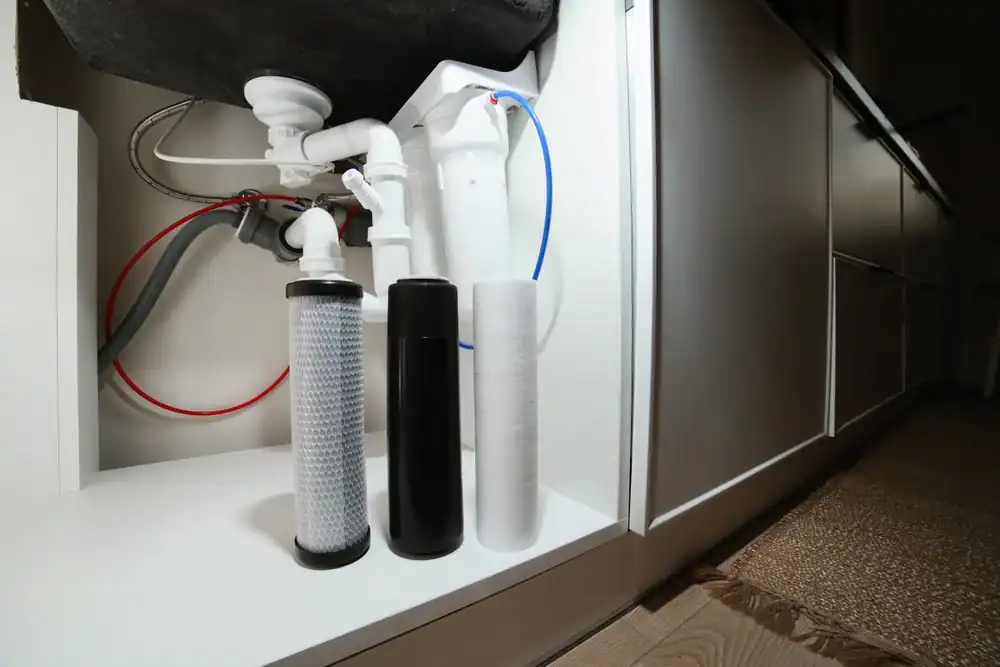
If your system includes a bacteria disinfection component, that needs to be checked annually to make sure it’s working properly. Any sediment filters in the system should be changed every six to twelve months depending on how much sediment is in your water.
We provide ongoing service for all the systems we install. You’re not on your own trying to figure out maintenance schedules or troubleshooting problems. Most of our customers set up annual service visits where we check everything, replace filters, and make any adjustments needed. It’s straightforward and keeps the system running the way it should. The worst thing you can do is install a system and then ignore it—regular maintenance is what keeps your water clean long-term.
Please provide your email address so that we can stay in touch and answer any questions you have! We will be reaching back out shortly.
"*" indicates required fields