Reach Out Today
Please provide your email address so that we can stay in touch and answer any questions you have! We will be reaching back out shortly.

Hear from Our Customers
No more orange rings around your toilets that won’t scrub away. No more rotten egg smell when someone turns on the shower. No more replacing water heaters every few years because hydrogen sulfide ate through the tank.
When your well water filtration system is designed correctly for Florida’s specific water chemistry, your fixtures stay clean. Your appliances last longer. Your water stops tasting like metal or smelling like sulfur.
You’re not buying bottled water by the case anymore. You’re not embarrassed when guests use your bathroom. You’re not wondering what’s actually in the water your family drinks and bathes in every day. That’s what properly filtered well water does. It removes the problem at the source, before it reaches any faucet, shower, or appliance in your home.
We have an A-rating with the Better Business Bureau, five stars, and zero complaints. We’re members of the National Water Quality Association. We’ve been solving hard water and contamination problems for Florida homeowners since the 1970s.
We’re not a national company that sells you a system and disappears. We’re local. We understand that Holden Heights sits on the same limestone aquifer system that loads well water with sulfur compounds, iron, and minerals. We test your specific water, design a system for your specific problems, and install it correctly the first time.
Military and first responders get $500 off. We support the Tunnels to Towers Foundation because we believe in taking care of the people who take care of us.
First, we test your water. Not a basic hardness test, but a comprehensive analysis that tells us exactly what contaminants we’re dealing with. Iron, sulfur, bacteria, nitrates, pH levels. Everything that affects how your water smells, tastes, and performs.
Then we design a system based on those results. If you have hydrogen sulfide creating that rotten egg smell, we might use hydrogen peroxide injection to oxidize the sulfur and kill the bacteria producing it. If iron is staining everything orange, we’ll use air injection oxidation or a catalytic carbon filter to remove it before it reaches your plumbing.
For bacterial contamination, we add UV sterilization. For hard water that’s destroying your appliances, we include softening. Every system is custom because every well is different. Once we install it at your main water line, every drop of water entering your home gets treated. You’ll notice the difference immediately. Cleaner fixtures within weeks. Better-tasting water right away. Appliances that actually last as long as they’re supposed to.
Ready to get started?
Your well water filtration system treats the specific problems in your water. That usually means iron removal if you’ve got orange stains. Hydrogen sulfide treatment if there’s a sulfur smell. Bacteria disinfection if your water tested positive for coliform or other harmful organisms.
In Holden Heights, FL, most wells pull from aquifers sitting in limestone that’s loaded with sulfur and minerals. The warm, oxygen-poor environment inside wells and plumbing systems is perfect for bacteria that produce hydrogen sulfide gas. That’s why the rotten egg smell is so common here. It’s not just your well. It’s the geology.
A properly designed system handles all of it. Air injection oxidation converts dissolved iron and manganese into particles that get filtered out. Hydrogen peroxide injection kills sulfur-reducing bacteria and oxidizes hydrogen sulfide before it can create that smell. Catalytic carbon filters catch the oxidized contaminants. UV sterilization kills any remaining bacteria or viruses.
You get a system that’s sized correctly for your household water usage, installed at the point where water enters your home, and designed to run efficiently without constant maintenance. We’re not selling you equipment you don’t need. We’re solving the problems your water actually has.

That smell is hydrogen sulfide gas, and it’s produced by sulfur-reducing bacteria living in your well or plumbing system. Florida’s limestone aquifers contain sulfur compounds that these bacteria feed on. When they break down the sulfur, they release hydrogen sulfide, which smells exactly like rotten eggs.
The bacteria thrive in warm, oxygen-poor environments, which describes most well systems in Florida perfectly. The smell is strongest when you first turn on the water because the gas builds up in your pipes overnight or when the water sits unused.
Hydrogen sulfide isn’t just unpleasant. It’s corrosive. It eats away at copper and brass fixtures, accelerates water heater breakdown, and shortens the life of your entire plumbing system. Treating it requires killing the bacteria and removing the hydrogen sulfide before it enters your home. That’s what hydrogen peroxide injection systems do. They oxidize the gas and eliminate the bacteria producing it.
Iron removal works by oxidizing dissolved iron into solid rust particles that can be filtered out. There are two main methods. Air injection oxidation pulls oxygen into the water, which reacts with dissolved iron and turns it into rust. That rust gets trapped in a filter media and flushed out during backwash cycles.
Hydrogen peroxide injection does the same thing chemically. It’s faster and more effective for higher iron concentrations or when you’re also dealing with sulfur bacteria. The peroxide oxidizes both iron and hydrogen sulfide while killing the bacteria that cause ongoing problems.
Once the iron is oxidized and filtered out, your water stops leaving orange stains on toilets, sinks, and laundry. Your fixtures stay clean. Your dishwasher stops leaving rust spots on glasses. The metallic taste disappears. Most well water in Holden Heights, FL has some level of iron because of the mineral-rich aquifer system. The question isn’t whether you have iron, it’s how much and what method removes it most effectively for your specific water chemistry.
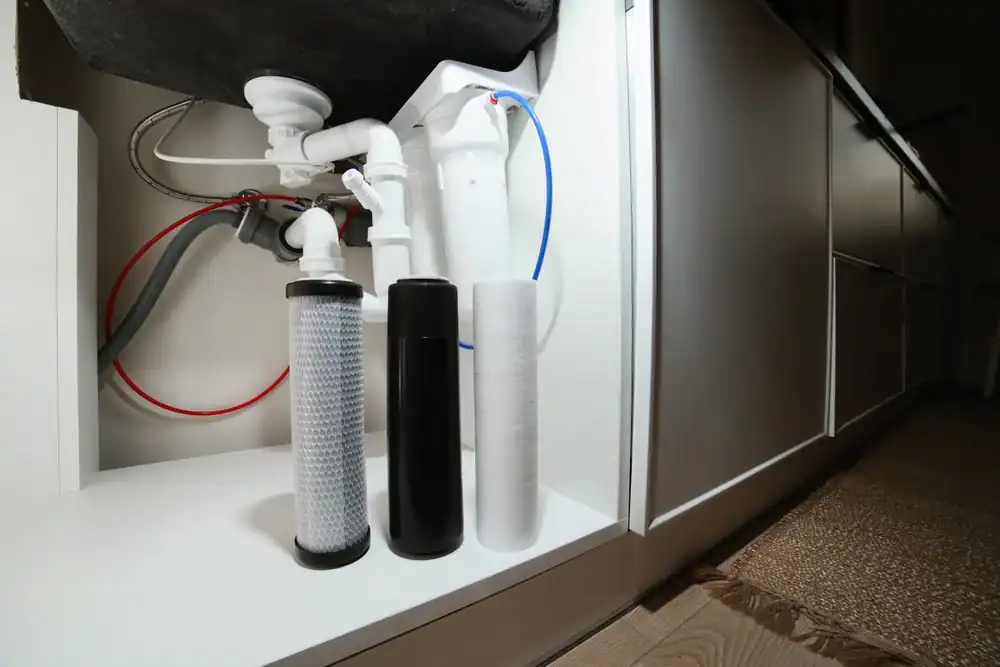
A whole house water filtration system treats water at the point where it enters your home, before it reaches any faucet, shower, or appliance. An under-sink filter only treats water at one specific location, usually your kitchen sink.
If your problem is iron staining your toilets, sulfur smell in your showers, or bacteria contaminating your water, an under-sink filter does nothing. It doesn’t protect your washing machine, dishwasher, or water heater. It doesn’t stop the orange stains or the rotten egg smell because those problems exist throughout your entire plumbing system.
Whole house systems solve the problem at the source. Every drop of water gets treated. Your showers don’t smell like sulfur. Your toilets don’t stain orange. Your appliances aren’t getting destroyed by corrosive water or mineral buildup. Under-sink filters are fine for improving taste at one tap, but they’re not a solution for well water contamination. You need treatment before the water enters your home’s plumbing, not after.
The Florida Department of Health recommends testing your well water annually for coliform bacteria and nitrates. You should test for lead every three years. Beyond that, test whenever you notice a change in taste, smell, or appearance. Test after flooding, nearby construction, or any work done on your well.
Well water quality changes over time. What was safe last year might not be safe now. Bacteria can enter through cracks in the well casing. Nitrate levels can increase from fertilizer runoff or septic system leaching. Iron and sulfur concentrations fluctuate based on seasonal water table changes and bacterial activity in your well.
More than one in five wells tested in Florida between 1991 and 2004 contained contaminants above human health benchmarks. Over 5,700 wells had chemical concentrations exceeding state and federal drinking water standards. Your well isn’t automatically safe just because it was clean when it was drilled. Regular testing is the only way to know what’s actually in your water right now.
A properly sized and installed whole house water filtration system shouldn’t noticeably affect your water pressure. The key is matching the system’s flow rate to your household’s peak water demand. If your home uses 15 gallons per minute during peak times, your filtration system needs to handle at least that much without creating a bottleneck.
Cheap or undersized systems do cause pressure drops because water can’t flow through the filter media fast enough. That’s why we size systems based on your specific household needs, not just pick something off a shelf. We calculate how many bathrooms you have, how many people live in your home, and what your peak usage looks like.
The filter media itself is designed for flow. Catalytic carbon, oxidizing media, and other filtration materials are engineered to treat water without significantly restricting flow. During backwash cycles, the system cleans itself and maintains efficiency. You get clean water at the pressure you’re used to. If a system is causing pressure problems, it’s either undersized, improperly installed, or needs maintenance.
Please provide your email address so that we can stay in touch and answer any questions you have! We will be reaching back out shortly.
"*" indicates required fields
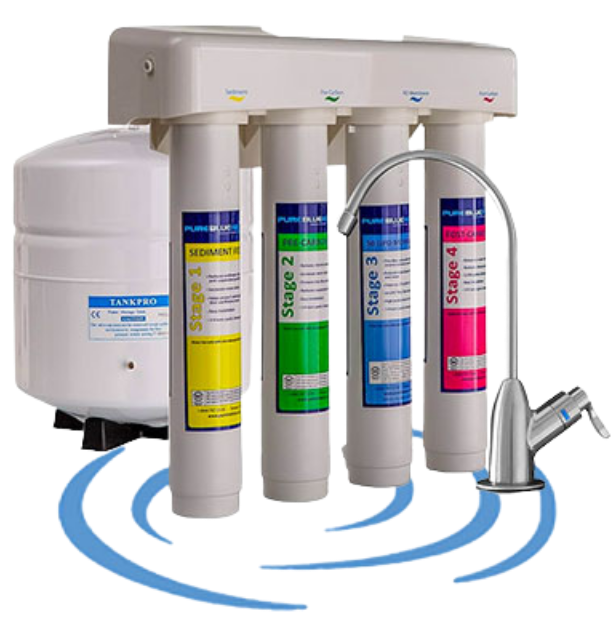
Get a free reverse osmosis drinking water system with the purchase of any whole-home water purification system.
*Cannot be combined with other offers. Mention this special when you call.