Reach Out Today
Please provide your email address so that we can stay in touch and answer any questions you have! We will be reaching back out shortly.

Hear from Our Customers
No orange rings in the toilet. No rotten egg smell when you turn on the shower. No embarrassment when guests use your bathroom.
That’s what happens when your well water filtration system is designed for Central Florida’s limestone aquifer, not just pulled from a catalog. The iron stops staining your fixtures. The hydrogen sulfide smell disappears completely. Your water heater stops corroding from the inside out.
You’re not buying bottled water anymore. Your washing machine isn’t leaving rust spots on white clothes. Your dishwasher actually gets glasses clean instead of coating them in mineral film.
This is what whole-house water filtration does when it’s built around your actual water test results, not a generic system that treats “hard water.” You get water that’s safe to drink, doesn’t destroy your plumbing, and stops costing you money in replacement appliances and endless cleaning products that don’t work.
We have an A+ Better Business Bureau rating, a 5-star customer rating with zero complaints, and over 50 years of experience treating well water in Central Florida. We’re members of the National Water Quality Association, and we install the same purification systems used in hospitals and health clinics throughout the state.
We don’t do plumbing. We don’t install water heaters. We design and install whole-house water treatment systems for Gotha homeowners dealing with iron, sulfur, bacteria, and the specific challenges that come from Lake County’s groundwater.
You’re working with a local company that understands why your well water smells like sulfur—it’s the limestone deposits beneath Gotha feeding sulfur-reducing bacteria in your aquifer. We test your water, design a system based on what’s actually in it, and install equipment that handles Florida’s warm groundwater conditions. That’s what we do, and we’ve been doing it longer than most companies in this industry have existed.
First, we test your water. Not a basic hardness test—a full analysis that shows us iron levels, hydrogen sulfide concentration, bacteria presence, pH, and everything else that matters for designing a system that actually works.
Then we design your system. If you’ve got iron, we’re likely using air injection oxidation or hydrogen peroxide injection depending on your levels and water chemistry. For sulfur, hydrogen peroxide is the most effective treatment because it kills the bacteria producing the smell and oxidizes the hydrogen sulfide itself. If bacteria are present, we add UV disinfection with our Purelight system.
Installation happens in a day for most homes. We’re connecting the treatment system at your main water line so every drop of water entering your house gets filtered before it reaches any faucet, shower, or appliance. You’ll see the difference immediately—clear water, no smell, no staining.
After installation, you’re not on your own. We service what we sell, which is something you won’t get from the national companies operating in this area. Your system gets maintained, your filters get changed on schedule, and if something needs adjustment, we handle it.
Ready to get started?
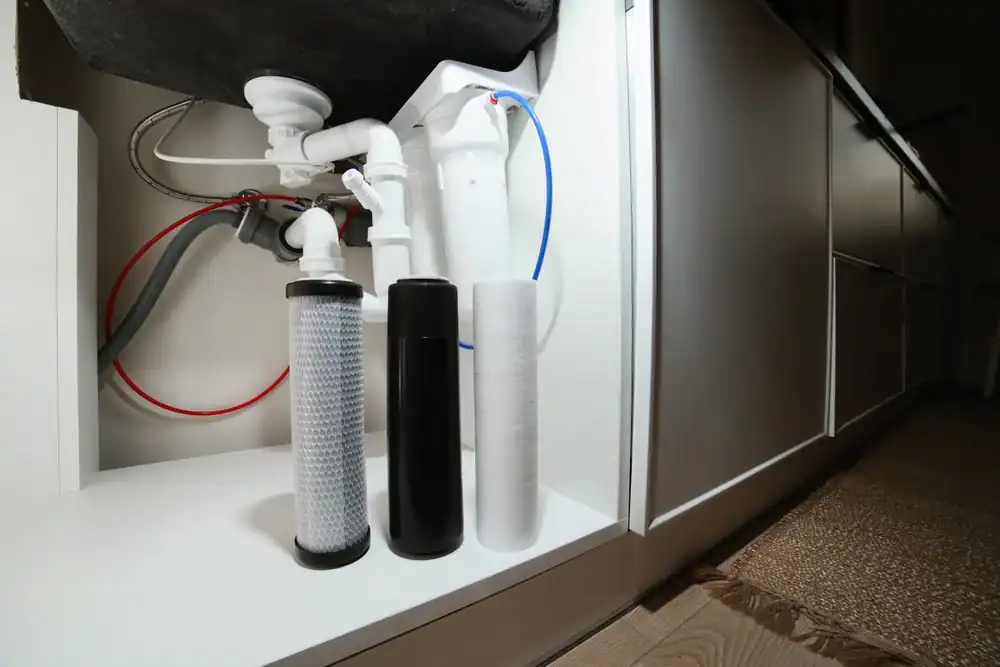
Your whole-house well water filtration system treats water at the point of entry, before it reaches anything in your home. That means every faucet, every shower, every appliance gets filtered water.
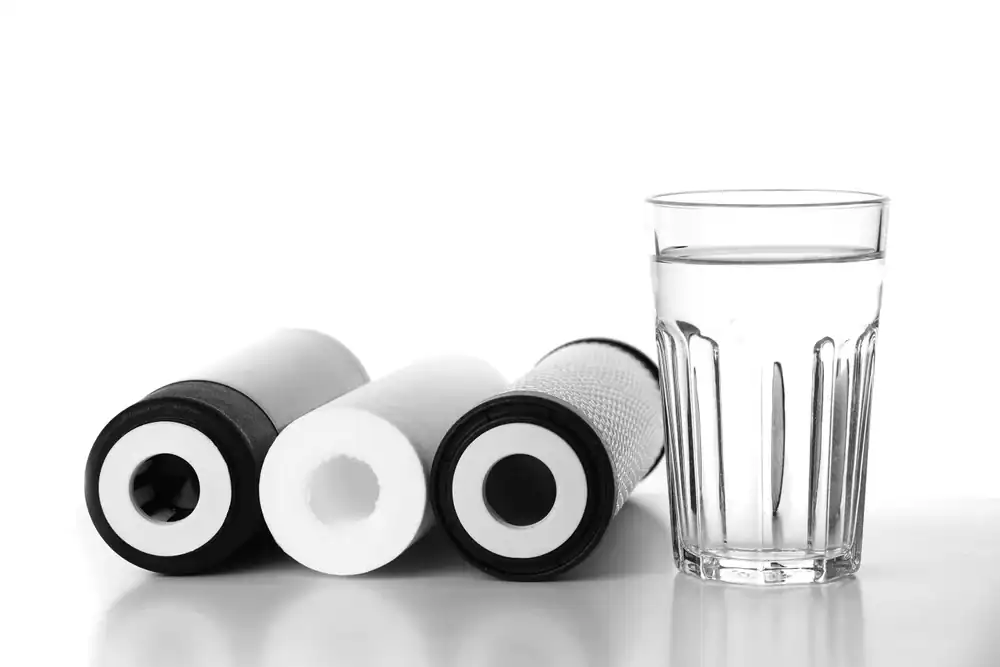
For iron removal, we typically install either an air injection system (chemical-free, uses oxygen to oxidize dissolved iron into particles we can filter out) or a hydrogen peroxide injection system for higher iron levels or when you’ve also got sulfur and bacteria issues. The oxidized iron gets caught in a catalytic carbon filter and backwashed out of your system automatically.
Hydrogen sulfide treatment uses hydrogen peroxide injection in most cases because it’s the most effective method available. It immediately converts the hydrogen sulfide gas into elemental sulfur that gets filtered out, and it kills the sulfur-reducing bacteria producing the smell in the first place.
If your water test shows bacteria—and in Lake County, it often does—we add UV disinfection. The Purelight system uses ultraviolet light to kill waterborne organisms and bacteria as water flows through, with no chemicals added to your water.
You also get a water softener if your hardness levels require it, which in Central Florida they usually do. Soft water protects your appliances, eliminates hard water spots, reduces soap and detergent use, and stops mineral buildup in your pipes. The system pays for itself in two to three years just from those savings alone.

That smell is hydrogen sulfide gas, and it’s one of the most common complaints from well owners in Lake County. You’re sitting on top of Florida’s limestone aquifer, which contains abundant sulfur deposits. Sulfur-reducing bacteria thrive in the warm, oxygen-depleted environment of your well and feed on those sulfur compounds in the limestone, producing hydrogen sulfide as a byproduct.
The smell is unmistakable—rotten eggs—and it’s embarrassing when you have guests over. It’s not just unpleasant; hydrogen sulfide is corrosive. It eats away at copper and brass plumbing fixtures, causes black or yellow staining, and accelerates the breakdown of your water heater’s anode rod, which shortens the life of the entire unit.
Hydrogen peroxide injection is the most effective treatment because it does two things at once: it kills the bacteria producing the smell, and it chemically reacts with the hydrogen sulfide to convert it into elemental sulfur that can be filtered out. You’re not masking the odor—you’re eliminating the source and stopping the corrosion damage at the same time.
Iron removal works by oxidizing the dissolved iron in your water, turning it from a dissolved state into solid rust particles that can be filtered out. There are two main methods: air injection oxidation and hydrogen peroxide injection.
Air injection systems are chemical-free. They inject oxygen into your water, which oxidizes the dissolved iron. The oxidized iron (now solid rust particles) gets caught in a catalytic carbon filter and automatically backwashed out of the system on a schedule. This works well for moderate iron levels and is a good option if iron is your primary issue.
Hydrogen peroxide injection is more aggressive and handles higher iron levels, plus it treats sulfur and bacteria at the same time. The hydrogen peroxide oxidizes the iron immediately and also kills iron bacteria, which is critical because iron bacteria create rust-colored slime that clogs pipes and severely restricts water flow. Once iron bacteria are established in your system, they’re extremely difficult to eliminate, so treating them early is essential.
Both systems use a catalytic carbon filter to capture the oxidized iron before water enters your home. You’ll stop seeing orange stains in your toilets, sinks, and showers. Your white laundry will stay white. And your appliances will last significantly longer because they’re not being destroyed by iron buildup.
Yes, and the cost savings are significant. Iron, minerals, and bacteria don’t just stain your fixtures—they destroy your appliances from the inside. Your water heater is especially vulnerable because iron bacteria and mineral buildup coat the heating elements and corrode the tank itself. Replacing a water heater costs a lot more than installing a proper filtration system in the first place.
Your washing machine, dishwasher, and any appliance that uses water will last years longer with filtered water. Hard water and iron cause mineral buildup that clogs valves, damages pumps, and reduces efficiency. You’ll also use less detergent and cleaning products because soft, filtered water actually cleans instead of leaving residue behind.
A whole-house system treats water before it reaches any fixture or appliance, so everything in your home is protected. Most systems pay for themselves within two to three years just from the savings on appliance replacement, bottled water, and cleaning products. After that, you’re saving money every month while using water that’s actually safe and pleasant to drink, cook with, and bathe in.
You should test your well water at least once a year, with priority on potability, nitrates, and bacteria. Florida’s aquifer conditions change, and what’s in your water this year might not be the same as last year. Surface contamination can introduce bacteria into your well, and naturally occurring bacteria exist in the oxygen-depleted environment deep underground.
If you’re noticing changes—new odors, staining that wasn’t there before, or changes in water taste—test immediately. Iron bacteria can grow rapidly when conditions are favorable, and bacterial slime can clog your entire well system in just a few months if left untreated. Early detection makes treatment much easier and less expensive.
A comprehensive water test shows you iron levels, hydrogen sulfide concentration, bacteria presence, pH, hardness, and other contaminants that affect both water quality and your plumbing system. You can’t design an effective treatment system without knowing what you’re treating. Generic systems don’t work because they’re not built for your specific water chemistry.
Testing also helps you catch problems before they become severe. Control of iron and sulfur bacteria is much easier early on, before the problem takes over your entire system. In early stages, treatment is straightforward. Once bacteria are well established, complete elimination becomes extremely difficult or even impossible.
Air injection is chemical-free and works well for moderate iron levels when iron is your main problem. The system injects oxygen into your water, which oxidizes dissolved iron into solid particles that get filtered out. It’s a simpler system with lower operating costs because you’re not buying chemicals—just using air.
Hydrogen peroxide injection is more aggressive and handles higher iron levels, plus it treats multiple problems at once. If you’ve got iron and sulfur and bacteria—which is common in Lake County—hydrogen peroxide is usually the better choice because it oxidizes iron, kills sulfur-reducing bacteria, and eliminates hydrogen sulfide in one treatment step.
The decision comes down to your water test results. If your iron levels are moderate and you don’t have significant sulfur or bacteria issues, air injection is effective and cost-efficient. If your iron is high, or you’re dealing with sulfur smell and bacteria on top of the iron staining, hydrogen peroxide gives you a more complete solution.
Both systems use catalytic carbon filters to capture the oxidized iron and automatically backwash it out of your system. You’re not maintaining anything manually—the system handles it. The difference is in how the oxidation happens and what other problems get treated at the same time.
Please provide your email address so that we can stay in touch and answer any questions you have! We will be reaching back out shortly.
"*" indicates required fields